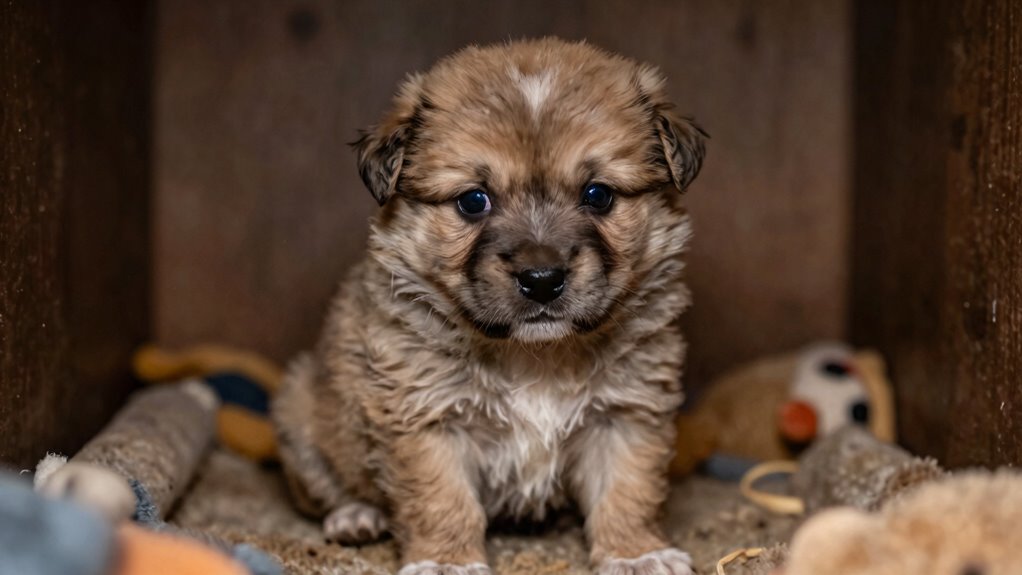

Puppy fear periods are normal, unpredictable phases where your pup might suddenly become wary of familiar people, places, or objects. These stages usually happen around 8-10 weeks and again at about 6 months old. During this time, your puppy’s reactions can seem sudden and confusing, but it’s all part of their development. Staying patient, gentle, and supportive helps build their confidence. Keep exploring these phases, and you’ll discover how to guide your pup through them successfully.

Get pet supplies delivered free — and shop member deals
- Fast, free delivery on millions of items
- Access to Prime Big Deal Days deals on October 6–7
- Prime Video, Amazon Music and more included
Key Takeaways
- Puppies often become suddenly shy or fearful during specific developmental stages, typically between 8-10 weeks and around 6 months.
- These fear periods are normal, temporary, and part of their social and emotional growth process.
- Gentle, gradual exposure with positive reinforcement helps puppies build confidence during these sensitive times.
- Recognizing these phases prevents owners from forcing puppies into uncomfortable situations, reducing future anxiety.
- Patience, calm reassurance, and avoiding punishment are crucial to helping puppies navigate and emerge more confident.

Understanding puppy fear periods is essential for every new dog owner because these are critical phases when puppies become especially sensitive to new experiences and stimuli. During these times, your puppy might suddenly act wary or even scared of things they previously showed no fear towards. It can be confusing and concerning, but it’s a normal part of their development. Recognizing what’s happening helps you respond appropriately, ensuring these periods become opportunities for positive growth rather than setbacks.
Understanding puppy fear periods helps owners foster confidence and growth during these sensitive, temporary developmental phases.
Puppy socialization plays a vital role during these fear response development stages. As your puppy encounters new people, animals, sounds, and environments, they’re building their understanding of the world. However, during fear periods, their reactions can be unpredictable. They might shy away from strangers or loud noises, even if they’ve previously been comfortable. It’s crucial to approach these moments gently, never forcing your puppy into situations that cause overt fear. Instead, you want to create positive associations, gradually introducing new experiences at their pace. This careful socialization helps them develop confidence and reduces the likelihood of future fears or anxieties.
Understanding the timing of these fear periods is also important. Most puppies go through their first one between 8 to 10 weeks of age, with a second around 6 months. During these phases, their fear response development accelerates, and they become more selective about what they’re comfortable with. As a result, you might notice sudden shyness or avoidance behavior. Rather than taking it personally or trying to push through it, you should remain patient and supportive. Use treats, praise, and calm voices to reassure your puppy during uncomfortable encounters. This approach helps them learn that new stimuli aren’t threats but manageable parts of life. Additionally, knowing the typical duration of fear periods can help you remain patient and supportive throughout these phases.
It’s also helpful to understand that timing of fear periods can vary among individual puppies, so observing your puppy’s unique responses is essential. The key to successfully navigating puppy fear periods is understanding that this phase is temporary. Your puppy is growing and learning, and their reactions are a normal part of that process. By providing a safe environment and positive reinforcement, you help them develop resilience and confidence. Avoid harsh reactions or punishment, as this can reinforce fear instead of reducing it. Instead, focus on gentle exposure, offering comfort and support, so your puppy feels secure during these sensitive times. With patience and understanding, you’ll help your puppy emerge from these phases more confident, social, and well-adjusted.
puppy socialization training treats
As an affiliate, we earn on qualifying purchases.
As an affiliate, we earn on qualifying purchases.
Frequently Asked Questions
How Long Do Puppy Fear Periods Typically Last?
Puppy fear periods usually last a few weeks, often between 8 to 10 weeks and again around 4 months. During this time, you should use gentle socialization techniques and calming strategies to help your pup feel secure. Keep exposure positive, avoid overwhelming scenarios, and offer comfort. Patience and consistency are key, as this phase is temporary, and your puppy will grow more confident with proper support.
Can Fear Periods Affect a Puppy’s Long-Term Behavior?
Fear periods can shape your puppy’s long-term behavior like a sculptor shaping clay. During these times, their reactions might seem unpredictable, but proper socialization importance and gentle training techniques help them build confidence. If ignored, fears could linger, affecting future behavior. You need patience and consistency, exposing your pup gradually to new experiences, so they grow into a confident, well-adjusted dog.
Are Some Breeds More Prone to Fear Stages Than Others?
Some breeds are more prone to fear stages because of breed tendencies and fear sensitivity. You’ll notice that certain breeds, like terriers or small breeds, tend to experience these fear periods more intensely or frequently. It’s essential to understand your puppy’s breed tendencies and be patient during these phases. By providing gentle, positive experiences, you help your puppy overcome fear sensitivity and build confidence for the long run.
How Can I Tell if My Puppy Is Experiencing a Fear Period?
Imagine your puppy’s behavior as a roller coaster—sudden dips and climbs. You’ll notice signs like clinginess, avoidance, or new fears during their fear period. To help, focus on gentle puppy socialization and behavioral training, keeping experiences positive. If your pup seems unusually hesitant or scared of everyday objects, they’re likely going through this phase. Patience and support will help them grow confident again.
What’s the Best Way to Support a Fearful Puppy?
To support a fearful puppy, use gentle socialization techniques, like introducing new people and environments gradually to build confidence. Employ calming strategies such as soothing voice tones, gentle touches, and providing a safe space where your puppy can retreat. Be patient and avoid forcing interactions, as this can increase fear. Consistent positive reinforcement helps your puppy feel secure, making it easier for them to overcome their fears over time.
Conclusion
Understanding puppy fear periods is like steering a stormy sea—you might feel lost at times, but with patience, you’ll find calmer waters. Remember when your puppy hesitated at the new vacuum, trembling like a leaf in the wind? That’s just a temporary gust. With gentle guidance and reassurance, you’ll help your pup sail through these waves, emerging stronger and more confident. Embrace the journey; it’s part of shaping a brave, happy companion.
Halloween Picks
halloween
As an affiliate, we earn on qualifying purchases.