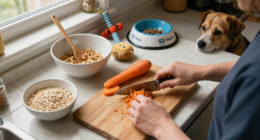
To feed your puppy properly, give high-quality puppy food that meets their developmental needs, with real meat as a key ingredient. Feed them 3-4 small meals daily until about six months old, then switch to twice daily. Follow portion guidelines based on their age and size, and monitor their body condition to prevent overfeeding or underfeeding. Keeping a consistent schedule and offering fresh water supports their health—stay tuned to learn more about optimizing your puppy’s diet.
Open a free Amazon Business account
Business pricing, bulk buying and tax-exempt orders.
As an affiliate, we earn on qualifying purchases.
Key Takeaways
- Feed puppies 3-4 times daily with high-quality, balanced puppy food tailored for their developmental needs.
- Gradually reduce feeding to twice daily around six months to support ongoing growth.
- Follow portion guidelines based on age, weight, and breed, and adjust as needed for body condition.
- Choose nutrient-rich foods with real meat as the first ingredient, avoiding fillers and artificial additives.
- Maintain a consistent schedule, always provide fresh water, and monitor your puppy’s health and appetite regularly.

Starting your puppy on the right feeding routine is essential for their growth and health. Proper puppy nutrition lays the foundation for a strong, happy dog, so establishing a consistent feeding schedule from the start is crucial. A well-planned feeding schedule helps regulate your puppy’s energy levels, digestion, and overall well-being. Puppies have small stomachs but high energy needs, so feeding them at regular intervals ensures they get the nutrients they require without overfeeding or underfeeding. Typically, young puppies should be fed three to four times a day, gradually reducing to two meals as they grow older, around six months. This consistency helps your puppy develop a routine, making meal times predictable and less stressful for both of you.
When it comes to puppy nutrition, selecting the right type of food is critical. You want to choose a high-quality puppy formula that provides balanced nutrients, including the right amounts of protein, fat, vitamins, and minerals. Commercial puppy foods are designed specifically for their developmental needs, with formulas tailored for small, medium, or large breeds. Always check the ingredients list; look for real meat as the first ingredient and avoid foods with excessive fillers or artificial additives. Feeding your puppy an appropriate diet supports their immune system, promotes healthy growth, and helps prevent future health issues. Remember, the quantity of food depends on your puppy’s age, breed, and activity level. Follow the feeding guidelines on the packaging, but also pay attention to your puppy’s body condition. If they start gaining too much weight or seem hungry after meals, adjust portions accordingly.
Creating a consistent feeding schedule helps you monitor your puppy’s intake and health more effectively. It’s easier to spot changes in appetite, digestion, or energy when you feed at regular times. Be sure to set specific times for meals, ideally spaced out evenly throughout the day. Avoid free-feeding, which can lead to overeating and obesity. Fresh water should always be available, and mealtimes should be calm and free of distractions. As your puppy matures, you can gradually shift to twice-daily feedings, but maintaining a routine remains essential. Proper feeding routines also give your puppy a sense of security, helping them settle into a healthy lifestyle. Remember, consistency is key: stick to the schedule, choose the right food, and adjust portions as needed to support your puppy’s growth and overall health.
high quality puppy food with real meat
As an affiliate, we earn on qualifying purchases.
As an affiliate, we earn on qualifying purchases.
Frequently Asked Questions
When Should I Start Transitioning My Puppy to Adult Food?
You should start shifting your puppy to adult food around 12 months old, but it depends on their breed and size. Watch for signs of adult food readiness, like steady growth and energy levels. Begin the puppy food changeover gradually over a week or two, mixing increasing amounts of adult food with their puppy food. This helps guarantee a smooth switch and supports healthy development into adulthood.
Are Homemade Diets Suitable for Puppies?
A homemade diet can be a nurturing garden for your puppy, but it needs careful tending. You must guarantee it provides nutritional balance, like a well-arranged mosaic. While homemade diets offer fresh ingredients, they often lack essential nutrients unless meticulously planned. Consulting a veterinarian or pet nutritionist helps craft a balanced menu, assuring your puppy’s growth is healthy and strong. Without proper guidance, your puppy might miss crucial nutrients needed for development.
How Do I Know if My Puppy Is Overeating?
You can tell your puppy is overeating if they seem overly full, gain excessive weight, or have a consistently bloated belly. To prevent this, use portion control and stick to a regular feeding schedule. Monitor their growth and adjust portions as needed, consulting your vet for guidance. Keep an eye on their energy levels and body condition to ensure they’re eating enough without overdoing it.
Can Puppies Eat Treats Daily Without Affecting Their Diet?
Think of giving treats like a dial-up modem—moderation is key. Yes, puppies can enjoy treats daily, but keep it as a healthy snack and avoid overdoing it. Stick to treat moderation to prevent disrupting their balanced diet and causing weight gain. Offer small, nutritious options and limit treats to a few per day. This way, you make certain your pup stays happy and healthy without turning into a blog-worthy overindulgence.
What Are Signs of Food Allergies in Puppies?
You’ll notice food allergy symptoms if your puppy experiences persistent itching, ear infections, or swelling. They might also have diarrhea or vomiting, indicating unusual puppy dietary reactions. Watch for red, inflamed skin or excessive scratching, which can signal allergies. If these signs appear, consult your vet promptly. Identifying food allergy symptoms early helps manage your puppy’s health and guarantees you avoid ingredients that trigger adverse puppy dietary reactions.
Conclusion
Remember, feeding your puppy is like nurturing a delicate sapling—consistent, the right nutrients, and plenty of love help it grow strong. Stick to a steady schedule, choose quality food, and watch your puppy flourish into a healthy, happy dog. Your care is the sunlight and water that fuels their growth. With patience and attention, you’ll cultivate a loyal companion who thrives by your side for years to come.
Fall Picks
fall essentials
As an affiliate, we earn on qualifying purchases.