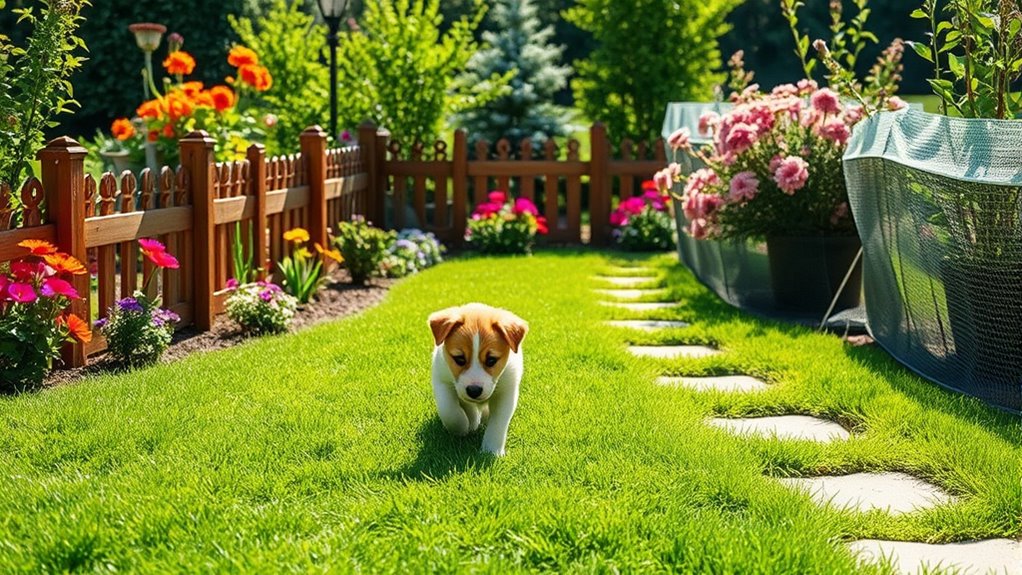
To puppy-proof your garden, start by identifying and removing toxic plants like lilies, azaleas, and certain herbs, or move them out of reach. Install secure fencing that’s high and sturdy enough to prevent escapes, with reinforced gaps and secure gates. Regularly inspect for weak spots or damage, and bury fencing underground to deter digging. Creating designated digging zones and supervising outdoor time helps protect plants and keep your puppy safe. Keep exploring for more tips to maintain a secure and healthy outdoor space.

Get pet supplies delivered free with Prime
- Fast, free delivery on millions of items
- Prime Video, Amazon Music and more included
- Member-only deals all year
Key Takeaways
- Identify and remove or relocate toxic plants like lilies and azaleas before allowing your puppy outside.
- Install secure, high fencing with sturdy latches to prevent escapes and reinforce weak spots.
- Create designated digging zones and use natural deterrents to protect plants and minimize unwanted digging.
- Regularly inspect fencing and garden areas for damage or hazards, repairing promptly as needed.
- Supervise outdoor time to ensure your puppy’s safety and prevent access to harmful plants or unsafe zones.
Your garden can be a safe and enjoyable space for your puppy, but it requires some preparation to prevent accidents and keep your pet healthy. One of the most important steps is inspecting your garden plants. Some common garden plants, like lilies, azaleas, and certain herbs, can be toxic if ingested by your puppy. Before allowing your pup outside, identify all the plants in your garden and research whether they are safe for dogs. Remove or relocate any potentially harmful plants out of reach. This proactive approach minimizes the risk of poisoning and ensures your puppy can explore freely without danger. Additionally, selecting plants with non-toxic properties can further reduce health risks for your puppy.
Inspect your garden plants regularly and remove any toxic species to keep your puppy safe.
Fencing solutions are essential for containing your puppy and preventing them from wandering into unsafe areas. A sturdy, secure fence acts as a physical barrier that keeps your puppy within the designated play area. Choose fencing materials that are durable and high enough so your pup can’t jump over or squeeze through. If your garden has gaps or spaces, reinforce them with additional fencing or mesh. Consider installing a gate that latches securely to prevent your puppy from escaping when you’re not watching. Fencing solutions also help protect your garden plants from being dug up or trampled, preserving your landscape and reducing cleanup.
When setting up fencing, think about the size and activity level of your puppy. Active pups may need taller fences to prevent jumping, while smaller breeds might require fencing with smaller gaps to avoid slipping through. Make sure the fencing is rooted firmly into the ground to prevent digging underneath. If your puppy has a habit of digging, bury a portion of the fencing a few inches underground or add concrete at the base to deter excavation. Regularly inspect your fencing for damage or weak spots, repairing them promptly to maintain a secure environment. This not only keeps your puppy safe but also protects your garden plants from accidental destruction.
In addition to fencing, you can create designated digging zones or use natural deterrents like rocks or plants that discourage digging in certain areas. Keeping your puppy busy with toys or training can also reduce digging behavior and curiosity around garden plants. Always supervise outdoor time, especially when introducing new plants or fencing solutions, to ensure your puppy is adapting well and remains safe. By combining careful plant selection with effective fencing solutions, you create a secure outdoor space where your puppy can enjoy exploring, playing, and growing alongside your garden.
As an affiliate, we earn on qualifying purchases.
Frequently Asked Questions
What Plants Are Toxic to Puppies in the Garden?
Some garden plants are toxic to puppies, so you need to be careful. Commonly, garden plant toxicity includes plants like azaleas, lilies, tulips, and daffodils, which can cause serious health issues if ingested. To keep your pup safe, choose puppy safe flora like marigolds, sunflowers, and pet-friendly herbs. Always research new plants for toxicity, and monitor your puppy closely to prevent accidental ingestion of harmful garden plants.
How Can I Prevent Puppies From Digging up Plants?
Ironically, your puppy’s natural curiosity makes it hard to keep them from digging up plants. To prevent this, you can set up garden fencing or plant barriers that act as physical deterrents. Bury chicken wire or rocks around vulnerable plants, and use scented deterrents to discourage digging. Remember, consistent supervision combined with these barriers helps your pup learn boundaries and keeps your garden intact.
Are There Specific Fencing Types Best for Puppy Containment?
You should choose wire mesh fencing or vinyl fencing for puppy containment. Wire mesh fencing is durable and allows visibility, making it easy to monitor your pup. Vinyl fencing offers a smooth, chew-proof surface, reducing the chances of your puppy biting through. Both options create a secure barrier, preventing your puppy from escaping or getting into unsafe areas. Select the fencing type that best fits your yard size and your puppy’s activity level.
How Do I Identify Garden Hazards That Could Harm Puppies?
Think of your garden as a treasure chest—hidden dangers lurk beneath every leaf. To spot hazards, you scan for sharp tools, toxic plants, and exposed wires. Check soil safety, ensuring no harmful chemicals or pests hide underground. Keep garden pest control measures in check, and remove debris or items your puppy could swallow. By staying vigilant, you turn your garden into a safe playground, free from surprises that could harm your curious pup.
What Should I Do if My Puppy Ingests a Toxic Plant?
If your puppy ingests a toxic plant, act quickly by contacting Poison Control for guidance. Don’t wait—call emergency services if your puppy shows severe symptoms like vomiting, difficulty breathing, or collapse. While waiting for help, administer emergency first aid, such as rinsing their mouth if possible. Stay calm, keep your puppy comfortable, and follow all instructions from professionals to guarantee the best outcome.
Conclusion
By puppy-proofing your garden, you protect your puppy from harm, prevent damage to your plants, and create a safe outdoor space. You guarantee safety, foster confidence, and promote responsible gardening. Remember to supervise your puppy, eliminate hazards, and secure your yard. With these steps, you build a garden that’s secure for your puppy and enjoyable for you. Ultimately, a well-prepared garden is a space where safety, happiness, and peace of mind come together harmoniously.
Halloween Picks
halloween
As an affiliate, we earn on qualifying purchases.