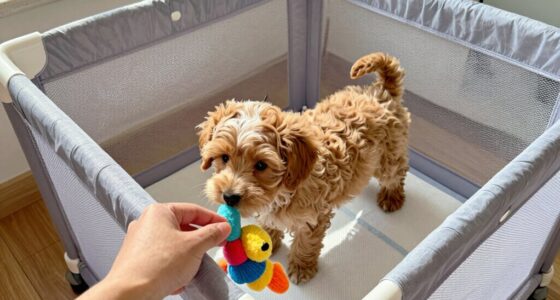

Establishing a consistent nap schedule is the key to helping your puppy behave better. Puppies need frequent rest to stay calm, focused, and less hyperactive. By observing their natural cues and guiding them to quiet spots after play or meals, you create a routine that prevents overstimulation and promotes better behavior. A predictable schedule also builds trust and security, setting your pup up for healthy habits. Keep this in mind, and you’ll discover ways to make the most of this simple secret.

Get pet supplies delivered free with Prime
- Fast, free delivery on millions of items
- Prime Video, Amazon Music and more included
- Member-only deals all year
Key Takeaways
- Establish a consistent nap routine aligned with natural energy cycles to promote calmness and better behavior.
- Observe your puppy’s cues to determine optimal times for naps after play or meals.
- Provide a quiet, comfortable space to encourage restful sleep and prevent overstimulation.
- Maintain regular sleep times to develop healthy habits and reduce hyperactivity.
- Prioritize sufficient rest to support overall development, focus, and better training outcomes.
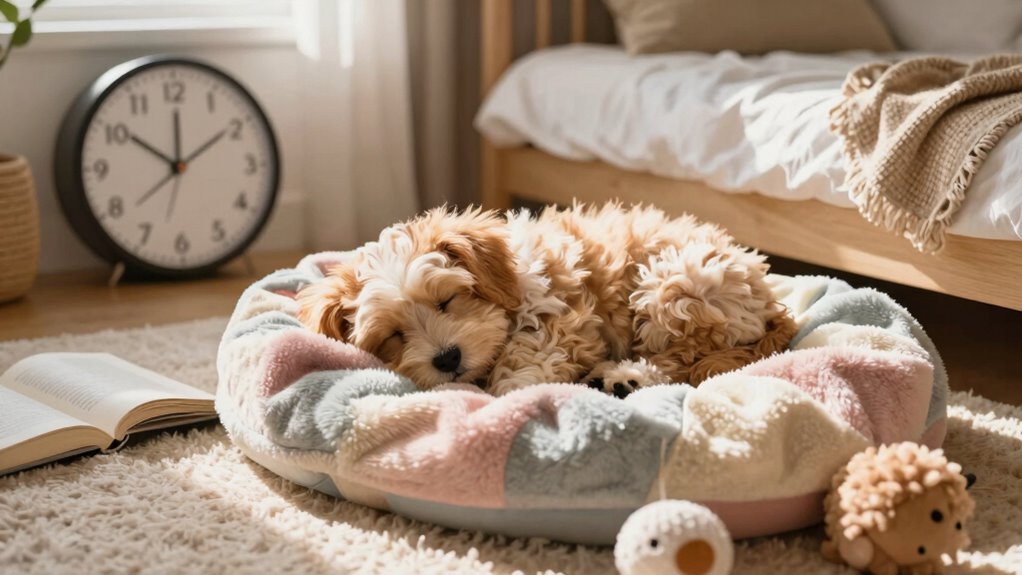
If you’ve ever struggled to stay alert during the day, you’re not alone—and the secret may lie in your nap schedule. Puppies, much like humans, thrive on proper rest, and their playful energy can quickly turn into chaos if they’re not getting enough sleep. Proper scheduling of daytime naps helps channel their energy in a healthy way, leading to better behavior overall. When puppies are well-rested, they’re more likely to be calm, focused, and easier to train.
The key is understanding that puppies have a natural need for frequent naps throughout the day, often more than their owners realize. These daytime naps aren’t just rest periods; they serve as an essential way for puppies to recharge their mental and physical batteries. When they’re deprived of these naps, their energy can become overwhelming, leading to destructive behaviors like chewing, barking, or hyperactivity. Conversely, if you prioritize consistent nap times, you help your puppy stay balanced and less prone to overstimulation, making training sessions more effective and less frustrating. Recognizing and accommodating their natural sleep needs can significantly improve their overall well-being. Establishing a structured routine not only benefits their health but also creates a sense of security and predictability for your puppy.
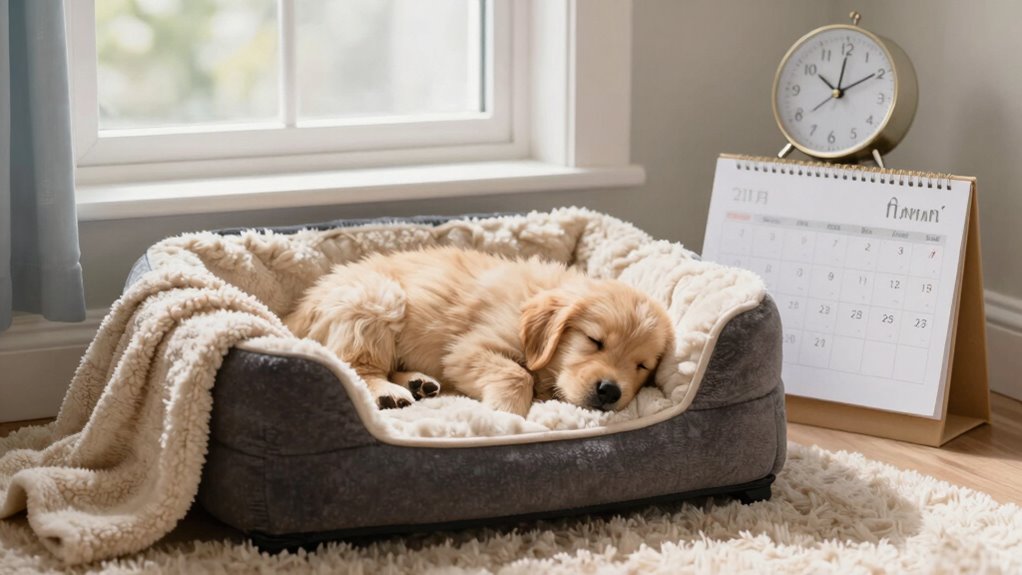
Creating a nap schedule involves observing your puppy’s natural rhythms and setting aside specific times for rest. For example, after play sessions or meals, your puppy may naturally feel sleepy. Recognizing these cues allows you to guide them to a quiet, comfortable spot where they can unwind. This structure not only reduces their playful energy in a manageable way but also helps them develop good habits and a sense of security. Consistency is essential—puppies thrive on routine, and a predictable schedule prevents them from becoming overtired or overly hyper. Additionally, understanding the benefits of proper sleep can motivate owners to prioritize these routines for better long-term health and behavior. Incorporating consistent timing into their daily routine ensures they develop healthy sleep habits that support their overall development and wellbeing. A well-planned nap schedule ultimately fosters healthier habits and supports their overall development.
As an affiliate, we earn on qualifying purchases.
Frequently Asked Questions
How Long Should Each Puppy Nap Last?
Puppy sleep needs vary, but generally, each nap should last about 30 minutes to an hour. Younger puppies tend to have shorter naps, around 20-30 minutes, while older puppies can nap longer. Pay attention to your puppy’s cues, as excessive sleep might mean boredom, and too little can cause fussiness. Maintaining a consistent nap schedule helps regulate their energy and improves overall behavior.
When Should I Start Implementing a Nap Schedule?
You should start implementing a nap schedule as soon as you bring your puppy home—because nothing screams “high-maintenance” like early grooming and socialization routines, right? Establishing regular nap times helps your pup stay calm during grooming sessions and makes socialization smoother. A consistent schedule prevents overtiredness, leading to better behavior. So, jump in early, and your puppy will thank you with better manners and less chaos during grooming or playdates.
Can Nap Schedules Prevent Puppy Anxiety?
Yes, a consistent nap schedule can help prevent puppy anxiety by providing predictability and comfort. When your puppy gets enough rest, they’re more receptive to socialization and less prone to teething discomfort, which often causes fussiness. By establishing regular nap times, you create a calming routine that reduces stress, helps your puppy feel secure, and supports smoother socialization experiences. This balance encourages better behavior and emotional stability.
What if My Puppy Refuses to Nap?
If your puppy refuses to nap, try adjusting their puppy playtime and feeding routines. Make sure play sessions aren’t too energetic or too close to nap times, which can overstimulate your pup. Establish a consistent schedule with calm activities before naps, and offer a cozy, quiet spot. Sometimes, a slight routine change helps your puppy settle down and rest better, promoting healthier behavior overall.
How Do Naps Influence Puppy Training Success?
Imagine your puppy happily playing, then suddenly zoning out for a nap—that’s when training success skyrockets. Naps help your puppy process what they’ve learned, making training more effective. When your pup is well-rested, they’re more receptive to training rewards and less distracted during puppy play. This consistency boosts their ability to learn commands and behavior, ultimately making your training sessions smoother and more successful.
Conclusion
By sticking to a consistent nap schedule, you’ll find that your puppy becomes calmer, better-behaved, and easier to train. Remember, patience and routine are your best friends in this journey. When you prioritize naps, you’re giving your pup the chance to reset and recharge, making it easier to handle their energy levels. After all, a well-rested puppy is worth its weight in gold — it’s the secret ingredient for a happy, harmonious home.
Halloween Picks
halloween
As an affiliate, we earn on qualifying purchases.