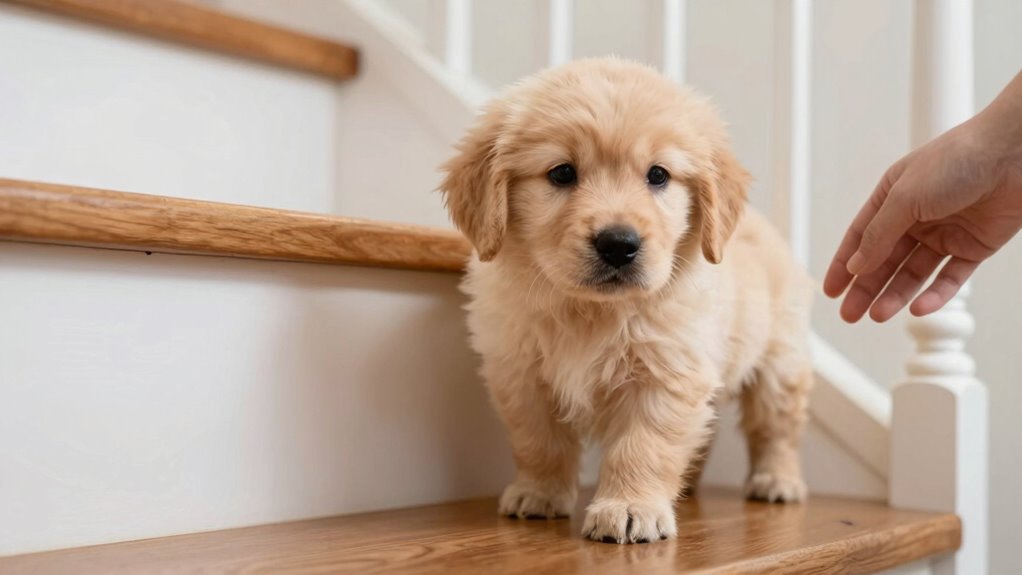

When your puppy is very young or unsteady, you should carry them to prevent falls and injuries. As they grow and gain confidence, start introducing stair practice slowly with guidance, treats, and positive reinforcement. Watch for signs of hesitation or fatigue; if your puppy struggles or seems unsure, it’s best to carry them until they’re more confident. With patience and proper training, your puppy will navigate stairs safely on their own—keep exploring for more helpful tips.

Get pet supplies delivered free with Prime
- Fast, free delivery on millions of items
- Prime Video, Amazon Music and more included
- Member-only deals all year
Key Takeaways
- Carry puppies during the first few weeks until they are steady and confident on stairs.
- Use barriers and supervision to prevent falls as they develop coordination skills.
- Gradually introduce stair practice with support, treats, and positive reinforcement.
- Revert to carrying if puppies show hesitation, unsteadiness, or fatigue during training.
- Progress to independent stair navigation only when they consistently demonstrate safety and confidence.

When it comes to your puppy’s safety, using stairs can pose a significant risk if not managed properly. Puppies are naturally curious and energetic, but their small size and developing coordination can make stair climbing dangerous. To ensure their safety, you need to think carefully about puppy stair safety and implement proper stair climbing techniques. Knowing when to carry your puppy and when to encourage them to practice climbing on their own can make a big difference in preventing injuries.
Initially, it’s best to avoid letting your puppy use stairs altogether, especially if they’re very young or have health concerns. Carrying your puppy when they need to go upstairs prevents falls and injuries. This is especially important during the first few weeks when their coordination is still developing. As your puppy grows and gains strength, you can start teaching them stair climbing techniques that promote safe navigation. Use slow, steady guidance, encouraging them to take small steps. Keep the environment safe by installing baby gates or barriers to restrict access until you’re confident they can climb safely. Ensuring proper supervision during stair training helps prevent accidents and builds trust. Additionally, providing a safe, non-slip surface on the stairs can give your puppy better traction and confidence.
Avoid stairs for young or unsteady puppies; carry them and use barriers until they can safely climb on their own.
When you do start practicing stair climbing techniques, do it gradually. Use treats and praise to motivate your puppy, making the experience positive. Keep the sessions short to prevent fatigue and avoid pushing them beyond their comfort zone. If your puppy shows hesitation or struggles, it’s wise to carry them rather than forcing them to continue. This not only protects their safety but also builds their confidence gradually. Remember, patience is key; rushing can cause fear or injury. Incorporating consistent training can help reinforce safe stair behaviors and improve their skills over time.
As your puppy becomes more comfortable with stairs, observe their behavior closely. If they seem hesitant or unsteady, it’s better to carry them again temporarily until they build more strength and confidence. Always use a firm but gentle grip, supporting their chest and hindquarters. This ensures they feel secure and reduces the likelihood of slipping. Reinforce positive stair climbing behaviors with praise and treats, making the experience enjoyable and stress-free for your puppy. Consistent practice and positive reinforcement will help your puppy develop safe stair navigation skills over time.
Ultimately, the decision to carry or practice stair climbing should depend on your puppy’s age, health, and confidence level. Regularly assess their progress and adjust your approach accordingly. When in doubt, err on the side of caution by carrying your puppy, especially in the beginning. Over time, with consistent practice and patience, they’ll learn to navigate stairs safely and confidently, making their environment safer for everyone. Remember, understanding puppy development and safety considerations is crucial for a smooth transition to independent stair climbing.
As an affiliate, we earn on qualifying purchases.
Frequently Asked Questions
How Do I Train My Puppy to Use Stairs Safely?
To train your puppy to use stairs safely, start with puppy stair training on safe stair materials like carpet or rubber. Encourage your puppy with treats and praise, guiding them slowly up and down. Keep sessions short and positive, and avoid rushing. Use a secure harness if needed, and always supervise. With patience and consistency, your puppy will learn to navigate stairs confidently and safely.
What Are Signs My Puppy Is Afraid of Stairs?
If your puppy shows signs of fear of stairs, you’ll notice stair anxiety in their behavior. They might hesitate or back away, whine, or freeze at the bottom or top. Watch for trembling paws, avoiding stairs altogether, or trying to escape. These signs indicate puppy fear of stairs. To help, go slow, use treats, and encourage confidence, ensuring your puppy feels safe and supported during stair training.
Are There Specific Stairs Better for Puppies?
Think of your puppy’s stairs as a gentle river guiding them home. Opt for stairs with slip-resistant materials like rubber or carpet to keep paws steady. Avoid shiny or slick surfaces that can cause slips. Also, choose stairs in well-lit areas, so your pup can see each step clearly. These safer options help your puppy build confidence and prevent accidents, making stair time a positive experience.
How Can I Prevent My Puppy From Slipping on Stairs?
To prevent your puppy from slipping on stairs, make sure the stairs have non-slip surfaces or add grip tape. Keep your puppy’s nails well-trimmed to avoid slipping, and use puppy nutrition to support healthy paw pads and coat. Regular grooming helps keep paws clean and traction good. Always supervise and guide your puppy, and consider using a harness for extra control. These steps keep your puppy safe and confident on stairs.
When Should I Start Teaching My Puppy to Navigate Stairs?
You should start teaching your puppy to navigate stairs once they’ve had all their vaccinations and are comfortable on flat surfaces. Focus on stair safety by introducing puppy climbing gradually, encouraging confidence, and supervising closely. Begin with short sessions, use treats as motivation, and carry them if they seem unsure or scared. This approach helps prevent accidents and builds their stair climbing skills safely.
Conclusion
Think of your puppy’s safety as a delicate dance—knowing when to lift them and when to let them find their footing. By understanding when to carry your pup and when to let them practice stairs safely, you guide their confidence to grow like a steady beat. With patience and care, you build a harmony that keeps your puppy secure and strong, turning every step into a confident stride toward their happy, healthy life.
Halloween Picks
halloween
As an affiliate, we earn on qualifying purchases.