
To start clicker training, begin by pairing the clicker sound with treats so your dog associates it with a reward. Keep sessions short and positive, clicking immediately when your dog performs a desired behavior. Use consistent commands and be patient as your dog learns at their own pace. Reinforce good behaviors regularly and gradually add distractions to challenge your dog. If you want a simple step-by-step guide, you’ll discover more effective techniques ahead.
Key Takeaways
- Pair the clicker sound with treats to create a positive association before training begins.
- Use consistent commands, tone, and clicker sound to reinforce learning and avoid confusion.
- Click immediately when your dog performs a desired behavior, then reward to mark success.
- Keep training sessions short, positive, and gradually increase difficulty with distractions and new environments.
- Reinforce learned behaviors regularly and avoid punishment to promote confident, happy learning.

Have you ever wondered how to teach your dog new commands effectively and positively? Clicker training is a fantastic method that combines clear communication with positive reinforcement to help your dog learn quickly and happily. The key to success with clicker training is understanding how to use the clicker as a precise marker for good behavior, paired with consistent training routines. When you’re consistent, your dog quickly learns what behaviors earn praise, making training sessions more effective and enjoyable for both of you.
To start, you’ll want to introduce your dog to the clicker. Keep sessions short and positive, and every time your dog does something you like—like sitting or staying—click the clicker immediately and follow up with a treat. This pairing of the click sound with a reward helps your dog associate the clicker with good things. Over time, the click becomes a signal that they’ve done something right and that a reward is coming. Remember, the key to positive reinforcement is always rewarding desired behaviors, so your dog understands exactly what you’re asking for.
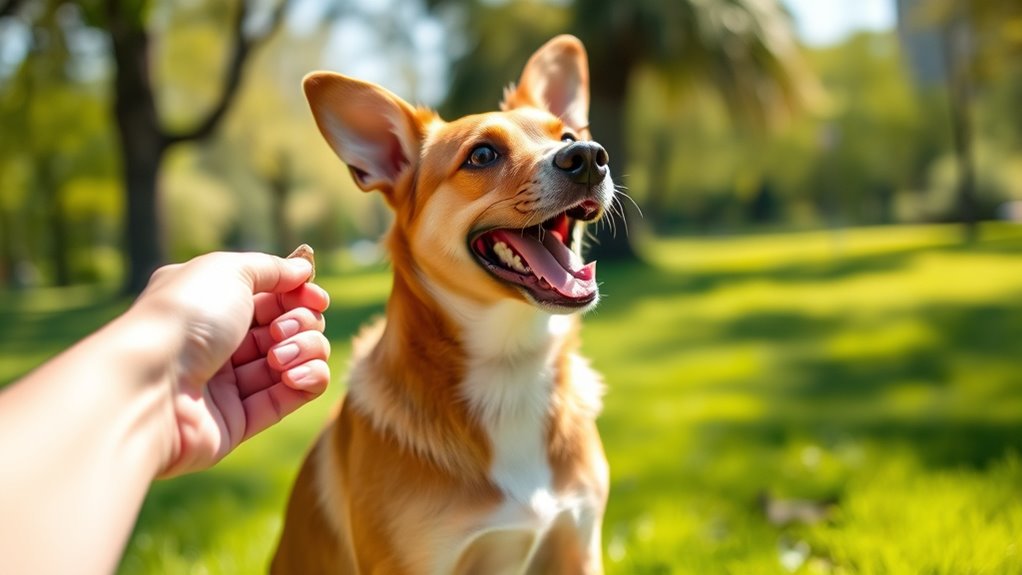
Start training by pairing the clicker with treats for desired behaviors like sitting or staying.
Training consistency is crucial in clicker training. Use the same commands, the same tone of voice, and the same clicker sound each time. This consistency helps your dog recognize patterns and understand expectations faster. If you inadvertently reward behaviors you don’t want, it can confuse your dog and slow down progress. So, be deliberate and steady with your cues and rewards. Practicing daily, even for just a few minutes, helps reinforce what your dog is learning, making the commands stick more effectively.
When your dog begins to understand a command, gradually increase the difficulty by adding distractions or practicing in different environments. Always be patient and reinforce good behavior with your clicker and treats. If your dog gets distracted or makes a mistake, don’t punish—simply return to a simple step and reward again. This positive approach keeps training fun and stress-free, encouraging your dog to stay engaged and enthusiastic to learn.
Frequently Asked Questions
How Long Does It Typically Take to See Results With Clicker Training?
You might see results with clicker training in just a few days if you’re consistent with your timing and patience. It’s important to reward your dog immediately after the desired behavior to reinforce learning. Keep sessions short and frequent, and stay patient—every dog learns at its own pace. With steady effort, you’ll notice improvements, and your dog will start connecting the click to positive outcomes.
Can Clicker Training Be Used for Aggressive or Fearful Dogs?
You can absolutely use clicker training for aggressive or fearful dogs. It’s a powerful tool for behavior modification and confidence building, helping these dogs feel safe and secure. Like a gentle lighthouse guiding them through stormy seas, clicker training provides clear, consistent cues that encourage positive responses. With patience and consistency, you’ll see remarkable progress as your dog learns to trust and calm down.
Is Clicker Training Effective for Puppies Under 8 Weeks Old?
Yes, clicker training can be effective for puppies under 8 weeks old when you use age-appropriate methods. At this early stage, focus on gentle socialization and simple commands, reinforcing positive behaviors with the clicker. Keep sessions short and positive, helping your puppy associate the clicker with good things. This early socialization sets a strong foundation for future training and builds trust between you and your puppy.
What Common Mistakes Should Beginners Avoid in Clicker Training?
Did you know that 60% of new dog owners face confusion from clicker misconceptions? To avoid common mistakes, be patient with training and resist rushing the process. Many beginners mistake thinking a click instantly fixes behavior, but consistency and timing are key. Stay calm, reward immediately, and remember that training patience builds trust and results. Avoid overdoing sessions, and always pair the click with a treat.
How Do I Transition From Clicker Training to Verbal Commands?
To shift from clicker training to verbal commands, start by using consistent verbal cues that match the clicker signals. Gradually introduce the verbal cue just before your dog performs the desired behavior, pairing it with the clicker initially. Over time, reduce the reliance on the clicker, emphasizing verbal cue consistency. This way, your dog learns to associate the verbal command with the behavior, making the transition smooth and effective.
Conclusion
By now, you’re ready to start clicker training with confidence. Did you know that dogs trained with clickers are 60% more likely to learn commands faster? Remember, consistency and patience are key. Keep sessions fun and positive, and you’ll build a stronger bond with your furry friend. With these simple steps, you’ll see progress in no time. Happy training—your dog’s best behavior is just a click away!