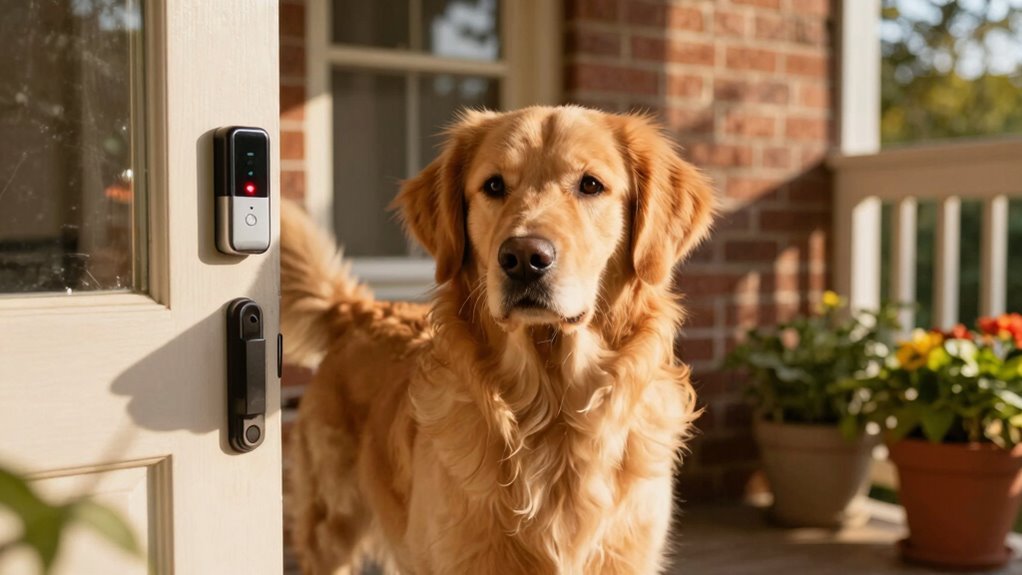

To help your dog settle when the doorbell rings, establish a consistent routine with plenty of positive reinforcement. Practice desensitizing your dog by playing recordings of the doorbell at low volume and rewarding calm behavior, gradually increasing the volume over time. Use commands like “quiet” and reward peaceful responses to reinforce calmness. Patience and repetition are key. Keep consistent boundaries, and over time, your dog will learn to stay relaxed. There’s more to discover on how to create lasting calmness.

Get pet supplies delivered free with Prime
- Fast, free delivery on millions of items
- Prime Video, Amazon Music and more included
- Member-only deals all year
Key Takeaways
- Establish a consistent routine to help dogs anticipate doorbell sounds and reduce anxiety.
- Use desensitization techniques, gradually exposing dogs to doorbell sounds paired with positive reinforcement.
- Practice approaching the door repeatedly, rewarding calm behavior and using commands like “quiet.”
- Manage barking triggers by observing specific stimuli and controlling exposure through gradual desensitization.
- Maintain humane, positive reinforcement-based training to promote long-term calmness and reduce excessive barking.

When your doorbell keeps barking, it can quickly become a frustrating nuisance for both you and your visitors. That constant noise not only disrupts your peace but also leaves guests feeling unwelcome. To address this, establishing a routine that helps your dog settle is essential. A key part of this routine is training consistency, which ensures your dog understands what behavior is expected and reduces their anxiety about visitors. Consistent training helps your dog recognize barking triggers—those specific situations, sounds, or sights that prompt them to bark excessively. By identifying these triggers, you can better manage their reactions and gradually teach them to remain calm when the doorbell rings.
First, you need to observe what causes your dog to bark. Is it the sound of the doorbell itself? Or perhaps the movement of visitors approaching your door? Once you pinpoint the barking triggers, you can begin desensitizing your dog to them. For example, you might play recordings of a doorbell sound at a low volume while rewarding your dog for staying quiet. Over time, increase the volume gradually, always pairing the sound with positive reinforcement. This process, when done consistently, helps your dog associate the doorbell noise with calmness rather than barking. The key is to stick to a predictable schedule, reinforcing calm behavior each time, which builds a routine your dog can rely on. Incorporating behavioral management techniques can further enhance your training efforts and promote a more peaceful environment. Establishing training routines helps your dog understand what to expect, reducing their overall stress and barking tendencies.
Training consistency is crucial because dogs thrive on routine and clear boundaries. If you only occasionally work on desensitization or fail to reinforce calm behavior, your dog might become confused or anxious, making the barking worse. Every time someone approaches your door, practice your routine—whether that’s ignoring the barking, giving a command like “quiet,” or rewarding calmness. Be patient and persistent; change won’t happen overnight, but consistent effort pays off over time. When your dog learns that barking doesn’t get attention or results in the excitement they seek, their urge to bark at the doorbell diminishes. Additionally, understanding animal welfare principles helps ensure your training methods are humane and effective, promoting your dog’s overall well-being. Consistent training grounded in positive reinforcement is essential for long-term success. Remember that creating a calm environment and providing mental stimulation can also help reduce overall anxiety and barking tendencies.
Products Worth Considering

Fi Series 3+ GPS Dog Collar & Tracker, Membership Required, Gray Large

PETLIBRO RFID Automatic Cat Feeder with Collar Sensor

PetSafe Electronic Pet Door – Collar Key Sensor – Large (up to 100 lb)
As an affiliate, we earn on qualifying purchases.
Frequently Asked Questions
How Long Does Doorbell Training Typically Take?
Doorbell training usually takes a few weeks, but it varies depending on your dog’s temperament. During this time, you should incorporate indoor exercises that reinforce calm behavior and practice socialization tips to reduce anxiety. Consistency is key—practice regularly, reward calm responses, and gradually expose your dog to doorbell sounds. With patience and positive reinforcement, most dogs learn to settle quickly, making your home more peaceful and enjoyable.
Can Doorbell Training Reduce Overall Barking?
Yes, doorbell training can reduce overall barking by addressing triggers like doorbell anxiety. Studies show that consistent routines decrease barking by up to 50%. When you train your dog to stay calm during doorbell rings, you help them manage anxiety and reduce unnecessary barking triggers. This routine not only calms your dog but also creates a more peaceful home environment, making barking less frequent and intense over time.
Is Doorbell Barking More Common in Certain Breeds?
Yes, doorbell barking is more common in certain breeds, especially those with breed tendencies toward alertness or guarding. Breeds like terriers, shepherds, and retrievers often bark more at triggers like the doorbell because they’re naturally vigilant. Understanding your dog’s breed tendencies helps you recognize barking triggers and implement strategies to reduce excessive barking, such as training routines or calming techniques, making your home more peaceful.
What if My Dog Continues to Bark Excessively?
If your dog continues to bark excessively, consider gentle behavior management strategies combined with environmental enrichment. You might introduce engaging toys or activities to redirect their focus and reduce the barking tendency. Consistency is key; reinforce calm behavior and gradually desensitize your dog to triggers. If needed, seek advice from a professional trainer to develop a tailored plan that helps your dog feel more secure and less inclined to bark excessively.
Are There Specific Treats That Work Best for Training?
You should choose treats that your dog finds highly motivating, like small pieces of cheese or chicken, for effective training. Treat alternatives like toys or praise can also work if your dog responds well. Remember, training consistency is key—use the same treats and routines to reinforce good behavior. This approach helps your dog associate calmness with positive rewards, making it easier for them to settle when the doorbell rings.
Conclusion
Now that you understand the doorbell’s demand and the dog’s distress, you can design a delightful, disciplined routine. Consistent cues, calming commands, and gentle reinforcement create a secure space where your dog feels safe and settled. Remember, patience and persistence pave the path to peace, transforming barking into blissful stillness. Embrace these effective efforts, and watch your worry melt away as your loyal companion calmly copes with the commotion, creating a calmer, happier home for all.