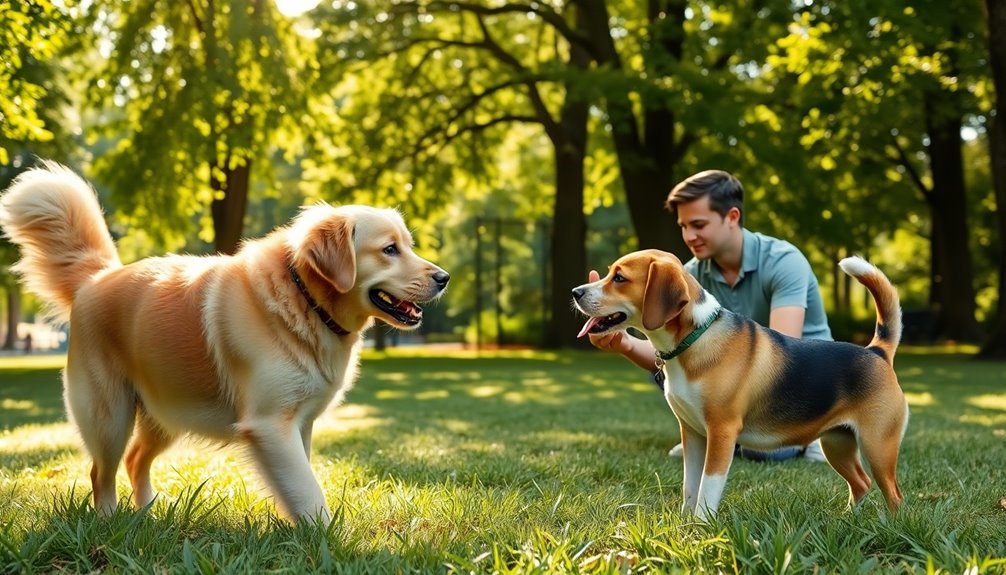
To reduce stress in reactive dogs through fear-free training, focus on recognizing their body language to spot early signs of discomfort. Use positive reinforcement like treats, praise, and toys to reward calm behavior, creating a relaxed environment. Keep sessions short and avoid rushing or forcing your dog into stressful situations. Building trust and maintaining patience are key. If you want practical tips to improve your approach, there’s much more to explore here.
Key Takeaways
- Recognize early stress signals like yawning or lip licking to adjust training approaches promptly.
- Use positive reinforcement with treats and praise to encourage relaxed behaviors.
- Keep training sessions short and stop if signs of stress appear to prevent overwhelm.
- Maintain a calm environment and gentle handling to build trust and reduce anxiety.
- Focus on building a strong bond through consistent, compassionate interactions to foster confidence.

Have you ever wondered how to help your pet feel more comfortable and less anxious during training? It’s a common concern, especially when working with reactive dogs that might become stressed or overwhelmed easily. Understanding dog body language is key. By observing how your dog communicates through their posture, tail position, ear placement, and overall demeanor, you can gauge their emotional state. For example, a stiff body, tucked tail, or pinned-back ears often signal discomfort or fear. Recognizing these signs early allows you to adjust your approach, making training sessions less intimidating and more supportive.
Recognizing your dog’s body language helps create a calm, supportive training environment.
One of the most effective strategies in fear-free training is using positive reinforcement. Instead of punishing undesirable behaviors, you reward your dog for calm, relaxed responses. This approach helps your dog associate training with pleasant experiences rather than stress or punishment. When your dog shows signs of calmness or engagement, immediately give them a treat, praise, or a favorite toy. This reinforces the idea that good things happen when they’re relaxed and receptive. Over time, positive reinforcement builds confidence and reduces fear, making training sessions more enjoyable for both of you.
To create a stress-free environment, start with short, manageable training sessions. Keep these sessions upbeat and positive, stopping before your dog shows signs of becoming overwhelmed. If your dog exhibits signs of stress—such as yawning, lip licking, or avoiding eye contact—pause and give them a break. This helps prevent escalation of anxiety and encourages your dog to feel safe. Incorporate plenty of praise and treats when they remain calm, reinforcing that staying relaxed is rewarding. Remember, patience is essential. Every dog learns at their own pace, so avoid rushing or forcing them into situations that cause fear.
Using positive reinforcement also includes choosing the right treats and rewards that your dog finds genuinely motivating. Whether it’s a small piece of cheese, a favorite toy, or enthusiastic praise, make sure it’s something your dog values. Consistency is important, so use the same cues and rewards to help your dog understand what’s expected. Pairing these rewards with calm, confident handling will help your dog build positive associations with training sessions.
Additionally, understanding preppy dog names can be a fun way to build rapport and show your dog’s personality during training. In the end, a fear-free approach isn’t just about avoiding stress; it’s about creating a trusting relationship where your dog feels safe and supported. By paying attention to their body language and emphasizing positive reinforcement, you foster an environment where your reactive dog can learn and grow without fear. This gentle, compassionate approach not only improves training outcomes but also strengthens your bond, making training a mutually enjoyable experience.
Frequently Asked Questions
How Do I Know if My Dog Is Truly Reactive?
You know your dog is truly reactive if you notice body language signs like stiffening, growling, or lunging when they encounter triggers. Pay attention to signals such as raised hackles, bared teeth, or intense staring. These behaviors show your dog is overwhelmed or uncomfortable. Recognizing these signs helps you understand their triggers and respond calmly, reducing stress and making training more effective.
Can Fear-Free Training Work for Aggressive Dogs?
Yes, fear-free training can work for aggressive dogs. You use positive reinforcement to reward calm behavior and gradually desensitize your dog to triggers. This approach helps build trust and reduces aggression over time. By patiently applying gradual desensitization, you create a safe environment where your dog learns to feel secure without fear or stress. Consistency and patience are key to success with aggressive dogs using fear-free methods.
What Are Signs of Stress in Reactive Dogs?
You’ll notice signs of stress in reactive dogs through their body language and stress signals. They might stiffen, pant, or lick their lips excessively. Watch for growling, barking, or lunging, which indicate heightened arousal. Pupils may dilate, ears flatten, or tail tuck. These stress signals show your dog is overwhelmed, so responding calmly and providing a safe space helps reduce their anxiety and promotes relaxation.
How Long Does Fear-Free Training Typically Take?
Wondering how long fear-free training takes? It varies depending on your dog’s specific needs and progress. Typically, training duration can span from a few weeks to several months. Regular progress assessment helps you gauge improvements and adjust techniques accordingly. Remember, patience is key—each dog learns at its own pace. Are you committed to consistent, gentle training? That dedication will make a significant difference in reducing your reactive dog’s stress.
Are There Any Breeds That Benefit Most From This Approach?
Certain breeds with heightened sensitivities, like Border Collies, Huskies, and Doberman Pinschers, often benefit most from fear-free training. You’ll find that their breed sensitivities make them more prone to stress, but their training adaptability allows you to tailor methods to their needs. By focusing on positive reinforcement and gentle handling, you help these dogs feel safer and more confident, leading to better progress and a happier relationship.
Conclusion
So, after all this fuss about reducing stress in reactive dogs, you might think it’s complicated. But really, the irony is that gentle, fear-free training often works best—yet many overlook it, thinking harsher methods are faster. In the end, you’ll find that patience, kindness, and understanding aren’t just good for your pup—they’re the easiest and most effective tricks up your sleeve. Who knew that softness could actually be your biggest strength?