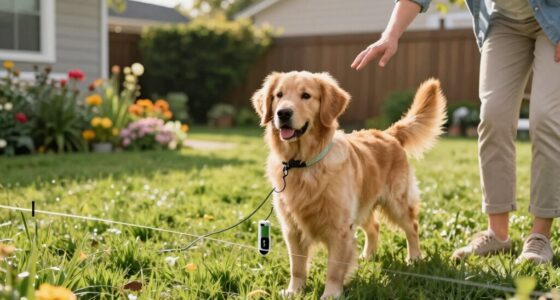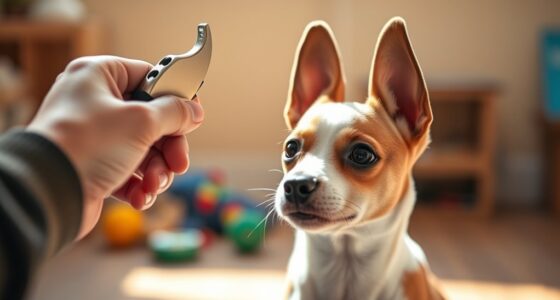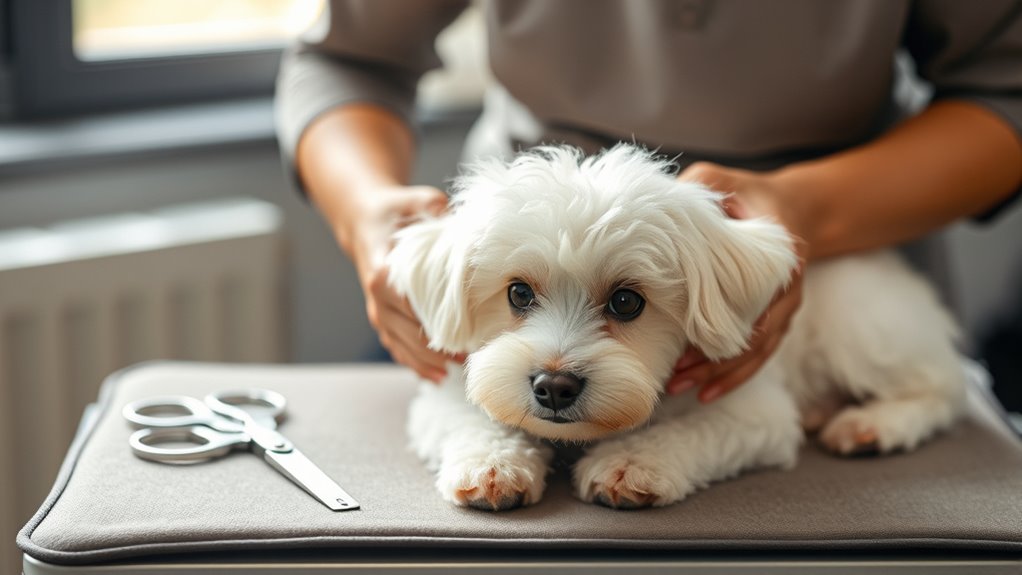

To condition your dog for grooming, start by gradually introducing tools like brushes and trimmers, letting your dog sniff and explore them calmly. Use positive reinforcement like treats and praise during short, relaxed sessions, and stop if your dog shows signs of stress. Regular practice helps build trust and reduces anxiety over time. If you keep consistent and patient, you’ll find grooming becomes much easier—and there’s much more to learn on how to master these steps effectively.
Key Takeaways
- Introduce grooming tools gradually, allowing the dog to sniff and explore them to build familiarity and reduce fear.
- Use positive reinforcement, treats, and praise during short, relaxed grooming sessions to create positive associations.
- Handle paws and nails gently during calm moments, rewarding the dog to ease anxiety before actual trimming.
- Keep grooming sessions consistent and brief to prevent stress and build trust over time.
- Stay calm, patient, and attentive to the dog’s comfort, revisiting steps if signs of stress or discomfort appear.
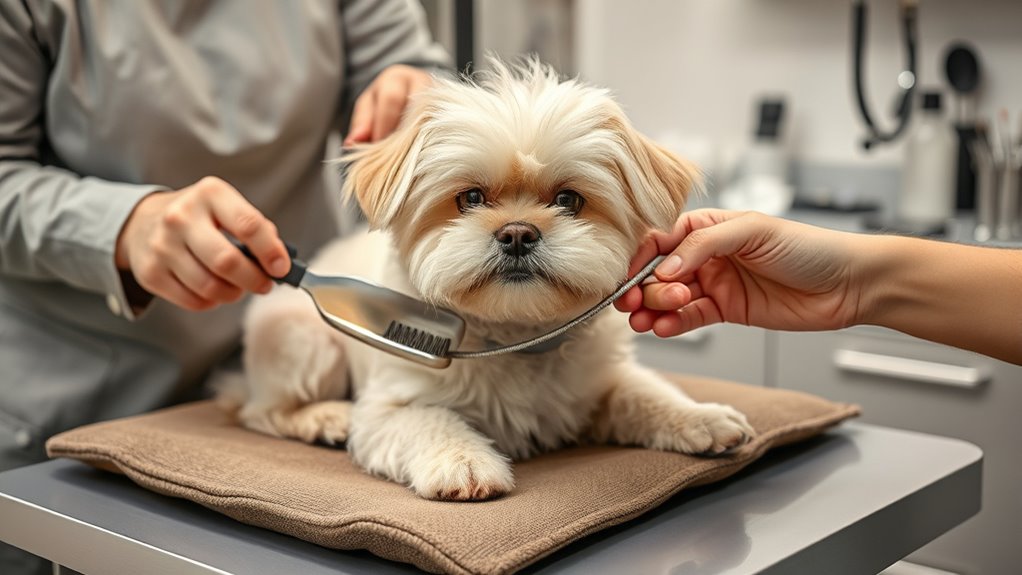
Training your pet for grooming is an essential step to make certain a smooth and stress-free experience for both of you. When you start early, your dog becomes familiar with the process, reducing their dog anxiety and making grooming sessions less intimidating. The key is to introduce grooming tools gradually and positively, so your dog associates them with good experiences rather than fear. Begin by letting your dog sniff and investigate the grooming tools, such as brushes, combs, and nail trimmers. Handle each tool gently, allowing your dog to get comfortable with their presence before you start using them. This initial exposure helps lessen any apprehension and builds trust.
Start grooming early by introducing tools gently to build trust and reduce your dog’s anxiety.
Once your dog is comfortable with the grooming tools, start incorporating them into short, positive sessions. For example, gently brush your dog’s coat for a few seconds, praising and rewarding them with treats afterward. Keep the sessions relaxed and stop before your dog shows signs of discomfort or stress. Consistency is vital, so aim for daily or every-other-day practice, gradually increasing the duration as your dog becomes more at ease. Using treats and praise throughout the process reinforces positive associations with grooming, making it less likely for your dog to develop grooming-related anxiety. Additionally, understanding the hours of operation of local grooming salons or stores can help you plan your training schedule more effectively.
Nail trims are often a source of stress, but with training, you can make them easier for your dog. Begin by touching their paws gently during calm moments, rewarding them each time they allow it. Introduce the nail trimmers gradually, showing them to your dog and letting them sniff and explore. Once your dog is comfortable, gently clip a small portion of a nail, and immediately praise and reward. Over time, increase the length of the trims, but always prioritize your dog’s comfort and stop if they show signs of distress. Patience and positive reinforcement are essential; rushing can increase dog anxiety and make future grooming sessions more challenging.
Throughout the training process, stay calm and patient. If your dog becomes anxious, pause and revisit earlier steps, giving them time to regain confidence. Remember, the goal is to create a positive, trusting relationship with grooming tools and procedures. By taking these steps, you’ll help your dog feel more secure during grooming, reducing stress and setting the stage for more manageable, stress-free grooming sessions in the future.

3PCS Self Cleaning Slicker Brush & Pet Grooming Rake & Flea Comb for Dogs, Cats and Horses | Double-Sided Dematting Comb & Skin Friendly Deshedding Grooming Tool | Premium Pet Supplies (Blue)
【Professional Pet Grooming Kit 】3 Pet grooming tools selected by pet lovers, which can meet daily all the…
As an affiliate, we earn on qualifying purchases.
As an affiliate, we earn on qualifying purchases.
Frequently Asked Questions
How Long Does It Typically Take to Train a Dog for Grooming?
It usually takes several weeks to a few months to train your dog for grooming, depending on their age and temperament. You need to establish a consistent grooming schedule and practice patience during each session. Gradually introduce brushes and nail trimmers, rewarding your dog for calm behavior. With steady, positive reinforcement, your dog will become comfortable with grooming routines, making the process smoother for both of you over time.
What Are Signs My Dog Is Stressed During Grooming Training?
You’ll notice your dog is stressed during grooming training if their body language cues show tension, like stiff posture, pinned-back ears, or avoiding eye contact. Vocal signals such as whining, growling, or heavy panting also indicate discomfort. Keep an eye on these signs, and if you notice them, pause the session, offer reassurance, and gradually reintroduce grooming to help your dog feel more secure and relaxed.
Can Grooming Training Be Effective for Senior Dogs?
Grooming training can definitely be effective for senior dogs. For example, a 12-year-old Labrador adapted well to brushing and nail trims after gentle, consistent sessions. Seniors can learn new routines with patience, helping them feel more comfortable. Focus on gradual exposure and positive reinforcement, making grooming a part of their lifelong routine. With time, your senior dog can stay relaxed and cooperative during grooming sessions.
How Do I Handle Aggressive Behavior During Grooming Training?
When handling aggressive behavior during grooming training, stay calm and use positive reinforcement to reward calm behavior. Employ desensitization techniques by gradually introducing grooming tools and routines, allowing your dog to build confidence. If aggression occurs, calmly pause and give your dog a break before resuming. Consistency and patience help your dog feel safe, making future grooming sessions smoother and reducing aggressive responses over time.
Are There Specific Breeds That Require Special Grooming Training Techniques?
Some breeds do require breed-specific grooming techniques, so you should adapt your grooming approach accordingly. For example, terriers need careful hand-stripping, while poodles benefit from regular trimming to maintain their coat. By understanding breed-specific grooming, you guarantee your dog feels comfortable and safe. You’ll need to adapt your grooming technique to match each breed’s needs, helping them stay relaxed and making grooming sessions more successful.

LOPSIC Whisper Quiet Dog Nail Grinder with LED Light, Safe & Stress-Free for Sensitive Dogs of All Breeds & Sizes, 3 Grinding Bits, 3-Speed, Pet Nail Trimmers, Rechargeable Painless Grooming Kit
𝐖𝐡𝐢𝐬𝐩𝐞𝐫 𝐐𝐮𝐢𝐞𝐭 & 𝐒𝐭𝐫𝐞𝐬𝐬-𝐅𝐫𝐞𝐞 𝐆𝐫𝐨𝐨𝐦𝐢𝐧𝐠: Ultra-quiet and low-vibration design keeps sensitive dogs calm. No more fear, shaking, or…
As an affiliate, we earn on qualifying purchases.
As an affiliate, we earn on qualifying purchases.
Conclusion
Now that you’ve conditioned your pup, brushing and nail trims become as easy as a walk in the park—if that park had a grooming salon and a tiny, furry, nail-phobic creature. Imagine your dog happily sitting still, practically begging for their next grooming session, while you wield the brush like a magic wand. With patience and practice, you’ll turn grooming from a battle into a bonding ritual—no more chaos, just cuddles and clean paws.

oneisall Dog Clipper Low Noise, Dog Grooming Kit with Rechargeable, Pet Shaver Cordless Electric Quiet Hair Clipper Set for Dogs Cats Pets(Gold)
Below 50 dB: The Oneisall silent motor reduces noise by 17%, ensuring that even the most sensitive pets…
As an affiliate, we earn on qualifying purchases.
As an affiliate, we earn on qualifying purchases.

Heusom Silent Groom Pro Pet Nail Grinder | Whisper Quiet Claw Trimmer for Dogs, Cats and Other Animals | Safe & Stress Free Nail Grooming, Ideal for Sensitive Dogs of All Breeds & Sizes
ULTRA QUIET OPERATION. Producing only 30–37 dB, this electric grooming tool works so silently it’s barely noticeable, helping…
As an affiliate, we earn on qualifying purchases.
As an affiliate, we earn on qualifying purchases.