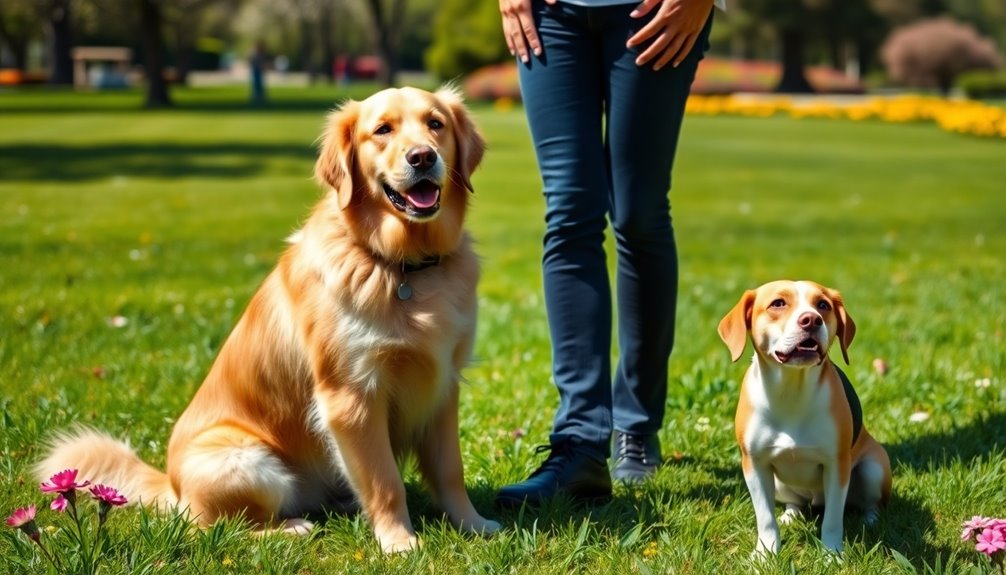
To teach your dog patience and focus, start with basic commands like “wait,” “stay,” and “leave it,” practicing them in various environments. Use positive reinforcement to reward calm behavior and gradually introduce new stimuli at a comfortable pace. Consistent daily training, especially during walks and social situations, helps curb impulsive reactions. Over time, your dog learns to respond calmly instead of impulsively, and you’ll discover simple strategies to strengthen their self-control along the way.
Key Takeaways
- Use commands like “wait,” “stay,” and “leave it” consistently across different situations to promote self-control.
- Reward calm, focused behavior with praise or treats to reinforce patience and impulse regulation.
- Incorporate impulse control exercises into daily routines, especially during walks and social interactions.
- Practice gradual exposure to new stimuli, rewarding calm responses to help dogs learn emotional regulation.
- Be patient and persistent, understanding that consistent training leads to improved patience and focus over time.
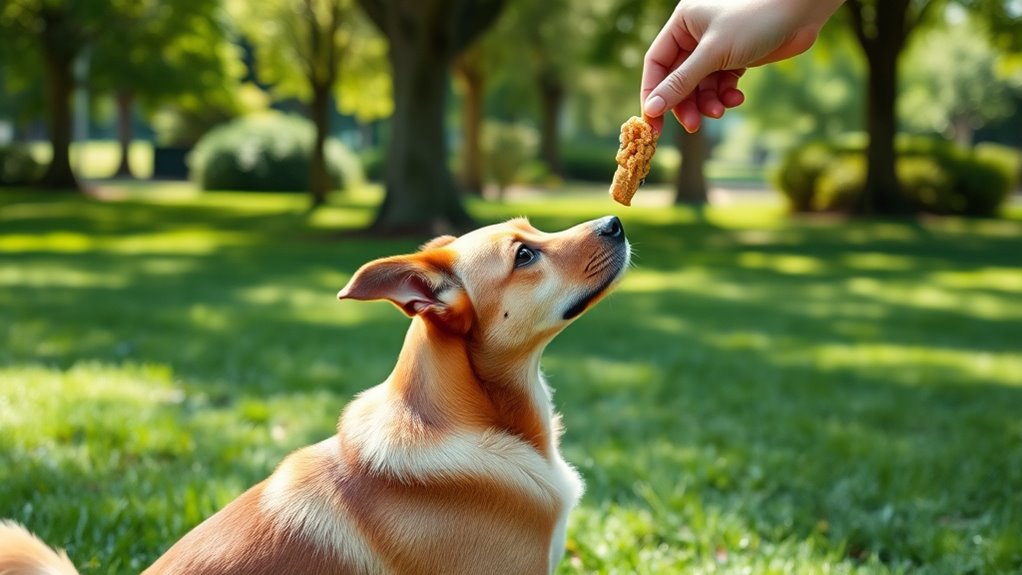
Have you ever acted impulsively and wished you had better control over your reactions? Teaching your dog impulse control is vital for their safety and your peace of mind. When it comes to dog socialization, patience is key. Proper socialization involves exposing your dog to new people, animals, and environments gradually, allowing them to learn how to remain calm and composed. If your dog gets overly excited or anxious around other dogs or strangers, it’s a sign they need help developing better impulse control. You can start by introducing your dog to new situations at a comfortable pace, rewarding calm behavior, and avoiding overwhelming scenarios. This helps them learn to regulate their emotions and respond appropriately, rather than reacting impulsively. Recognizing emotional dysregulation in your dog can guide your training approach and improve their behavior over time.
Another essential aspect of impulse control is mastering leash manners. Many dogs pull or lunge when they see something interesting, which can be dangerous and frustrating. Teaching leash manners involves training your dog to walk calmly beside you without pulling or darting off. When your dog pulls, stop walking and wait until they return to your side or loosen the leash. Reward them when they walk beside you calmly. This teaches your dog that staying focused and patient results in positive reinforcement. Consistency is vital—every walk is an opportunity to reinforce good leash manners and curb impulsive behaviors. Over time, your dog will learn that calm walking is more rewarding than pulling or reacting impulsively to stimuli.
Building impulse control requires patience, repetition, and clear communication. Use commands like “wait,” “stay,” and “leave it” to help your dog develop self-control. Practice these commands in different environments to guarantee they generalize the behavior beyond the training setting. When your dog successfully demonstrates impulse control, praise generously. This positive reinforcement encourages them to repeat the desired behavior. Remember, progress may be slow, especially if your dog is naturally excitable, but persistence pays off. You’re helping your dog become more patient, focused, and obedient, which enhances their ability to navigate social situations and manage their impulses on walks.
Incorporate these training techniques into daily routines, making impulse control a natural part of your dog’s life. Over time, your dog will learn to stay calm and patient, whether during social interactions or on a leash. Your effort will lead to a more enjoyable and safer experience for both of you, transforming impulsive reactions into controlled, focused responses. With consistent training, your dog will grow into a well-mannered companion who understands patience and focus are rewards in themselves.
Top picks for "impulse control train"
Open Amazon search results for this keyword.
As an affiliate, we earn on qualifying purchases.
Frequently Asked Questions
How Long Does Impulse Control Training Typically Take?
Impulse control training usually takes several weeks, but the training duration varies based on your dog’s age, temperament, and consistency. Progress factors like regular practice, patience, and clear commands influence how quickly your dog learns to focus and stay patient. You’ll see steady improvements with daily training sessions, but some dogs may need more time to master impulse control. Stay consistent, and you’ll notice positive changes over time.
Can Impulse Control Training Be Done at Home Alone?
Think of impulse control training like building a muscle—you can do it at home with patience. Yes, you can train your dog alone using training tools like clicker training to reinforce calm behavior. I once worked with a dog that learned to wait patiently for treats through consistent, short sessions at home. With dedication, you can teach your dog impulse control effectively without needing a professional trainer.
What Signs Indicate a Dog Needs Impulse Control Training?
If your dog shows impulse signs like jumping, grabbing, or barking excessively, they likely need impulse control training. Training indicators also include difficulty waiting for treats, rushing through doors, or reacting strongly to distractions. You can spot these signs quickly, and addressing them helps your dog learn patience. Keep observing their behavior, and when these signs appear, start simple exercises to improve focus and self-control.
Are Certain Breeds More Receptive to Impulse Control Training?
Certain breeds are more receptive to impulse control training because of their breed tendencies and training adaptability. For example, breeds like Labrador Retrievers and Golden Retrievers tend to be more enthusiastic to please and adapt quickly, making impulse control easier to teach. Conversely, high-energy breeds like Jack Russell Terriers may require more patience and consistent training. Tailoring your approach to your dog’s breed tendencies can lead to better results.
How Do I Keep My Dog Motivated During Training?
You keep your dog motivated during training by making sessions fun and rewarding. Use positive reinforcement, like treats or praise, to encourage good behavior. Keep training techniques varied and short to match your dog’s attention span. Celebrate small successes to boost confidence and maintain their interest. Remember, consistency and patience are key, so stay positive and upbeat, helping your dog associate training with enjoyable experiences and reinforcing desirable dog behavior.
Conclusion
By practicing impulse control training, you can help your dog develop patience and focus, leading to a calmer, more obedient pet. Did you know that dogs with better impulse control are 40% less likely to develop behavioral issues? Consistency is key—start small and gradually increase challenges. With patience and practice, you’ll notice your dog becoming more attentive and relaxed in everyday situations. Together, you’ll build a stronger bond and a happier, well-behaved companion.