
Separation anxiety in dogs happens when your pet feels stressed or fearful when left alone, often leading to barking, chewing, or escape attempts. Signs include whining, destructive behavior, and distress when you leave or return. To help, keep departures low-key, establish routines, and create positive associations with being alone. Providing a safe space and mental stimulation also helps. Want to know more effective ways to soothe your dog’s anxiety? Keep going for helpful tips.

Get pet supplies delivered free with Prime
- Fast, free delivery on millions of items
- Prime Video, Amazon Music and more included
- Member-only deals all year
Key Takeaways
- Separation anxiety is an emotional stress response, not caused by mischief or boredom, often triggered by routine changes or environmental factors.
- Common signs include excessive barking, destructive behaviors, escape attempts, and distress upon owner departures or returns.
- Establishing a consistent routine and gradually increasing alone time helps build your dog’s confidence and reduces anxiety.
- Creating a safe, comfortable space with positive associations and engaging mental activities alleviates stress and promotes calmness.
- Patience, low-key departures, and positive reinforcement are essential for effective management and reducing separation-related behaviors.
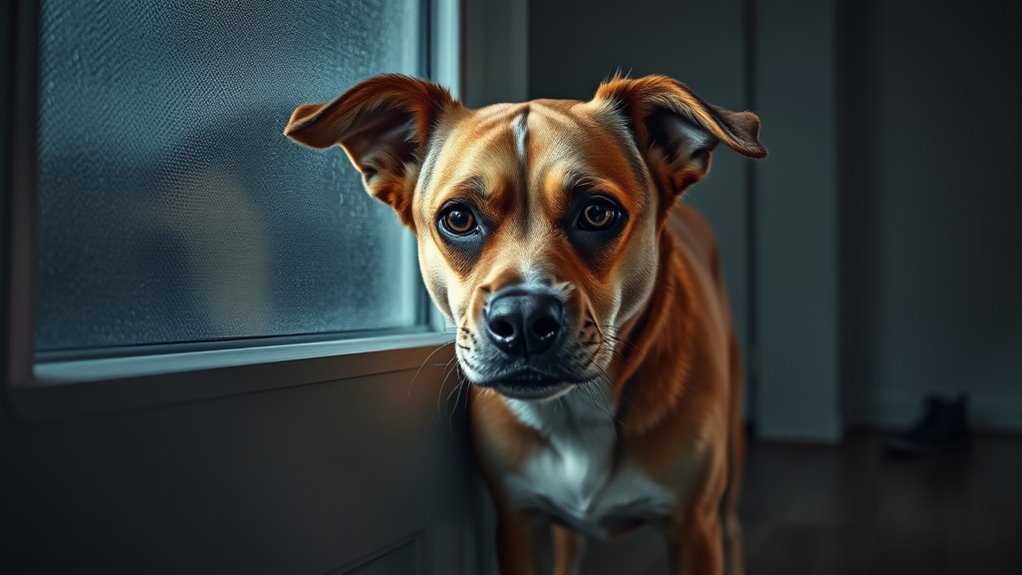
Have you ever wondered why your dog becomes anxious or destructive when you leave the house? The answer often lies in separation anxiety, a common issue that affects many dogs. Understanding dog behavior is key to addressing this problem. When your dog shows signs of distress, like barking excessively, chewing furniture, or trying to escape, it’s clear they’re feeling overwhelmed by your absence. This behavior isn’t merely mischief; it’s a response to stress and fear. The good news is that you can help your dog cope through effective training techniques.
The first step is recognizing that separation anxiety isn’t about disobedience or boredom but a genuine emotional challenge. Dogs are social animals that thrive on companionship, and when left alone, they can experience intense loneliness or fear. To tackle this, you need a consistent approach that gradually helps them build confidence and independence. Start by establishing a routine that includes short departures, then slowly increase the time you’re away. During these periods, keep your departures low-key, so your dog doesn’t associate your leaving with a dramatic event.
Training techniques play a vital role in altering dog behavior. One effective method is desensitization, where you create positive associations with your absence. For example, leave a treat or a puzzle toy that keeps your dog occupied when you step out. Over time, your dog will learn that your departure isn’t something to fear but just a part of daily life. Another technique involves teaching your dog to stay calm through commands like “settle” or “stay.” Reward calm behavior with praise or treats, reinforcing that remaining relaxed is desirable. It’s important to remain patient and consistent because change won’t happen overnight.
Creating a safe, comfortable space for your dog can also ease anxiety. Use a crate or a designated area with their favorite blanket and toys. Pair this space with positive experiences so your dog begins to associate it with security. Additionally, maintaining a routine helps reduce uncertainty, which can minimize anxiety triggers. Engaging your dog in regular mental stimulation, such as puzzle toys or training exercises, can also help reduce stress. Remember, discipline and patience are key—never punish your dog for anxious behaviors, as this can worsen their fear. Instead, focus on rewarding calmness and gradually increasing independence.
As an affiliate, we earn on qualifying purchases.
Frequently Asked Questions
Can Separation Anxiety Affect Dogs of All Ages?
Yes, separation anxiety can affect dogs of all ages. As a dog owner, you should recognize that environmental triggers, like leaving the house or changing routines, can cause anxiety regardless of your dog’s age. Proper dog training helps your pet develop coping skills, while understanding environmental triggers allows you to minimize stress. Early intervention and consistent routines can prevent or reduce separation anxiety in puppies and older dogs alike.
Are Some Breeds More Prone to Separation Anxiety?
You might worry that your breed is more prone to separation anxiety, and that’s true for some. Certain breed tendencies, driven by genetic factors, make breeds like Labrador Retrievers and Border Collies more susceptible. These dogs often thrive on companionship and can struggle when left alone, leading to anxiety. Recognizing this helps you understand your dog’s needs better, so you can provide tailored training and comfort to ease their stress.
How Long Does Separation Anxiety Typically Last?
Separation anxiety in dogs can last anywhere from a few weeks to several months, depending on the severity and your treatment efforts. You might wonder about the duration concerns and treatment timeline; consistent training and gradual desensitization often shorten this period. If you stick with a structured approach, you could see progress within a few weeks, but in more severe cases, it may take longer. Patience and persistence are key.
Can Separation Anxiety Be Completely Cured?
Yes, separation anxiety can be managed and often improved considerably. With consistent training techniques like desensitization and positive reinforcement, you can help your dog feel more secure. Sometimes, medication options prescribed by your vet can support behavioral therapy, especially in severe cases. While complete cure isn’t guaranteed for every dog, many owners see substantial progress, making daily life calmer and happier for both you and your furry friend.
What Are Early Signs to Detect Separation Anxiety?
Did you know about 17% of dogs show signs of separation anxiety? Early signs include excessive barking, destructive behavior, or pacing when you prepare to leave. You can spot these by observing your pup’s reactions during crate training or using calming techniques. If they seem anxious before you leave, it’s a good idea to work on gradual departures to help them feel more secure and prevent escalation.
Conclusion
Imagine your dog curled up peacefully, no longer trembling or pacing. With patience and the right strategies, you can help them feel safe and secure even when you’re not around. Picture a calm, confident pup, wagging their tail happily as they enjoy their own space. Separation anxiety doesn’t have to control your dog’s life. Together, you can turn those anxious moments into peaceful, trusting ones, building a stronger bond along the way.
Fall Picks
fall essentials
As an affiliate, we earn on qualifying purchases.