Using targeting and shaping techniques in dog training helps you communicate clearly and build your dog’s skills gradually. With targeting, you teach your dog to focus on and touch a specific object, like your hand, while shaping involves rewarding small steps toward a complex behavior. Both methods make training fun and effective, fostering confidence and problem-solving. Keep exploring these techniques, and you’ll discover how to create reliable, well-behaved behaviors with your dog.
Key Takeaways
- Targeting teaches dogs to focus on and touch specific objects, establishing a foundation for more complex behaviors.
- Shaping involves rewarding small steps toward a desired behavior, gradually building to the full action.
- Combining targeting and shaping with a clicker creates clear, consistent signals that enhance learning accuracy.
- Using positive reinforcement with these techniques encourages engagement, confidence, and problem-solving skills in dogs.
- Consistent application of targeting and shaping accelerates training, leading to reliable, well-behaved behaviors over time.

Are you wondering how to effectively train your dog? Using targeting and shaping techniques can make a big difference in your training journey. These methods rely heavily on clear communication and consistent reinforcement, making training sessions productive and enjoyable for both of you. One of the most effective ways to reinforce desired behaviors is through clicker training combined with positive reinforcement. This approach creates a clear link between the behavior and the reward, helping your dog understand exactly what you want them to do.
Clicker training involves using a small device that makes a distinct sound, like a click, to mark the precise moment your dog performs the desired behavior. When you pair this with positive reinforcement—giving treats, praise, or play—you establish a powerful learning loop. The click acts as a bridge, pinpointing the exact behavior you’re rewarding, which accelerates the learning process. When your dog hears the click, they know they’ve done something right, and they’re enthusiastic to repeat it for more rewards. This method also helps reduce confusion, as your dog is never left guessing which actions earned praise.
Clicker training links behavior with rewards, making learning clear and effective for your dog.
Targeting is a fundamental technique where you teach your dog to focus on and touch a specific object, like your hand or a stick, with their nose or paw. This simple behavior can be the foundation for more complex commands. To start, hold out your hand close to your dog’s nose and say a cue like “touch.” When they touch your hand, immediately click and reward. Consistency is key here; every time they touch your hand, click and reward. Over time, your dog will associate the cue with the action and will respond reliably, making it easier to shape more advanced behaviors.
Shaping takes targeting a step further by rewarding successive approximations toward a desired behavior. Instead of expecting your dog to perform the complete behavior immediately, you reward small steps that lead up to it. For instance, if you want your dog to sit, you might start by rewarding any downward movement, then only when they lower their hips slightly, and finally when they sit fully. Using a clicker helps you precisely mark each small success, reinforcing the incremental progress. This method keeps training positive and engaging, helping your dog learn complex behaviors without frustration.
Incorporating targeting and shaping with clicker training and positive reinforcement makes training more effective and enjoyable. It encourages your dog to think and problem-solve, fostering a stronger bond between you two. With patience and consistency, these techniques turn training sessions into fun, rewarding experiences that produce reliable, well-behaved dogs.
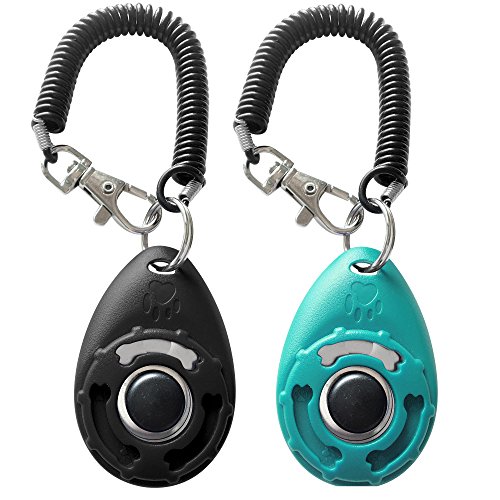
HoAoOo Pet Training Clicker with Wrist Strap – Dog Training Clickers (New Black + Blue)
Come in 2 pack button clickers with wrist strap in 2 different colors:Black, blue
As an affiliate, we earn on qualifying purchases.
As an affiliate, we earn on qualifying purchases.
Frequently Asked Questions
How Do I Choose the Right Targeting Object for My Dog?
You should choose the right targeting object by considering your dog’s size, breed, and preferences. Opt for simple training accessories like a small, lightweight ball or a flat, smooth surface that’s easy for your dog to touch. Avoid overly complicated or uncomfortable equipment. When selecting equipment, make sure it’s durable and fits comfortably in your dog’s mouth or paws. This way, your training sessions stay effective and enjoyable for both of you.
What Are Common Mistakes When Shaping Dog Behaviors?
Don’t bite off more than you can chew when shaping behaviors, as common mistakes include incorrect timing and inconsistent reinforcement. These slip-ups can cause your dog to get mixed signals, making training a uphill battle. Be patient, reward immediately when your dog performs the desired action, and stay consistent with your cues. This way, you’ll avoid confusion and help your pup learn faster, turning training into a walk in the park.
How Long Does It Typically Take to See Progress?
You’ll usually see progress within a few sessions, but it depends on your timing, consistency, and reinforcement methods. If you reward immediately when your dog performs the desired behavior and stay consistent with your cues, you’ll notice improvements faster. Patience is key—some dogs learn quicker than others. Keep practicing daily, stay positive, and modify your reinforcement methods as needed to maintain motivation and guarantee steady progress.
Can Targeting and Shaping Techniques Be Used for Aggressive Dogs?
Yes, targeting and shaping techniques can be effective for aggression management and behavior modification. You can use these methods to gradually teach your dog alternative behaviors and reduce aggressive responses. By carefully shaping calm, controlled actions and targeting specific triggers, you help your dog learn better coping skills. Consistency and patience are key, and working with a professional trainer guarantees you apply these techniques safely and effectively for your dog’s needs.
Are These Techniques Suitable for Puppies or Only Adult Dogs?
Like planting seeds in a garden, targeting and shaping techniques flourish with both puppies and adult dogs. These methods are versatile, making them perfect for puppy training and adapting to adult dog behavior. You can start early with puppies, building good habits, or refine skills in adult dogs. The key is patience and consistency, helping your dog learn effectively regardless of age.
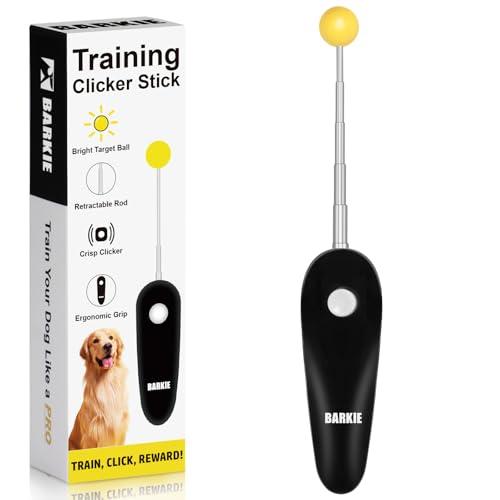
Dog Training Clicker with Target Stick – Portable & Retractable Trainer with Comfortable Handle and Bright Target Ball – Dog Agility Training Aids, Essential Tools & Equipment for Puppies, Cats & Pets
【2-in-1 Training Tool】This click stick combines a crisp-sounding dog clicker with a retractable target stick, featuring an easy-to-press…
As an affiliate, we earn on qualifying purchases.
As an affiliate, we earn on qualifying purchases.
Conclusion
By mastering targeting and shaping techniques, you can substantially improve your dog’s training progress. These methods are proven to increase learning efficiency—studies show that dogs trained with shaping are 30% more responsive to commands. Remember, patience and consistency are key. With practice, you’ll build a strong bond and foster better communication. Keep refining your skills, and you’ll see your dog’s behavior transform, making training sessions more enjoyable for both of you.

DogBone Shed Hunting Dog Training Kit – Train Your Puppy to Find Deer Antlers – Includes 2 oz Scent for Nosework & Flexible Floating Dummy for Retrieving – Perfect for Whitetail Hunters
Shed Hunting Kit – Train your dog to find deer or elk antlers using our unique system that…
As an affiliate, we earn on qualifying purchases.
As an affiliate, we earn on qualifying purchases.

Training the Best Dog Ever: A 5-Week Program Using the Power of Positive Reinforcement
As an affiliate, we earn on qualifying purchases.
As an affiliate, we earn on qualifying purchases.