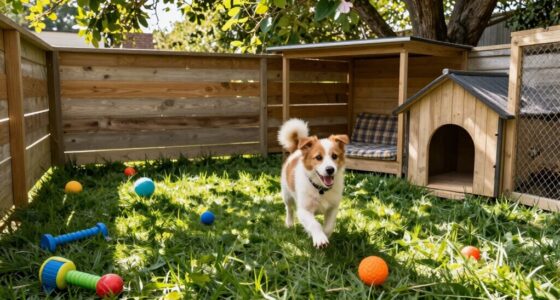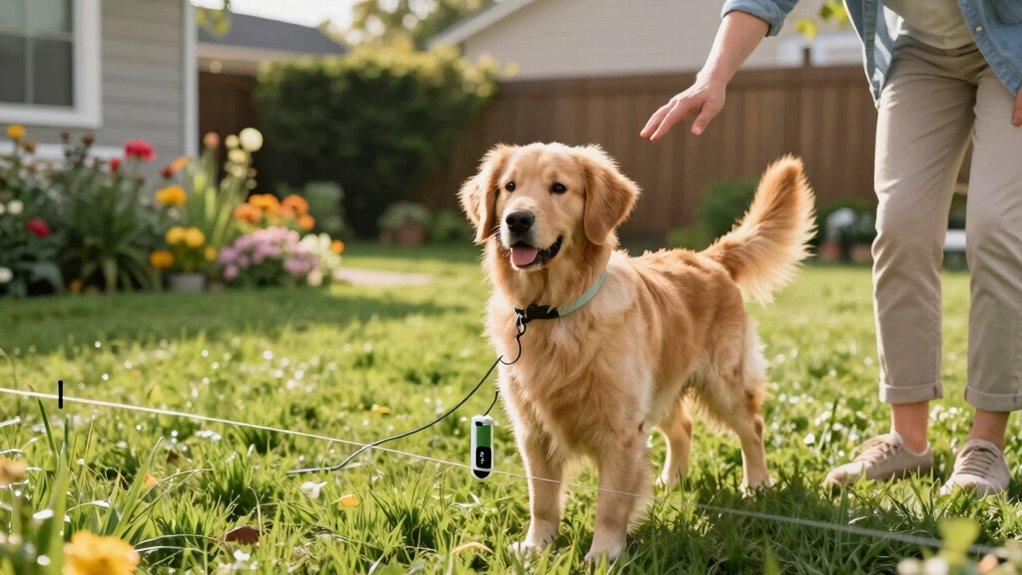
To train your dog to an invisible fence without fear, start by preparing your dog with basic commands like sit and come using positive reinforcement. Introduce the boundary gradually, using visual cues and consistent commands, while reinforcing boundary respect with praise and treats. Watch for signs of stress and give your dog plenty of reassurance, gradually increasing exposure while keeping training calm and gentle. If you keep consistent and patient, you’ll help your dog build confidence and stay safe.
Key Takeaways
- Introduce the boundary gradually using visual markers and positive reinforcement to help the dog recognize limits without stress.
- Use consistent commands and gentle corrections, rewarding calm behavior and boundary respect immediately.
- Ensure the collar fits snugly and start with short training sessions in a calm, familiar environment.
- Monitor signs of stress like trembling or avoidance, and adjust training pace to keep the dog comfortable.
- Reinforce positive feelings around the boundary with treats, praise, and socialization to foster confidence and reduce fear.

VERSMELO GPS Wireless Dog Fence, Electric Fence for Dogs, Perimeter Collar Fence System, Radius 33-1999 Yards, IPX7 Waterproof, Beep Vibration Shock Correction, for Pets Over 18 Lbs
【U.S. GPS Chip with AI】Our GPS wireless dog fence features the latest U.S.-made GPS chip combined with an…
As an affiliate, we earn on qualifying purchases.
As an affiliate, we earn on qualifying purchases.
How Do Invisible Fences Work and Why Are They Safe?
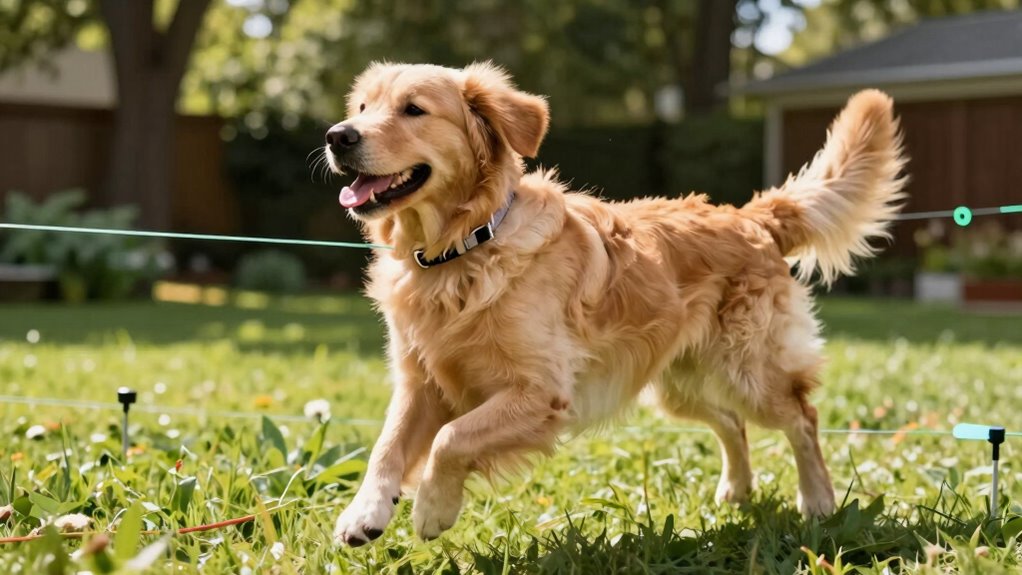
Invisible fences work by creating a boundary that your dog can detect through a special collar equipped with a transmitter. This innovative fence technology sends signals along a designated perimeter, alerting your dog when they approach the boundary. When your dog gets close, the collar emits a warning beep, giving them a chance to stop. If they cross the line, a mild correction, like a static pulse, is applied to reinforce the boundary. This method aligns with natural dog behavior, encouraging them to stay within safe limits without physical barriers. Many owners find invisible fences safe because they don’t pose the risk of injury typical of traditional fences. Plus, the collar’s adjustable settings help tailor the correction level to your dog’s temperament, ensuring a humane and effective training experience.

Jugbow Dog Shock Collar – 4500FT Dog Training Collar with Remote, IPX8 Waterproof Electric Dog Collar with 4 Training Modes, Security Lock, Rechargeable eCollar for 10-120lbs Small Medium Large Dogs
[4 Effective Training Mode – Recall & Correct Unwanted Dog Behavior] Featuring advanced Safe-Tech with 4 modes: Beep(1-8),…
As an affiliate, we earn on qualifying purchases.
As an affiliate, we earn on qualifying purchases.
Preparing Your Dog for Gentle Fence Training
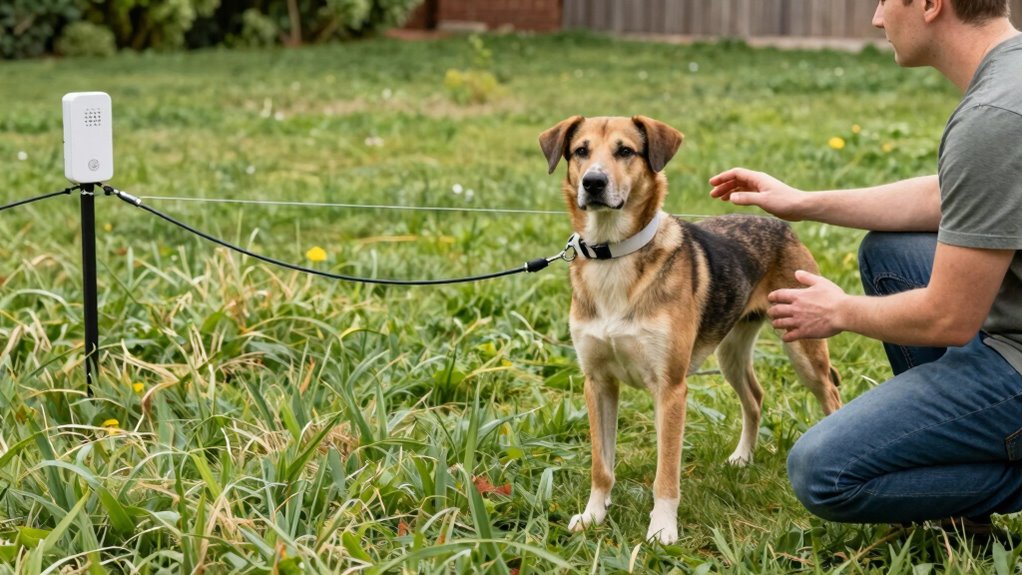
Before you start fence training, it’s important to confirm your dog understands basic commands and is comfortable with the training process. This foundation is key for effective dog training and ensures your dog responds calmly to cues. Make sure your dog reliably follows commands like sit, stay, and come, which will help during fence training and enhance fence safety. Gradually introduce your dog to the training environment, using positive reinforcement to build confidence. Avoid rushing the process; instead, focus on gentle, consistent steps that prevent fear or stress. Proper preparation helps your dog see the invisible fence as a safe boundary, making fence training smoother and more successful. This approach fosters trust and minimizes anxiety, ensuring your dog’s safety and well-being. Additionally, understanding the concept of Free Floating can help you create a more natural and stress-free training experience. Recognizing how positive reinforcement techniques work can further improve your dog’s learning process and reduce resistance. Incorporating gradual exposure to the fence area allows your dog to become familiar with the boundary without feeling overwhelmed. It’s also beneficial to consider proper equipment to ensure safety and comfort during training. Being aware of dog psychology can help you tailor your training approach to your dog’s individual needs, making the process even more effective.

PetSafe Stubborn Dog In-Ground Fence – Invisible Pet Containment Kit – Covers Up to 1/3 Acre with 500 ft of 20 Gauge Wire – for Dogs Older Than 6 Months Weighing 8lb+
Weekend DIY Installation: The Stubborn Dog In-Ground Fence is a 2-person weekend project that allows you to create…
As an affiliate, we earn on qualifying purchases.
As an affiliate, we earn on qualifying purchases.
Setting Up Your Invisible Fence for Comfort and Clarity
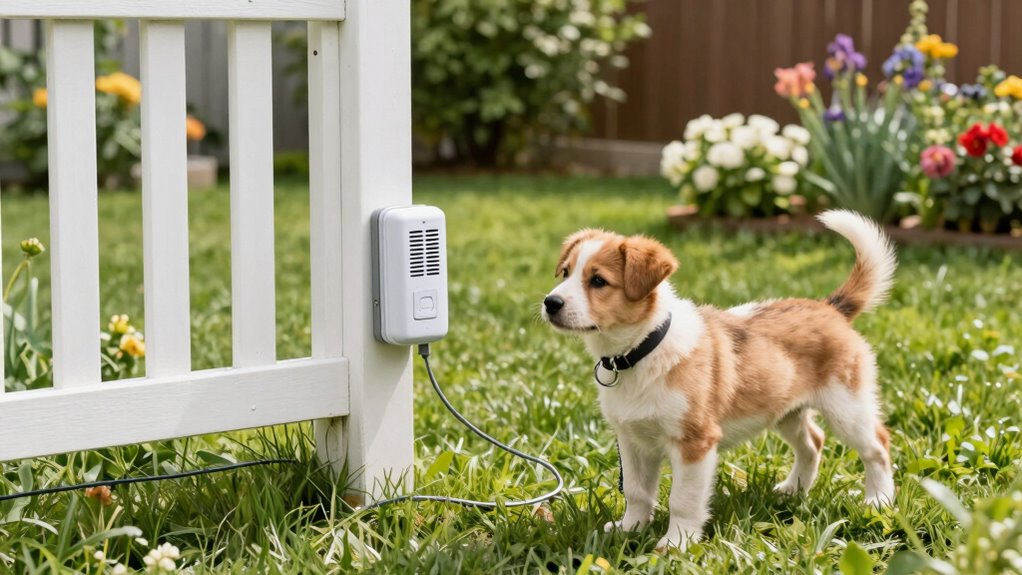
You want your dog to understand the boundaries clearly, so start by placing the fence in a comfortable, unobstructed area. Use visible boundary markers to help your dog recognize the limits easily. Proper placement and clear markers create a safe and effective training environment. Additionally, incorporating training aids can enhance your training approach over time. To ensure your dog remains comfortable, consider using remote car covers or other protective accessories to keep their environment calm and free from distractions. Understanding positive reinforcement techniques can also promote a more confident and relaxed response from your dog during training sessions. Being mindful of dog behavior cues can further improve the training process and help address any signs of stress early.
Proper Fence Placement
Have you ever wondered how to position your fence so your dog feels secure and understands its boundaries? Proper fence placement starts with careful boundary placement; you want to set the fence where your yard’s natural limits are clear. Make sure the fence height is appropriate—usually around 26 inches for small to medium dogs and higher for larger breeds—to prevent jumping over. Keep the boundary straight and consistent, avoiding sharp curves or irregular shapes that could confuse your dog. Place the wire along level ground, avoiding steep slopes that might alter the boundary’s effectiveness. Remember, the goal is to create a clear, safe zone where your dog can explore without feeling trapped or uncertain. Proper placement ensures your dog feels comfortable and understands its limits. Effective boundary design also involves considering the terrain and ensuring the boundary remains intact over time. Additionally, regularly checking the boundary’s placement helps maintain fence effectiveness and keeps your dog safe. Being aware of boundary placement principles can significantly impact how well your dog adapts to the invisible fence, especially when considering environmental factors that may influence boundary signals. Ensuring the proper fence height aligns with your dog’s size is essential for both safety and training success.
Clear Boundary Markers
Once you’ve positioned your fence correctly, the next step is to set up clear boundary markers that your dog can easily recognize. Visual cues, like bright flags or tape, help your dog see the boundary during training and beyond. Place these markers along the perimeter at regular intervals to create a consistent visual line. Additionally, scent markers—such as a special spray or scent pad—can reinforce the boundary through smell, making it easier for your dog to identify the limits even when visual cues aren’t visible. Use a combination of these cues to establish a clear, understandable boundary. Consistent placement ensures your dog learns the limits quickly and confidently, reducing confusion and helping them feel secure while respecting the invisible fence.

VUMXPE 4-in-1 Wireless Dog Fence System, Electric Fences for Medium Large Dogs, 4 Modes Training Collar with Remote, IPX7 Waterproof, Portable Indoor & Outdoor Safe Pet Containment, Real-Time Display
【4-in-1 Wireless Dog Fence System with Camping Essentials】Experience the ultimate convenience with our wireless dog fence and static…
As an affiliate, we earn on qualifying purchases.
As an affiliate, we earn on qualifying purchases.
Introducing the Boundary Zone Without Stress or Confusion

To introduce your dog to the boundary zone smoothly, it’s important to create a calm and positive environment from the start. Use your dog’s scent to familiarize them with the area, making the boundary feel safe. Make certain the collar fit is snug but comfortable, so your dog doesn’t feel restricted or anxious. Keep initial sessions short and positive, rewarding calm behavior near the boundary. Additionally, understanding essential oils for calming can help create a soothing atmosphere during training sessions. Recognizing dream symbolism related to time can also help you interpret your dog’s reactions and adjust training accordingly. Incorporating luxury calming products can further enhance the training environment, making your dog feel more secure and relaxed. Being aware of pinball machine weight can be useful if you need to relocate the boundary equipment or set up in different areas of your home. Moreover, using portable safety tips can ensure the boundary setup remains secure and effective throughout the process.
Using Positive Reinforcement to Teach Boundary Respect

Using positive reinforcement is essential for teaching your dog to respect the boundary zone effectively. When your dog approaches the boundary, reward calm behavior with praise, treats, or affection. This encourages your dog to develop a positive association with staying within the designated area. Incorporate dog socialization by exposing your dog to different environments and distractions, helping them learn boundary respect in various settings. During leash training, use gentle corrections combined with rewards to reinforce good behavior near the boundary line. Consistency is key; always reward boundary-respecting behavior immediately. Avoid punishment or harsh corrections, as these can create fear or confusion. By focusing on positive reinforcement, you build your dog’s confidence and trust, making boundary training a stress-free experience for both of you. Additionally, understanding how ownership concepts influence your dog’s behavior can improve training outcomes and foster a stronger bond. Recognizing the importance of trust-building techniques can further enhance your dog’s willingness to respect boundaries and respond positively. Incorporating training consistency helps reinforce desired behaviors and ensures your dog understands your expectations clearly. Including proper timing of rewards can significantly boost your training success and foster a positive learning environment. To further enhance your training, consider incorporating behavioral insights from HRV, which can help you better understand your dog’s stress levels and responsiveness during training sessions.
Gradually Expanding Boundaries and Reducing Corrections
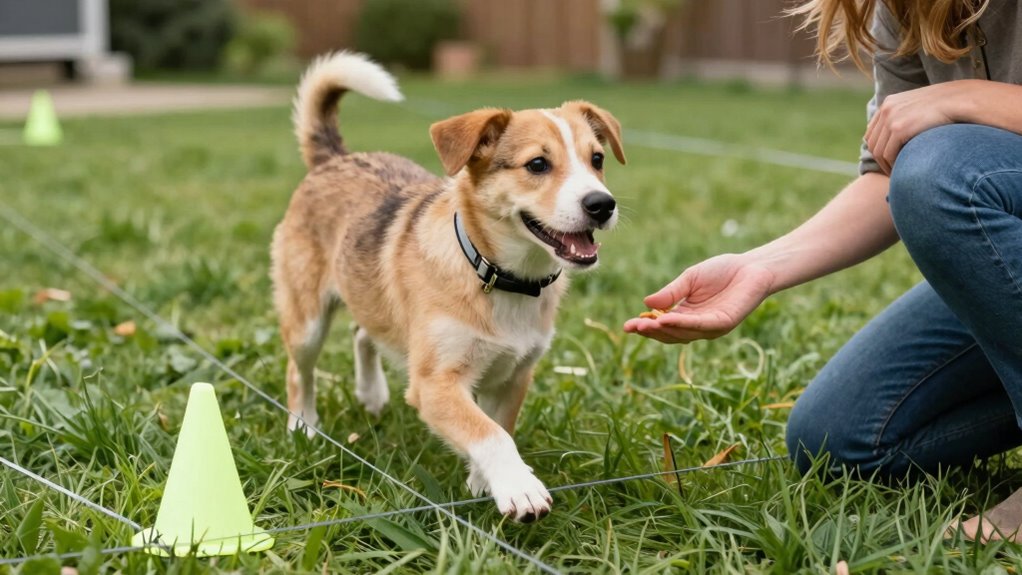
As your dog becomes comfortable with respecting the boundary, you can start gradually expanding the zone. This involves slowly increasing the distance from the original boundary while monitoring your dog’s dog body language for signs of stress or confusion. Reduce corrections gradually, rewarding calm behavior to reinforce trust. Fence troubleshooting may be necessary if your dog shows hesitation or avoidance. Use a step-by-step approach, moving the boundary a few feet at a time, and observe how your dog reacts. Keep training sessions brief and positive. Remember, patience is key. To visualize, here’s a simple expansion plan:
| Step | Zone Size | Correction Level | Focus Area |
|---|---|---|---|
| 1 | Original | Low | Boundary Respect |
| 2 | Slightly Larger | Slight Increase | Confidence Building |
| 3 | Moderate | Minimal | Recall Reinforcement |
| 4 | Larger | Reduced | Independence |
| 5 | Full Zone | None | Complete Freedom |
Furthermore, consistent training techniques are essential for a successful transition and ensuring your dog feels safe throughout the process. Incorporating positive reinforcement methods can significantly improve your dog’s comfort and responsiveness during this gradual expansion.
Recognizing Signs of Fear and How to Help Your Dog Feel Safe
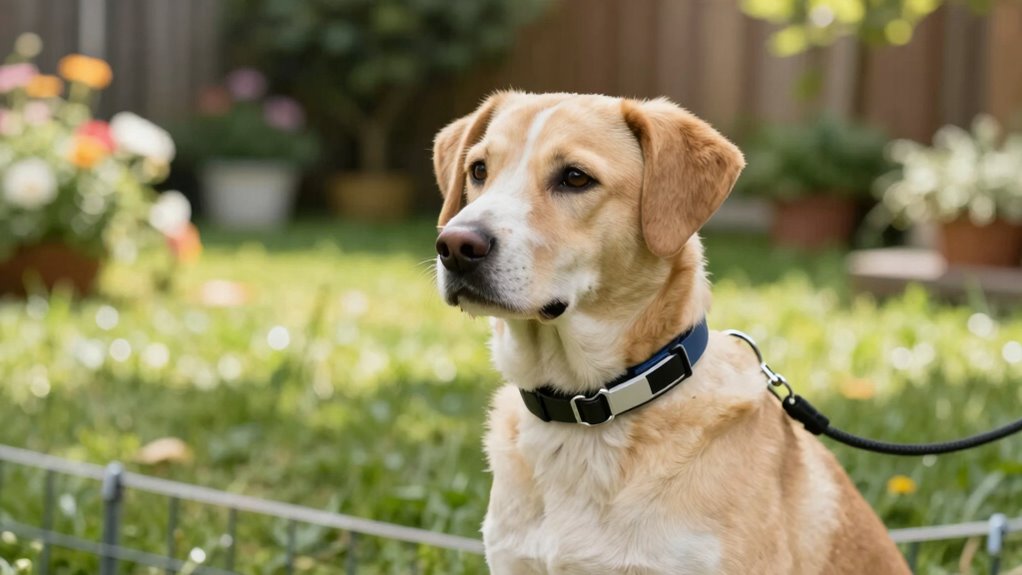
You need to watch for signs that your dog feels anxious, like trembling or avoiding eye contact. Building trust and confidence helps your dog feel more secure and less fearful. Recognizing these signals early allows you to take steps to make your dog feel safe and comfortable. Incorporating positive reinforcement techniques can also reduce anxiety during training sessions, creating a more comfortable environment for your dog.
Identifying Anxiety Indicators
Understanding the signs of fear in your dog is essential for helping them feel safe during training with an invisible fence. Recognizing canine stress signals allows you to intervene early and prevent anxiety from escalating. Watch for subtle signs in your dog’s body language, such as tucked tails, pinned-back ears, or lip licking. These are classic indicators of stress or fear. Other signs include yawning, avoiding eye contact, and trembling. By paying close attention to these cues, you can adjust your approach to keep your dog comfortable. Remember, dogs communicate their feelings through their body language, so staying alert helps you respond compassionately and effectively. Recognizing anxiety indicators early makes the training experience positive and stress-free for your furry friend.
Building Trust and Confidence
Building trust and confidence with your dog is essential, especially when introducing new training methods like an invisible fence. Recognizing signs of fear helps you respond appropriately and foster a sense of safety. Focus on positive dog socialization, gradually exposing your dog to new environments and people. A well-balanced diet that meets your dog’s nutritional needs also supports confidence and reduces anxiety. Keep an eye out for signs like trembling, avoiding eye contact, or excessive barking. Use treats, praise, and gentle reassurance to help your dog feel secure. Consider this table to guide your approach:
| Behavior | What It Means | How to Help |
|---|---|---|
| Avoidance | Fear or discomfort | Gradually reintroduce stimuli |
| Excessive barking | Anxiety or stress | Calm reassurance and redirection |
| Cowering or trembling | Overwhelmed or scared | Create a safe, quiet space |
Common Challenges and How to Address Them During Training

Training a dog to an invisible fence can present several challenges, but recognizing these issues early can make the process smoother. Common problems include behavioral adjustments that lead to hesitation or avoidance, and difficulties with socialization strategies that make your dog wary of the boundary. You might notice your dog repeatedly testing the fence or ignoring commands near the boundary line. To address these issues, reinforce positive reinforcement and patience. Focus on consistent training, gradually increasing exposure, and using clear commands. Also, work on socialization strategies that help your dog feel comfortable and confident around the boundary area. Being attentive to your dog’s reactions and adjusting your approach accordingly can help prevent setbacks and ensure a successful, fear-free training experience.
Tips for Keeping Your Dog Calm and Confident With the Fence
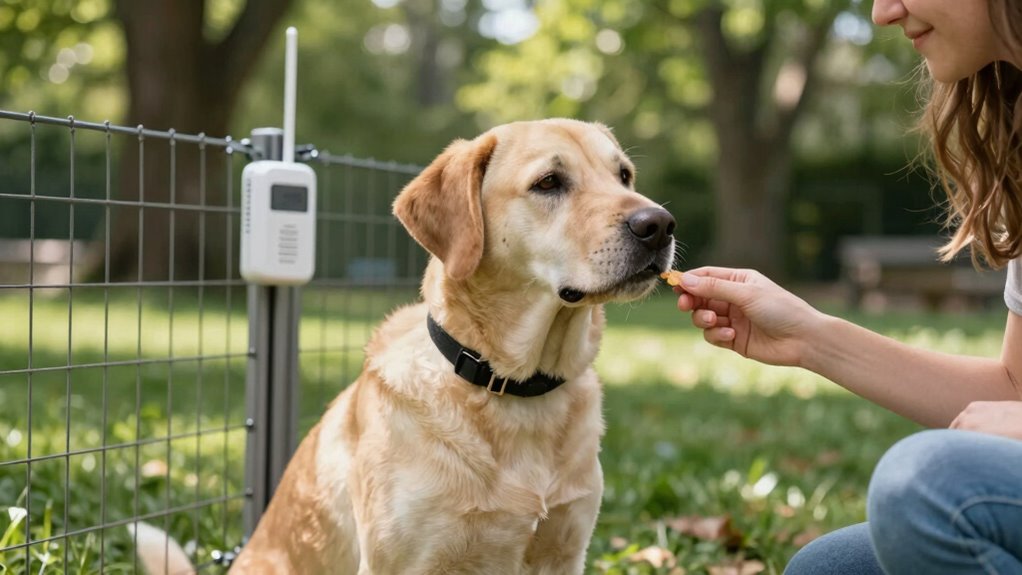
Once you’ve addressed the initial challenges of boundary testing and socialization, focusing on keeping your dog calm and confident around the fence becomes the next important step. To do this, make sure your dog has positive dog socialization experiences, so they associate the fence area with trust rather than fear. Incorporate leash training sessions near the boundary to help your dog get comfortable with controlled walks, reinforcing calm behavior. Use praise and treats to reward relaxed responses when approaching the fence. Keep training sessions short and consistent, avoiding any punishment that could cause anxiety. Over time, your dog will learn to stay confident and composed, understanding that the fence is a safe boundary. Building this trust minimizes stress and encourages a secure, happy relationship with their outdoor space.
Maintaining Ongoing Confidence and Security in Your Dog
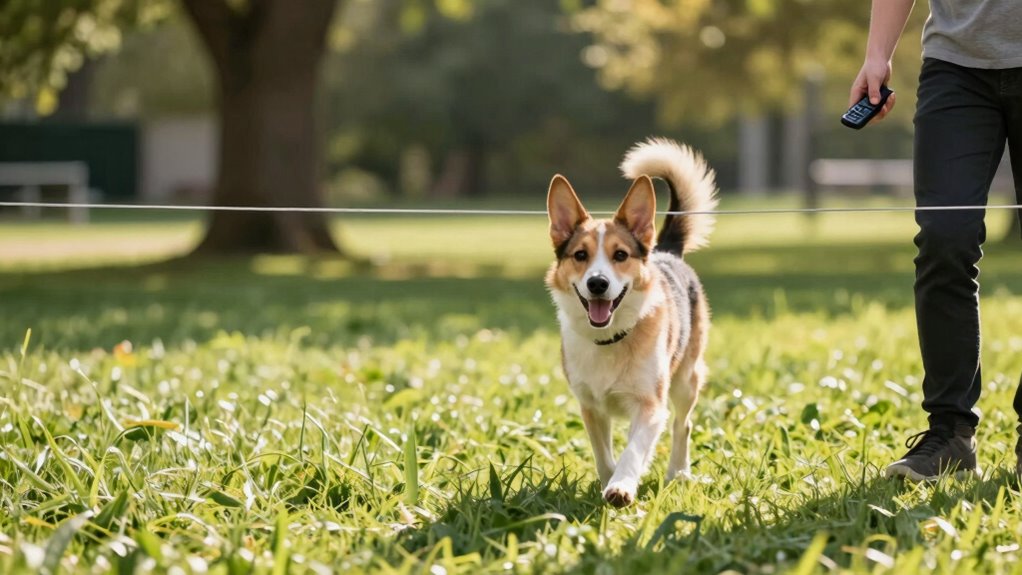
To guarantee your dog remains confident and secure around the invisible fence, it’s vital to reinforce positive experiences consistently. This helps your dog associate the fence with safety, not fear. Regular dog socialization allows your dog to build trust and confidence with other animals and people, easing anxiety during outdoor adventures. Incorporate leash training to improve control and reduce stress, making boundary reinforcement smoother. Keep training sessions upbeat and rewarding to reinforce good behavior.
- Gradually increase outdoor socialization with other dogs and people
- Use treats and praise during leash training to boost confidence
- Maintain consistent routines to prevent confusion
- Reinforce the positive feelings associated with crossing boundaries
Frequently Asked Questions
How Long Does It Typically Take for a Dog to Learn the Boundary?
You can expect your dog to learn the boundary in about 2 to 4 weeks with consistent boundary training. Patience strategies are key; always use positive reinforcement and avoid punishment. Keep training sessions short and frequent, gradually increasing the distance from the boundary. Every dog is different, so stay patient and persistent, and your dog will understand the invisible fence boundaries without fear in time.
Can I Train Multiple Dogs With the Same Invisible Fence?
Yes, you can train multiple dogs with the same invisible fence. Just make sure each dog undergoes proper boundary training, so they understand their limits. Keep up with regular fence maintenance to prevent any malfunctions that could confuse your pets. Consistency is key—use positive reinforcement and clear commands for all. Monitoring their progress helps ensure they respect the boundary, making the system effective and safe for everyone.
What Should I Do if My Dog Ignores the Boundary Warning?
If your dog ignores the boundary warning, don’t panic—think of it as a small obstacle, not a mountain! Use positive reinforcement and consistent training to help your dog respect the invisible fence. When they stay within boundaries, reward them generously. Gradually, with patience and praise, your dog will learn to heed the warning, transforming their disregard into a reliable boundary response. Keep training steady, and success will follow!
Are Invisible Fences Suitable for All Dog Breeds and Sizes?
Invisible fences aren’t suitable for all dog breeds and sizes. Breed suitability varies because some dogs, like small or very energetic ones, may ignore fence warnings or escape. You should consider fence limitations, such as the need for proper training and the dog’s temperament. Larger or stubborn breeds might require stronger boundaries or alternative containment methods. Always assess your dog’s behavior and consult a professional to guarantee safety and effectiveness.
How Can I Prevent My Dog From Becoming Overly Dependent on the Fence?
You can prevent your dog from becoming overly dependent on the invisible fence by promoting dog independence through consistent training. Gradually increase outdoor supervision and encourage off-leash play in safe areas to build confidence outside the fence. Maintain training consistency by reinforcing boundaries and rewarding good behavior. Avoid relying solely on the fence; instead, foster your dog’s ability to make decisions independently, ensuring they don’t depend entirely on the fence for safety.
Conclusion
With patience and gentle guidance, you’ll turn the invisible fence into a trusted guardian for your dog. Think of it as planting a sturdy seed of confidence that will grow into a secure, happy life beyond the yard. As you nurture this bond with positive reinforcement and understanding, your dog will navigate their new boundaries with a calm heart and a wagging tail—embracing freedom within a safe, invisible embrace.