Wireless fences work well when installed correctly and used with proper training, creating a safe boundary that alerts your dog as they approach. However, their effectiveness can drop due to signal interference, uneven terrain, or obstacles like metal fences. They’re not foolproof, and supervision remains essential. If you want to know when these systems succeed or fall short—and how to choose and use them wisely—keep exploring the details below.
Key Takeaways
- Wireless fences are effective when properly installed, calibrated, and used with consistent training; terrain and interference can impact performance.
- They help contain pets and prevent wandering but do not eliminate all risks or pet stress related to boundaries.
- Signal disruptions from metal, electronic devices, weather, or large structures can cause false alerts or gaps in coverage.
- Supervision and training are essential; wireless fences are not foolproof and should complement other containment measures.
- System reliability varies by quality, environmental factors, and pet behavior, so understanding limitations is crucial for effective use.

PetSafe Wireless Pet Containment System – Original Wireless Electric Fence for Dogs – Covers Up to 1/2 Acre – for Pets 8lb+
Wireless Freedom: The PetSafe Wireless Pet Containment System is a lightweight, travel-friendly system that sets up in 1-2…
As an affiliate, we earn on qualifying purchases.
As an affiliate, we earn on qualifying purchases.
How Do Wireless Pet Fences Work?
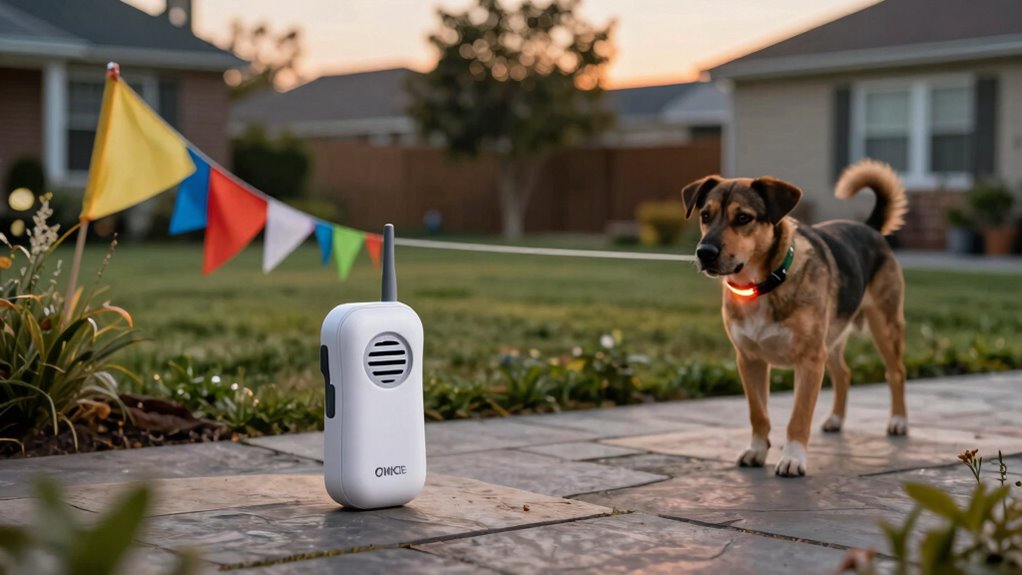
Wireless pet fences work by creating a safe boundary using radio signals. When you set up the system, you’ll install the base unit in your home, which transmits signals to define the perimeter. As your dog approaches this boundary, they receive a warning, often through a tone or vibration, encouraging them to stay within limits. Proper fence installation is essential for effective containment, and consistent dog training helps your pet understand the boundaries. This process involves reinforcing commands and positive reinforcement to ensure your dog respects the fence lines. Keep in mind, while the technology is straightforward, establishing clear boundaries through training is key to making sure your pet stays safe and secure within the wireless fence. Security considerations are also important to ensure that the system functions reliably and safely. Additionally, understanding the radio signal range can help prevent issues where the fence might not be effective in larger or more complex environments. Proper calibration of the system enhances its signal strength, ensuring your pet remains within the designated area without false alarms or gaps. Regularly checking the system’s calibration can help maintain optimal performance and safety. Being aware of potential interference sources can further improve the system’s reliability and consistency.
PetSafe Wireless Pet Containment System – Original Wireless Electric Fence for Dogs – Covers Up to 1/2 Acre – for Pets 8lb+
Wireless Freedom: The PetSafe Wireless Pet Containment System is a lightweight, travel-friendly system that sets up in 1-2…
As an affiliate, we earn on qualifying purchases.
As an affiliate, we earn on qualifying purchases.
Can a Wireless Fence Keep My Pet Safe?
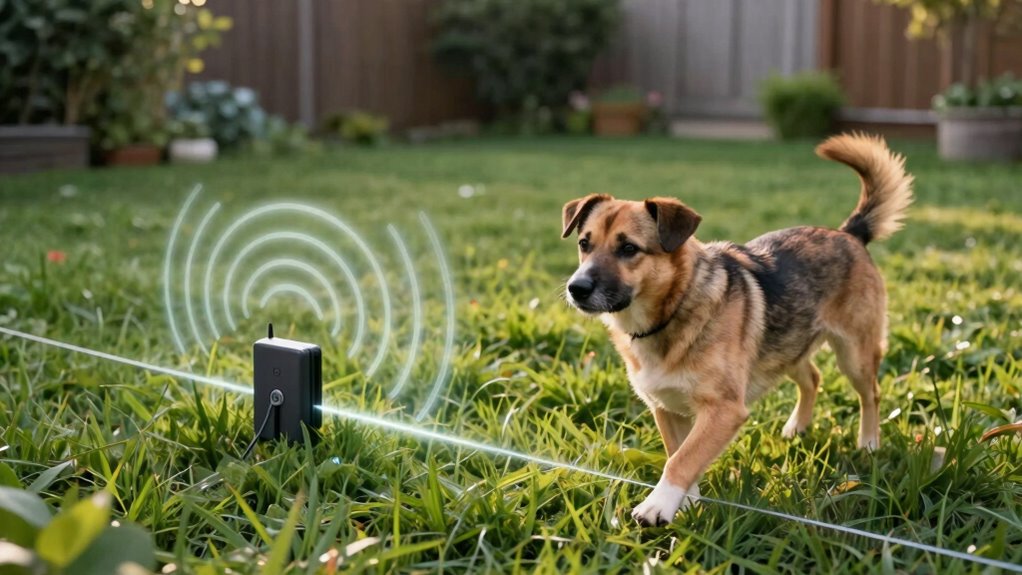
Wondering if a wireless fence can truly keep your pet safe? It might help prevent your pet from wandering into dangerous areas, but it isn’t foolproof. Wireless fences don’t eliminate pet anxiety, especially if your furry friend is easily stressed by new surroundings or unfamiliar boundaries. They rely on your pet learning to associate a correction with the boundary, which can take time and patience. Installation challenges also pose a concern; uneven terrain, underground cables, or interference can affect the fence’s effectiveness. If your pet is highly curious or stubborn, they might test the boundaries, risking escape or injury. So, while a wireless fence can be a useful containment tool, it’s not a guaranteed safety measure on its own. Supervision remains essential. Proper training and patience are key to helping your pet adapt to the system effectively. Additionally, understanding fence limitations can help set realistic expectations for its performance. Recognizing the importance of inclusive casting can also ensure that pet owners of diverse backgrounds find the right solutions for their needs. Moreover, staying informed about latest safety innovations can help pet owners choose the most reliable containment options available. Exploring advanced technology in fencing systems may further improve their reliability and effectiveness.

GPS Wireless Dog Fence System, Humane Virtual Boundary Collar with Beep, Vibration & Adjustable Static, No Wires No App, Waterproof Rechargeable for Large Yards & Farms-Purple
Stable & Humane GPS Boundary — No Random Corrections Advanced GPS technology creates a consistent virtual boundary that…
As an affiliate, we earn on qualifying purchases.
As an affiliate, we earn on qualifying purchases.
What Are the Limitations of Wireless Fences?

While wireless fences offer a convenient way to contain pets, they come with notable limitations that can impact their effectiveness. First, installation challenges may arise, requiring precise placement for ideal coverage. Second, signal interference from objects like metal fences, electronic devices, or thick walls can weaken or disrupt the boundary signal. Third, environmental factors such as weather conditions or large metal structures can interfere with the system’s performance. Fourth, unpredictable signal range issues might leave gaps or cause false alerts, making it untrustworthy in certain areas. Additionally, signal range limitations can vary depending on the system’s quality and environmental conditions, further affecting reliability. Understanding nail biology and strength can help pet owners select systems with better durability against environmental factors, ensuring longer-lasting performance. Moreover, the quality of the wireless fence components plays a crucial role in overall system reliability. These limitations mean you need to carefully consider your property’s layout and environment before relying solely on a wireless fence. Recognizing potential technological disruptions can help you prepare for system malfunctions and ensure pet safety. Understanding these challenges helps set realistic expectations and ensures you’re prepared for potential setbacks.

Jugbow Dog Shock Collar – 4500FT Dog Training Collar with Remote, IPX8 Waterproof Electric Dog Collar with 4 Training Modes, Security Lock, Rechargeable eCollar for 10-120lbs Small Medium Large Dogs
[4 Effective Training Mode – Recall & Correct Unwanted Dog Behavior] Featuring advanced Safe-Tech with 4 modes: Beep(1-8),…
As an affiliate, we earn on qualifying purchases.
As an affiliate, we earn on qualifying purchases.
How to Choose the Right Wireless Fence System
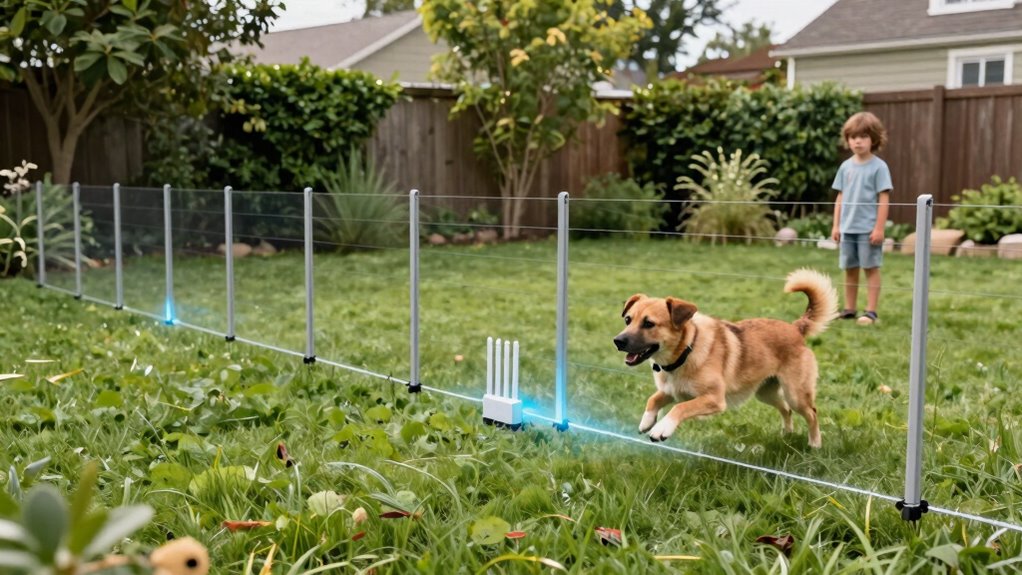
Choosing the right wireless fence system requires evaluating your specific needs and property layout. Start by considering your yard’s size and terrain, as some systems work better on flat land while others handle slopes. Look for models with clear installation tips to guarantee proper setup, avoiding dead spots or weak signals. Think about your pet’s size and temperament, as this influences the correction levels needed. Pet training is essential; select a system with adjustable correction modes and be prepared to invest time in training your dog to understand boundaries. Check customer reviews for reliability and ease of use. Additionally, understanding Smart Strategies for Effective Personal Finance Planning can help you budget appropriately for a quality wireless fence system and avoid overspending. Being aware of the different types of wireless fences can also guide your decision to choose the most suitable technology for your environment. Exploring sound healing science may offer insights into calming your pet during training sessions. Considering the horsepower of electric dirt bikes can provide insights into the power and performance levels you might want in related outdoor equipment. Incorporating water safety considerations can also ensure a comprehensive approach to outdoor safety for your family and pets. By carefully assessing these factors, you’ll find a wireless fence system that fits your property and keeps your pet safe without unnecessary hassle.
Tips to Use Your Wireless Fence Safely and Effectively

To guarantee your wireless fence keeps your pet safe and functions effectively, it is crucial to follow proper usage guidelines. Start with training principles that help your pet understand boundaries. Consistently reinforce these limits through positive reinforcement. Next, observe your pet’s behavior and adjust your training approach accordingly. Here are four tips to maximize safety and effectiveness:
- Gradually introduce the boundary to prevent confusion.
- Use consistent commands to reinforce pet behavior.
- Regularly check the system for proper signal strength and coverage.
- Supervise outdoor time until your pet responds reliably.
- Be aware of signal interference that can affect the system’s performance and safety. Additionally, understanding wireless signal stability can help you troubleshoot issues more effectively. Ensuring the system setup is correct can also prevent common problems caused by improper installation or environmental factors.
Frequently Asked Questions
How Long Does a Wireless Fence System Typically Last Before Needing Replacement?
A wireless fence system typically lasts around 3 to 5 years before needing replacement. The battery lifespan of the transmitter and receiver units plays a key role in this timeline. You should expect to replace batteries every 1 to 2 years, depending on usage. Regular maintenance and monitoring battery health can help extend the system’s effectiveness, but ultimately, the entire system may need replacement once components start failing.
Are Wireless Fences Suitable for All Dog Breeds and Sizes?
Sure, wireless fences are the superhero of dog containment—if your pup’s a small, obedient angel. Larger dogs or those with a stubborn streak might find the boundary more like a suggestion than a rule. Dog breed compatibility varies, and size limitations mean that some breeds could just leap over or ignore the signal entirely. So, unless your dog’s a tiny, easygoing pup, you might want to weigh alternative options.
Can Wireless Fences Be Installed Indoors?
Yes, you can install wireless fences indoors, but there are limitations. Indoor installation of wireless barriers might not effectively contain your dog if they’re very active or curious, as signals can be affected by walls and furniture. For best results, consider a dedicated indoor containment system or a wired fence designed specifically for indoor use. Make sure to supervise your pet during initial training to guarantee safety and proper boundaries.
What Are Common Signs My Wireless Fence Isn’T Working Properly?
You’ll notice your wireless fence isn’t working properly if your pet frequently ignores the boundary, or if the collar isn’t emitting corrections. Common signs include signal interference from devices like Wi-Fi routers or metal objects, which can disrupt the connection. Boundary misalignment may cause inconsistent alerts or failures to activate. If these issues persist, check for interference sources and verify the boundary is correctly calibrated to keep your pet safe.
Do Wireless Fences Interfere With Household Electronics or Wi-Fi?
Wireless fences can sometimes cause household interference, but they rarely disrupt Wi-Fi signals. You might notice minor wifi disruption if the fence’s transmitter is placed too close to your router or electronics. To prevent this, keep the transmitter away from household electronics and Wi-Fi routers. Typically, a properly installed wireless fence won’t interfere greatly, but if you experience persistent issues, adjusting the placement helps ensure both systems work smoothly without interference.
Conclusion
A wireless fence is like a guiding star for your pet, offering freedom within gentle boundaries. But remember, it’s not a magic shield—limitations can leave gaps in protection. To keep your furry friend safe and happy, choose wisely and use it thoughtfully. Think of it as a dance partner: when used correctly, it moves in harmony with your pet’s needs. With the right approach, your yard becomes a safe haven, not a wild frontier.