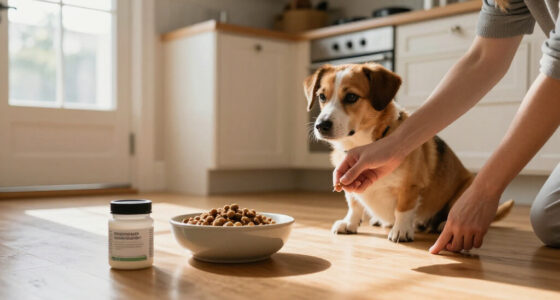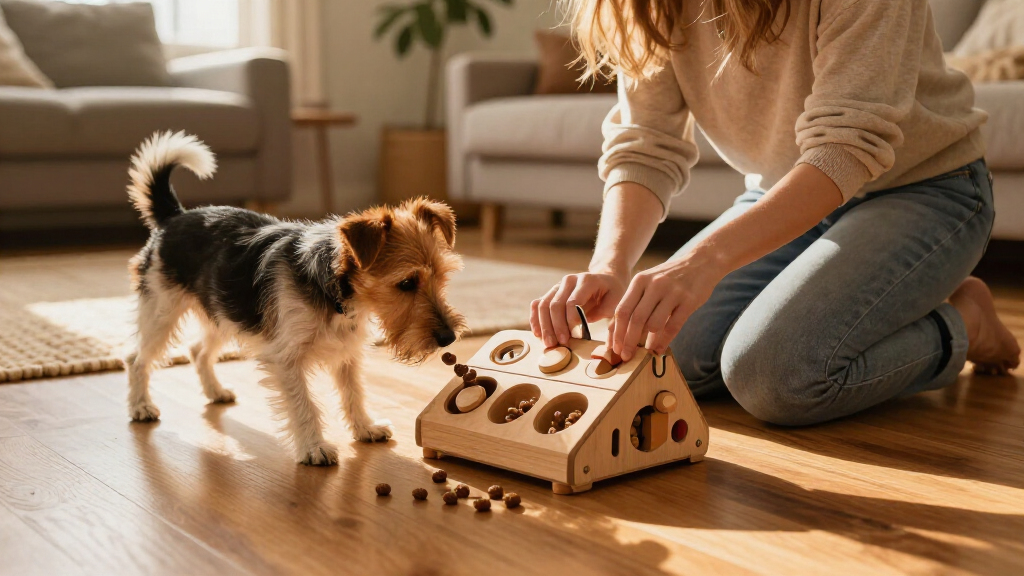
Interactive dog puzzle toys turn mealtime and treat time into mental exercise, and the right one depends on your dog’s problem-solving level, chewing style, and how much supervision you can give. The Nina Ottosson Dog Tornado stands out as the best overall pick thanks to its rotating multi-layer design that scales from casual sniffers to determined problem-solvers, while the DR CATCH Dog Puzzle Feeder (Blue) delivers the best value for first-time buyers and the KADTC Dog Chess Puzzle offers the toughest challenge for genuinely smart dogs. The main tradeoff in this category is difficulty versus frustration: too easy and your dog loses interest in minutes, too hard and they resort to flipping, chewing, or ignoring the toy altogether. Durability, cleaning effort, and treat compatibility also separate these options more than price does. Keep reading for the full breakdown of all 14 toys and which one fits your dog.

Get pet supplies delivered free with Prime
- Fast, free delivery on millions of items
- Prime Video, Amazon Music and more included
- Member-only deals all year
Complete the kit


Key Takeaways
- Difficulty labeling is wildly inconsistent across brands — several ‘Level 3’ toys like the Barkwhiz were solvable by average dogs in under five minutes, while the KADTC Dog Chess genuinely challenged experienced puzzlers.
- Plastic slider-and-compartment puzzles (Nina Ottosson, DR CATCH, Potaroma) are dramatically easier to clean than fabric options (snuffle mat, snuffle ball, MewaJump plush), which matters if you use wet food or peanut butter.
- Treat-dispensing balls like the BSISUERM are the only true ‘leave-and-go’ option here — nearly every flat board puzzle requires supervision because determined dogs flip or chew them open.
- The two DR CATCH puzzles (Blue and Pink) are nearly identical in function, differing mainly in layout and color, so buyers should choose based on compartment count rather than treating them as separate difficulty levels.
- Hybrid designs like the MewaJump 4-in-1 and Potaroma slow-feeder combo trade puzzle depth for versatility — they suit multi-dog households better than dedicated single-purpose puzzlers.
| Barkwhiz Dog Puzzle Toy with 3 Levels |  | Best for Varied Sliding Challenges | Toy type: Puzzle | Challenges: 4 games across 3 levels | Food storage holes: 14 | VIEW LATEST PRICE | See Our Full Breakdown |
| BSISUERM Adjustable Dog Treat Dispensing Puzzle Ball, Green |  | Best for Rolling Treat Dispensing | Material: ABS | Dimensions: 6.1 × 3.44 × 3.44 inches | Weight: 4.96 ounces | VIEW LATEST PRICE | See Our Full Breakdown |
| DR CATCH Dog Puzzle Feeder Toy for IQ Training & Mental Enrichment (Blue) |  | Best for Puppies and Small Dogs | Brand: DR CATCH | Dimensions: 9.44 × 9.44 × 1.14 inches | Weight: 12.64 ounces | VIEW LATEST PRICE | See Our Full Breakdown |
| KADTC Dog Chess Puzzle Toy, 3 Levels, Mental Stimulation for Smart Dogs |  | Best for Advanced Puzzle Sessions | Toy type: Puzzle | Levels: 3 adjustable levels | Material: Food-grade ABS; BPA, PVC, and phthalate-free | VIEW LATEST PRICE | See Our Full Breakdown |
| Dog Snuffle Ball – Interactive Puzzle Treat Dispenser Toy with Squeaky Carrot |  | Best Fabric Foraging Pick | Brand: Pettation | Toy type: Treat dispenser toy | Material: Fleece fabric and TPR rubber | VIEW LATEST PRICE | See Our Full Breakdown |
| Interactive Dog Puzzle Toy for IQ Stimulation, Treat Training & Fun Feeding (Level 1-3) |  | Best for Small Dogs Ready for a Challenge | Dimensions: 10 × 10 × 1.1 inches | Weight: 335 g (listed as 0.9 lbs) | Material: Polypropylene | VIEW LATEST PRICE | See Our Full Breakdown |
| Vivifying Snuffle Mat for Dogs, Interactive Puzzle and Enrichment Feeding Toy |  | Best for Foraging and Slower Meals | Dimensions: 26 × 16.5 inches | Weight: 0.27 kg | Material: Felt cloth | VIEW LATEST PRICE | See Our Full Breakdown |
| Nina Ottosson Dog Tornado Treat Puzzle Toy |  | Best for Intermediate Puzzle Solvers | Brand: Nina Ottosson by Outward Hound | Toy type: Treat puzzle | Difficulty: Level 2, intermediate | VIEW LATEST PRICE | See Our Full Breakdown |
| PETSTA Dog Puzzle Toy and Treat Dispenser |  | Best for Varied Board-Style Play | Material: Polypropylene | Dimensions: Conflicting listings: 10 × 10 × 1.3 inches and 8 × 8 × 1 inch | Treat compartments: 16 | VIEW LATEST PRICE | See Our Full Breakdown |
| BoYoYo Interactive Treat-Dispensing Puzzle Toy for Dogs, Yellow |  | Best Rolling Puzzle for Supervised Play | Brand: BoYoYo | Color: Yellow | Materials: ABS, nylon, and rubber | VIEW LATEST PRICE | See Our Full Breakdown |
| Potaroma Two-Level Dog Puzzle Toy and Slow Feeder |  | Best Dual-Purpose Design | Height: 4.2 inches | Puzzle levels: 2 | Material: Food-grade PP | VIEW LATEST PRICE | See Our Full Breakdown |
| FOXMM Interactive Dog Treat Puzzle Toy |  | Best for Multi-Pet Households | Dimensions: 10 x 10 x 1.2 in | Weight: 0.4 kg | Material: Polypropylene | VIEW LATEST PRICE | See Our Full Breakdown |
| DR CATCH Dog Puzzle Feeder Toy for Mental Stimulation, Pink |  | Best Lightweight Pick for Small Breeds | Pet toy type: Puzzle feeder | Recommended breed size: Small breeds | Suitable pets: Cats and dogs | VIEW LATEST PRICE | See Our Full Breakdown |
| MewaJump 4-in-1 Puzzle Enrichment Dog Toy – Squeaky Plush Toy with Treat Pocket and Tug Rope |  | Best for Interactive Play | Brand: MewaJump | Type: Interactive plush dog toy | Length: 23 inches | VIEW LATEST PRICE | See Our Full Breakdown |
| interactive dog puzzle toy | Material | Dimensions | Weight |
|---|---|---|---|
| Barkwhiz Dog Puzzle Toy with 3 | Plastic | 11.5 × 9.3 × 2 inches | 1.3 pounds |
| BSISUERM Adjustable Dog Treat | ABS | 6.1 × 3.44 × 3.44 inches | 4.96 ounces |
| DR CATCH Dog Puzzle Feeder Toy | Polyvinyl chloride (PVC) | 9.44 × 9.44 × 1.14 inches | 12.64 ounces |
| KADTC Dog Chess Puzzle Toy | Food-grade ABS; BPA, PVC, and phthalate-free | 16.73 × 16.73 × 2.64 inches | Approximately 2.67 pounds |
| Dog Snuffle Ball | Fleece fabric and TPR rubber | 3.5 × 3.5 × 3.5 inches | 0.33 kg |
| Interactive Dog Puzzle Toy for | Polypropylene | 10 × 10 × 1.1 inches | 335 g (listed as 0.9 lbs) |
| Vivifying Snuffle Mat for Dogs | Felt cloth | 26 × 16.5 inches | 0.27 kg |
| Nina Ottosson Dog Tornado Trea | — | — | — |
| PETSTA Dog Puzzle Toy and Trea | Polypropylene | Conflicting listings: 10 × 10 × 1.3 inches and 8 × 8 × 1 inch | — |
| BoYoYo Interactive Treat-Dispe | — | — | — |
| Potaroma Two-Level Dog Puzzle | Food-grade PP | — | — |
| FOXMM Interactive Dog Treat Pu | Polypropylene | 10 x 10 x 1.2 in | 0.4 kg |
| DR CATCH Dog Puzzle Feeder Toy | — | 9.6 x 9.6 x 1.4 in | — |
| MewaJump 4-in-1 Puzzle Enrichm | Soft short plush with reinforced stitching | — | — |
More Details on Our Top Picks
Barkwhiz Dog Puzzle Toy with 3 Levels
Four treat-finding games across three levels give this board more variety than the single rolling challenge of the BSISUERM Adjustable Dog Treat Dispensing Puzzle Ball. Flip and slide actions keep the dog working at the board, which can suit owners who want a stationary puzzle to pair with meals or supervised enrichment. Its 14 food storage holes also offer several places to hide rewards, while six silicone pads help limit movement during play. The tradeoff is that this is a plastic board rather than a rolling toy, so it offers less chase-based activity than the BSISUERM ball. It needs supervision, and its lack of water resistance means cleanup calls for soap and warm water rather than outdoor rinsing.
Pros:- Four treat-finding games provide variety across three levels
- Fourteen food holes support treat hunts or meal portions
- Six silicone pads help keep the board stable
- Can be cleaned with soap and warm water
Cons:- Requires supervision during play
- Not water resistant
- Stationary board offers less movement than a dispensing ball
Best for: Owners seeking several slide-and-flip challenges for supervised indoor enrichment or slower meals
Not ideal for: Dogs that need chase-based play or owners who want a water-resistant toy for outdoor use
- Toy type:Puzzle
- Challenges:4 games across 3 levels
- Food storage holes:14
- Material:Plastic
- Weight:1.3 pounds
- Dimensions:11.5 × 9.3 × 2 inches
- Recommended dog sizes:Small, medium, and large
- Water resistance:Not water resistant
Our verdict“Choose the Barkwhiz if your dog enjoys working through several stationary treat puzzles and you can supervise play.”
BSISUERM Adjustable Dog Treat Dispensing Puzzle Ball, Green
Adjustable treat openings make this barbell-shaped puzzle a more active option than the stationary Barkwhiz Dog Puzzle Toy with 3 Levels. A dog has to push and chase it to release kibble, adding movement to the food hunt while the switches let owners adjust output for different kibble sizes. That makes it a practical fit for dogs who lose interest in puzzles that stay in one place. Its ABS body and smooth curved shape are designed to roll quietly, but this is a dispenser rather than a chewing toy; supervision still matters for dogs inclined to bite hard. Each sphere can be set for one treat size at a time, so it is less flexible than a board with multiple hiding spots, and it is not water resistant.
Pros:- Adjustable switches control treat output
- Openings can accommodate different kibble sizes
- Rolling action encourages pushing and chasing
- Lightweight ABS construction
Cons:- Not intended as a chew toy
- Each sphere adjustment accommodates only one treat size at a time
- Not water resistant
Best for: Owners of dogs who engage more readily with rolling toys and want to dispense measured kibble during play
Not ideal for: Dogs that chew toys aggressively or households needing a puzzle that can be rinsed outdoors
- Material:ABS
- Dimensions:6.1 × 3.44 × 3.44 inches
- Weight:4.96 ounces
- Color:Green
- Shape:Barbell with two treat-dispensing spheres
- Dispensing adjustment:Adjustable switches
- Recommended dog sizes:Small, medium, and large
- Use:Indoor
Our verdict“Pick this ball for a dog that needs movement to stay engaged with treat dispensing.”
DR CATCH Dog Puzzle Feeder Toy for IQ Training & Mental Enrichment (Blue)
A compact slide puzzle gives puppies and small dogs a simple way to nose or paw treats out of hiding places. At 9.44 inches square and just over a pound, it is easier to move and store than the much larger KADTC Dog Chess Puzzle Toy, whose 16.73-inch footprint suits households with more floor space. The DR CATCH also works as a slow feeder, so owners can use it for a meal as well as short training sessions. Its lightweight PVC construction helps with portability, but it also marks a limit: this board is not made to withstand chewing. Small pets are the stated fit, and supervised use is needed, so owners of large or persistent chewers should look to a sturdier, more substantial puzzle.
Pros:- Slide challenges encourage nose and paw problem-solving
- Can serve as a slow feeder
- Lightweight design is easy to move and store
- Sized for cats, puppies, and small dogs
Cons:- Not durable enough to withstand chewing
- Requires supervised use
- Not water resistant
Best for: Puppy and small-dog owners who want a portable slide puzzle that can also slow meals
Not ideal for: Owners of large dogs or dogs that chew puzzle pieces and need a tougher board
- Brand:DR CATCH
- Dimensions:9.44 × 9.44 × 1.14 inches
- Weight:12.64 ounces
- Material:Polyvinyl chloride (PVC)
- Color:Blue
- Puzzle action:Slide puzzle
- Recommended pets:Cats, puppies, and small dogs
- Features:Slow feeder, treat puzzle, lightweight, portable
Our verdict“Choose the DR CATCH for a supervised starter puzzle sized for puppies and small pets.”
KADTC Dog Chess Puzzle Toy, 3 Levels, Mental Stimulation for Smart Dogs
Three adjustable difficulty levels make the KADTC the most structured choice here for owners who want to change the challenge as a dog learns. Its large board, removable cups and lids, and lick-proof paw shield call for more active problem-solving than the rolling BSISUERM Adjustable Dog Treat Dispensing Puzzle Ball, which releases food through movement. The KADTC is also designed to slow eating and has under-board storage for its pieces, reducing the chance of loose parts getting separated between sessions. That complexity comes with practical costs: the 16.73-inch square board takes considerable floor space, and removable pieces can still go missing. It is listed for indoor use, so the waterproof construction does not make it an outdoor-play option.
Pros:- Three adjustable levels support changing challenge difficulty
- Lick-proof paw shield is designed to encourage problem-solving
- Dishwasher-safe construction simplifies cleanup
- Under-board storage keeps removable pieces together
Cons:- Large footprint needs substantial floor space
- Removable cups and lids can be lost
- Listed for indoor use only
Best for: Owners with floor space who want a staged puzzle that can keep presenting harder challenges
Not ideal for: Small-space households or owners who want a simple, chase-based toy with few loose parts
- Toy type:Puzzle
- Levels:3 adjustable levels
- Material:Food-grade ABS; BPA, PVC, and phthalate-free
- Weight:Approximately 2.67 pounds
- Dimensions:16.73 × 16.73 × 2.64 inches
- Recommended breed sizes:Small, medium, and large
- Cleaning:Dishwasher safe
- Special features:Lick-proof paw shield, non-slip pads, drain holes, under-board storage
Our verdict“Choose the KADTC if you have room for a large board and want to raise the puzzle difficulty over time.”
Dog Snuffle Ball – Interactive Puzzle Treat Dispenser Toy with Squeaky Carrot
Fabric strips turn treat finding into sniffing and foraging, giving this snuffle ball a different feel from the hard sliding boards such as the Barkwhiz Dog Puzzle Toy with 3 Levels. The compact 3.5-inch ball can hide treats in its fleece, while the included squeaky carrot adds another play element. Machine washing is a useful advantage for a fabric puzzle that collects food crumbs during repeated use. But the soft format brings a clear tradeoff: it is explicitly not a chew toy and needs supervision to prevent dogs from swallowing pieces. Its small size may also be a poor match for large dogs, despite the all-breed recommendation. Choose it for sniff-focused sessions and easy laundering; choose a hard board if you want slide or flip challenges.
Pros:- Fleece strips encourage natural sniffing and foraging
- Machine washable for repeated use
- Includes a squeaky carrot toy
- Can be used indoors or outdoors
Cons:- Not a chew toy and requires supervision
- Small 3.5-inch size may not suit large dogs
- Not water resistant
Best for: Owners seeking a washable sniffing activity for supervised treat hunts with small dogs or other small pets
Not ideal for: Large dogs, aggressive chewers, or owners who need a water-resistant puzzle
- Brand:Pettation
- Toy type:Treat dispenser toy
- Material:Fleece fabric and TPR rubber
- Weight:0.33 kg
- Dimensions:3.5 × 3.5 × 3.5 inches
- Recommended pets:Dogs and cats
- Usage:Indoor and outdoor
- Includes:Squeaky carrot toy
Our verdict“Pick this snuffle ball for supervised, washable foraging sessions where sniffing matters more than hard-surface puzzle solving.”
Interactive Dog Puzzle Toy for IQ Stimulation, Treat Training & Fun Feeding (Level 1-3)
Built-in sliders and center pieces give this compact board more problem-solving steps than a simple treat search. It suits small dogs that already understand basic food puzzles and can benefit from working for part of a meal; the board can also serve as a slow feeder. Compared with the PETSTA Dog Puzzle Toy and Treat Dispenser, it has fewer listed compartments and no squeak feature, but its Level 1–3 format and fixed parts keep the focus on manipulating the puzzle rather than chasing sound or loose pieces.
The dishwasher-safe polypropylene construction makes cleanup straightforward, and the lack of removable parts is useful for supervised solo play. The tradeoff is fit: at 10 inches square, it is aimed at small dogs, puppies, and cats, and the moderate-to-challenging design may frustrate a true beginner. I’d choose it for a small, persistent puzzle solver, not a large dog or a first-ever enrichment toy.
Pros:- Built-in sliders and center pieces offer several ways to uncover treats
- No removable parts reduce the chance of pieces being separated during play
- Dishwasher-safe polypropylene simplifies cleanup
- Can be used as a slow feeder as well as a treat puzzle
Cons:- The moderate-to-challenging design may be too difficult for beginners
- The 10-inch board is best suited to small dogs, puppies, and cats
Best for: Small-dog owners whose pets already solve simple treat puzzles and need a fixed-part board that can also slow meals.
Not ideal for: Owners of large dogs or puzzle beginners, since the compact board is intended for smaller pets and its slider challenges may be frustrating at first.
- Dimensions:10 × 10 × 1.1 inches
- Weight:335 g (listed as 0.9 lbs)
- Material:Polypropylene
- Toy type:Treat dispenser
- Difficulty:Level 1–3; moderate to challenging
- Recommended pets:Small dogs, puppies, and cats
- Features:Interactive, waterproof, dishwasher safe, no removable parts
Our verdict“Choose this fixed-part board for a small dog that already enjoys puzzles and is ready for a more involved treat search.”
Vivifying Snuffle Mat for Dogs, Interactive Puzzle and Enrichment Feeding Toy
The felt snuffle mat turns feeding into a nose-led search: hide kibble across its eight treat areas and let your dog forage through them. That makes it a different kind of interactive puzzle from the Nina Ottosson Dog Tornado Treat Puzzle Toy, which asks dogs to lift covers and rotate tiers. The mat is better suited to pets who enjoy sniffing and benefit from a slower, scattered meal than to dogs seeking a mechanical challenge.
At 26 × 16.5 inches, it offers a broad search area, then folds with elastic straps for storage. It can be hand-washed or machine-washed, but it is not water resistant and is explicitly not chewproof. That tradeoff matters: it works best with a supervised dog who searches gently, not an aggressive chewer likely to pull at the felt. I’d pick it for calm enrichment and feeding routines, rather than independent play with a destructive dog.
Pros:- Eight hiding areas encourage dogs to forage for food
- Broad mat gives treats room to be spread out
- Can be hand-washed or machine-washed
- Elastic straps let it fold for storage or transport
Cons:- Not chewproof, so it needs supervision around dogs that pull or chew fabric
- Not water resistant, which limits use around wet food or messy play
- Not recommended for extra-large dogs
Best for: Owners of small or medium dogs who want to turn kibble into a supervised sniffing game and slow down mealtimes.
Not ideal for: Owners of aggressive chewers or extra-large dogs, since the felt is not chewproof and the mat is not recommended for those pets.
- Dimensions:26 × 16.5 inches
- Weight:0.27 kg
- Material:Felt cloth
- Treat-hiding areas:8
- Recommended pets:Small and medium dogs, cats, and rabbits
- Cleaning:Hand wash or machine wash
- Water resistance:Not water resistant
- Storage:Folds with elastic straps
Our verdict“Pick this mat for a supervised sniff-and-search meal, especially if your dog prefers foraging to moving puzzle pieces.”
Nina Ottosson Dog Tornado Treat Puzzle Toy
Three spinning tiers and 12 compartments give this Level 2 puzzle a clear step up from a basic sniff mat: dogs lift covers and rotate layers to reach the food. It holds up to 1/2 cup of kibble or treats, so it can turn a portion of a meal into a more involved activity. Compared with the Vivifying Snuffle Mat, the Tornado calls for more paw-and-nose manipulation, while the mat emphasizes searching through felt.
The included bone covers let owners adjust how much access dogs have, which can help tailor the challenge. Its food-safe materials are listed as free of BPA, PVC, lead, and phthalates, and the toy is suitable for small, medium, and large dogs. The tradeoffs are its intermediate difficulty and reliance on treats or kibble; some dogs may need an easier introduction, and it does not provide food on its own. This is my pick for a dog that has moved beyond simple foraging.
Pros:- Three rotating tiers create multiple steps between the dog and the reward
- Twelve compartments and 1/2-cup capacity suit treat games or part of a meal
- Three included bone covers allow some adjustment to the challenge
- Food-safe materials are listed as BPA-, PVC-, lead-, and phthalate-free
Cons:- Intermediate difficulty may frustrate dogs that have not learned basic puzzle play
- Requires kibble or treats for each session
- The layered mechanics are a different fit for dogs who prefer nose-led foraging
Best for: Owners of small to large dogs who already understand basic food puzzles and want a tiered challenge that can hold part of a meal.
Not ideal for: Owners of dogs new to puzzles or uninterested in treat-based play, since the Level 2 mechanics require both food motivation and some problem-solving.
- Brand:Nina Ottosson by Outward Hound
- Toy type:Treat puzzle
- Difficulty:Level 2, intermediate
- Tiers:3
- Treat compartments:12
- Capacity:1/2 cup of kibble or treats
- Included covers:3 bone treat compartment covers
- Suitable dogs:Small, medium, and large
- Materials:Food-safe; BPA-, PVC-, lead-, and phthalate-free
Our verdict“Choose the Tornado for a food-motivated dog ready to graduate from a snuffle mat to a rotating, tiered puzzle.”
PETSTA Dog Puzzle Toy and Treat Dispenser
The 16 treat compartments and three difficulty designs give this board more variety than a single-mechanism puzzle. Dogs can spin and slide sections, search hidden spots, and respond to a squeak button. Compared with the Interactive Dog Puzzle Toy for IQ Stimulation, PETSTA adds a sound cue and more listed compartments; both use fixed parts, but PETSTA’s mix of actions may better suit dogs who lose interest when a puzzle repeats one movement.
A non-slip base helps keep the board steadier as dogs work, and the dishwasher-safe design eases cleanup. Its dimensions are inconsistent in the supplied product details: one listing gives 10 × 10 × 1.3 inches, another 8 × 8 × 1 inch, so buyers should verify the board size before choosing a spot for it. The built-in parts are not a reason to leave an aggressive chewer unattended; the listing advises caution. This is a flexible board for supervised training and slow feeding, with some uncertainty around fit.
Pros:- Sixteen compartments provide plenty of places to hide treats
- Three difficulty designs combine spin, slide, seek, and hide actions
- Non-slip pads help limit movement while a pet works
- Non-removable parts and dishwasher-safe construction simplify use and cleaning
Cons:- The listed dimensions conflict between the description and product details
- Aggressive chewers need close supervision
- Not water resistant
Best for: Owners of dogs or cats who want several board-puzzle actions and difficulty options in one dishwasher-safe toy.
Not ideal for: Owners of aggressive chewers or anyone who needs a confirmed board size before purchase, since the listing warns about chewing and gives conflicting dimensions.
- Material:Polypropylene
- Dimensions:Conflicting listings: 10 × 10 × 1.3 inches and 8 × 8 × 1 inch
- Treat compartments:16
- Play features:Spin and slide, seek and hide, squeak button
- Parts:Non-removable
- Cleaning:Dishwasher safe
- Recommended use:Training and slow feeding
- Suitable pets:Dogs and cats
- Water resistance:Not water resistant
Our verdict“Choose PETSTA for varied spin-and-slide board play if the listed size suits your space and your dog is supervised.”
BoYoYo Interactive Treat-Dispensing Puzzle Toy for Dogs, Yellow
Instead of asking a dog to work across a flat board, the BoYoYo rolls as it dispenses treats, linking movement to food. Adjustable openings let owners change how readily kibble comes out, so the toy can suit a longer feeding session or an easier start. Compared with the Nina Ottosson Dog Tornado Treat Puzzle Toy, which rewards lifting and rotating, this one favors dogs who like to nudge a toy around the floor.
The removable food compartment makes cleaning easier, while rubber in the roller is intended to reduce noise. That rolling format also needs space and supervision, and the product is not suitable for aggressive chewers. It is described for medium and large dogs, with cats also mentioned, but its play style may not suit a pet that prefers a stationary puzzle or pulls at components. I’d choose it for an active, food-motivated dog whose owner can supervise sessions.
Pros:- Rolling design makes the dog move the toy to release treats
- Adjustable openings can change how quickly food comes out
- Removable food compartment supports easier cleaning
- Rubber roller material is designed to reduce noise
Cons:- Not suitable for aggressive chewers
- Requires supervised play
- Rolling play needs open floor space and may not suit dogs that prefer stationary puzzles
Best for: Owners of medium or large dogs who enjoy rolling toys and can supervise treat-based play on an open floor.
Not ideal for: Owners of aggressive chewers or pets that need a stationary puzzle, since this rolling toy is intended for supervised use and is not chew-rated for forceful play.
- Brand:BoYoYo
- Color:Yellow
- Materials:ABS, nylon, and rubber
- Design:Rolling treat dispenser
- Food control:Adjustable treat openings
- Food compartment:Removable
- Suitable pets:Medium and large dogs; also described for cats
- Cleaning:Dishwasher safe or hand wash
- Chewer suitability:Not suitable for aggressive chewers
Our verdict“Pick the BoYoYo for a supervised rolling challenge when your dog prefers nudging a treat toy to solving a tabletop board.”
Potaroma Two-Level Dog Puzzle Toy and Slow Feeder
What sets this pick apart from single-function sliders like the DR CATCH Puzzle Feeder is its two-in-one design: the transparent top doubles as a slow feeder while the base layer hides treats behind two difficulty levels. That flexibility means one purchase covers both mealtime pacing and enrichment play. Compared with the FOXMM slider, the Potaroma’s weighted base with four non-slip pads is a genuine advantage for enthusiastic dogs who shove lighter puzzles across the floor. The transparent lid also lets owners see how much food remains without interrupting play. The tradeoff is maintenance — non-removable parts make deep cleaning fiddlier than fully disassembling rivals, and some dogs need coaching before they grasp the level-two dispenser. This pick makes the most sense for owners who want enrichment and portion control in a single sturdy unit.
Pros:- Two difficulty levels grow with your dog’s problem-solving ability
- Doubles as a slow feeder, replacing a separate dish for fast eaters
- Weighted base with four non-slip pads keeps it planted during energetic play
- No assembly required, so it works straight out of the box
Cons:- Non-removable parts make thorough cleaning slower and less convenient
- Level-two dispenser often requires owner training before dogs figure it out
Best for: Owners who want one device that handles both slow feeding and treat-puzzle enrichment, especially with dogs that push toys around
Not ideal for: Owners of strong-jawed dogs who chew plastic — the food-grade PP body is a puzzle, not a chew toy, and determined chewers will damage it
- Height:4.2 inches
- Puzzle levels:2
- Material:Food-grade PP
- Base:Weighted with 4 non-slip rubber pads
- Assembly:None required
- Cleaning:Non-removable parts; easy to clean
- Suitable for:Large and small dogs
Our verdict“The smart choice for owners who want slow feeding and two-stage puzzle play in one stable, tip-resistant unit.”
FOXMM Interactive Dog Treat Puzzle Toy
The FOXMM earns its spot by being one of the few puzzles here rated for both dogs and cats, which immediately distinguishes it from dog-only options like the KADTC Dog Chess Puzzle. The built-in squeaker is the hook — hesitant or easily bored pets get an audible reward that draws them back to the board, something flat slider puzzles like the DR CATCH Pink feeder lack. Unlike the Potaroma, this one is fully washable by hand or dishwasher, a real plus for households using wet treats or peanut butter. The flat 1.2-inch profile also slides under furniture for storage. The compromises are real, though: it’s explicitly not a chew toy, and the compact size suits small and medium dogs rather than large breeds. This option stands out for homes where a cat and dog share enrichment time.
Pros:- Works for both cats and dogs, rare among treat puzzles
- Built-in squeaker attracts pets that ignore silent sliders
- Dishwasher-safe construction simplifies cleanup after messy treats
- Slim 1.2-inch profile stores easily and suits indoor use
Cons:- Not designed as a chew toy and needs replacement if damaged
- Requires constant supervision, making it unsuitable for solo entertainment
Best for: Households with both cats and dogs, or small-to-medium dogs that lose interest in silent puzzles
Not ideal for: Large-breed or heavy-chewing dogs — the slim board and polypropylene sliders won’t survive determined jaws
- Dimensions:10 x 10 x 1.2 in
- Weight:0.4 kg
- Material:Polypropylene
- Toy type:Puzzle
- Difficulty:S-Level 2
- Suitable pets:Dogs and cats
- Recommended dog size:Small and medium
- Water resistance:Waterproof
Our verdict“A smart buy for mixed-pet homes that want a squeaker-driven puzzle both species will actually use.”
DR CATCH Dog Puzzle Feeder Toy for Mental Stimulation, Pink
Compared with the heftier Potaroma two-level station, the DR CATCH wins on simplicity: it’s a flat, nose-and-paw sliding board that small dogs and cats can operate without tipping anything over. There’s no learning curve around weighted bases or multi-level dispensers, which makes it a gentler entry point than the Nina Ottosson Dog Tornado for pets new to puzzles. It also pulls double duty as a slow feeder for kibble, stretching mealtimes a few extra minutes. The honest tradeoffs: it’s not water resistant — a step below the FOXMM’s waterproof, dishwasher-friendly build — so cleaning means a wipe-down rather than a rinse cycle. And it’s explicitly aimed at small breeds, so anything beyond a compact dog will find the board too cramped. Supervision is non-negotiable, since determined pets can pry the sliders loose.
Pros:- Simple sliding mechanics that beginners grasp quickly
- Doubles as a slow feeder for portion-paced meals
- Works for both cats and small dogs
- Lightweight, low-profile design is easy to store and reposition
Cons:- Not water resistant, so cleaning is limited to wiping rather than soaking
- Not indestructible and cannot be left with unsupervised pets
- Small-breed sizing excludes most medium and large dogs
Best for: Owners of small breeds or cats wanting a simple, affordable sliding puzzle that also slows down fast kibble eaters
Not ideal for: Medium and large dogs — the 9.6-inch board is cramped, and stronger paws can overwhelm the sliders
- Pet toy type:Puzzle feeder
- Recommended breed size:Small breeds
- Suitable pets:Cats and dogs
- Intended uses:Mental stimulation, training, slow feeding
- Dimensions:9.6 x 9.6 x 1.4 in
- Water resistance:Not water resistant
- Color:Pink
Our verdict“A no-frills sliding board best suited to small pets and first-time puzzle users who don’t need heavy-duty construction.”
MewaJump 4-in-1 Puzzle Enrichment Dog Toy – Squeaky Plush Toy with Treat Pocket and Tug Rope
The MewaJump takes a completely different approach from rigid boards like the FOXMM or Potaroma: instead of mechanical puzzles, it layers engagement into a 23-inch plush body with a treat-hiding pocket, double squeakers, crinkle paper, and a tug rope. The treat pocket delivers the foraging challenge, but the real difference is social — this is the only pick here built for tug-of-war and shared play, where flat puzzles are solo food-dispensing exercises. Sizing is another advantage: unlike the DR CATCH’s small-breed limit, the extra-long body suits small through large dogs. Machine washability also beats hand-wiping plastic boards. The catch is durability: reinforced stitching helps, but plush cannot match plastic against serious chewers, and a destroyed toy means hidden treats scattered across the floor. This model is better suited to play-focused homes than puzzle purists.
Pros:- Four play modes in one toy: foraging, squeaking, tugging, and cuddling
- 23-inch length accommodates small, medium, and large dogs
- Treat pocket extends engagement beyond typical plush toys
- Machine washable, easier to maintain than non-removable plastic puzzles
Cons:- Plush material will not survive heavy or aggressive chewing
- Treat-hiding challenge is simpler than dedicated multi-level puzzle boards
Best for: Owners who want enrichment woven into fetch, tug, and cuddle time rather than solo food puzzles
Not ideal for: Aggressive or power chewers — plush construction will be shredded regardless of the reinforced stitching
- Brand:MewaJump
- Type:Interactive plush dog toy
- Length:23 inches
- Features:Double squeakers, crinkle paper, treat-hiding pocket, tug rope
- Material:Soft short plush with reinforced stitching
- Care:Machine washable and hand washable
- Suitable for:Small, medium & large dogs
Our verdict“The right pick for playtime-oriented owners who value a tug-and-squeak companion with a treat twist over hard-core problem solving.”

How We Picked
I evaluated each puzzle on four buyer-facing criteria. Challenge quality came first: a good interactive puzzle should occupy a dog for 10–20 minutes and reward problem-solving rather than luck or brute force, so I looked at how many distinct steps each design requires and whether it holds a dog’s interest after repeated use. Build and safety came second — puzzle toys live in a dog’s mouth, so material thickness, chew resistance, small removable parts, and whether pieces can be swallowed all affected ranking. Practicality was third: how easy the toy is to load, empty, wash, and store, plus whether it works with the treats or kibble a typical owner already has. Value for the intended dog rounded out the scoring, because a cheap toy a smart dog solves in two minutes is worse value than a pricier one that lasts months.
The ranking reflects a simple logic: toys that balance genuine mental challenge with durability and easy cleaning sit at the top, while options that excel at only one job — like the fabric snuffles for scent work or the BSISUERM ball for solo play — are positioned as specialists rather than all-rounders. Products with unclear difficulty claims, fragile moving parts, or awkward cleaning earned lower placements regardless of price.
Factors to Consider When Choosing Interactive Dog Puzzle Toys
Before choosing a specific toy, it helps to understand what actually makes an interactive puzzle succeed or fail with a given dog. These are the factors that shaped the rankings above — and the mistakes that most often lead to an abandoned toy in the corner.Match the Difficulty to Your Dog’s Actual Experience, Not the Label
Manufacturers’ difficulty ratings are close to meaningless across brands — a ‘Level 3’ from one company can be easier than a ‘Level 1’ from another, a pattern confirmed repeatedly in this lineup. A better approach is to judge the number of independent mechanisms: a single sliding lid is beginner-level, rotating layers add a step, and combinations of sliders plus hidden compartments plus moveable pegs are for veterans. Start one level below what you think your dog can handle, because early wins build the confidence that keeps a dog engaged with harder puzzles later. The most common mistake owners make is buying an advanced puzzle for a dog that has never seen one — the dog gets frustrated, starts chewing the toy to break it open, and the owner concludes their dog ‘doesn’t like puzzles.’ Most dogs that fail at puzzles were simply given the wrong starting point.
Chewing Style Should Dictate Material Choice
Every puzzle in this category can be destroyed by a determined chewer — the difference is how long it takes and how safely it fails. Hard plastic boards like the Nina Ottosson and KADTC crack rather than shattering into sharp pieces, while thin knockoff boards can splinter. Fabric-based options like snuffle mats and plush hybrids are gentler on teeth but essentially disposable for powerful chewers, so factor in a replacement cycle rather than expecting permanence. If your dog has a history of destroying toys within minutes, a treat ball with thick rubber construction will outlast any flat puzzle board. A useful rule: the more moving parts a puzzle has, the more breakable it is, so heavy chewers should favor simpler mechanisms made from thicker materials over complex, fragile ones.
Think About Cleaning Before You Buy, Not After
This is the factor buyers most often regret ignoring. If you plan to use wet food, xylitol-free peanut butter, or soft cheese as motivation — which is often what gets reluctant dogs started — fabric puzzles become hygiene problems fast, harboring bacteria in layers you cannot fully wash. Plastic boards with removable lids or dishwasher-safe parts are the practical choice for messy treats. Check whether compartments have corners where food residue collects, because smelly buildup will attract ants and dull your dog’s interest over time. Board puzzles with many small sliding pieces also lose bits in the dishwasher, so hand-washable single-piece designs save real time for daily users. If you travel with the toy or use it at parks, easy-rinse designs beat elaborate multi-part systems.
Supervision Requirements Differ More Than Buyers Expect
Only one style of toy in this roundup — the weighted treat ball — can genuinely be left with an unsupervised dog, because everything else has removable parts that can be chewed off and swallowed. Flat board puzzles should always be used in your presence, both for safety and because half their value comes from you celebrating the solves with your dog. This surprises many buyers who imagined a puzzle as an occupation device for a dog home alone; for that job, a treat ball, a stuffed frozen rubber toy, or a sturdy snuffle mat used under a camera is the honest answer. Plan your purchase around when you will actually use it: puzzles for supervised evening enrichment, dispensing toys for absences. Buying a complex board puzzle to fight separation anxiety almost always ends in a chewed-up toy and no behavioral progress.
Food Compatibility Determines Whether the Toy Gets Used
The best puzzle in the world is useless if your dog’s kibble doesn’t fit its dispensing holes or compartment size. Large-breed kibble frequently jams in treat balls designed for small breeds, while tiny kibble falls out of wide compartments instantly, removing the challenge. Measure your dog’s kibble width against the toy’s openings before ordering, or plan to use larger treats that fit snugly. Also consider whether the puzzle suits portion control — if your dog gets meals through the puzzle daily, compartment capacity should roughly match half a normal meal, which is where slow-feeder hybrids like the Potaroma earn their place. Dogs on strict diets can still use most puzzles with their regular kibble ration; the puzzle changes how food arrives, not what it is.
When Paying More Actually Matters
In this category, price differences mostly buy you material quality and mechanism smoothness, not more difficulty. A well-made rotating layer that spins freely with a paw or nose keeps a dog engaged; a cheap copy with sticky bearings teaches the dog that effort produces nothing. Where premium construction genuinely pays off is longevity for daily users — a toy used twice a day, every day, needs to survive hundreds of loading cycles. For occasional enrichment a few times a week, budget boards perform nearly identically and replacing one occasionally is cheaper. The clear waste case is buying multiple cheap puzzles at increasing difficulty levels when one mid-priced adjustable-difficulty design would have covered the whole progression. Look for toys where you can block off sections to raise difficulty over time rather than buying a ladder of separate products.
Frequently Asked Questions
How do I know if a puzzle is too hard or too easy for my dog?
Watch the solve time and your dog’s emotional state rather than guessing. A well-matched puzzle keeps most dogs busy for 10–20 minutes and shows visible engagement — pawing, sniffing, head tilting, returning to unsolved compartments. If your dog finishes in under two or three minutes, the toy is too easy and will be ignored within a week; if your dog gives up, whines, or starts trying to bite and flip the board within a couple of minutes, it is too hard. The fix for too-easy is freezing wet food inside compartments or covering openings with added difficulty; the fix for too-hard is loading easier compartments first and demonstrating one solve by hand. Most dogs need two or three sessions with a new mechanism before it clicks, so judge difficulty after several tries, not the first.
Are interactive puzzle toys safe to leave with my dog when I’m not home?
Generally no — with one exception in this category. Flat board puzzles with sliding lids, removable pegs, and stacking cups have parts a bored or frustrated dog will chew off and potentially swallow, so they should be used only under supervision. Fabric snuffle mats are safer but a determined dog can shred and ingest strips of fleece, which risks intestinal blockage. The safest unsupervised options are heavy rubber treat balls like the BSISUERM, which have no removable parts and dispense food through fixed holes. A good middle path is using a camera to check in while your dog works a puzzle, or reserving puzzle time for when you are home in the evenings. The supervision requirement is not a design flaw — most of the enrichment value comes from you sharing the activity anyway.
Can puzzle toys really replace physical exercise for a high-energy dog?
No, and expecting that leads to disappointment on both ends. Mental work does tire dogs — a 15-minute puzzle session can have a calming effect similar to a brisk walk for many dogs because problem-solving is genuinely taxing — but it does not replace the physical outlet, scent work, or social engagement that high-energy breeds need. Where puzzles shine is as a supplement: occupying a dog during bad weather, slowing fast eaters, easing pre-meal excitement, or winding a dog down before bed. For breeds like Border Collies, Huskies, or German Shepherds, the best pattern is physical exercise first, then a puzzle, because a physically pent-up dog is too restless to concentrate on problem-solving. Think of puzzle toys as the mental half of a complete exercise plan, not a shortcut around walks.
What’s the difference between a snuffle mat and a plastic puzzle board, and which should I get first?
They train different skills. Snuffle mats and snuffle balls are scent-driven — your dog uses its nose to find food hidden in fabric, which is instinctual, low-frustration, and suitable for puppies, seniors, and dogs that give up easily on mechanical puzzles. Plastic boards are logic-driven — your dog must learn cause and effect by moving lids, rotating layers, or sliding panels, which is more mentally demanding and better for dogs that already enjoy problem-solving. For a first puzzle, a snuffle mat is the safer bet because virtually no dog fails at it, and it builds the habit of working for food. Move to a beginner-level plastic board once your dog confidently works the mat. Dogs that master both types benefit from alternating them, since sniffing and mechanism-solving use the brain differently.
How do I stop my dog from just flipping the puzzle over to get the treats out?
Flipping is the most common failure mode and it is learned behavior, not a design flaw — the dog discovered that physics beats problem-solving. Prevention starts with placement: use puzzles on a rubber mat or non-slip surface, or hold the board steady with your hand during early sessions so flipping never works. If the habit is already established, switch to a heavier floor-stable toy for a few weeks, like a treat ball or a weighted slow feeder, before reintroducing boards. You can also reward only proper solves: when your dog flips the board, calmly pick it up, reset it, and let them try again, so flipping earns a pause instead of food. Some boards handle this better than others — wider, lower-profile designs with grippy feet resist flipping far more than tall or narrow ones, which is worth checking before your next purchase.
Conclusion
The right interactive dog puzzle toy comes down to your dog’s experience level and how you plan to use it. For the best overall choice, the Nina Ottosson Dog Tornado earns the top spot with its durable rotating design, adjustable difficulty, and reliable mechanism that keeps average-to-smart dogs engaged session after session. Budget-conscious buyers get the best value from the DR CATCH Dog Puzzle Feeder (Blue), which covers beginner-to-intermediate difficulty at a fraction of the cost and is easy to wash. If money is no object and you own a genuinely clever dog, the KADTC Dog Chess Puzzle is the premium pick, offering the deepest multi-step challenge in the lineup. Beginners and puzzle first-timers should start with the Barkwhiz 3-Level or a snuffle mat like the Vivifying, both of which build confidence without frustration. For specific needs: the BSISUERM ball suits unsupervised play, the Potaroma doubles as a slow feeder for fast eaters, and the MewaJump 4-in-1 fits multi-dog households that want puzzle, squeak, and tug play in one toy. Whatever you pick, start one difficulty level lower than you think necessary and keep sessions short — a dog that succeeds early will beg for the next challenge.
Halloween Picks
halloween
As an affiliate, we earn on qualifying purchases.