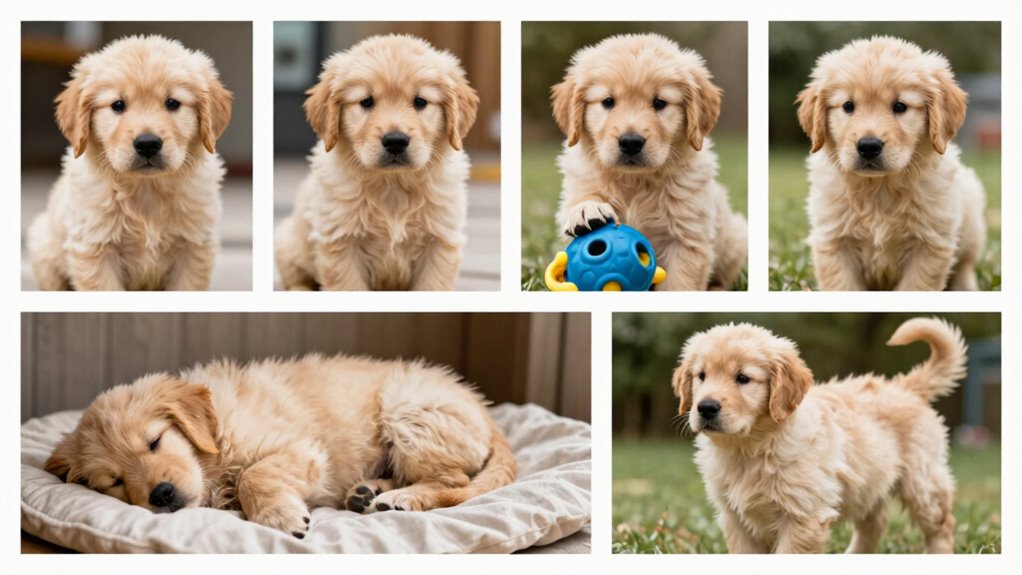

As your puppy grows from 0-6 months, you’ll notice routines centered around sleep, meals, and bathroom breaks shifting gradually. Early on, keep training sessions short and focus on socialization, then introduce more structured activities as they grow. Around six months, expect longer bathroom intervals and independence. By one year, routines stabilize, but they’ll need new commands and adult food. Staying attentive to these changes helps keep your pup happy and healthy—continue to explore for more helpful tips.
Key Takeaways
- Routines start with frequent bathroom breaks, short training sessions, and socialization in the first 0-6 months.
- As puppies grow, routines become more structured with longer intervals between bathroom breaks and adjusted feeding schedules.
- Around six months, independence increases, and routines include longer bladder control and transition to adult food.
- Developmental milestones require routine adjustments to support growth, nutrition, and behavioral training.
- After one year, routines focus on advanced training, consistent feeding, and adapting to changing energy levels.
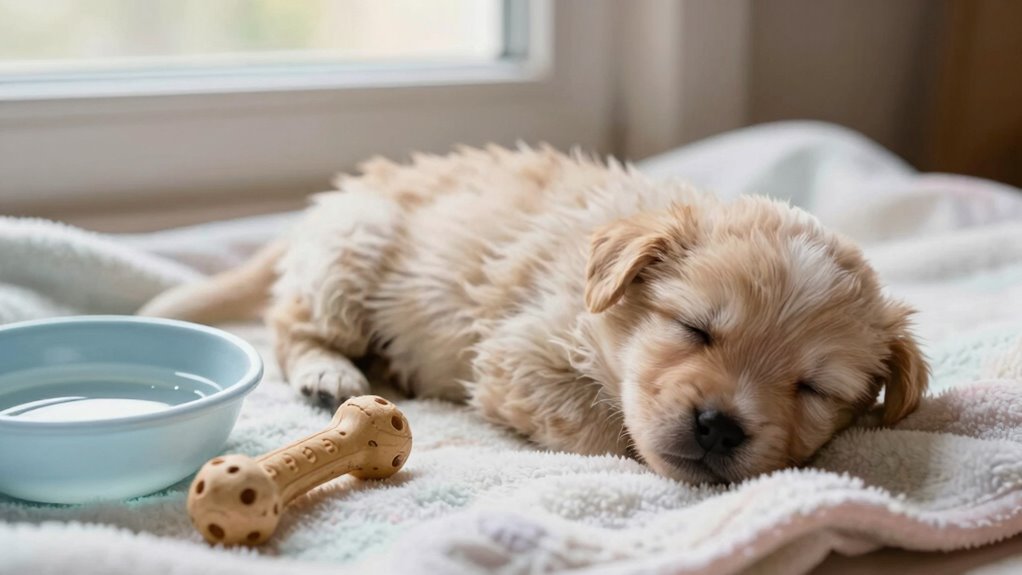
Caring for a puppy involves understanding how their daily routines change as they grow. In the first few months, your puppy’s schedule revolves around sleep, eating, and frequent bathroom breaks. During this time, establishing effective training techniques is vital. You’ll want to start with simple commands like “sit” and “stay,” using positive reinforcement to encourage good behavior. Consistency is key, so keep training sessions short and frequent to match their attention span. As they grow, their ability to learn improves, and their routines become more structured. Be patient, and remember that their energy levels fluctuate, which affects how often you’ll need to focus on training and socialization. Additionally, providing appropriate environmental enrichment can help support their mental development and reduce undesirable behaviors. A stimulating environment can also foster their curiosity and prevent boredom, which is crucial during these developmental stages. Proper socialization and exposure to new experiences during this period are essential for their overall development. Incorporating training and socialization into their daily routine can also promote positive behaviors and strengthen your bond. Dietary needs also evolve rapidly in the first few months. Puppies require a high-quality, nutrient-dense diet suited to their age, size, and breed. During this period, feed them multiple small meals daily—typically three to four—since their tiny stomachs can’t handle large portions at once. As they approach three to six months, you can gradually shift to fewer meals per day, usually twice, but always follow your veterinarian’s advice. Keep an eye on their weight and growth to guarantee they’re developing properly. Proper nutrition supports their immune system and overall health, making it easier to maintain routines and train effectively.
Understanding evolving routines helps ensure your puppy’s healthy growth and effective training.
By around six months, your puppy will start to shed some of their initial clinginess and become more independent. Their bathroom schedule will lengthen, and they’ll be able to hold their bladder for longer periods. This is a good time to reinforce training techniques that promote good behavior without excessive oversight. Their dietary needs will also shift slightly—many puppies can switch to adult food around this age, but check with your vet first. Maintaining consistent feeding times and bathroom routines helps them feel secure and reduces accidents. Additionally, their growth rate will slow down, signaling the need to adjust their routines accordingly to support healthy development. Recognizing signs of developmental milestones can help you adapt their routines effectively during this phase. Staying attentive to their changing needs ensures they develop into a well-rounded adult dog.
As your puppy reaches one year, their routine will stabilize further, but you’ll still need to adapt to their changing energy levels and growth spurts. Regular training sessions should now focus on more advanced commands and socialization, ensuring they remain well-behaved. Their dietary needs will likely settle into a more adult pattern, but ongoing attention to nutrition and exercise remains important. Throughout all these stages, your attentiveness to their routines, training techniques, and dietary needs guarantees a smooth transition as they mature. With patience and consistency, you’ll help your puppy grow into a healthy, well-behaved companion.

OYEFLY Dog Training Clicker with Wrist Strap Durable Lightweight Easy to Use, Pet Training Clicker for Cats Puppy Birds Horses. Perfect for Behavioral Training 2-Pack (Black and Water Lake Blue)
EASY TO USE – Simple push button with distinct clicking sound.
As an affiliate, we earn on qualifying purchases.
As an affiliate, we earn on qualifying purchases.
Frequently Asked Questions
How Can I Train My Puppy to Sleep Through the Night?
To train your puppy to sleep through the night, establish a consistent bedtime and use housebreaking techniques like crate training to create a safe, comfortable space. Limit water intake before bed and take your puppy outside for bathroom breaks right before sleeping. Incorporate socialization tips by gradually exposing your puppy to different environments during the day, helping them feel secure. Be patient and consistent, and your puppy will learn to settle down through the night.
What Are Signs of Developmental Milestones in Puppies?
Imagine a tiny explorer suddenly standing taller, ears perked up, eyes bright with curiosity—that’s a developmental milestone. You’ll notice signs like increased puppy socialization, playful independence, and refinement of developmental behavior. These cues mean your pup is growing and learning essential skills. Watch for their ability to interact confidently, respond to commands, and display new problem-solving. These signs show they’re progressing through key stages of development, shaping a well-rounded, confident dog.
How Do I Manage a Puppy’s Teething Discomfort?
To manage your puppy’s teething discomfort, offer teething relief with cold, wet washcloths or chilled toys. Choose appropriate chew toys that are sturdy and safe, focusing on those specifically designed for teething puppies. Rotate toys to keep your pup engaged, and avoid giving them items that could break or be harmful. Consistent, gentle redirection and positive reinforcement help soothe their gums and make teething easier for your puppy.
When Should I Start Crate Training My Puppy?
You should start crate training your puppy as early as 8 weeks old, making it a positive experience. During this time, incorporate puppy nutrition and socialization techniques by introducing the crate with treats and praise, helping your pup feel secure. Gradually increase crate time, ensuring it’s a safe space. Early training fosters good habits, reduces anxiety, and sets the foundation for proper socialization and balanced development.
How Do I Handle a Puppy’s Separation Anxiety?
To tame your puppy’s separation anxiety, start with socializing tips like gradual goodbyes and positive reinforcement. Use calming techniques such as creating a cozy, consistent space and playing soothing sounds. Stay patient, providing plenty of praise and reassurance. By building a bond through consistent routines, you’ll help your pup feel safe and secure, easing anxiety over time. Remember, patience and positive practices foster a fearless, faithful friendship.

Dog Bed Mat – Soft & Comfortable Dog Kennel Pad for Crate – Durable Crate Bed & Mat for Dogs & Cats – Ideal for Crate, Kennel, and Home Use
Dual-Sided for All-Season Comfort: This dog bed mat features a reversible design tailored for year-round use. One side…
As an affiliate, we earn on qualifying purchases.
As an affiliate, we earn on qualifying purchases.
Conclusion
As your puppy grows, their daily routine will evolve, keeping you on your toes. Remember, patience is key—what works one month might need tweaking the next. Embrace each stage as a learning experience, and don’t forget, Rome wasn’t built in a day. With consistent care and love, you’ll nurture a well-adjusted pup who’s ready to take on the world, one paw at a time. Keep the faith, and enjoy every moment of this exciting journey!

Blue Buffalo Life Protection Formula Puppy Dry Dog Food with DHA and ARA, Made with Natural Ingredients, Chicken & Brown Rice Recipe, 5-lb Bag
REAL CHICKEN FIRST: This Blue Buffalo dry dog food is made with real, high quality chicken as the…
As an affiliate, we earn on qualifying purchases.
As an affiliate, we earn on qualifying purchases.

XIUGOAL Pink Puppy Toys for Boredom – 23 Pack Puppy Chew Toys for Teething, Interactive Dog Toys for Puppies, Cute Small Dog Toys with Treat Ball, Squeaky Dog Chew Toys and Ropes
Pink Dog Toys for Female Puppy: Great for female dogs (under 25 Lbs), including 8 rope toys, 5…
As an affiliate, we earn on qualifying purchases.
As an affiliate, we earn on qualifying purchases.