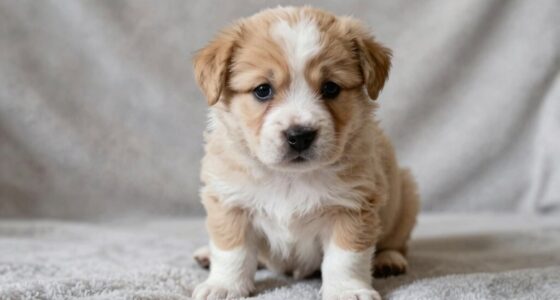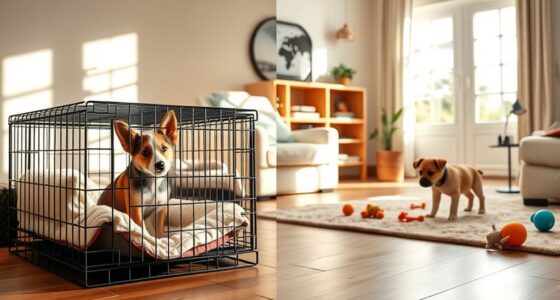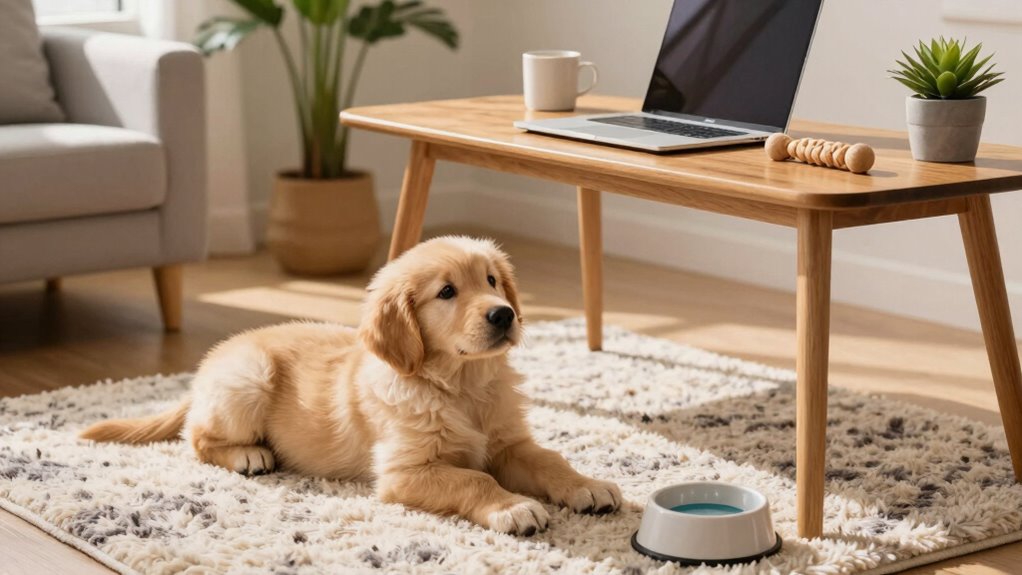
To create the best puppy routine while working from home, set designated times for socialization, potty breaks, and play. Schedule short, frequent breaks every 2-3 hours to tend to your puppy’s needs, using crate training and positive reinforcement. Keep a consistent feeding and potty schedule, and create a dedicated space for work and pet care. You’ll find simple ways to balance work and puppy, with more tips to help you succeed if you keep exploring.
Key Takeaways
- Schedule regular short breaks every 2-3 hours for potty, play, and training to reinforce routines and build trust.
- Incorporate daily puppy socialization sessions to boost confidence and prevent behavioral issues.
- Use crate training as a positive space for the puppy during work hours to ensure safety and routine.
- Maintain consistent feeding and potty schedules to support housebreaking and routine stability.
- Designate specific work and puppy areas to minimize distractions and allow quick attention when needed.
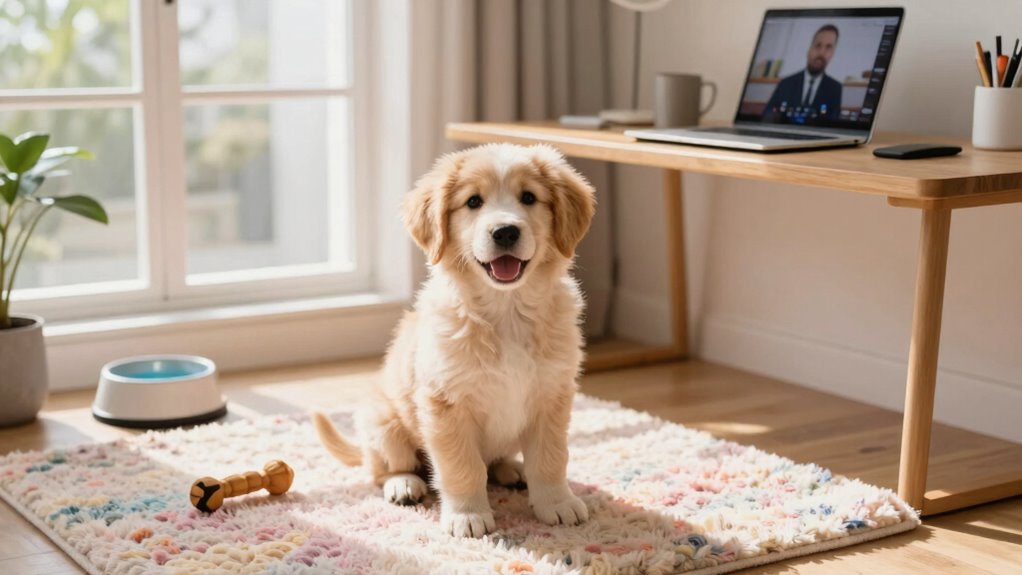
Working from home offers flexibility, but it also means you need a solid routine to care for your puppy while staying productive. Establishing a structured schedule helps you balance work with your puppy’s needs, especially during the vital early months. One of the first priorities is puppy socialization. You want your puppy to feel comfortable around people, other pets, and different environments. To do this, set aside specific times each day for gentle introductions—whether it’s a quick visit from a friend or supervised play with other vaccinated puppies. Socialization not only boosts your puppy’s confidence but also helps prevent behavioral issues later.
Crate training is equally essential and should be integrated into your daily routine. When done correctly, it creates a safe space for your puppy and helps with housebreaking. Start by introducing the crate as a positive environment, placing treats and toys inside, and encouraging your puppy to enter voluntarily. During your workday, use the crate to give your puppy a quiet place to rest and feel secure. Remember, crate training isn’t about punishment; it’s about creating a consistent, comforting routine that your puppy learns to associate with safety. Keep crate time brief initially, gradually increasing the duration as your puppy becomes more comfortable.
To make this routine effective, plan your day around short, frequent breaks. Every two to three hours, pause your work and spend 10-15 minutes engaging with your puppy. Use this time for potty breaks, short play sessions, or gentle training exercises. This approach minimizes accidents inside and helps your puppy develop good habits. During these breaks, reinforce crate training by encouraging your puppy to rest quietly inside the crate, offering treats or praise when they settle down. This consistency builds trust and helps your puppy learn that being alone for short periods is okay.
In addition, incorporate consistent feeding times into your schedule. Feeding your puppy at the same times each day helps regulate their bathroom schedule, making house training more predictable. After meals, take your puppy outside promptly to reinforce potty training and prevent accidents indoors. Make sure your work setup allows you to quickly attend to your puppy’s needs without too much disruption. A dedicated space for your work and a designated area for your puppy’s needs create boundaries, making it easier to maintain focus. Incorporating biodiversity principles in your environment, such as choosing pet-friendly plants or natural decor, can also contribute to a more sustainable living space for both you and your puppy. Additionally, understanding positive reinforcement techniques can accelerate your puppy’s learning process and strengthen your bond.
Ultimately, a well-planned routine that emphasizes puppy socialization, crate training, and scheduled breaks will help you stay productive while raising a happy, well-adjusted puppy. Your consistency and patience will pay off, fostering a strong bond and a smooth daily flow.
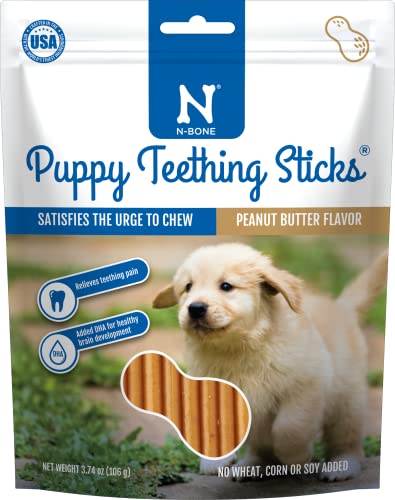
N-Bone Puppy Teething Sticks Peanut Butter Flavor, 3.74-oz Bag
Available in puppy-favorite Peanut Butter flavor for the first time!
As an affiliate, we earn on qualifying purchases.
As an affiliate, we earn on qualifying purchases.
Frequently Asked Questions
How Do I Train My Puppy to Be Independent?
To train your puppy to be independent, start with crate training to create a safe space for them. Gradually introduce puppy socialization by exposing them to different people, places, and other dogs, helping build confidence. Practice short periods of separation, rewarding calm behavior. Consistent routines and positive reinforcement will help your puppy feel secure and independent, making it easier for them to be alone comfortably over time.
What Are Some Ways to Prevent Separation Anxiety?
To prevent separation anxiety, start with puppy socialization early, exposing your pup to different people and environments gradually. Use crate training to create a safe, cozy space where they feel secure when alone. Practice short departures, gradually increasing time apart to build confidence. Consistent routines and positive reinforcement help your puppy feel more comfortable when you’re away. Over time, these strategies reduce anxiety and foster independence.
How Often Should I Change My Puppy’s Routine?
Think of your puppy’s routine as a garden needing regular tending. You should change it gradually, about every few months, to match their growing needs. Incorporate consistent times for puppy nutrition, crate training, and play. As your puppy matures, adjust activities to challenge them and fit their energy levels. Keep an eye on their development, and tweak the routine to guarantee they stay happy, healthy, and well-adjusted.
What Are the Best Toys for Mental Stimulation?
You should choose interactive puzzles and sensory toys to keep your puppy mentally stimulated. Interactive puzzles challenge their problem-solving skills and keep them engaged, while sensory toys provide different textures and sounds that excite their senses. Rotate these toys regularly to prevent boredom and encourage curiosity. By incorporating these toys into your puppy’s routine, you help develop their intelligence and reduce anxiety, making them happier and more well-adjusted.
How Can I Balance Work Calls With Puppy Care?
You can balance work calls with puppy care by scheduling dedicated play and socialization times, especially during breaks. Use crate training to keep your puppy safe and calm during important calls. Incorporate puppy socialization into daily routines, like short walks or gentle interactions, so your puppy learns good behavior without constant supervision. This approach helps you stay productive while ensuring your puppy feels secure and well cared for.
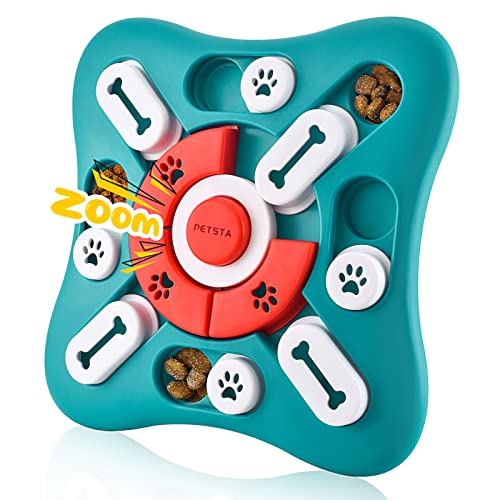
PETSTA Dog Puzzle Toys, Treat Dispensing Dog Enrichment Toys for IQ Training and Brain Stimulation, Interactive Mentally Stimulating Toys as Gifts for Puppies, Cats, Dogs
【PRODUCT SIZE】10 inch*10 inch*1.3 inch.
As an affiliate, we earn on qualifying purchases.
As an affiliate, we earn on qualifying purchases.
Conclusion
Establishing a consistent routine for your puppy helps create a gentle rhythm in your busy day, like a steady heartbeat guiding both of you. It’s about weaving moments of play, rest, and training into the fabric of your work-from-home life, gently nurturing trust and comfort. As you tend to your puppy’s needs with patience and care, you’ll find your days flowing more smoothly—like a peaceful stream—making your shared journey joyful and rewarding.

Amazon Basics Leak-Proof Dog and Puppy Potty Training Pee Pads with Quick-Dry 5-Layer Super Absorbent Design, Regular Size 22 x 22 inch, Blue & White, 100 Count
FSC-certified PADS (FSC N004130). Made with materials from well-managed forests, recycled materials, and/or other controlled sources
As an affiliate, we earn on qualifying purchases.
As an affiliate, we earn on qualifying purchases.

Chipak 16L Large Automatic Dog Feeder with Timer, Stainless Steel Pet Food Dispenser W/Programmable Feeding Schedule for Large Breed Dogs or Cats
【16L Extra Large Capacity Dog Feeder】 Compared with other dog feeders, this 16L large capacity dog feeder can…
As an affiliate, we earn on qualifying purchases.
As an affiliate, we earn on qualifying purchases.