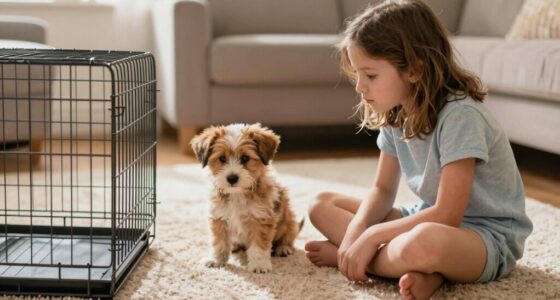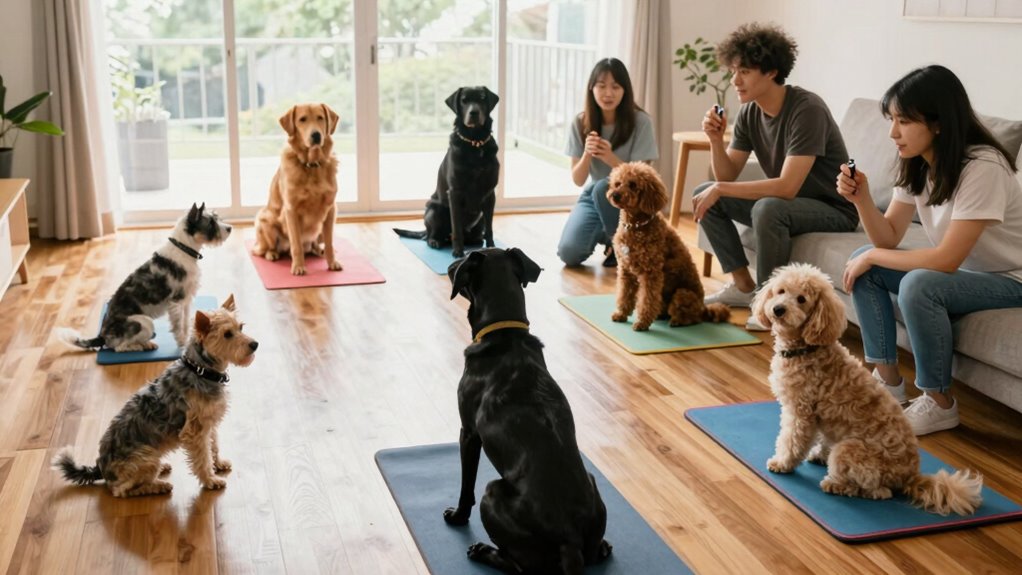

To train in a multi-dog home without confusion, establish yourself as the clear leader by setting consistent boundaries and rules everyone follows. Recognize each dog’s personality and adapt your approach, using positive reinforcement and short, frequent sessions for excitable dogs while longer, calm sessions suit others. Keep commands consistent and avoid favoritism to maintain harmony. If you stick with these strategies, you’ll create a peaceful environment where all dogs understand their roles and obey happily.

Get pet supplies delivered free — and shop member deals
- Fast, free delivery on millions of items
- Access to Prime Big Deal Days deals on October 6–7
- Prime Video, Amazon Music and more included
Key Takeaways
- Establish and consistently enforce clear boundaries and commands for all dogs to prevent confusion.
- Identify and reinforce the pack hierarchy, ensuring leadership is clear and respected by every dog.
- Tailor training methods to each dog’s personality, avoiding one-size-fits-all approaches.
- Use positive reinforcement and rewards to promote understanding and encourage desired behaviors.
- Maintain a calm, structured environment with predictable routines to reduce uncertainty and conflict.
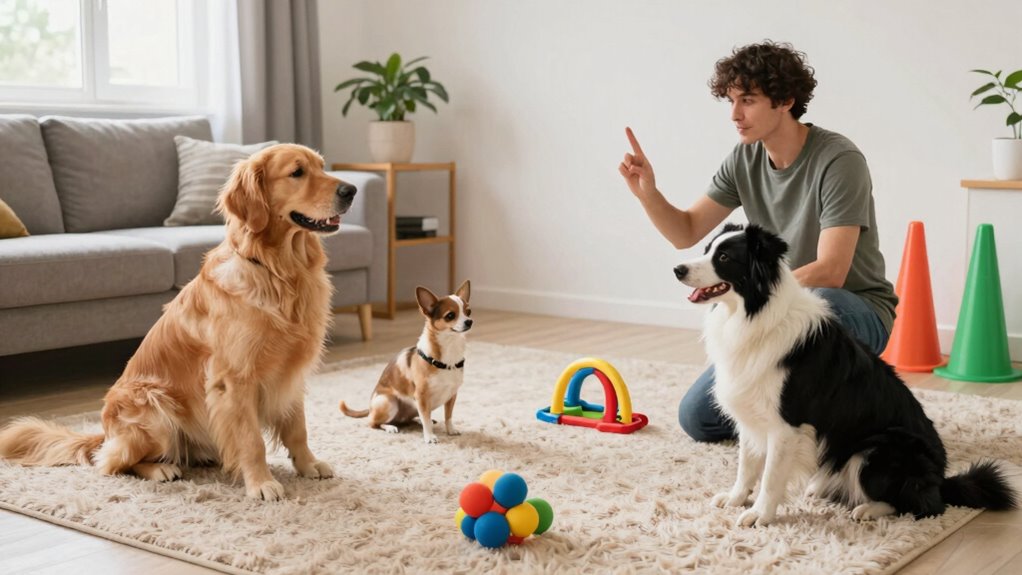
Managing training in a multi-dog household can be challenging, but with the right approach, you can keep everyone on the same page without causing confusion. One of the key aspects to contemplate is understanding the dog pack hierarchy. Dogs naturally establish social ranks, and recognizing this can help you develop effective training strategies. When you understand who the alpha is or how the dogs relate to each other, you can use that knowledge to set clear boundaries and expectations. For example, the more dominant dog might need to learn that you’re the true leader, and this can influence how you structure training sessions. By establishing your leadership role, you prevent potential conflicts that arise from pack disputes and ensure each dog knows their place.
Understanding your dogs’ social ranks helps establish clear boundaries and a peaceful training environment.
At the same time, it’s essential to implement individual training strategies for each dog. Every dog has a unique personality, learning style, and motivation. Some respond well to treats, while others thrive on praise or play. Tailoring your training methods to each dog’s needs helps them learn faster and reduces frustration for both you and your pets. For instance, the more excitable dog might need shorter, more frequent sessions to stay engaged, whereas a calmer dog could handle longer periods of training. Using individual strategies also helps prevent competition or jealousy, which can happen when dogs feel they’re being left out or compared to their siblings.
Balancing the dog pack hierarchy with individual training strategies requires consistency. You should always reinforce your leadership role and use the same commands and rules across the household. When each dog understands what’s expected of them, it minimizes confusion. Be clear and firm but fair, avoiding favoritism. If one dog receives special privileges, it might upset the balance, leading to tension within the pack. At the same time, acknowledging each dog’s unique needs during training shows respect for their individuality and promotes harmony. Understanding the importance of dog pack hierarchy can significantly influence successful training outcomes.
Finally, remember to keep training sessions positive and rewarding. Celebrate small victories and make the process enjoyable. When you’re consistent and attentive to the dog pack hierarchy and individual needs, everyone in your household will learn faster, and your multi-dog environment will stay peaceful and organized. With patience and clarity, you can successfully train multiple dogs without creating chaos or confusion, ensuring everyone knows their role and feels valued.
As an affiliate, we earn on qualifying purchases.
Frequently Asked Questions
How Do I Introduce New Dogs to My Home Safely?
To introduce new dogs safely, start with a controlled, neutral environment for dog socialization. Keep initial meetings calm and short, observing body language for signs of stress or aggression. Use a safe introduction approach, like leashing dogs and allowing them to sniff and greet gradually. Make certain each dog feels secure, and gradually increase interactions. Patience and positive reinforcement help everyone feel comfortable, making the process smooth and stress-free.
What Are Signs of Jealousy Between Dogs?
Jealousy behaviors in dogs often show as guarding resources, such as food or toys, or seeking attention when the other dog gets it. You might notice canine rivalry manifesting as growling, snapping, or avoiding the other dog altogether. Don’t dismiss these signs; instead, address them calmly. Recognizing jealousy helps you manage interactions better, ensuring all dogs feel secure and loved without competition or tension escalating.
How Can I Prevent Resource Guarding Among Dogs?
To prevent resource guarding, you should encourage resource sharing by feeding dogs separately or using barriers, so they learn to share peacefully. Address territorial behavior by providing each dog with individual spaces and possessions. Consistently reward calm, non-guarding behavior and avoid punishment, which can escalate guarding tendencies. Regularly observe interactions, and intervene early if guarding starts, helping your dogs feel secure and reducing conflicts over resources.
What Training Tools Work Best for Multiple Dogs?
You should use tools like slip leashes, harnesses, and treat-dispensing toys to manage multiple dogs effectively. Incorporate consistent grooming routines and structured exercise schedules to help them stay calm and focused during training. Always supervise interactions, and use positive reinforcement to encourage good behavior. These tools and routines make training smoother, reduce confusion, and help each dog understand their boundaries without causing stress or rivalry.
How Do I Manage Individual Training Needs?
You can manage each dog’s individual training needs by establishing consistent behavior routines for everyone. Many think it’s overwhelming, but sticking to clear, repeated routines helps dogs understand their roles. Use behavior consistency to reinforce commands, and dedicate specific times for one-on-one training. This approach guarantees each dog gets personalized attention without confusion, making training smoother and more effective for multi-dog households.
Conclusion
Training in a multi-dog home is like conducting a symphony—you need harmony, patience, and clear signals. Remember to set consistent rules and individual boundaries for each pup, so their behaviors don’t clash like discordant notes. With steady guidance and a touch of compassion, you’ll orchestrate a peaceful household where every dog feels understood and secure. Keep your rhythm steady, and soon, your home will sing with the sweet sound of well-trained pups.
Halloween Picks
halloween
As an affiliate, we earn on qualifying purchases.