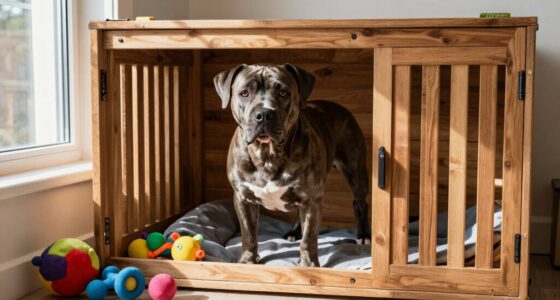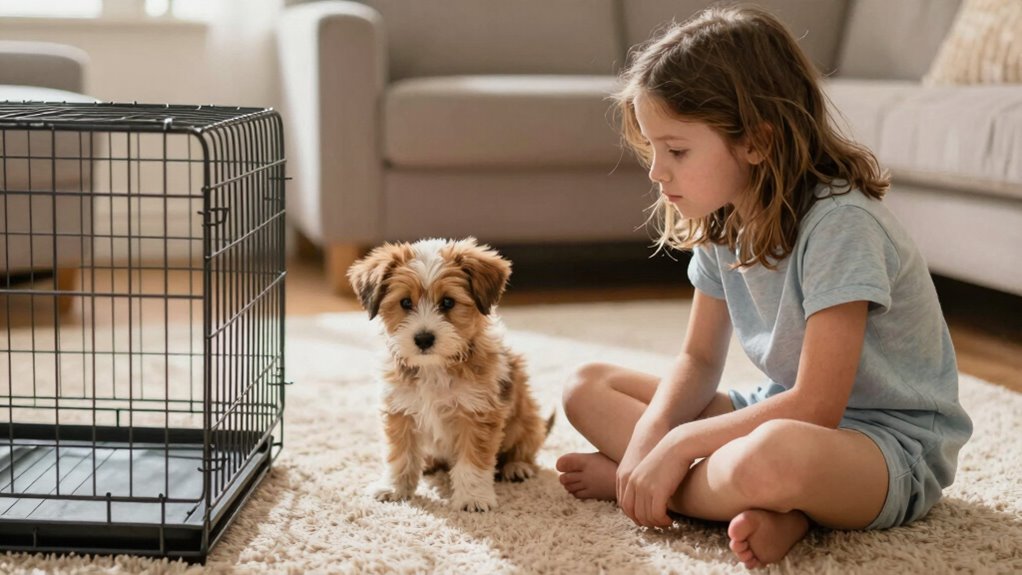

If your puppy suddenly hates the crate during adolescence, it’s often due to developmental changes, increased independence, or negative past experiences with confinement. They might be testing boundaries or feeling anxious from environmental shifts. To help, reintroduce the crate gradually with positive reinforcement and create a cozy, inviting space. Addressing fears and building trust are key—continue exploring this guide for practical tips to support your puppy’s comfort and confidence.

Get pet supplies delivered free with Prime
- Fast, free delivery on millions of items
- Prime Video, Amazon Music and more included
- Member-only deals all year
Key Takeaways
- Adolescence increases puppy independence, causing testing boundaries and potential crate aversion.
- Past traumas or environmental changes can trigger fear or dislike of the crate.
- Signs of crate regression include whining, scratching, and reluctance to enter or settle inside.
- Reintroduce the crate gradually using positive reinforcement and create a comfortable, inviting environment.
- Address anxiety with patience, consistency, and professional guidance if necessary.
puppy crate training positive reinforcement
As an affiliate, we earn on qualifying purchases.
As an affiliate, we earn on qualifying purchases.
Why Do Puppies Backslide on Crate Training During Adolescence?
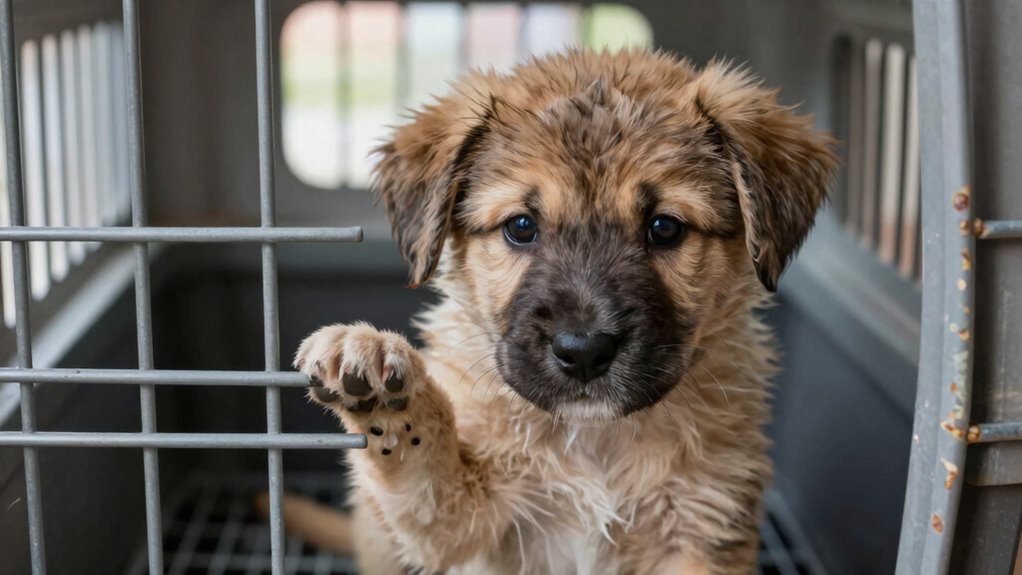
During adolescence, puppies often seem to regress in their crate training, and this can be confusing for owners. During this phase, your puppy is developing a stronger sense of puppy independence, which can make them more resistant to crate confinement. They may test boundaries to assert their independence, causing them to backslide on previously learned behaviors. Additionally, crate customization becomes vital—if the crate isn’t comfortable or feels too restrictive, your puppy might refuse to enter or stay inside. During this time, their need for exploration and autonomy increases, leading to behaviors like whining or avoiding the crate altogether. Understanding that this regression is part of normal development helps you adapt your approach, ensuring your puppy gradually regains comfort and trust in their crate.
How Can You Recognize Signs of Crate Aversion in Your Puppy?
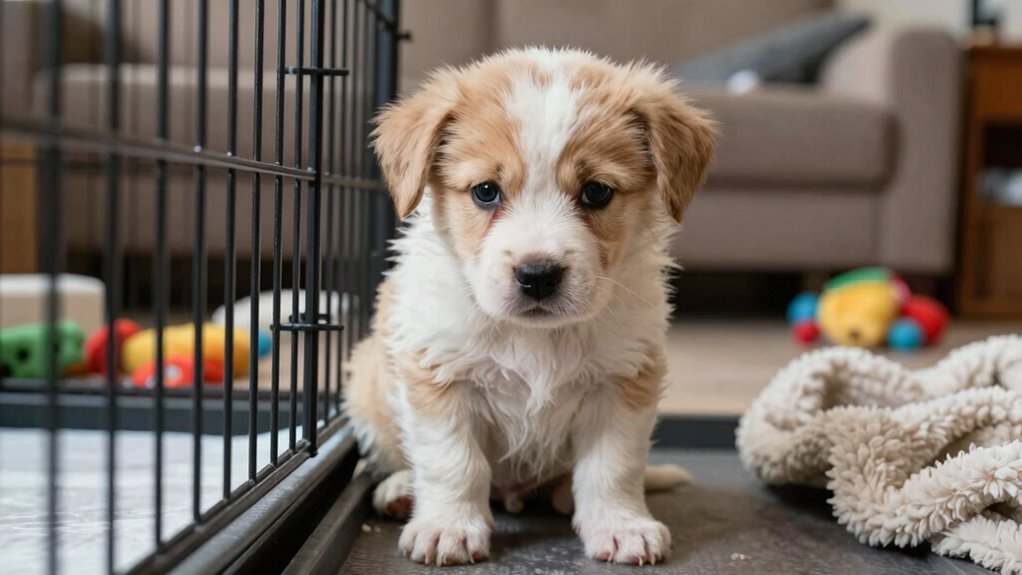
Recognizing signs of crate aversion early can save you from ongoing frustration and help your puppy feel more comfortable. If your puppy starts resisting crate familiarity, you might notice excessive whining, barking, or scratching at the door. They may try to escape by pawing or biting the crate, or become visibly anxious when confined. A lack of puppy independence during crate time, such as refusing to settle or showing signs of distress, also indicates discomfort. Pay attention to their body language—tensed muscles, avoiding eye contact, or trying to escape—these are clear signs they’re unhappy. Addressing these signs promptly allows you to adjust your approach and rebuild trust, ensuring the crate remains a safe and positive space for your puppy. Additionally, understanding the importance of environmental factors can help you optimize the environment around your puppy to make the crate more inviting and less intimidating. Creating a calm and consistent environment can significantly reduce crate aversion and promote positive associations. Being aware of puppy psychology can help you tailor your training methods to better support your puppy’s comfort and confidence.
What Are Common Psychological and Environmental Triggers for Crate Hating?
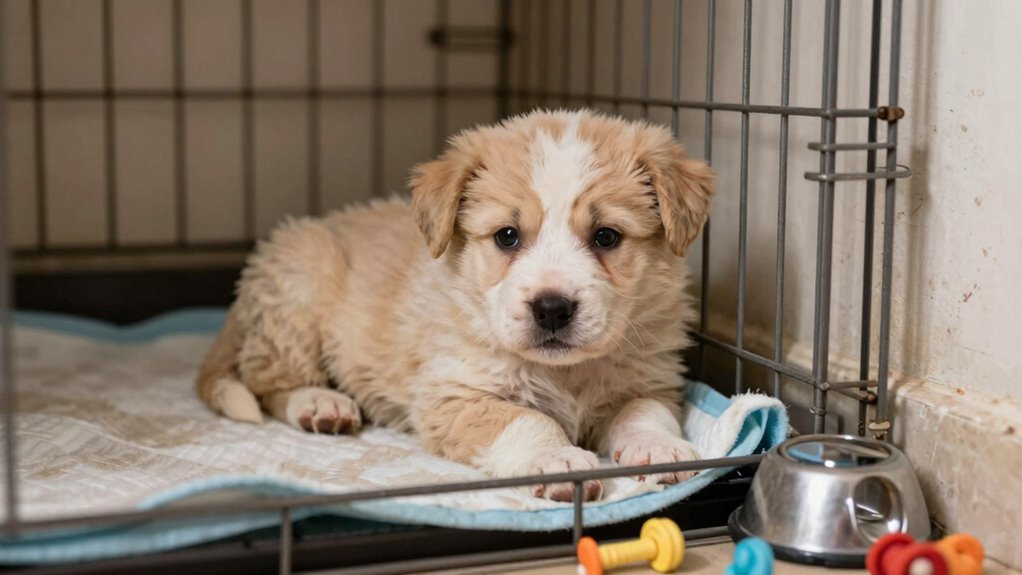
Your dog might start hating the crate after a traumatic experience or negative incident. Changes in the household or environment can also make the crate seem unfamiliar or scary. Recognizing these triggers helps you address your dog’s fears and create a safer, more comforting space. Additionally, understanding essential oils for calming can help you explore natural ways to keep your dog comfortable during power outages or outdoor activities.
Past Traumatic Experiences
Past traumatic experiences often serve as powerful psychological and environmental triggers for crate hating in adolescents. Traumatic memories from previous incidents—such as being confined too harshly or during stressful events—can cause your puppy to associate the crate with fear and discomfort. These past experiences create negative associations that resurface whenever they’re placed inside the crate again. If your dog has been mishandled or frightened in the past, they might interpret the crate as a threat rather than a safe space. Recognizing these triggers is essential to understanding their behavior. By addressing and mitigating these traumatic memories, you can help your puppy rebuild positive feelings toward the crate and regain their trust.
Changes in Environment
Changes in a dog’s environment can markedly contribute to crate aversion, especially if these changes are sudden or unfamiliar. Environmental changes, such as moving to a new home, new family members, or rearranged furniture, can unsettle your puppy. These disruptions may trigger anxiety or fear, making the crate feel like an unsafe space. During adolescence, your puppy’s adaptability can vary, and they might struggle more with these shifts. If they associate the crate with past stressful events or feel overwhelmed by new surroundings, they may resist entering or stay away altogether. Supporting your puppy’s ability to adapt fosters positive associations with the crate and minimizes the likelihood of crate hating caused by environmental stressors. Recognizing the importance of behavioral development can help you better understand and address your puppy’s reactions during this critical period. Additionally, consistent routines can provide a sense of stability that eases their adjustment to environmental changes. Implementing positive reinforcement during these adjustments encourages your puppy to view the crate as a safe and comforting space, which is essential for their emotional well-being. Maintaining a predictable schedule helps reinforce feelings of security amid these shifts.
How Do You Safely Reintroduce Your Puppy to the Crate?
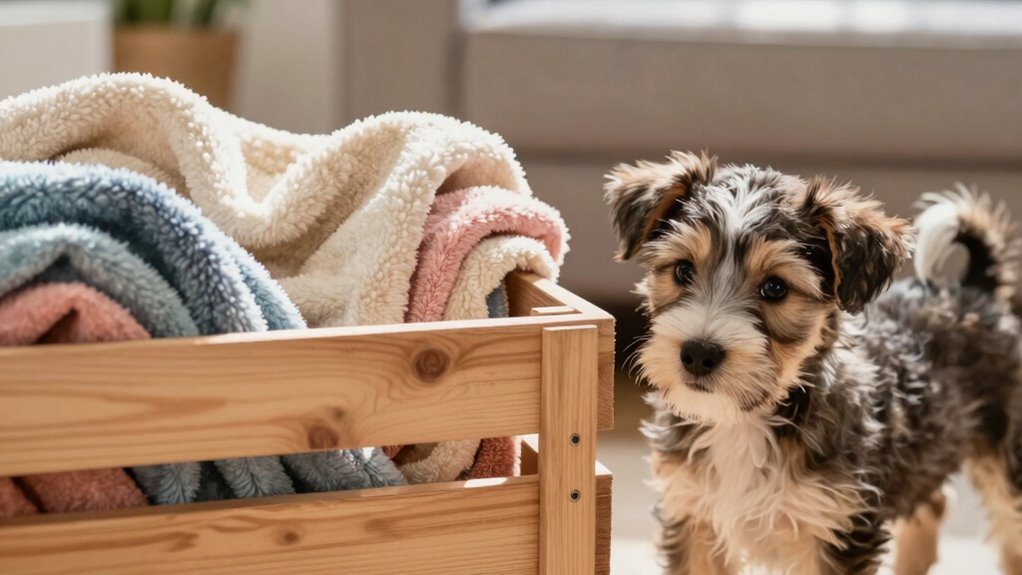
To safely reintroduce your puppy to the crate, start with a gradual reacclimation approach, allowing them to explore at their own pace. Use positive reinforcement techniques, like treats and praise, to create a happy association with the crate. Make sure the crate environment is comfortable and inviting to encourage your puppy to feel secure inside. Incorporating art and culture into your training environment, such as displaying calming artwork or cultural symbols, can also promote a sense of security and well-being.
Gradual Reacclimation Strategy
Reintroducing your puppy to the crate safely requires a gentle, step-by-step approach. Start by creating a positive environment that promotes crate comfort and stress reduction. Gradually increase your puppy’s exposure, making the crate a safe haven rather than a punishment. You might:
- Place treats and toys inside, encouraging your pup to explore at their own pace
- Keep the door open initially, allowing easy access without pressure
- Spend quiet time nearby, so your puppy feels secure and unthreatened
- Recognize the importance of a toxin-free environment to support your puppy’s overall well-being and reduce stress. Establishing a stress-reducing environment can further facilitate a smoother reintroduction process. Additionally, ensuring your space is free from physical hazards minimizes potential accidents that could cause fear or discomfort for your puppy. Creating a calm and comforting space can help your puppy associate the crate with positive feelings.
As your puppy becomes more comfortable, slowly close the door for short periods, then gradually extend these times. Patience is key—this process rebuilds trust and helps your puppy associate the crate with safety and calmness.
Positive Reinforcement Techniques
Using positive reinforcement is one of the most effective ways to help your puppy feel comfortable and safe when reintroducing the crate. Focus on rewarding your puppy for calm behavior around the crate, such as sitting quietly nearby or entering willingly. Use treats, praise, or gentle petting to reinforce these positive actions. During crate training, only reward your puppy when they show calmness and curiosity, not fear or resistance. Keep sessions short and gradually increase their duration as your puppy becomes more comfortable. Consistency is key—always reward good behavior and avoid punishment. This approach builds trust and associates the crate with positive experiences, making your puppy more likely to willingly reenter and settle inside. Incorporating behavioral reinforcement techniques helps ensure a successful, stress-free crate reintroduction. Additionally, incorporating desensitization strategies can further reduce your puppy’s anxiety around the crate, promoting a more positive association. Understanding the importance of a positive training environment can also enhance your puppy’s comfort and confidence during this process.
Comfortable Crate Environment
Creating a comfortable crate environment is essential for your puppy’s successful reintroduction. A cozy space promotes crate comfort and helps ease anxiety. To achieve this, add soft bedding that cushions and insulates, making the crate inviting. Include familiar scents or a piece of your clothing to provide reassurance. Consider environment enrichment by placing safe toys or chew items inside to keep your puppy engaged. Keep the crate in a quiet, familiar area away from drafts or loud noises. Guarantee the door remains open initially, so your puppy can explore at their own pace. This approach helps build positive associations and reduces fear. Using eco-friendly recycling tips can also make your crate setup more sustainable. A well-enriched, comfortable crate environment encourages your puppy to see the crate as a safe, cozy retreat rather than a place of punishment. Additionally, understanding large number conversions can help you better communicate with trainers or vets about your puppy’s progress. Incorporating positive reinforcement techniques during crate training can further foster a sense of security and trust in your puppy. Ensuring proper crate weight considerations is also important to prevent discomfort and promote safety during use. Being aware of safe crate sizing can help ensure your puppy’s comfort and prevent injury while inside.
How Can You Make the Crate a Positive and Comfortable Space?

To make the crate a positive and comfortable space, start by selecting a size that allows your teen to sit, stand, and stretch comfortably without feeling cramped. A well-chosen crate promotes relaxation and helps your pup view it as a safe retreat. Enhance crate decor with soft bedding, toys, and familiar items that promote comfort. Keep the environment inviting and free of harsh sounds or smells. Consistent training is key; establish a routine so your puppy knows what to expect, reinforcing positive associations with the crate. Use treats and praise when your pup enters willingly, making the crate a rewarding space. Over time, these small steps build trust, making the crate a cozy, positive place your teen puppy will want to retreat to willingly. Additionally, considering the environmental considerations such as minimizing noise and ensuring proper ventilation can further enhance your puppy’s comfort in the crate. Creating a positive association with the crate through patience and gentle encouragement can significantly reduce fear or resistance. Incorporating proper ventilation and ambient noise control can also help your puppy feel more secure and relaxed in its space.
How Do You Address Anxiety and Fear That Make Your Puppy Hate the Crate?
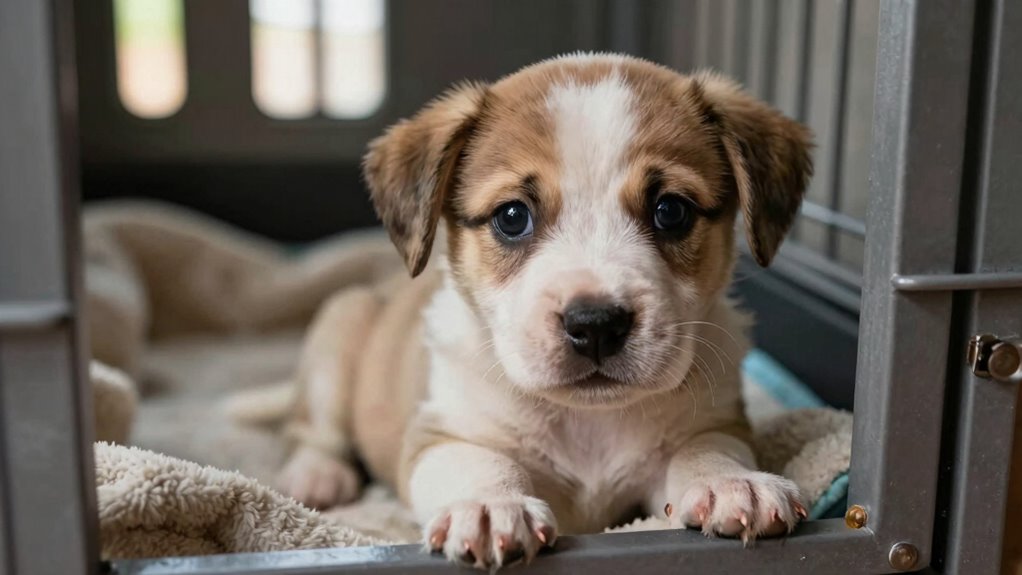
When your puppy shows signs of anxiety or fear toward the crate, addressing these feelings promptly is essential to help them feel safe. To ease their anxiety, focus on creating a calm environment and gradually rebuilding trust. Encourage puppy independence by offering short, positive crate sessions with treats and praise. To prevent crate boredom, provide engaging toys or puzzle feeders inside the crate, making it a stimulating space. Remember, consistency and patience are key. Keep crate time relaxed and never force your puppy in when they resist. By making the crate a safe haven and respecting their fears, you help your puppy develop confidence and reduce anxiety. Additionally, understanding how behavioral training techniques can influence their comfort level is crucial for fostering a positive association. Over time, this approach fosters a positive association, making crate time a comfortable part of their routine.
When Should You Seek Professional Help for Persistent Crate Regression?
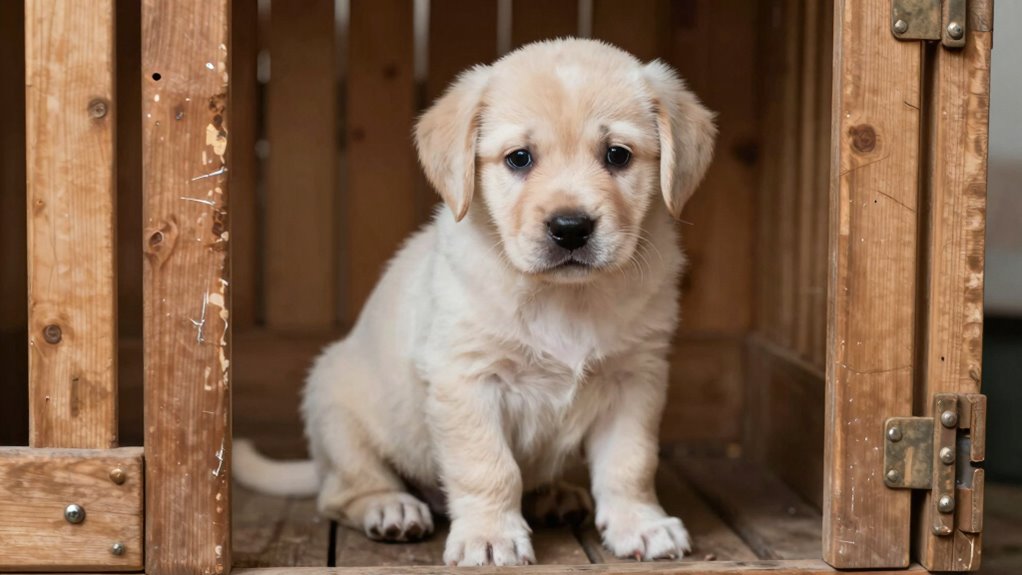
If your puppy’s anxiety or fear about the crate persists despite your efforts, it might be time to contemplate seeking professional help. A qualified trainer or veterinarian can assess your puppy’s behavior and recommend effective behavioral correction strategies tailored to their needs. They can also introduce socialization techniques that help your puppy build positive associations with the crate and reduce fear. Persistent crate regression may indicate underlying issues that require expert intervention, especially if your puppy shows signs of extreme distress, aggression, or avoidance. Recognizing behavioral warning signs early can make a significant difference in addressing the problem effectively. Professional guidance can provide you with structured plans to address these challenges safely and accurately. Don’t hesitate to seek help early—early intervention can prevent long-term behavioral problems and help your puppy regain confidence.
How Can You Prevent Future Crate Regression and Support Your Puppy’s Growth?
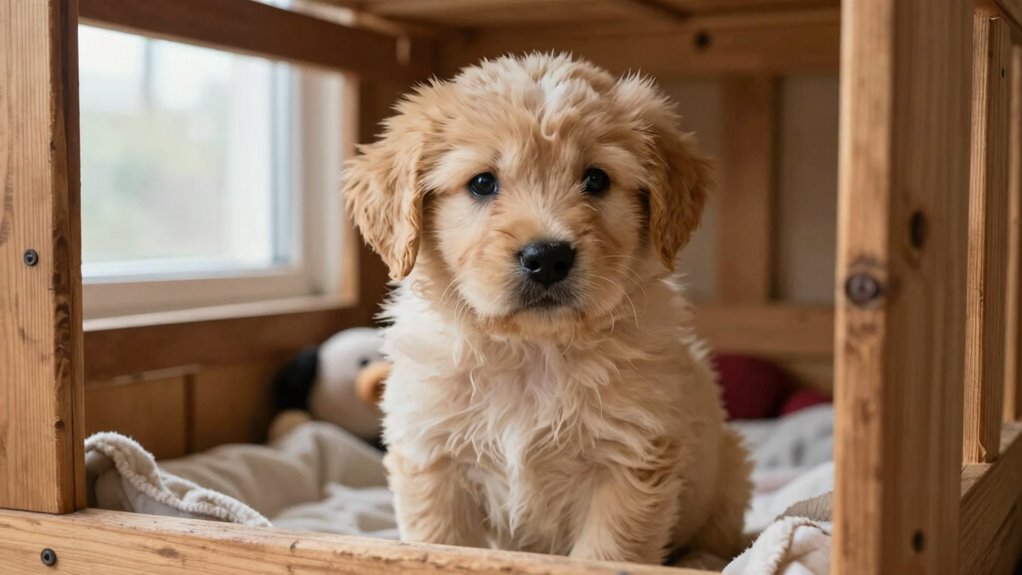
Preventing future crate regression begins with establishing a positive and consistent routine that makes the crate a safe, comfortable space for your puppy. Focus on creating a welcoming crate environment where your puppy feels secure and relaxed. To support this, incorporate training consistency by rewarding calm behavior and gradually increasing crate time. You can achieve this by:
Creating a consistent, positive routine helps your puppy view the crate as a safe and relaxing space.
- Using soft bedding and toys to make the crate inviting
- Keeping a predictable schedule for meals, walks, and crate time
- Praising your puppy whenever they enter or stay calmly in the crate
These steps foster a sense of trust and stability, reducing anxiety and avoiding regressions. Consistent training and a cozy crate environment help your puppy view the crate as a positive, safe space, supporting healthy growth and independence.
Frequently Asked Questions
Is Crate Regression a Sign of Underlying Behavioral Issues?
Crate regression isn’t necessarily a sign of underlying behavioral issues, but it could signal separation anxiety or past trauma. If your puppy suddenly resists the crate, they might be feeling anxious or scared due to recent changes or negative experiences. You should observe their behavior closely, provide reassurance, and avoid punishment. Consulting a professional dog trainer or veterinarian can help identify if deeper issues like trauma are involved and guide appropriate training.
Can Diet or Health Problems Cause Crate Aversion?
A healthy pup is a happy pup, so yes, diet concerns and health implications can cause crate aversion. If your dog feels discomfort or pain, they might associate the crate with negative feelings and resist entering it. Check for signs of illness or dietary issues and consult your vet to rule out health problems. Addressing these concerns can help your pup regain comfort and confidence in their crate.
How Long Does Crate Regression Typically Last?
Crate regression usually lasts a few weeks but can vary depending on your puppy’s age-related anxiety and training setbacks. During adolescence, your pup might temporarily resist the crate as they test boundaries or feel insecure. Stay patient and consistent with positive reinforcement. Keep crate training sessions short, comfortable, and rewarding to help your puppy regain confidence and overcome this phase more quickly.
Are There Breed-Specific Tendencies for Crate-Hating During Adolescence?
In the era of knights and castles, some breeds like terriers and hounds tend to dislike crates during adolescence due to their breed traits and independent nature. These breeds often value freedom and may resist confinement, reflecting typical adolescent behavior. You might notice more resistance in these breeds compared to calmer, more trainable ones. Understanding your dog’s breed traits helps you tailor your training approach, making crate time less stressful for your pup.
What Are Some Effective Calming Techniques During Crate Reintroduction?
To calm your puppy during crate reintroduction, try relaxation exercises like gentle massage or deep breathing to ease anxiety. Incorporate scent therapy by placing a familiar blanket or a piece of your clothing inside the crate, which provides comfort. Use positive reinforcement, praising softly when they settle, and keep initial sessions short. Consistency and patience help your puppy associate the crate with calmness and safety.
Conclusion
Understanding why your puppy suddenly hates the crate during adolescence helps you respond effectively. Remember, about 60% of puppies experience some form of crate regression, often due to growth, fear, or environmental changes. By patiently reintroducing the crate as a safe space and addressing underlying fears, you can help your puppy regain confidence. With consistent positive reinforcement, you’ll strengthen your bond and ensure your puppy feels secure, making crate training a positive experience again.
Halloween Picks
halloween
As an affiliate, we earn on qualifying purchases.