The main difference between watchdog and guard breeds lies in their roles. Watchdogs are alert systems that bark at unusual activity and warn you of potential dangers, but they aren’t necessarily aggressive. Guard breeds, however, are trained to both alert and protect, sometimes confronting intruders if needed. Choosing the right breed depends on your safety needs and lifestyle. Understanding these differences helps you select a dog that fits perfectly into your home—there’s more to discover if you keep exploring.

Get pet supplies delivered free with Prime
- Fast, free delivery on millions of items
- Prime Video, Amazon Music and more included
- Member-only deals all year
Key Takeaways
- Watchdogs primarily alert and react to unusual activity; guard breeds are trained to both alert and actively protect.
- Watchdogs are typically reactive and wary of strangers; guard breeds tend to be more confident and assertive.
- Guard breeds often have a more dominant and territorial temperament compared to watchdogs.
- Proper assessment of temperament and role is essential for selecting the right breed for safety and harmony.
- Training strategies differ significantly, with guard breeds requiring more controlled and disciplined training approaches.
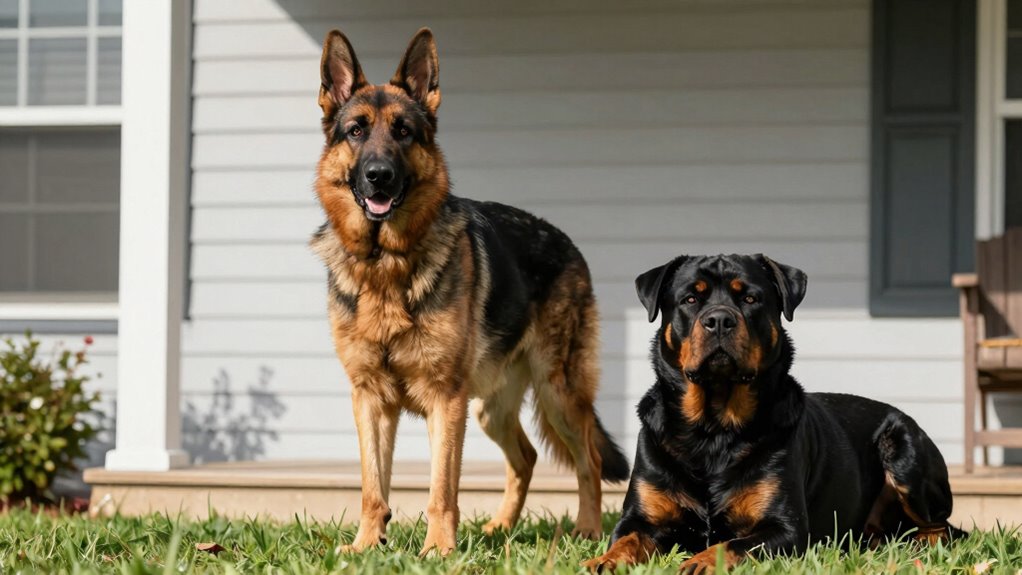
When choosing a dog for security, understanding the difference between watchdogs and guard breeds is vital. These terms often get used interchangeably, but they describe distinct roles and qualities. Watchdogs primarily serve as alert systems—they’re vigilant and quick to bark at any unusual activity. They’re often wary of strangers but may not always be aggressive. Guard breeds, on the other hand, are trained not just to alert but also to protect and potentially confront intruders. Recognizing this distinction helps you select a dog that matches your security needs and lifestyle.
Your choice depends heavily on temperament nuances. Watchdogs tend to be more reactive than proactive; their primary function is to sound the alarm. They’re often wary of strangers but may not always be aggressive. Guard breeds are usually more confident and assertive, capable of confronting threats when necessary. Their temperament nuances require careful assessment: some guard breeds have a calm, reserved demeanor until provoked, while others can be more dominant. Understanding these subtleties helps you determine which breed aligns with your environment and comfort level. Additionally, temperament assessment is crucial in choosing the right breed for your specific situation and ensuring a good fit for your household. Recognizing the distinction between roles can significantly impact your dog’s training and your overall safety. A clear understanding of breed qualities and their training requirements can further enhance your security strategy. A comprehensive understanding of breed temperament can aid in making an informed decision that ensures both safety and harmony in your home.
dog training collar for guard breeds
As an affiliate, we earn on qualifying purchases.
As an affiliate, we earn on qualifying purchases.
Frequently Asked Questions
How Do Training Methods Differ Between Watchdog and Guard Breeds?
Training methods differ between watchdog and guard breeds mainly in their focus and techniques. For watchdog breeds, you use behavioral training and positive reinforcement to encourage alertness and responsiveness to stimuli. Guard breeds require more thorough training techniques, emphasizing control, obedience, and confidence building. You’ll need consistent commands and socialization to guarantee they protect without becoming overly aggressive. Tailoring your training approach helps each breed perform their specific protective roles effectively.
Are Watchdog Breeds Suitable for Family Environments?
Imagine a gentle giant standing guard at your doorstep, ready to protect but also warm and welcoming. Watchdog breeds are often suitable for family environments because they balance alertness with friendliness, reinforcing family safety without being overly aggressive. Their breed compatibility makes them great companions, providing security while still forming loving bonds with children. You’ll find these breeds can serve as both loyal protectors and affectionate family members.
What Health Issues Are Common in Guard Dog Breeds?
You should be aware that guard dog breeds often face health issues like hip dysplasia, bloat, and certain hereditary conditions. Their breed temperament can sometimes lead to stress or anxiety if not properly trained, which may affect their health. Regular health screening is essential to catch potential problems early. By understanding their specific needs, you can help guarantee your guard dog stays healthy and happy.
Can a Dog Be Both a Watchdog and a Guard Breed?
Yes, a dog can be both a watchdog and a guard breed. Notably, about 60% of guard breeds also exhibit watchdog traits. Your dog’s temperament traits and behavioral differences make this possible, as some breeds are naturally alert and protective. By training and socializing properly, you can help your dog develop both alertness and friendliness, making them effective at warning you of danger while also providing a protective presence.
How Do Size and Appearance Influence Breed Selection?
Appearance influence and size considerations play a big role in your breed choice. Larger breeds tend to be more intimidating, making them excellent guard dogs, while smaller ones can be quick watchdogs, alerting you to danger without necessarily intimidating intruders. You should think about how size impacts the dog’s presence and how appearance might match your lifestyle or environment. Ultimately, selecting a breed with the right size and look helps guarantee effective protection and compatibility.
Conclusion
By now, you see that choosing between watchdog and guard breeds isn’t just a small decision—it’s like picking between a gentle guardian angel and a fierce fortress. Knowing the difference guarantees you pick the right protector for your home and family. Don’t underestimate the power of this knowledge; it’s your secret weapon in creating a safe haven. When you understand these breeds, you hold the key to a safer, more secure life—more powerful than you ever imagined.
Halloween Picks
halloween
As an affiliate, we earn on qualifying purchases.