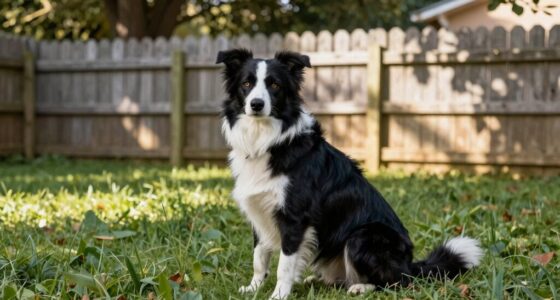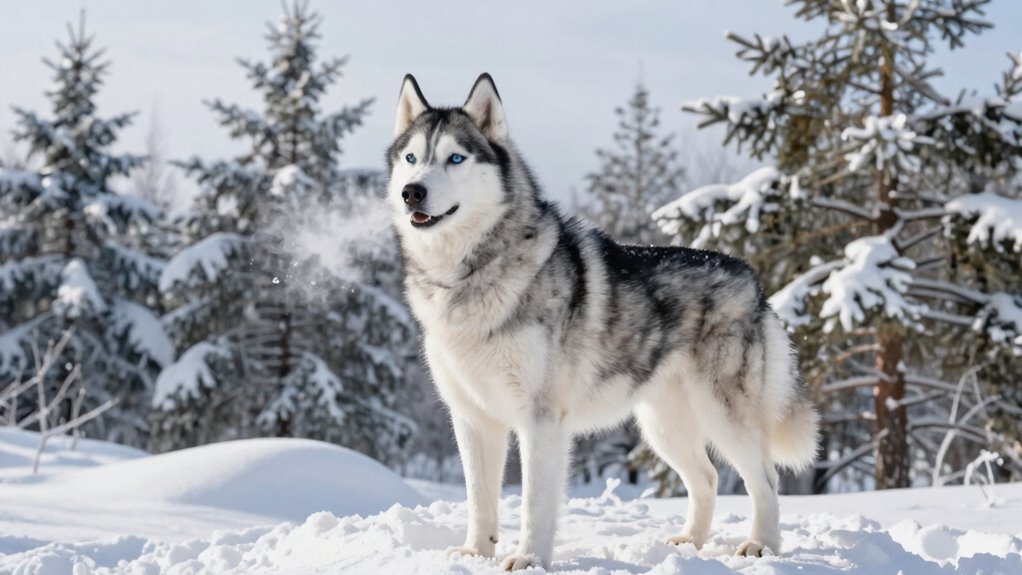
If you’re looking for dog breeds that thrive better in cooler climates, focus on those with dense double coats and sturdy builds. Breeds like Siberian Huskies, Alaskan Malamutes, and Bernese Mountain Dogs are well-adapted to cold weather because of their thick fur and strong physiques. These dogs can handle chilly outdoor conditions with ease. To discover more about choosing the right breed for winter, you’ll find helpful tips and insights ahead.

Get pet supplies delivered free with Prime
- Fast, free delivery on millions of items
- Prime Video, Amazon Music and more included
- Member-only deals all year
Key Takeaways
- Breeds with dense double coats, like Siberian Huskies and Alaskan Malamutes, are naturally adapted to cold climates.
- Sturdy, robust breeds such as Bernese Mountain Dogs and Newfoundland thrive in chilly weather.
- Dogs with thick fur and a strong build, like Samoyeds and Keeshonds, tolerate low temperatures well.
- Cold-weather breeds often have protective features, including bushy tails and layered coats for insulation.
- Selecting breeds with natural cold adaptations ensures better comfort and health in cooler environments.
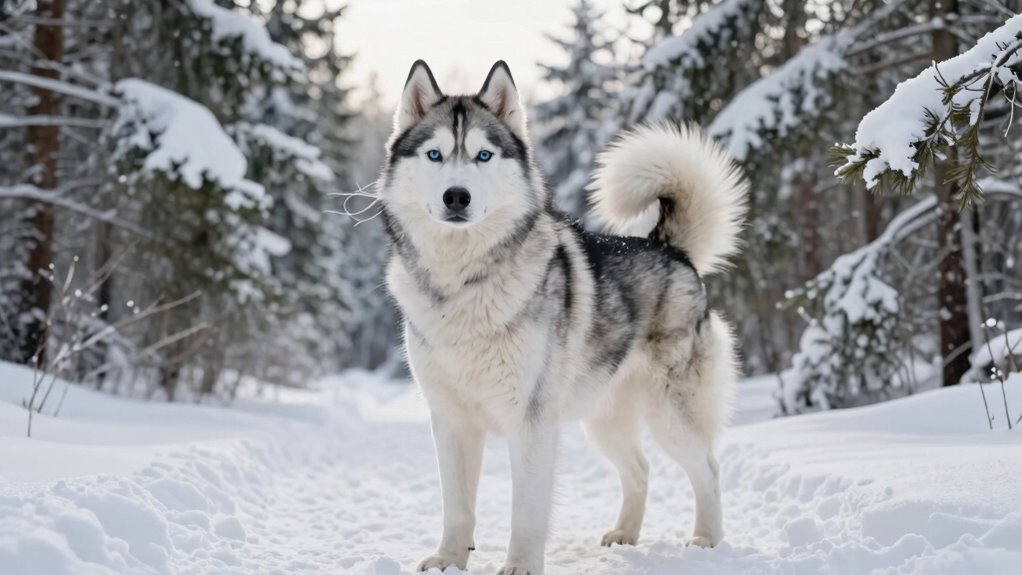
If you live in a cooler climate, choosing a dog breed that can handle the cold is crucial for your pet’s comfort and health. Not all dogs are built to withstand chilly temperatures, so selecting a breed adapted to colder weather ensures your dog stays warm and happy. When caring for a breed suited to colder climates, you should also be mindful of proper dog grooming tips. Regular brushing helps remove loose fur, which can trap heat and keep your dog warmer. Additionally, trimming excess hair around sensitive areas prevents matting and irritation, especially during winter when moisture can cause skin issues. Keep in mind that even cold-weather breeds need protection from extreme conditions—short walks during the coldest parts of the day are preferable, and you should always check your dog’s paws for ice buildup or signs of frostbite.
Cold weather training is another critical aspect of caring for these breeds. Your dog may need to adapt to longer outdoor periods or winter-specific routines. Start by gradually increasing outdoor exposure, making sure to monitor your dog’s response to the cold. Use positive reinforcement to encourage your dog to enjoy colder weather, which helps build confidence and resilience. When training, keep sessions short and engaging, and always provide a warm shelter afterward. This approach not only keeps your pet comfortable but also reinforces good behavior during winter months. Remember, some breeds are naturally more tolerant of cold, but they still require a warm place to rest. Providing a cozy bed indoors and using dog sweaters or coats during outdoor walks can make a significant difference. Additionally, choosing breeds with a dense double coat can further enhance their ability to withstand cold temperatures, making them even more suitable for chilly environments. Certain breeds also have sturdy builds that help them endure harsher weather conditions. Moreover, understanding the importance of a thick coat can help in selecting the right breed for your climate. Proper knowledge of cold weather adaptations can also assist in maintaining your dog’s health and comfort during winter.
Products Worth Considering

Fi Series 3+ GPS Dog Collar & Tracker, Membership Required, Gray Large

PetSafe Electronic Pet Door – Collar Key Sensor – Large (up to 100 lb)

PETLIBRO Automatic Pet Feeder with 1080p Camera and Night Vision
As an affiliate, we earn on qualifying purchases.
Frequently Asked Questions
Are These Breeds Suitable for Indoor Living in Warmer Climates?
These breeds can live indoors in warmer climates, but you need to guarantee proper indoor cooling to keep them comfortable. Their climate adaptability varies, so provide air conditioning or fans during hot days. Regularly grooming them and creating a cool, shaded space helps prevent overheating. Keep in mind, some breeds are more sensitive to heat, so monitor their behavior and adjust indoor conditions to support their well-being.
How Much Exercise Do These Breeds Require Daily?
These breeds typically need moderate to high exercise routines daily to stay healthy and happy. Their activity levels vary, but most require at least 30 to 60 minutes of vigorous activity, such as walks, playtime, or outdoor activities. You should tailor their exercise routines to match their energy levels, ensuring they get enough physical activity without overexertion, especially in cooler climates where they tend to be more comfortable and active.
Do These Breeds Have Specific Grooming Needs?
Imagine adopting a Siberian Husky and loving their thick coat. These breeds have specific grooming needs, especially during seasonal shedding, which can be heavy in spring and fall. Regular coat maintenance is essential to manage shedding and keep their coat healthy. Brushing several times a week helps remove loose fur, reduces matting, and keeps your dog comfortable, especially as they adapt to changing temperatures.
Are These Breeds Good With Children and Other Pets?
Many cooler climate breeds are good with children and other pets when properly socialized. You should focus on pet socialization early on, helping your dog become comfortable around family and friends. Child compatibility varies by breed, but generally, breeds like Siberian Huskies or Alaskan Malamutes are friendly and playful. Consistent training and positive reinforcement are key to ensuring they’re well-behaved around kids and other animals.
What Health Issues Are Common in Cooler Climate Breeds?
You should watch out for genetic predispositions like joint issues, which are common in colder climate breeds, especially those with thick coats. Cold weather adaptations, such as denser fur, help them tolerate low temperatures but can also lead to overheating if not managed properly. Regular vet check-ups are essential to monitor specific health concerns, and keeping their coat well-maintained helps prevent issues like matting or skin infections.
Conclusion
When choosing a dog for cooler climates, you want a breed that thrives in the cold, a breed that endures the chill, and a breed that loves the snow. You want a companion who’s comfortable in the cold, who embraces the winter wonderland, and who enjoys the crisp air. By understanding these breeds, you guarantee your furry friend stays happy, healthy, and cozy in the cooler months ahead. After all, the right dog makes every season a little brighter.