
TL;DR
A July 1, 2026 ISR Briefing analysis says Wide-Area Motion Imagery can record and track movement across several square kilometers, letting analysts rewind events after the fact. The report says the technology’s reach depends on AI processing, has limits in weather and airspace, and raises privacy questions already tested in U.S. courts.
A new July 1, 2026 ISR Briefing analysis says Wide-Area Motion Imagery can watch and record movement across city-sized areas, giving security operators a way to rewind events after they happen while raising privacy and oversight concerns already tested in U.S. federal court.
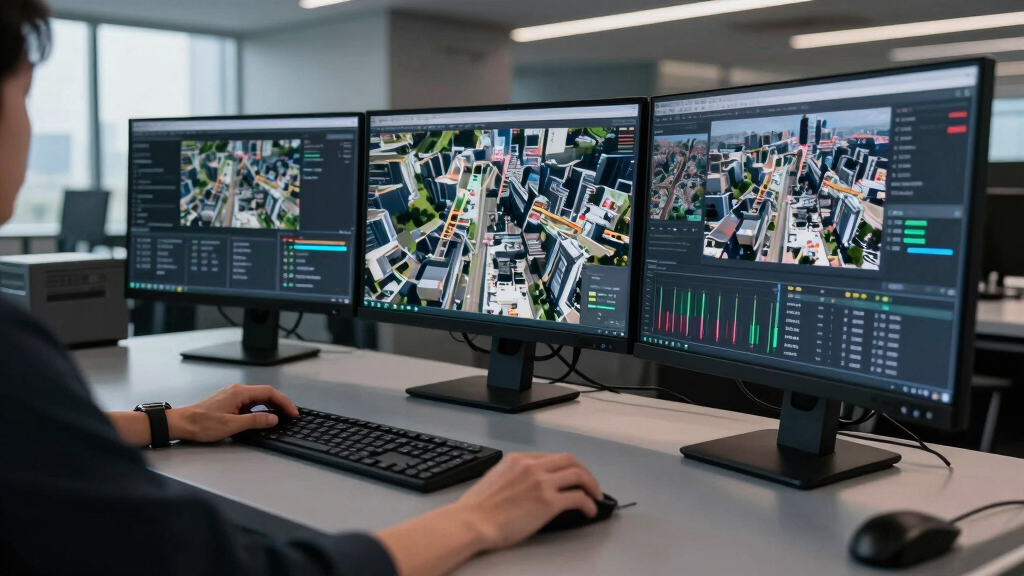
The analysis, published by Thorsten Meyer AI, describes WAMI as a form of persistent airborne surveillance that differs from ordinary drone video because it captures many movers across a broad area at once. Instead of following one car, street or building, a WAMI system can record activity across several square kilometers and preserve that record for later review.
According to the briefing, the core workflow is capture, stabilization, detection, tracking and archiving. A payload uses a camera array to build a large composite image, software registers the background to cancel aircraft motion, AI detects movement, and the system stores the imagery so analysts can trace a person or vehicle backward from an incident.
The article cites DARPA’s ARGUS-IS as a widely known example, saying it used 368 five-megapixel cameras to produce an image of about 1.8 gigapixels. The briefing says the volume of data is too large for full live human review, making near-sensor AI a basic requirement rather than an optional add-on.
The eye over the city: how Wide-Area Motion Imagery works — and where it goes blind
A normal drone sees through a soda straw. WAMI watches an entire city at once, tracks every mover, and records it all for forensic rewind. Immense reach — with hard limits that make radar and AI its necessary partners.
- City-scale motion, fine detail
- Forensic rewind
- Cloud / smoke / dark degrade it
- Needs a platform loitering overhead
sensing
+ AI
- Sees through cloud & total dark
- Tasked over denied airspace
- Persistent, wide-area from orbit
- Sovereign · on-prem · air-gap
The same archive that traces a bomber to a safe house can trace anyone home — retroactively, without prior suspicion. Baltimore’s secret 2016 deployment led to a 2021 federal ruling that persistent aerial tracking violated the Fourth Amendment. The security value is real; so is the mass-surveillance risk. Who owns the sensor, the archive, and the AI is the accountability question.
WAMI’s power is the archive and the AI reading it; its weakness is weather, airspace, and oversight. The mature posture isn’t optical-vs-radar or capability-vs-liberty — it’s layered sensing (optical WAMI + all-weather SAR), AI-enabled exploitation, and sovereign, auditable control of the whole chain. WAMI shows what a persistent eye can do with clear skies and owned airspace; for the cloud, the night, and the denied area, the radar layer is where the resilient coverage lives.
City Surveillance Meets AI Limits
The development matters because WAMI changes what aerial surveillance can do after an event. In military, border and public-safety settings, the archived imagery can help investigators reconstruct routes, contacts and origins after a bombing, shooting or crossing. That gives authorities a wider forensic record than a single camera feed.
The same capability also creates a civil-liberties problem. A system that can trace a suspect can also trace ordinary people who were not under prior suspicion. The briefing says the main accountability questions are who controls the sensor, who owns the archive, and how the AI layer is audited.

Hiseeu 3K PTZ Wired Security Camera System Outdoor with 8PCS Cameras
- 360° Pan and Tilt Coverage: Flexibility with 355° pan and 90° tilt
- Dual Control Options: Adjust angles via DVR remote or mobile app
- 360°Coverage with PTZ: Far beyond static camera capabilities
As an affiliate, we earn on qualifying purchases.
As an affiliate, we earn on qualifying purchases.
Baltimore Case Shapes Oversight
The briefing points to Baltimore’s 2016 aerial surveillance program, which was launched without broad public knowledge and later challenged in court. In 2021, the U.S. Court of Appeals for the Fourth Circuit ruled that prolonged aerial tracking used in the city violated the Fourth Amendment.
The source also distinguishes optical WAMI from synthetic aperture radar, or SAR. Optical systems can provide fine city-scale detail but are degraded by cloud, smoke and darkness and need a platform able to remain overhead. Radar can operate through cloud and at night and can be tasked over denied areas, but it does not simply replace optical imagery.
“A normal drone sees through a soda straw.”
— Thorsten Meyer AI ISR Briefing
Limits Still Need Public Testing
The briefing does not establish how widely WAMI is currently deployed, what agencies are using it, or what rules govern specific archives. It also does not provide a new official procurement record, deployment order or court filing tied to a fresh program. Those details remain unconfirmed from the supplied material.
It is also unclear how consistently AI tracking performs across dense urban traffic, poor weather, occlusion and mixed pedestrian movement. The briefing says AI is needed to manage the data stream, but it does not quantify false positives, false negatives or audit standards for operational use.
Radar And Audit Rules Loom
The next questions are likely to center on layered sensing and governance. The briefing argues that future systems will pair optical WAMI with all-weather radar while keeping the archive, AI models and analyst workflow under sovereign or auditable control.
For readers, the policy test is whether agencies and vendors can show clear limits on retention, access, warrant standards and model review before city-scale archives become routine. Courts, procurement rules and public disclosure may decide how far the technology can be used in civilian settings.
Key Questions
What is Wide-Area Motion Imagery?
Wide-Area Motion Imagery is an airborne surveillance method that records movement across a large area, often city-sized, instead of filming one narrow scene at a time.
Why does WAMI need AI?
The briefing says the imagery creates too much data for human analysts to watch live. AI detection and tracking are used to find movers, follow them and help analysts search the archive.
Can WAMI identify faces?
The supplied material does not confirm face identification. It describes tracking vehicles and pedestrians moving in the open, with resolution cited for one system at about 13 centimeters per pixel.
Why is the Baltimore case relevant?
Baltimore’s 2016 program became a major legal reference point because a federal appeals court ruled in 2021 that persistent aerial tracking violated the Fourth Amendment.
Does radar replace WAMI?
No. The briefing says optical WAMI and SAR radar cover different gaps: optical systems offer fine visual detail, while radar can work through cloud, smoke and darkness.
Source: Thorsten Meyer AI