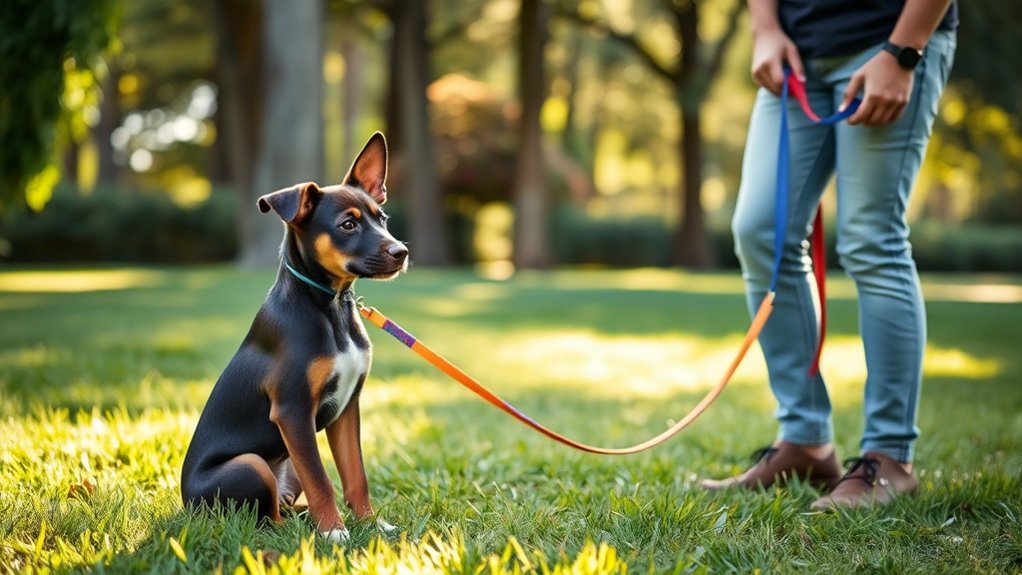

By six months, your dog should master basic commands like sit, stay, come, and heel to guarantee safety and good manners. Consistent training using positive reinforcement helps build a responsive and well-behaved pet, preventing future behavior issues. Focusing on these core commands from an early age sets the foundation for advanced skills and a strong bond with your dog. Keep going, and you’ll discover how to make training even more effective.
Key Takeaways
- Teach basic commands such as sit, stay, come, and heel to ensure control and safety.
- Use positive reinforcement consistently to strengthen understanding and responsiveness.
- Keep training sessions short and frequent for better retention and engagement.
- Focus on behavior modification by reinforcing good habits and redirecting unwanted behaviors.
- Aim for your dog to master these commands by 6 months to prevent behavioral issues and build trust.

Training your dog with obedience commands is essential for creating a well-behaved and responsive pet. It’s the foundation that helps you build a strong bond while ensuring your dog behaves appropriately in different situations. When you focus on effective training techniques, you’re not just teaching commands—you’re also guiding your dog’s behavior and influencing how they interpret their environment. Dog behavior modification becomes more manageable when you establish clear, consistent cues and routines early on, setting your puppy up for success as they grow.
Consistent training and routines early on foster a well-behaved, confident, and responsive dog.
Start with basic commands like sit, stay, come, and heel. These are the core skills that give you control and help keep your dog safe. To teach these effectively, use positive reinforcement—praise, treats, or toys—to reward your dog when they perform the desired behavior. Consistency is key; always use the same command words and hand signals so your dog can easily associate the cue with the action. For example, when teaching “sit,” say the command clearly and gently guide your dog into that position if needed. When they comply, immediately reward them. This method not only helps your dog learn quickly but also strengthens your communication.
Incorporating training techniques that focus on dog behavior modification will accelerate progress. For instance, short, frequent training sessions are more effective than long, infrequent ones. Keep sessions engaging and end each session on a positive note. If your dog struggles with a command, break it down into smaller steps, and practice each step until mastered before moving forward. Over time, these techniques help modify your dog’s behavior by reinforcing good habits and reducing unwanted behaviors like jumping or barking excessively. Additionally, understanding basic principles of floating on water can help when introducing your dog to aquatic environments or water-based activities, making training more versatile.
Another critical element is patience. Remember, your puppy is still learning, so avoid punishment or harsh corrections. Instead, redirect their energy or attention to a more appropriate activity. For example, if your dog is barking at the doorbell, teach them to sit and stay calmly instead. By consistently applying training techniques and reinforcing positive behaviors, you’re shaping your dog’s responses and reducing problematic behaviors through dog behavior modification.
As your dog masters these commands by six months, you’ll notice a more obedient, happy dog that responds reliably to your cues. This early training sets the stage for more advanced skills later on and helps prevent behavioral problems. The key is to stay consistent, patient, and positive throughout the process. When you combine effective training techniques with a focus on behavior modification, you create a well-mannered companion who feels secure and understands what’s expected of them. That’s the true benefit of early obedience training—it’s about building trust, clarity, and good habits that last a lifetime.

BARKIE Dog Training Kit – Treat Pouch, Pet Training Fanny Pack, 2 Puppy Training Clickers, Ultrasonic Silent Whistle, 2-in-1 Whistle Clicker, Clicker Training Guide Booklet, Dog Poop Bag (Black)
- Complete Dog Training Kit: Includes treat pouch, clickers, whistle, manual
- Ample Storage Capacity: Oxford waist bag for gear and personal items
- Waterproof Treat Pouch: Silicone treat bag easy to clean and waterproof
As an affiliate, we earn on qualifying purchases.
As an affiliate, we earn on qualifying purchases.
Frequently Asked Questions
How Long Does It Typically Take to Teach These Commands?
Training duration varies depending on your dog’s age, temperament, and consistency. Generally, it takes a few weeks to a few months to master basic commands with effective techniques. You should practice daily, keep sessions short, and use positive reinforcement. Patience and repetition are key. If you stay committed and adapt your methods to your dog’s needs, you’ll see progress faster, making training more enjoyable for both of you.
Can Puppies Learn Commands Before 3 Months Old?
You can start teaching your puppy basic commands before 3 months old, as part of their puppy development. Early training techniques like short, positive sessions help your pup learn quickly and build good habits. Keep commands simple, be consistent, and use plenty of praise. Remember, patience is key—at this stage, your puppy is just beginning to understand their environment, so gentle, frequent training sets a strong foundation for future obedience.
What if My Dog Refuses to Obey Commands?
Think of your dog’s refusal as a puzzle waiting to be solved. Don’t fall for dog training myths that say some dogs can’t learn. Instead, stay patient and use effective obedience training tools like treats, praise, or clickers. Remember, consistency beats frustration. If your dog ignores commands, revisit your training methods and make certain you’re clear and positive, turning ‘no’ into ‘know’ with gentle persistence.
Are There Breeds That Struggle More With Obedience Training?
Some breeds face more breed-specific challenges with obedience training, often due to their natural instincts or independence. For example, breeds like Afghan Hounds or Basenjis may be more stubborn or less responsive, but your success depends on training adaptability. Tailor your approach to your dog’s personality, stay patient, and use positive reinforcement. Remember, with consistent effort, most dogs can learn commands regardless of breed tendencies.
How Do I Maintain Commands Once My Dog Masters Them?
You might worry your dog will forget commands once mastered, but consistent training keeps skills sharp. Use positive reinforcement daily, praising and rewarding good behavior to reinforce learning. Regular practice sessions help your dog understand that commands are expected and worth obeying. By maintaining a routine and staying patient, you guarantee your dog retains obedience skills, making training a lasting part of your bond.
Conclusion
Imagine your dog as a young pianist, enthusiastic but needing guidance to hit the right notes. Teaching obedience commands by six months sets the stage for a harmonious life together. Just like mastering scales helps a musician play beautifully, consistent training builds trust and respect. Remember, the effort you put in now creates a lifelong melody of companionship. With patience and practice, your puppy will soon perform perfectly, turning everyday moments into a symphony of obedience and joy.