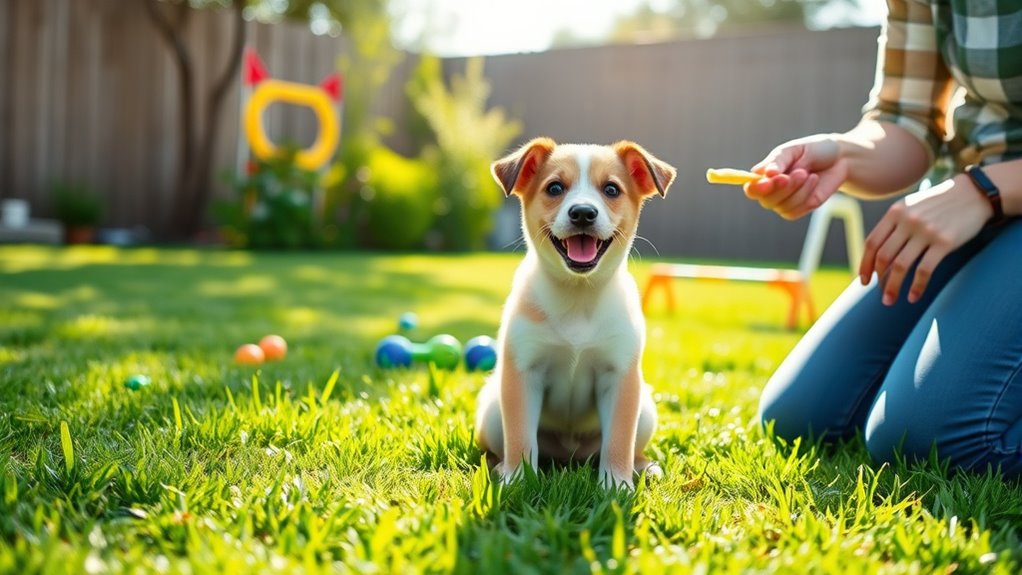

Starting early with basic commands like sit, stay, come, and down helps establish good behavior and builds trust between you and your puppy. Keep training sessions short, fun, and consistent, using treats and praise to motivate. Socialize your puppy gradually to new people, animals, and environments to boost confidence. Incorporate crate training to provide a safe space and support housebreaking. Keep at it, and you’ll soon see how these simple steps create a well-behaved, happy pup. There’s plenty more to learn for lasting success.
Key Takeaways
- Start training with simple commands like sit, stay, come, and down using positive reinforcement.
- Keep training sessions short, fun, and consistent to maintain your puppy’s interest and understanding.
- Use high-value treats and praise to motivate and reinforce desired behaviors effectively.
- Incorporate socialization early by exposing puppies to different people, animals, sounds, and environments positively.
- Utilize crate training to build confidence and create a safe space, pairing it with treats and positive associations.
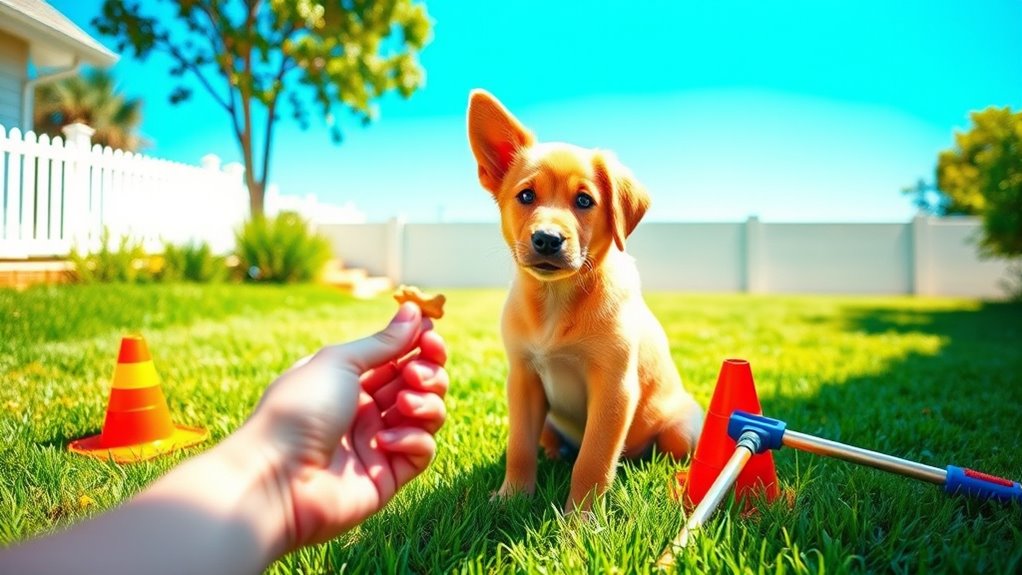
Training your puppy begins with teaching basic commands that establish a foundation for good behavior. It’s essential to start early, focusing on simple commands like sit, stay, come, and down. These commands not only help manage your pup but also build trust and communication between you. As you work through these basics, you’ll want to incorporate puppy socialization into your routine. Socialization is critical during your puppy’s early weeks because it helps them become confident and well-adjusted around people, other animals, and new environments. Introduce your puppy to different sounds, sights, and gentle handling from friends and family members. This exposure reduces fear and aggression later in life, setting the stage for smoother training sessions. Remember, socialization should be positive and controlled; never force your puppy into stressful situations. Pair new experiences with treats and praise to reinforce good behavior, making each encounter a pleasant one.
Alongside socialization, crate training techniques are crucial in your puppy’s early education. Crate training provides a safe space for your pup and helps with housebreaking. When introducing the crate, keep it comfortable and inviting—add bedding, toys, and treats to encourage your puppy to view it as a secure den. Use positive reinforcement to teach your puppy to go into the crate willingly. For example, toss a treat inside and praise them when they enter, gradually increasing the time they stay inside. Consistency is key—use the same command, like “crate” or “bed,” each time you want your pup to go in. Avoid using the crate as punishment, as this can create negative associations. Instead, make it a relaxing place where your puppy can rest, which ultimately aids in potty training and reduces separation anxiety.
Combining puppy socialization with effective crate training techniques helps your dog develop good habits early on. As your puppy becomes comfortable with social settings and their crate, they’ll grow more confident and easier to train. When teaching basic commands, keep training sessions short, fun, and frequent—around five to ten minutes each. Use high-value treats and lots of praise to motivate your puppy. Remember, patience and consistency are your best tools; every puppy learns at their own pace. By establishing a solid foundation with socialization and crate training, you’ll set your puppy up for success and foster a well-behaved, happy companion.

Buddy Biscuits Trainers Training Bites Soft & Chewy Dog Treats, Bacon, 10 oz. Pouch
- Flavor: Highly palatable with pork liver
- Quantity: 500 treats per bag
- Calories: Only 1.5 calories per treat
As an affiliate, we earn on qualifying purchases.
As an affiliate, we earn on qualifying purchases.
Frequently Asked Questions
When Should I Start Training My Puppy?
You should start training your puppy as soon as you bring them home, ideally around 8 weeks old. Focus on puppy socialization and crate training basics early on to build good habits. Socialize them with other dogs and people to boost confidence, and introduce the crate as a safe space. Early training helps prevent behavioral issues later and makes housebreaking smoother. Consistency and patience are key during these initial stages.
How Long Should Training Sessions Last?
You should keep training session durations short, around 5 to 10 minutes, to match your puppy’s attention span. This prevents frustration and keeps your puppy engaged. Focus on one or two commands per session, and end on a positive note. As your puppy grows, you can gradually lengthen training sessions, but always prioritize quality over quantity to guarantee effective learning and a happy, attentive pup.
What if My Puppy Doesn’t Respond to Commands?
If your puppy doesn’t respond to commands, stay patient and keep practicing with consistent commands. Puppies need time to learn, so don’t get frustrated. Use positive reinforcement like treats and praise to encourage good behavior. Keep training sessions short and fun, and always be patient. Over time, your puppy will start to understand and respond better as you remain consistent and patient throughout the process.
How Do I Motivate My Puppy to Learn?
You motivate your puppy to learn by making training sessions fun and rewarding. Use positive reinforcement, like treats and praise, to encourage good behavior. Incorporate puppy socialization to build confidence and reduce fear, making them enthusiastic to participate. Additionally, apply crate training techniques to create a secure environment, helping your puppy feel comfortable and focused during lessons. Consistency and patience are key to motivating your puppy effectively.
Should I Use Treats or Praise for Training?
You should use treats motivation and praise reinforcement to train your puppy effectively. Treats motivate your pup by providing immediate, tasty rewards that encourage learning new commands. Praise reinforcement, like enthusiastic words and petting, builds confidence and strengthens your bond. Combining treats and praise creates a balanced approach that keeps your puppy motivated and enthusiastic to learn, making training sessions more successful and enjoyable for both of you.
Conclusion
As you teach your puppy basic commands, remember you’re planting seeds of trust and understanding. Each command is like a guiding star, illuminating the path to a strong bond. Patience and consistency nurture this connection, helping your pup grow into a confident, well-behaved companion. Ultimately, your training journey symbolizes more than just obedience—it’s about building a lifelong partnership rooted in love, respect, and mutual growth. Together, you’re creating a foundation that lasts a lifetime.