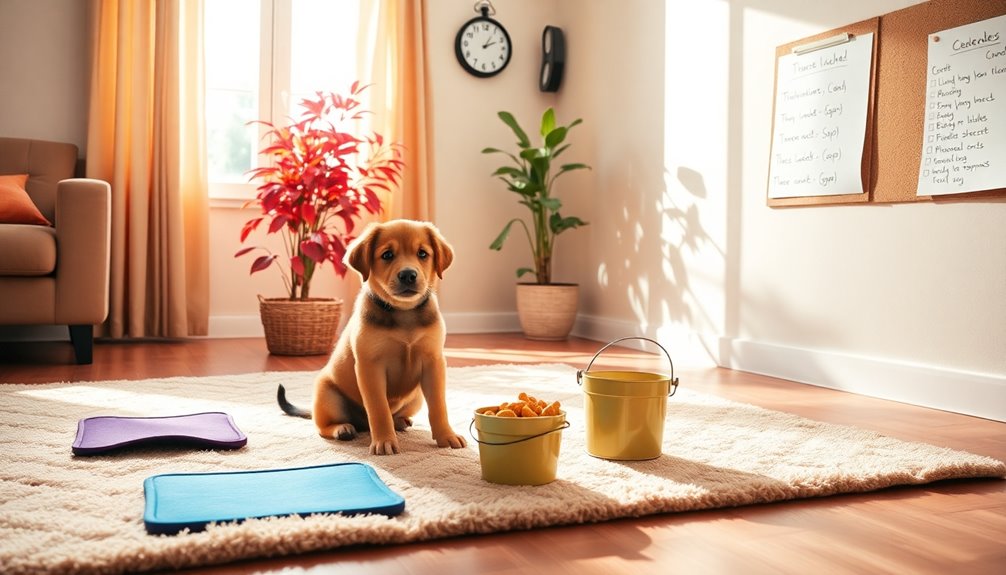
To prevent separation anxiety, start by gradually building your puppy’s independence through positive crate training and desensitizing them to departures and sounds. Keep routines consistent and low-key when leaving or returning, showing your puppy that being alone is normal and safe. Use engaging toys and stay calm during separations to reinforce confidence. With patience and steady routines, you can help your puppy feel secure—and there’s more to discover on how to make this process even smoother.

Get pet supplies delivered free with Prime
- Fast, free delivery on millions of items
- Prime Video, Amazon Music and more included
- Member-only deals all year
Key Takeaways
- Introduce the crate gradually with treats and toys to create positive associations as a safe, cozy space.
- Use gradual desensitization by slowly increasing time away and keeping departures low-key.
- Engage puppies with puzzle toys and treats to build confidence and promote independence.
- Establish a consistent routine to reduce uncertainty and normalize alone time.
- Keep departures and arrivals calm and unremarkable to prevent reinforcing anxiety behaviors.
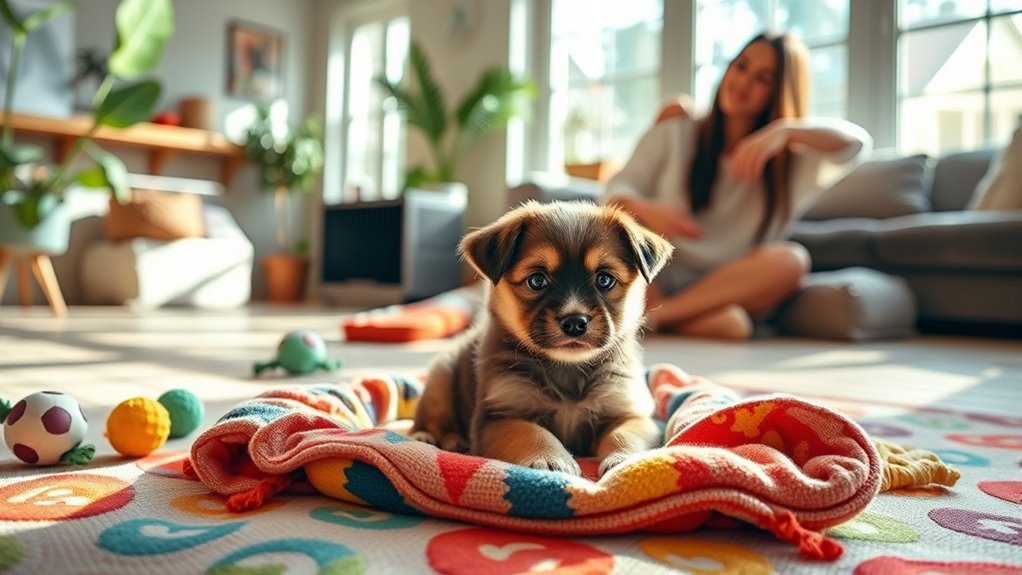
Separation anxiety can develop quickly in puppies if not addressed early, making it essential for owners to take proactive steps. One of the most effective methods is crate training, which helps your puppy see their crate as a safe, cozy space rather than a punishment. When done correctly, crate training encourages your puppy to feel secure when alone, reducing anxiety when you leave the room or house. Start by introducing the crate gradually, placing treats and toys inside to create positive associations. Keep initial sessions short, then gradually increase the time your puppy spends inside. This slow approach prevents your puppy from feeling overwhelmed and helps them build confidence in their own space.
Alongside crate training, gradual desensitization is key. This technique involves slowly exposing your puppy to the sights, sounds, and situations that trigger anxiety, but in a controlled and positive manner. For example, you might start by stepping out of the room for just a few seconds, then returning immediately, and gradually extending the time away. During this process, it’s important to keep departures and arrivals low-key to avoid heightening your puppy’s anxiety. Over time, your puppy learns that your absence isn’t something to fear, and they become more comfortable spending time alone. Consistency is vital—stick to a routine so your puppy knows what to expect.
Building independence also involves encouraging your puppy to entertain themselves. Use puzzle toys, treat-dispensing toys, or safe chews to keep them occupied when you’re not around. These activities not only distract your puppy but also help develop their confidence and problem-solving skills. Avoid making your departures overly emotional or drawn out, as this can inadvertently reinforce anxiety. Instead, remain calm and neutral, demonstrating that being alone is normal and safe. Recognizing the importance of early intervention can significantly improve your puppy’s ability to adapt and thrive independently.
As an affiliate, we earn on qualifying purchases.
Frequently Asked Questions
When Should I Start Training My Puppy to Be Alone?
You should start training your puppy to be alone around 8 to 10 weeks old. Use socialization techniques and independence exercises to gradually increase their comfort level away from you. Begin with short absences, then slowly extend the time, always ensuring they feel safe. Consistency and positive reinforcement help your puppy develop confidence, making separation less stressful for both of you as they grow older.
How Long Can a Puppy Be Left Alone Safely?
Think of your puppy as a delicate plant—you can’t leave it in the sun all day without care. For safe crate training, start with short periods, ideally no more than 2-3 hours, gradually increasing as they grow. Use socialization techniques to build confidence, but don’t leave them alone too long at first. A puppy needs companionship and mental stimulation to thrive without developing separation anxiety.
What Signs Indicate My Puppy Is Developing Separation Anxiety?
You’ll notice signs of separation anxiety in your puppy’s behavior, such as excessive barking, whining, or destructive actions when you leave. They may also show signs of distress, like pacing or trying to escape. Anxiety triggers include being alone for too long or sudden changes in routine. Recognizing these signs early helps you address the behavior, creating a calmer, more independent puppy over time.
Are There Breeds More Prone to Separation Anxiety?
Think of breeds as different musical instruments—some are naturally more expressive and sensitive, making them prone to separation anxiety. Breeds with certain personality traits and tendencies, like Border Collies or Labrador Retrievers, often thrive on companionship and can struggle alone. Knowing your dog’s breed tendencies helps you prepare and build their independence, ensuring they feel secure even when you’re not around.
Can Crate Training Prevent Separation Anxiety in Puppies?
Crate training can help prevent separation anxiety by fostering independence in your puppy. When you use a crate properly, your pup learns to feel safe alone, reducing stress when you’re away. It creates a secure space, making departures less upsetting. Consistent crate training combined with gradual independence building teaches your puppy that being alone isn’t scary, ultimately helping to prevent separation anxiety from developing.
Conclusion
By building your puppy’s independence early on, you’re laying a strong foundation that keeps separation anxiety at bay. Think of it like tending a delicate garden—you nurture confidence bit by bit, and over time, your pup blossoms into a happy, self-assured companion. Remember, patience and consistency are your best tools. With each small step, you’re weaving a safety net that makes goodbyes less intimidating and your bond even stronger.
Fall Picks
fall essentials
As an affiliate, we earn on qualifying purchases.