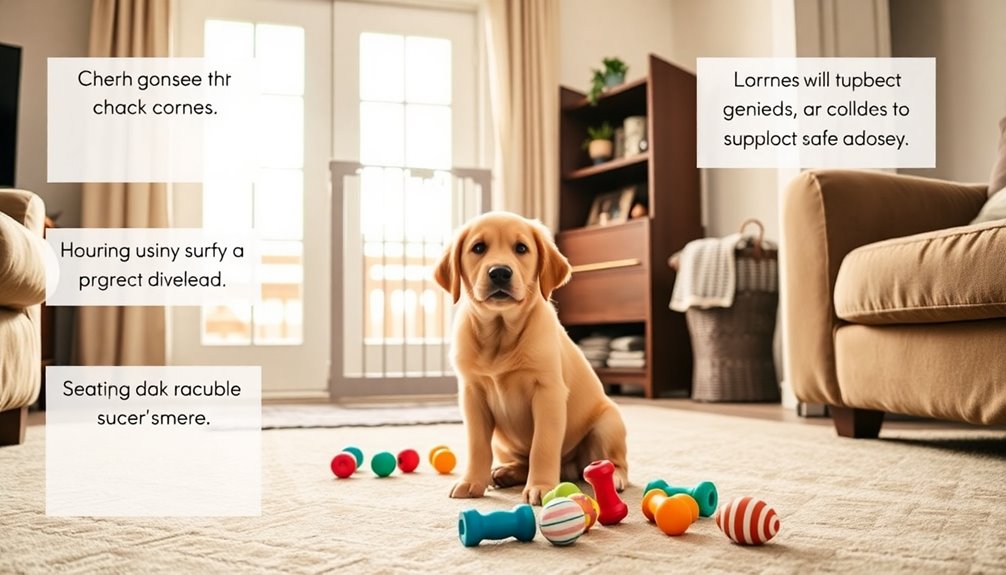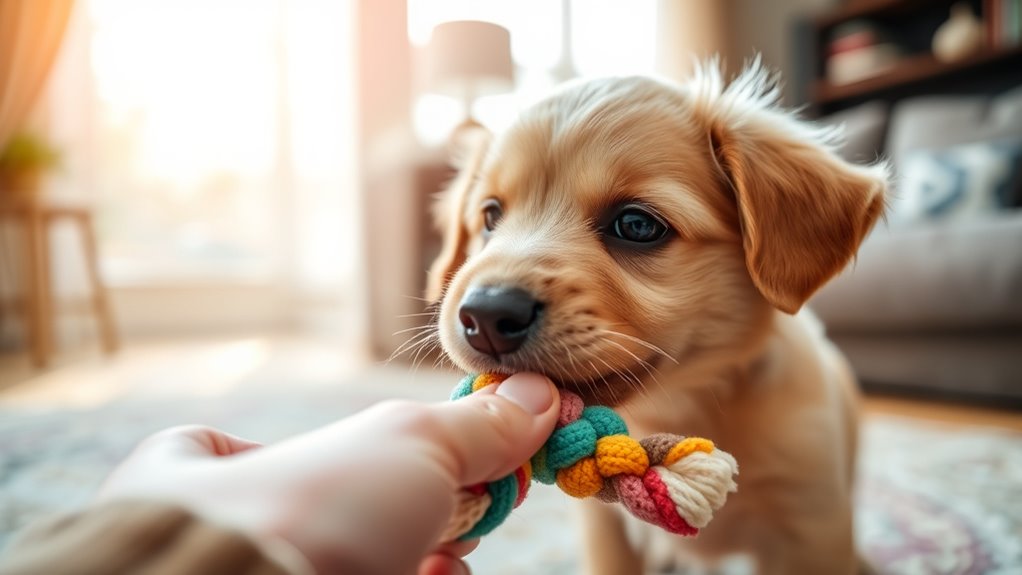

To prevent puppy biting and mouthing, provide plenty of appropriate chew toys to redirect their need to chew. Use positive reinforcement by praising gentle play and calmly stopping play when biting too hard. Establish consistent boundaries by using commands like “ouch” or “no,” and pause play to teach bite inhibition. Patience and routine are key, and soon your puppy will learn to play gently. Keep exploring for more tips to make playtime stress-free and enjoyable.
Key Takeaways
- Offer plenty of safe, textured chew toys to redirect biting from hands and furniture.
- Use calm, consistent commands like “no” or “ouch” to indicate gentle play.
- Pause play sessions when biting becomes too hard to teach bite inhibition.
- Praise and reward the puppy when they chew on toys to reinforce good behavior.
- Maintain a routine and keep a variety of toys available to prevent boredom and frustration.
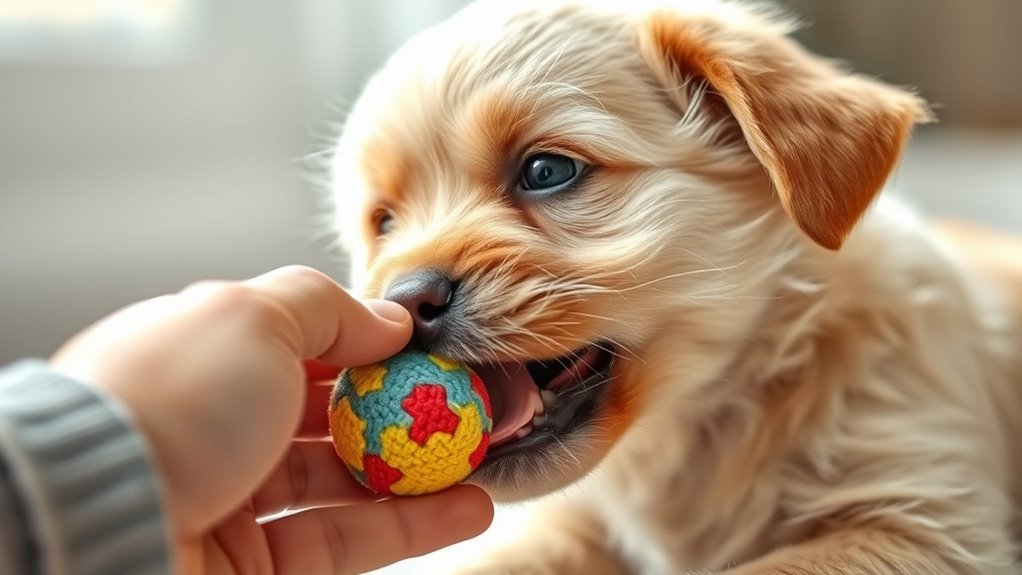
Puppy biting is a common behavior that can be challenging for new owners to manage, but with the right approach, you can teach your puppy acceptable habits early on. One of the main reasons puppies bite is because they are going through puppy teething, which causes discomfort and prompts them to chew and bite more than usual. During this phase, it’s essential to provide appropriate outlets for their teething instincts. Offer plenty of safe chew toys designed for teething puppies, which help soothe sore gums and reduce their urge to bite your hands or furniture. When your puppy starts biting during play, gently redirect their focus onto these toys. This process, known as redirecting play, is crucial because it teaches your puppy what is acceptable to chew and bite. Instead of scolding or punishing, calmly give them the toy, encouraging them to chew on it instead of your fingers or clothes.
Consistently redirect their biting to appropriate objects, and praise them when they chew on their toys. This positive reinforcement makes it clear what behaviors you want to see. Remember, puppies explore the world with their mouths, so patience and consistency are key. If you catch your puppy biting or mouthing your hands, immediately stop play and give them a toy to chew on. Over time, they’ll associate toys with acceptable play and will start to understand that biting human skin isn’t okay. It’s also helpful to teach your puppy early on that biting too hard results in play stopping. Use a firm but gentle voice to say “no” or “ouch” when they bite too hard, then pause the play session for a moment. This teaches them bite inhibition and helps them learn that rough biting ends the fun.
During puppy teething, your puppy may be more excitable and prone to biting, so be extra vigilant. Keep a variety of toys handy to offer them different textures and sizes, which can keep them engaged and distracted from biting you. When redirecting play, always ensure your puppy has access to a variety of suitable chew toys, so they don’t resort to biting you out of boredom or frustration. Establishing a routine of offering toys during playtime and calmly redirecting their biting behavior helps them learn boundaries early. Remember, patience and consistency are your best tools. With time, your puppy will grasp the concept of gentle play, and biting will become a thing of the past, replaced by happy, appropriate interactions.

Beiker 20 Pack Puppy Chew Toys, Dog Teething Toys for Puppies Small Dogs
- Genuine Puppy Toy Pack: 20 fun toys for puppies and small dogs
- Variety of Toy Types: Includes rubber, rope, tug, and teething toys
- Safe for Puppy Teething: Made from natural rubber and cotton
As an affiliate, we earn on qualifying purchases.
As an affiliate, we earn on qualifying purchases.
Frequently Asked Questions
When Should I Start Training My Puppy Not to Bite?
You should start training your puppy not to bite as soon as you bring them home. Early puppy socialization helps them learn bite inhibition, which is essential for gentle play. Engage in bite inhibition training during playtime, gently redirecting their biting. Consistent, positive reinforcement teaches your puppy appropriate behavior. The sooner you begin, the better your chances of preventing future biting issues and fostering a well-behaved, socialized dog.
How Can I Tell if My Puppy’s Biting Is Normal?
You can tell if your puppy’s biting is normal by observing their Puppy development and Bite severity. During early stages, gentle nipping and mouthing are typical as they explore and learn. However, if bites become too severe or cause pain, it’s a sign to intervene. Normal biting usually involves soft pressure, while problematic biting involves hard, aggressive bites, indicating the need for training and socialization to encourage gentle play.
Are There Specific Toys That Reduce Biting Tendencies?
Think of playful sparring with your puppy as a gentle dance, and the right toys as your partner’s guiding hand. Interactive toys and soft chew items are excellent choices, as they redirect your puppy’s energy and soothe their gums. These toys not only keep your pup engaged but also teach them appropriate biting behaviors, making playtime more enjoyable and less likely to lead to nipping and mouthing.
How Do I Handle Biting During Playdates With Other Dogs?
During playdates, if your puppy bites another dog, calmly interrupt play to reinforce bite inhibition. You can gently but firmly say “no” or “ouch” to signal the bite hurts, then stop play briefly to teach self-control. Consistent socialization helps your puppy learn appropriate play behavior. Supervise interactions closely, and make certain all dogs are comfortable. This approach encourages gentle play and builds good social skills, reducing future biting incidents.
What Are Signs My Puppy Is Teething and Biting More?
You notice your puppy’s biting intensifies, and suddenly, you realize the telltale signs of teething—red gums, chewed-up toys, and increased mouthiness. Puppy teething signs include swollen gums and drooling, making bites sharper and more frequent. This biting intensity is their way of soothing discomfort. Stay patient and gentle, offering appropriate teething toys to ease their pain while reinforcing gentle play, so you both navigate this phase smoothly.
Conclusion
By consistently using gentle redirection and positive reinforcement, you’ll turn your playful pup into a well-mannered companion. Remember, patience is your greatest tool—think of it as a magic wand transforming tiny nips into cuddles. Every calm response builds a bond stronger than steel, guiding your puppy toward gentle play. Stay persistent, and soon you’ll have a loyal friend whose bite is as soft as clouds and as harmless as a whisper.