
To prevent aggression, focus on early interventions and socialization strategies that teach emotional regulation and empathy. Recognize emotional cues early and encourage practices like deep breathing or stepping away when feelings intensify. Use positive reinforcement to reward calm behavior, and create safe spaces for honest emotional expression. Supporting these efforts with professional guidance and social skills training helps build healthier interactions. Keep exploring these approaches to effectively foster peaceful and respectful relationships over time.
Key Takeaways
- Implement early social skills training to promote empathy and understanding, reducing the likelihood of aggressive behaviors.
- Use role-playing exercises to teach patience, conflict resolution, and emotional regulation skills from a young age.
- Foster open communication environments where individuals feel safe expressing emotions without judgment.
- Reinforce positive emotional responses through praise and rewards to encourage calm and constructive behaviors.
- Provide access to professional mental health resources to support ongoing development of social and emotional skills.
Have you ever wondered what triggers aggressive behavior and how it can be prevented? Understanding the roots of aggression often begins with recognizing how emotional regulation plays a critical role. When someone struggles to manage intense feelings like anger, frustration, or fear, it can manifest as aggression. As someone involved in guiding or caring for others, you can help by teaching effective emotional regulation strategies. This involves encouraging individuals to recognize their emotional cues early and employ techniques like deep breathing, counting to ten, or stepping away from stressful situations. When these skills are cultivated, they act as a buffer, reducing the likelihood of aggressive outbursts.
Recognizing emotional cues early helps prevent aggression through strategies like deep breathing and stepping away.
Positive reinforcement is another powerful tool in preventing aggression. When you notice someone handling their emotions calmly or resolving conflicts peacefully, praise and reward those behaviors. This approach helps reinforce the idea that managing feelings constructively leads to positive outcomes. For example, if a child or peer responds to a frustrating situation by taking deep breaths instead of yelling, acknowledging their effort can motivate them to repeat that behavior. Over time, consistent positive reinforcement creates a pattern where emotional regulation becomes a preferred and rewarding way to cope, decreasing the chances of aggression taking hold.
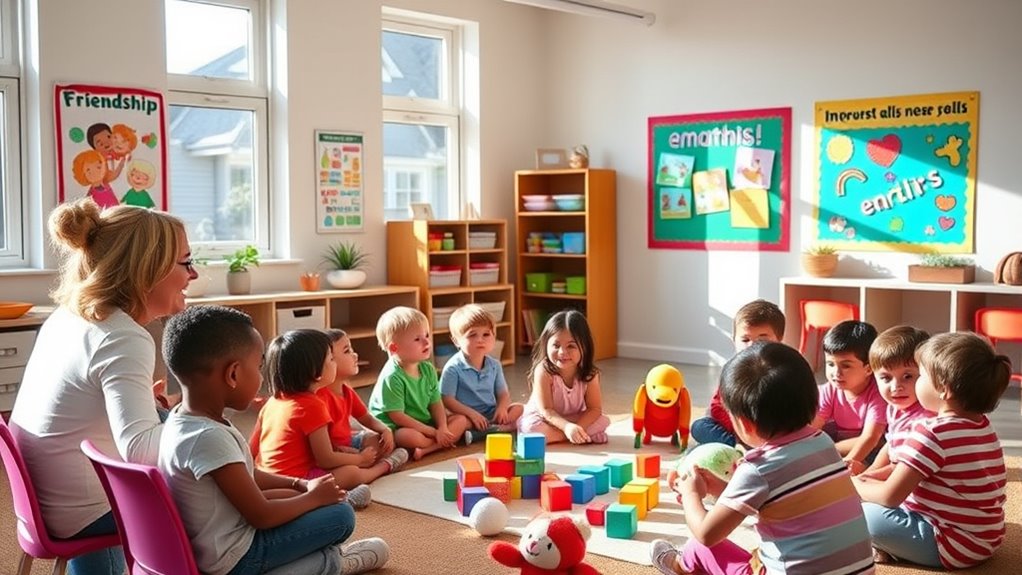
Early interventions are essential in shaping social behaviors before aggressive tendencies become ingrained. When you intervene early, you can introduce socialization strategies that promote understanding and empathy. Teaching individuals to recognize others’ feelings fosters better communication and reduces misunderstandings that often escalate into conflict. Role-playing exercises, for instance, can help people practice responding to challenging situations with patience and empathy. These activities not only improve social skills but also reinforce emotional regulation, as individuals learn to pause and think before reacting impulsively.
Furthermore, creating an environment that encourages open dialogue about feelings helps prevent aggression. When you foster a space where individuals feel safe expressing their emotions without judgment, they are less likely to bottle up frustration or anger. Instead, they learn that emotions are normal and manageable. Combining this approach with consistent positive reinforcement for appropriate responses builds confidence and resilience, making it easier for individuals to navigate social interactions without resorting to aggression. Additionally, incorporating activities supported by mental health coverage can enhance access to professional guidance when needed.
emotional regulation toys for kids
As an affiliate, we earn on qualifying purchases.
As an affiliate, we earn on qualifying purchases.
Frequently Asked Questions
How Can I Tell if My Child Is Naturally Aggressive?
You can tell if your child is naturally aggressive if they often display intense emotional awareness, such as frustration or anger, and struggle with conflict resolution. Notice if they frequently lash out or have difficulty calming down after disagreements. Pay attention to their responses to social situations—if aggression seems to be their default, it may be part of their temperament. Addressing these signs early helps guide them toward healthier emotional regulation.
What Are Signs of Socialization Difficulties in Young Children?
Like Icarus soaring too close to the sun, your child may struggle with social cues. Signs include difficulty engaging in playful interactions, persistent withdrawal, or trouble making peer acceptance. They might avoid eye contact, have trouble sharing, or react intensely to social situations. If these signs appear, it’s a cue to gently support their social skills, fostering patience and encouraging positive peer interactions to build confidence and connection.
How Does Early Intervention Impact Long-Term Behavior?
Early intervention helps shape your child’s long-term behavior by improving emotional regulation and social skills. With parent training, you learn effective strategies to guide your child’s responses and reduce aggressive tendencies. When you act early, you foster healthier interactions and build a strong foundation for positive behavior, which can last a lifetime. Your proactive approach makes a significant difference in your child’s emotional development and overall well-being.
Are There Specific Activities That Reduce Aggression?
Imagine a child’s laughter echoing during play therapy, where engaging activities like role-playing conflict resolution help reduce aggression. You can use these activities to teach kids how to express emotions calmly and resolve disputes peacefully. Incorporating structured play and social skills exercises not only divert energy but also build empathy and self-control, making aggressive behaviors less likely over time. These hands-on strategies foster positive interactions and emotional growth.
How Do Cultural Differences Influence Socialization Strategies?
Cultural differences shape socialization strategies by influencing your approach to parenting styles and what behaviors are acceptable. You might adapt your methods based on cultural norms, emphasizing respect, independence, or community harmony. These factors guide how you teach children to manage emotions and interact socially, ultimately affecting their likelihood of aggression. Understanding and respecting these cultural influences helps you develop effective strategies tailored to your child’s social environment.
Conclusion
By starting early with gentle socialization and proactive interventions, you can turn a small spark into a steady flame of positive behavior. Imagine a gardener tending to delicate seedlings, nurturing them with patience and care—soon, they grow strong and resilient. Just like that gardener, your consistent efforts shape a calmer, more cooperative child. Remember, early action isn’t just preventive; it’s the foundation for a lifetime of healthier relationships and better understanding.