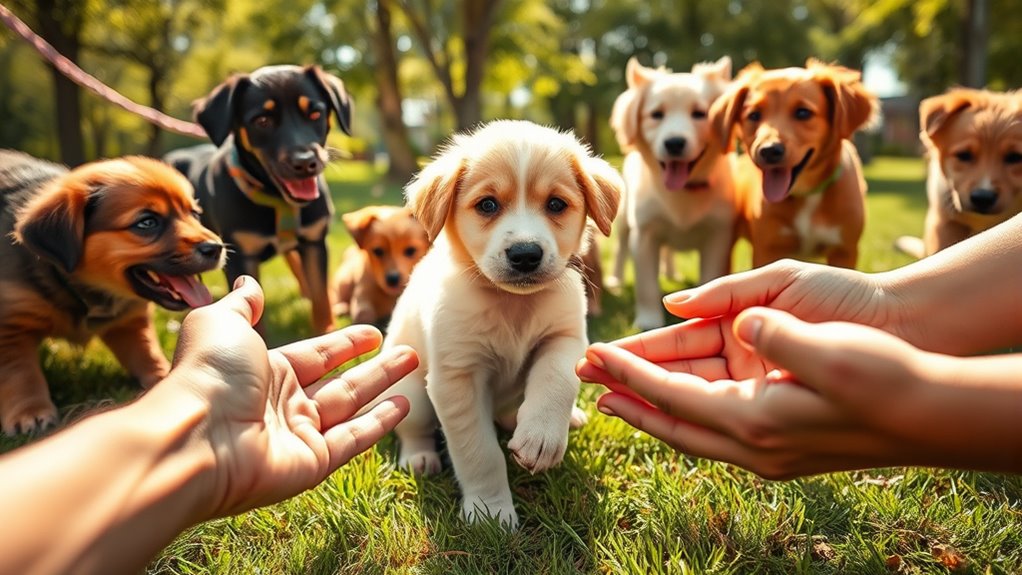

The early socialization window, typically from 3 to 14 weeks of age, is vital because your puppy is most receptive to new experiences during this time. Proper socialization helps prevent fears and aggression later, shaping a confident, well-adjusted dog. Introducing your puppy to different sights, sounds, and people in a gentle, positive way maximizes this developmental period. Understanding the significance of timing guarantees you give your puppy the best start for lifelong behavior—keep exploring to learn more.

Get pet supplies delivered free with Prime
- Fast, free delivery on millions of items
- Prime Video, Amazon Music and more included
- Member-only deals all year
Key Takeaways
- The critical socialization window for puppies is from 3 to 14 weeks old, when they are most receptive to new experiences.
- Early socialization during this period helps prevent fearfulness and behavioral issues later in life.
- Introducing vaccinated puppies to new sights, sounds, and environments within this window enhances adaptability.
- Missing the optimal timing can lead to increased anxiety, aggression, or social withdrawal as the dog matures.
- Starting socialization promptly when puppies are vaccinated maximizes their confidence and long-term behavioral health.

Have you ever wondered why early socialization is so vital for puppies? The answer lies in a pivotal window during their development when they’re most receptive to new experiences. During this period, puppies learn about their environment, other animals, and humans, shaping their future behavior and temperament. Understanding the importance of timing can make a significant difference in how well your puppy adapts as they grow. Breed behaviors play a role here, too, since some breeds are naturally more social or independent than others. Recognizing these tendencies helps you tailor your socialization efforts effectively. For example, herding breeds might need more exposure to different stimuli early on to prevent them from becoming overly protective or anxious later.
Early socialization shapes puppies’ future behavior by exposing them to new experiences during their critical developmental window.
Training techniques during this window should focus on positive reinforcement, gentle exposure, and consistency. Puppies are highly impressionable, which means they’re more likely to develop confidence and curiosity when introduced to new sights, sounds, and smells in a supportive manner. Using treats, praise, and patience reinforces good behavior and helps your pup associate new experiences with positive feelings. This period is also indispensable for establishing trust and a solid foundation for future training. If you wait too long, puppies may become fearful or wary of unfamiliar situations, making training more challenging.
Timing matters because the early socialization window is limited, generally from around three to fourteen weeks of age. During this time, puppies are especially open to learning and less likely to develop fears or aggression. If you miss this opportunity, you might find yourself battling behavioral issues that could have been prevented. That’s why it’s important to start socializing your pup as soon as they’re vaccinated and safe to interact with others. Early exposure to different environments, people, and other animals helps them develop a balanced and confident personality. Recognizing critical developmental stages allows you to maximize their socialization potential and ensure their well-being.
Incorporating breed-specific behaviors into your socialization plan can also prevent future problems. Some breeds are naturally more territorial or reserved, requiring tailored approaches to socialization and training techniques. For example, shy or cautious breeds benefit from slow, controlled introductions, while more outgoing breeds can handle more extensive social exposure. Recognizing these traits early allows you to adapt your methods, making training more effective and less stressful for your puppy. Ultimately, the goal is to create a well-rounded dog capable of handling various situations with confidence. Timing plays a critical role in this process, making early socialization not just beneficial but essential for a happy, well-behaved companion.
puppy socialization training treats
As an affiliate, we earn on qualifying purchases.
As an affiliate, we earn on qualifying purchases.
Frequently Asked Questions
How Do Socialization Needs Differ Among Various Dog Breeds?
You should tailor socialization techniques based on breed-specific traits, as different breeds have unique needs. For instance, herding breeds may need more mental stimulation, while scent hounds benefit from nose work activities. Understanding these breed differences helps you implement effective socialization strategies, ensuring your dog develops confidence and well-rounded behavior. By adjusting your approach, you support your dog’s natural instincts and temperament, promoting a healthy, happy relationship.
Can Puppies Be Socialized After the Optimal Window Closes?
Yes, you can still socialize puppies after the ideal window, but you might face puppy fears and socialization setbacks. It’s important to be patient and gentle, gradually exposing your pup to new people and environments. While earlier socialization helps prevent issues, late socialization can still improve your dog’s confidence and behavior, provided you approach it with care. Consistency and positive experiences are key to overcoming fears and encouraging healthy social development.
What Are Signs of Stress During Socialization?
When your puppy’s stress signals are like warning flags, you’ll notice it through body language and vocal cues. Signs include tucked tails, pinned-back ears, yawning, lip licking, or avoiding eye contact. Vocal cues like whining, whimpering, or growling also indicate discomfort. Recognizing these signals early helps you pause socialization, giving your pup space to relax. Respond quickly and gently to ease their anxiety, ensuring positive experiences for future social encounters.
How Does Early Socialization Impact a Dog’s Behavior as an Adult?
Early socialization shapes your dog’s behavior as an adult by fostering confidence and reducing fear development. It helps your pup learn bite inhibition, making them gentler during play and interactions. By exposing them to various people, animals, and environments at the right time, you prevent future behavioral issues. Proper socialization guarantees your dog grows into a well-adjusted, calm companion, less likely to develop fear or aggression later in life.
Are There Risks Involved in Socializing Puppies Too Early?
Yes, socializing puppies too early can pose risks like overwhelming them, leading to fear or stranger anxiety. You might also hinder bite inhibition development if interactions are too rough or intense. To minimize these risks, introduce new experiences gradually, ensuring your puppy feels safe and confident. Proper timing helps them build positive associations, reducing issues like fear of strangers and encouraging healthy social behaviors as they grow.
Conclusion
Remember, the early socialization window is your puppy’s golden ticket to becoming confident and well-behaved. Think of it as planting seeds in a garden—what you nurture now blossoms into a well-rounded adult dog. Missing this window is like trying to catch the wind; it’s much harder later on. So, seize these vital weeks with patience and love. Your puppy’s future happiness and your shared bond depend on planting the right seeds at just the right time.
Fall Picks
fall essentials
As an affiliate, we earn on qualifying purchases.