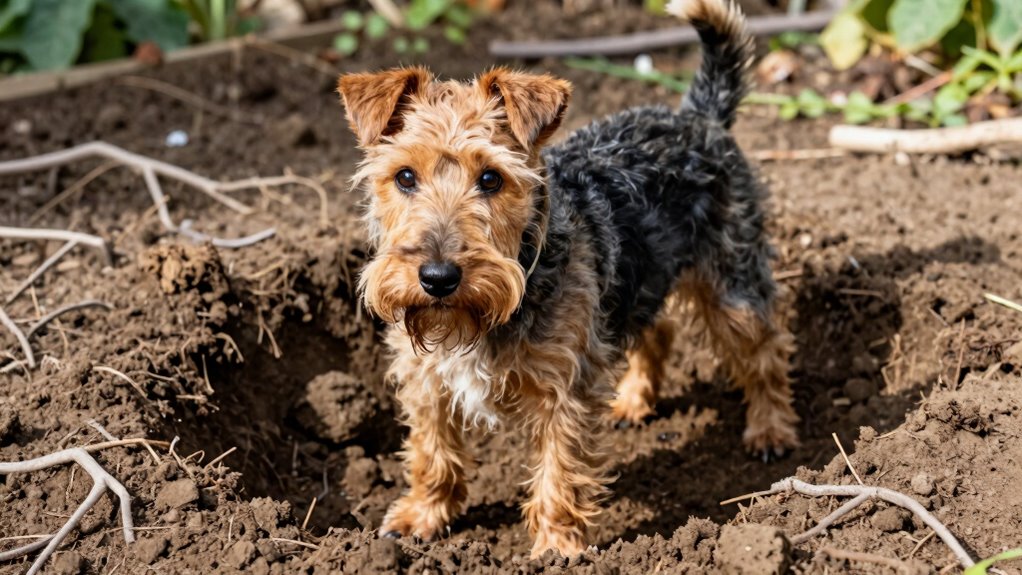
Terrier breeds are naturally inclined to dig because of their history as underground hunters, bred in England to chase small game like rats and foxes. Their instinct drives them to claw, scrape, and explore underground, which is a skill passed down through generations. Instead of viewing digging as problematic, understanding it as part of their natural talents helps you better manage their energy and needs. If you want to discover how to channel this behavior positively, keep exploring.

Get pet supplies delivered free with Prime
- Fast, free delivery on millions of items
- Prime Video, Amazon Music and more included
- Member-only deals all year
Key Takeaways
- Digging is an innate trait rooted in terrier breeds’ history of hunting small underground prey.
- Their digging techniques involve precise paw movements driven by curiosity and natural instincts.
- Managing digging involves providing designated areas and mental stimulation to redirect behavior positively.
- Understanding their breed background helps develop effective training strategies and environmental modifications.
- Recognizing digging as a breed feature fosters appreciation and improves harmony with terrier dogs.
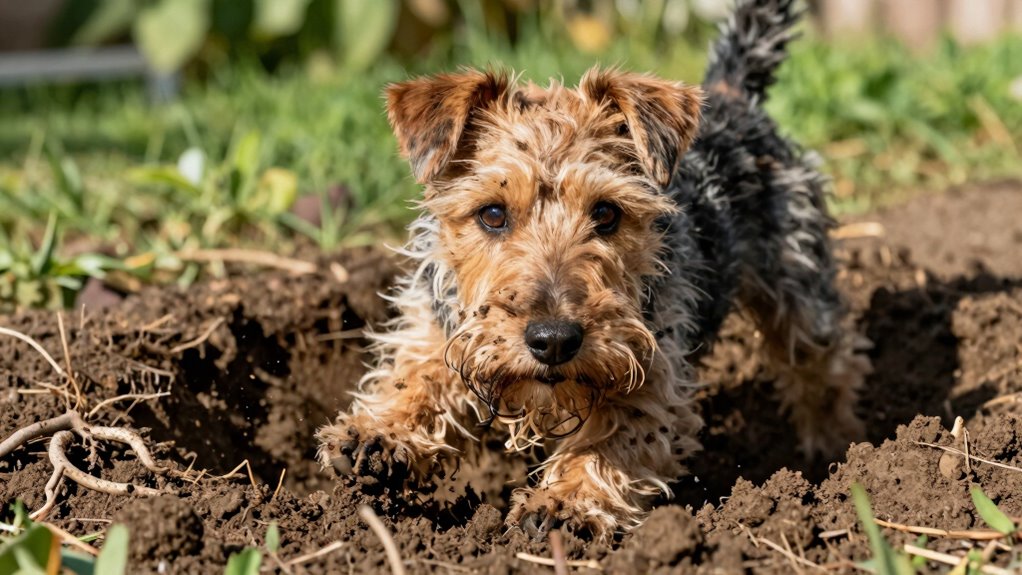
Many terrier breeds are known for their strong digging instincts, which can be both a charming trait and a challenge for pet owners. This behavior isn’t random; it’s deeply rooted in their history and purpose. Understanding terrier history helps you see why digging has become such a prominent part of their nature. Originally, terriers were bred in England to hunt small game like rats and foxes, often working underground or in burrows. Their digging techniques evolved to help them chase prey, escape predators, or retrieve animals trapped underground. Over generations, these skills became instinctual, passed down through breeding, making digging an inherent trait rather than a mere habit.
When you observe a terrier digging, you’re seeing a skill that has been refined over hundreds of years. They use their paws to claw and scrape at the ground, often with remarkable precision, aiming to reach what’s beneath the surface. This behavior, while impressive, can lead to unintended damage in your yard or garden. To manage it effectively, it’s helpful to understand their digging techniques. Many terriers dig by instinct, driven by a combination of curiosity, boredom, or the desire to hunt. Some may dig to find a cool spot on hot days, while others do it to uncover hidden treasures or simply because it’s a natural part of their hunting drive. Recognizing these motivations allows you to address their behaviors more thoughtfully.
Additionally, providing mental stimulation can help reduce excessive digging driven by boredom. If you want to redirect your terrier’s digging, consider providing designated digging areas, like a sandbox or a patch of loose soil where they’re free to excavate without causing chaos elsewhere. You can also engage them in activities that mimic their natural instincts, like supervised outdoor play or puzzle toys that challenge their minds. Training them to understand boundaries takes patience but is worth the effort, especially when you’re aware of their history and innate techniques. Understanding the natural instincts of terriers helps you develop more effective training strategies and environmental modifications. It’s also beneficial to observe their behavioral patterns to better anticipate when they might be inclined to dig. Recognizing the importance of their hunting background can also guide how you channel their energy in positive ways. Remember, digging isn’t just a quirky trait—it’s a window into their past and their natural talents. Embracing this aspect of their personality means you can better accommodate their needs while protecting your yard. Ultimately, understanding terrier history and their digging techniques helps you see this behavior not as a problem but as a feature of their remarkable breed.
As an affiliate, we earn on qualifying purchases.
Frequently Asked Questions
How Can I Train My Terrier to Stop Digging?
To stop your terrier from digging, you need to redirect their hunting instincts and address digging triggers. Provide plenty of engaging activities like fetch or puzzle toys to keep them occupied. When they dig, calmly interrupt and guide them to a designated digging spot, rewarding them when they use it. Consistency and patience are key; over time, your terrier will learn where it’s okay to dig and where it isn’t.
Are All Terrier Breeds Equally Prone to Digging?
Not all terrier breeds are equally prone to digging, as their temperament and breed origins influence their behavior. Some, like the Jack Russell Terrier, have a strong instinct to dig due to their history as hunting and burrowing dogs. Others, like the Staffordshire Bull Terrier, may dig less. Understanding your specific breed’s temperament and origins helps you manage their digging tendencies better, providing appropriate outlets and training.
What Safety Precautions Should I Take While My Terrier Digs?
When your terrier digs, guarantee safety by supervising closely and creating a designated digging area. Install sturdy garden fencing to prevent escape or damage and use digging deterrents around the yard’s perimeter. Keep hazardous tools, chemicals, and sharp objects out of reach. Regularly check for holes or tunnels and fill them promptly to prevent injuries. Also, provide plenty of toys and exercise to reduce excessive digging driven by boredom.
How Does Digging Behavior Vary Among Different Terrier Breeds?
You’ll notice that digging behavior varies among terrier breeds due to their rich history and breeding differences. Some, like the Jack Russell Terrier, are naturally enthusiastic diggers, reflecting their history as hunters and burrowers, while others, like the Border Terrier, dig less. Your understanding of these breeds’ origins helps you appreciate their instincts, allowing you to channel their energy positively and enjoy their unique digging tendencies.
Can Digging Be a Sign of Health Issues in Terriers?
Digging can sometimes be a sign of health issues, but more often, it’s linked to stress or boredom. If your terrier digs excessively, it might be trying to relieve anxiety or entertain itself. You should observe for other signs of distress or discomfort and make sure it gets enough exercise and mental stimulation. Addressing stress and boredom can reduce unnecessary digging, keeping your terrier healthier and happier.
Conclusion
So, next time your terrier starts digging, remember—it’s not just a quirk but part of their nature. This behavior likely harks back to their hunting instincts, making it an integral trait rather than a flaw. While it might be frustrating, embracing their digging tendencies helps you understand and connect with your furry friend better. After all, what seems like a nuisance is simply a glimpse into their wild, enthusiastic spirit—a feature, not a bug.
Fall Picks
fall essentials
As an affiliate, we earn on qualifying purchases.