To clean tear stains without irritating your pet’s skin, use gentle methods with natural remedies like diluted witch hazel or chamomile tea applied with a soft cloth or cotton ball. Avoid harsh chemicals and aggressive rubbing, and always make certain no solution gets into the eyes. Keep the area dry and follow a consistent routine. Address underlying causes like allergies or diet to support long-term health. For more tips, keep exploring options for safe, effective cleaning that keeps your pet comfortable.

Get pet supplies delivered free with Prime
- Fast, free delivery on millions of items
- Prime Video, Amazon Music and more included
- Member-only deals all year
Key Takeaways
- Use gentle, natural remedies like witch hazel or chamomile tea applied with a soft cloth or cotton ball.
- Avoid harsh chemicals and aggressive rubbing; gently wipe stained areas without entering the pet’s eyes.
- Maintain a consistent cleaning routine to prevent stain buildup and skin irritation.
- Keep the pet’s environment clean and free from dust and pollutants to reduce environmental factors.
- Address underlying causes like allergies or diet, supporting skin health with nutrient-rich foods and long-term care.
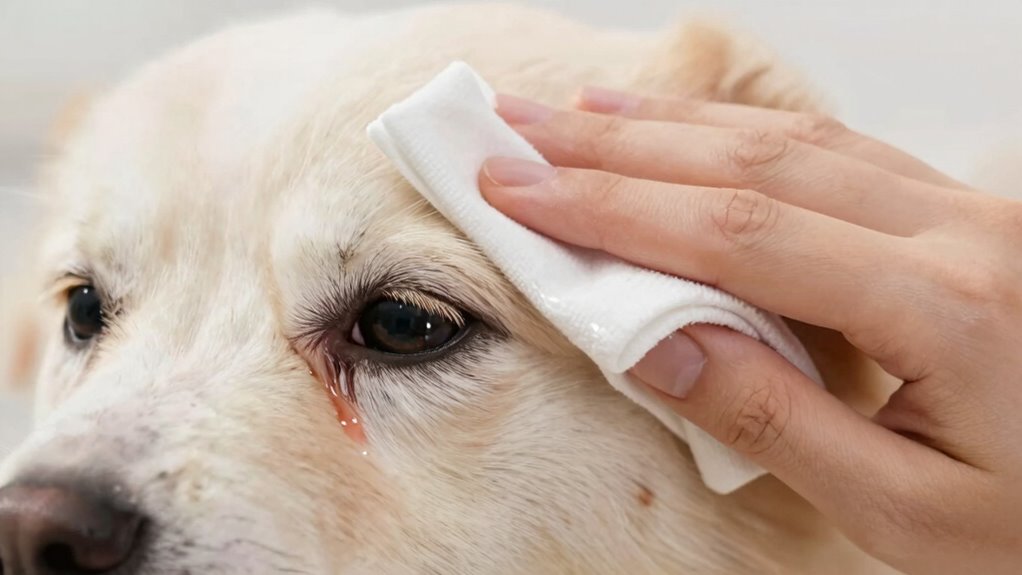
Tear stains can be a common concern for pet owners, but cleaning them without irritating your pet’s delicate skin requires careful attention. The area around your pet’s eyes is sensitive, and harsh chemicals or improper cleaning methods can cause discomfort or even worsen the problem. The importance of gentle cleaning techniques cannot be overstated, as they help maintain skin integrity while effectively managing stains. When it comes to pet allergy management, choosing gentle, natural remedies often offers the safest and most effective solution. Natural remedies not only help reduce tear stains but also minimize the risk of skin irritation, making them ideal for pets with sensitive skin or allergies.
Start by identifying the cause of tear stains, which can sometimes be linked to allergies, diet, or even environmental factors. If allergies are suspected, managing them properly helps reduce excess tearing and staining. Consult your veterinarian for advice on pet allergy management, which may include changes in diet or introducing hypoallergenic products. Once you’ve addressed underlying issues, focus on cleaning routines that are gentle yet effective. Instead of harsh commercial products, opt for natural remedies like a diluted solution of witch hazel or chamomile tea, which can help soothe the area and break down tear stains without causing irritation. Using gentle cleaning methods is essential to prevent further skin irritation. Additionally, understanding the causes of tear stains can help you develop a more targeted approach to treatment.
In cleaning tear stains, it’s also helpful to be aware of environmental factors that can contribute to staining, such as dust or pollutants, and try to minimize your pet’s exposure. Use a soft cloth or cotton ball dipped in your chosen natural remedy. Gently wipe the stained area, avoiding aggressive rubbing that could irritate the skin or damage the fur. Consistency is key; regular cleaning helps prevent staining from building up and keeps the area healthy. Be careful to avoid getting any solution into your pet’s eyes, which can cause discomfort or further irritation. After cleaning, ensure the area is thoroughly dried to prevent moisture buildup, which can lead to bacterial or yeast infections. Additionally, maintaining a clean and dry environment can support overall skin health and decrease the likelihood of infections. Proper hygiene and environmental management are crucial components of tear stain prevention.
In addition to topical remedies, consider dietary adjustments that support skin health and reduce tear staining. Foods rich in antioxidants and omega-3 fatty acids can strengthen your pet’s immune system and promote healthier skin and coat. Combining these nutritional strategies with natural remedies can be highly effective for managing tear stains long-term. Remember, patience and gentle care are essential; aggressive cleaning or harsh chemicals can worsen the problem and irritate your pet’s skin. Always monitor your pet’s reaction to new remedies and consult your veterinarian if the tear stains persist or worsen.
natural tear stain remover for pets
As an affiliate, we earn on qualifying purchases.
As an affiliate, we earn on qualifying purchases.
Frequently Asked Questions
Can Tear Stain Removal Harm My Pet’s Eyes?
Tear stain removal can harm your pet’s eyes if you use harsh chemicals or abrasive methods, leading to eye irritation or worsening sensitivities. If your pet has chemical sensitivities, opt for gentle, pet-safe options to prevent irritation. Always follow product instructions carefully, and avoid rubbing directly into the eye area. If you’re unsure, consult your veterinarian to guarantee safe and effective tear stain cleaning.
Are Natural Remedies More Effective Than Commercial Products?
Natural remedies like herbal alternatives and homemade remedies can be quite effective for cleaning tear stains, especially if you prefer gentle, chemical-free options. You often have more control over ingredients, reducing the risk of irritation. While commercial products are convenient and scientifically formulated, many pet owners find that herbal alternatives and homemade remedies work well, providing a safe, affordable, and natural way to manage tear stains without causing discomfort or harm.
How Often Should I Clean My Pet’s Tear Stains?
You should clean your pet’s tear stains daily to keep their face bright and healthy. Regular grooming helps prevent buildup, while a diet improvement can reduce staining caused by inflammation. Use gentle, natural solutions to avoid skin irritation, and make certain you’re thorough but gentle each time. Consistency is key—by maintaining this routine, you’ll keep your pet comfortable and their face looking clean and fresh every day.
What Signs Indicate an Infection or Allergy?
If your pet shows allergy symptoms like redness, swelling, or excessive tearing, it could be an allergy indicator. Watch for signs of infection, such as foul odor, unusual discharge, swelling, or increased redness around the eyes. If you notice these, it’s important to consult your veterinarian promptly. Recognizing infection indicators early helps prevent complications, ensuring your pet stays comfortable and healthy.
Is It Safe to Use Human Skincare Products on Pets?
It’s not safe to use human skincare products on pets because their skin sensitivity differs from ours. Pet grooming requires products specifically formulated for animals to prevent irritation or allergic reactions. Always choose pet-safe grooming supplies, especially around sensitive areas like tear stains. Using human products can cause discomfort or harm, so when in doubt, consult your veterinarian to guarantee you’re using the right, gentle products designed for your pet’s unique skin needs.
Conclusion
By following these gentle cleaning tips, you’ll keep your pet’s eyes clear and healthy, much like a loyal guardian watching over its domain. Remember, patience and kindness are your most trusted allies—think of it as tending to a delicate garden that blooms with care. With consistent effort, you’ll prevent irritation and maintain your pet’s comfort, proving that even in small acts, true devotion shines through. After all, a caring hand can turn the mundane into a masterpiece.
Halloween Picks
halloween
As an affiliate, we earn on qualifying purchases.