
Choosing between dog daycare and dog walkers depends on your dog’s personality and social needs. If your dog loves socializing and thrives on routine, daycare offers structured play and training, while walkers provide personalized attention and flexibility for dogs that prefer one-on-one interaction. Consider your schedule and your dog’s comfort level. To find the best fit, learn how each option can benefit your dog’s well-being and happiness.
Key Takeaways
- Dog daycare offers structured socialization and routine reinforcement, ideal for social, active dogs.
- Dog walkers provide personalized, one-on-one attention, fitting for dogs needing tailored care or with special needs.
- Daycare suits dogs that enjoy interacting with multiple dogs, while walkers benefit dogs prone to anxiety or overwhelmed in groups.
- Consider your dog’s personality, social preferences, and your schedule to choose the most suitable option.
- Both options can enhance your dog’s well-being when aligned with their temperament and your daily routine.
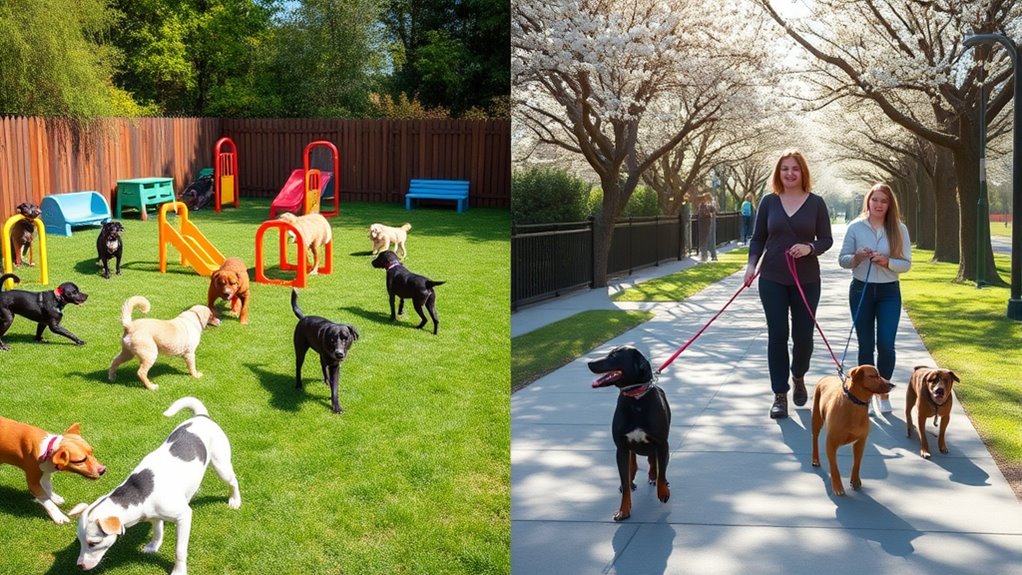
When choosing care options for your dog, you might wonder whether dog daycare or hiring a dog walker is the better fit. Both options have their advantages, but understanding how they impact your dog’s development can help you decide. Dog daycare offers a structured environment where your dog can follow consistent training routines. These routines help reinforce good behavior through supervised activities and regular schedules, making it easier for your dog to learn boundaries and commands. If your goal is to establish or maintain training routines, a quality dog daycare can be highly effective because it provides ongoing social cues and consistent discipline from trained staff.
Socialization benefits are another key consideration. Dog daycare provides ample opportunities for your dog to interact with other dogs in a controlled setting. This exposure helps improve social skills, reduce anxiety around new dogs or people, and prevent behavioral issues caused by social isolation. Your dog can learn to communicate and play appropriately in a group, which is often difficult to replicate during solo walks. Plus, daycare staff are usually experienced in managing different temperaments, ensuring your dog’s social experiences are safe and positive. This kind of socialization is invaluable for developing a well-rounded, confident dog.
On the other hand, hiring a dog walker offers more personalized attention and flexible scheduling. If your dog thrives on one-on-one interaction or if you have a busy schedule that doesn’t align with daycare hours, a dog walker could be a better fit. While a walker might not follow a formal training routine during walks, they can reinforce basic commands and good leash manners, especially if they’re experienced. However, the socialization benefits are typically limited to interactions with the walker or other dogs the walker might encounter on route, rather than the structured group environment of a daycare.
Another aspect to consider is your dog’s personality. Some dogs prefer the hustle and bustle of a daycare environment, where they can engage with multiple dogs and enjoy constant stimulation. Others may feel overwhelmed or anxious in a busy setting, making a walker’s more intimate approach preferable. If your dog has special needs or needs more gentle, customized care, hiring a dog walker allows for personalized routines and attention that are tailored specifically to your dog’s temperament and health.
In the end, the right choice depends on your dog’s personality, your schedule, and your training goals. Both options can improve your dog’s well-being, but understanding the socialization benefits and how each fits into your training routines will help you make the best decision for your furry friend.
Frequently Asked Questions
How Do I Decide Between a Dog Daycare and a Dog Walker?
You should choose based on your dog’s socialization needs and your schedule. If your dog thrives on interaction and benefits from socialization, a dog daycare offers constant social benefits. If you need flexibility, a dog walker fits better, especially if your dog prefers one-on-one attention. Consider your dog’s personality, energy level, and your availability to find the option that keeps them happy and well-cared for.
Are There Breed Restrictions for Dog Daycare or Walkers?
Of course, there are breed restrictions—because apparently, some dogs are too refined or too wild for certain daycares or walkers. They consider breed restrictions based on dog temperament, assuming a Chihuahua can’t keep up or a Pit Bull might be too intimidating. It’s all about matching your pup’s personality to the facility’s policies, ensuring they’re safe and happy, regardless of the breed they strut around with.
What Safety Measures Are in Place at Dog Daycares?
You should know that dog daycares prioritize safety through strict vaccination requirements and supervised play. Staff members closely monitor interactions to prevent conflicts, and secure facilities keep your dog safe from escapes or hazards. Many daycares also have emergency protocols and trained personnel on-site. These measures guarantee your dog stays safe, happy, and healthy while enjoying socialization and playtime with other dogs.
How Do I Evaluate a Dog Walker’s Experience and References?
You evaluate a dog walker’s experience and references by checking their credentials, verifying their references, and observing their interaction with your dog. Ask about their training, certifications, and past client feedback. Trust your instincts during a meet-and-greet, and confirm their credentials are current. By thoroughly verifying references and appraising their experience, you gain confidence in their ability to care for your dog safely and lovingly.
Can My Dog Participate in Both Services Simultaneously?
Yes, your dog can participate in both services simultaneously. Just keep in mind multi service options and scheduling considerations to avoid overloading your pup. Coordinate times carefully so your dog isn’t overwhelmed or stressed. Communicate clearly with both providers about your dog’s routine, ensuring they work together smoothly. This way, your dog benefits from socialization and exercise without feeling exhausted or confused by conflicting schedules.
Conclusion
Ultimately, choosing between dog daycare and a dog walker depends on your dog’s personality, your schedule, and your lifestyle. Both options offer socialization, exercise, and peace of mind, but each caters to different needs. Whether you prefer the structured environment of daycare or the personalized attention of a walker, remember that your dog’s happiness, safety, and well-being come first. Make the choice that best suits your dog’s needs, your routine, and your peace of mind.