When flying with your dog, IATA crate rules are there to keep your pet safe and comfortable. Your crate should be sturdy, well-ventilated, and the right size so your dog can stand, turn around, and lie down comfortably. Be sure to measure your dog accurately and choose a compliant crate with secure locks and proper airflow. Avoid common mistakes like oversized or poorly ventilated crates. Stick with these guidelines, and you’ll ensure smooth travel—more tips to help you prepare lie ahead.

Get pet supplies delivered free — and shop member deals
- Fast, free delivery on millions of items
- Access to Prime Big Deal Days deals on October 6–7
- Prime Video, Amazon Music and more included
Key Takeaways
- Crates must be sturdy, well-ventilated, and secure, meeting specific IATA standards for safety and comfort during air travel.
- Measure your dog accurately and choose a crate that allows them to stand, turn around, and lie down comfortably.
- Label the crate with your contact details and include familiar bedding and water to reduce stress.
- Verify airline-specific crate size, weight, and design requirements before travel to ensure compliance.
- Arrive early at the airport for crate inspection, follow handling procedures, and ensure proper ventilation and security throughout the journey.
As an affiliate, we earn on qualifying purchases.
What Are the Basic IATA Crate Requirements for Flying With Your Dog?
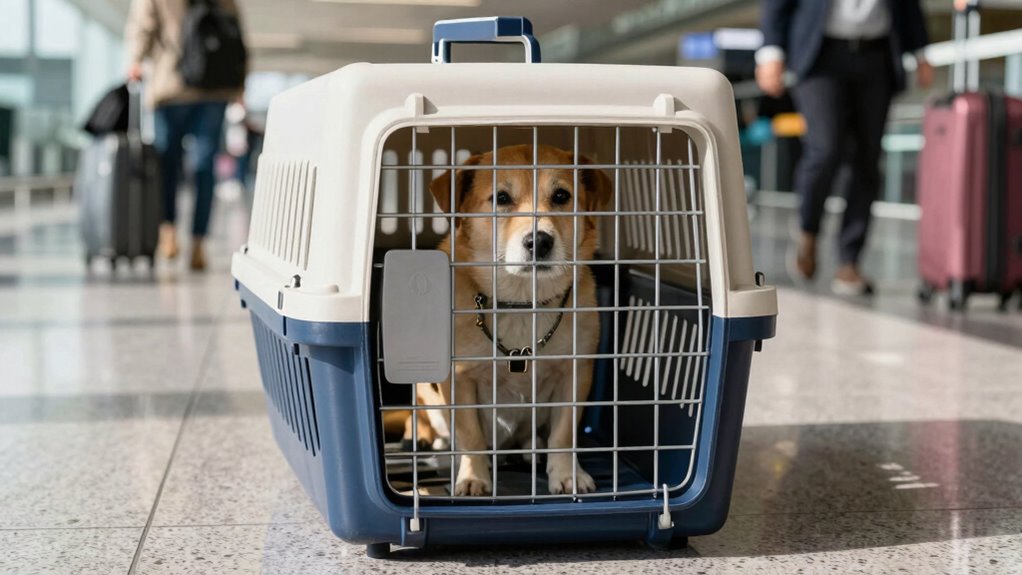
To guarantee your dog travels safely and comfortably, it’s essential to meet the basic IATA crate requirements. Airline policies often specify these standards to ensure safety during transit. Your crate must be sturdy, well-ventilated, and escape-proof, with secure latches. It should have a solid floor and enough space for your dog to stand, turn around, and lie down comfortably. Including crate accessories like absorbent bedding and proper labeling helps meet airline standards and keeps your pet comfortable. Avoid crates with sharp edges or collapsible sides, which can compromise safety. Always double-check specific airline policies because they may have additional requirements. Ensuring your crate meets safety standards is crucial for a smooth journey. Paying attention to crate ventilation helps prevent overheating and ensures proper airflow. Proper crate sizing and dimensions are also important to provide enough room for your dog to move comfortably during transit. Additionally, selecting a crate with durable construction can prevent accidental escapes or damage during handling. Maintaining a secure locking mechanism is essential to avoid accidental openings during travel. Following these guidelines ensures your dog’s crate is compliant and reduces stress during travel.
How Do I Measure My Dog and Pick the Right Crate Size?
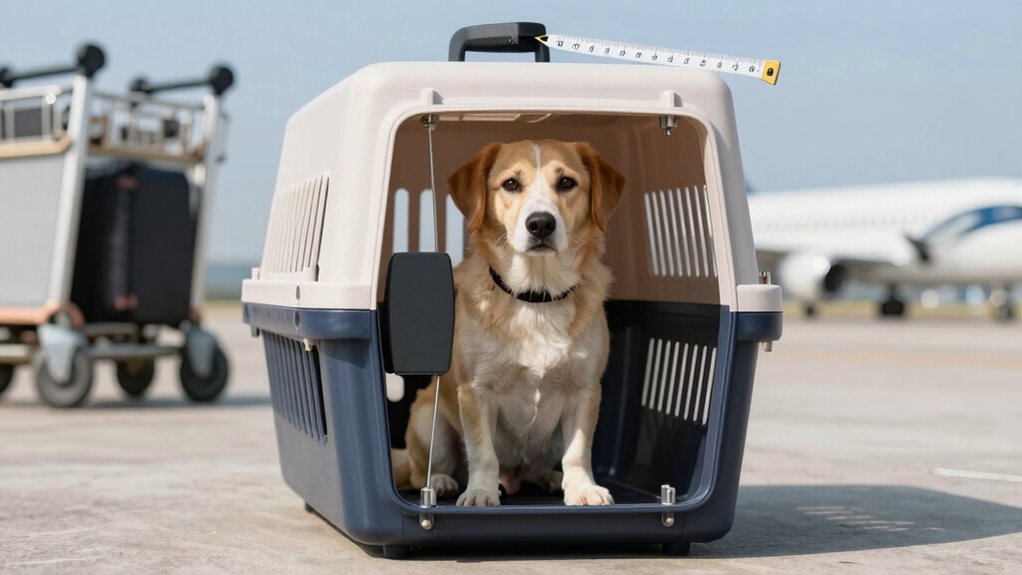
Measuring your dog accurately is vital to choosing the right crate size, guaranteeing your pet’s comfort and safety during travel. Start by measuring your dog’s height from the ground to the top of its head or ears while standing. Add a few inches to this measurement to allow space for movement and breathing. When selecting a crate, check that there’s enough room for your dog to stand, turn around, and lie down comfortably. Proper crate ventilation is also essential—it should have enough airflow to keep your dog cool and comfortable throughout the journey. Avoid crates that are too tight or too spacious, as both can cause stress or discomfort. Taking precise measurements ensures you pick a crate that meets IATA standards and keeps your dog safe during the flight. Additionally, considering the horsepower of electric dirt bikes can be useful if your dog enjoys off-road adventures or outdoor activities that may involve rugged terrain. Knowing how to properly measure your dog helps in selecting a crate that offers both safety and comfort during air travel, and understanding the size requirements can help prevent last-minute issues at the airport. Being aware of dog behavior during travel can also assist in choosing the most suitable crate for your pet’s needs.
What Are the Key Features of an IATA-Compliant Dog Crate?
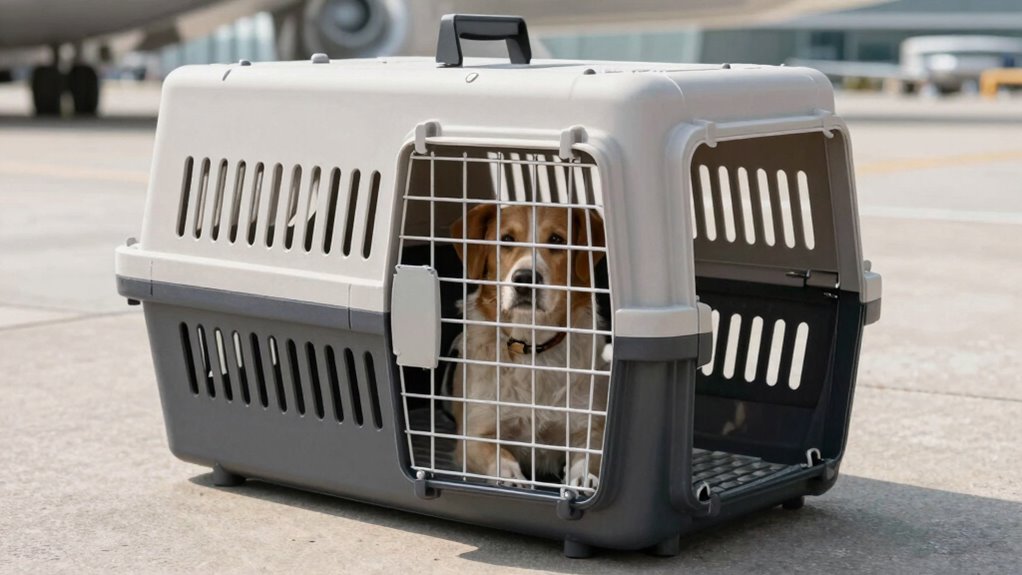
Wondering what makes a dog crate IATA-compliant? The key features include proper dog crate ventilation, ensuring your pet gets enough airflow during travel, which helps keep them comfortable and reduces stress. The crate must also have secure crate security, meaning it can withstand handling and prevent accidental escapes. Look for sturdy, durable materials that are escape-proof and resistant to chewing. The door should lock securely but be easy for you to open when needed. The crate’s design should promote safety, with smooth edges and no sharp points that could injure your dog. Overall, an IATA-compliant crate combines excellent ventilation with reliable security, giving your pet a safe, comfortable space during the flight. Additionally, IATA crate rules emphasize the importance of proper sizing to prevent movement and injury during transit. Proper crate ventilation is also crucial to meet airline requirements and ensure your dog’s comfort throughout the journey, as adequate airflow can significantly reduce travel stress for your pet.
What Common Mistakes Should I Avoid When Preparing My Dog’s Crate?
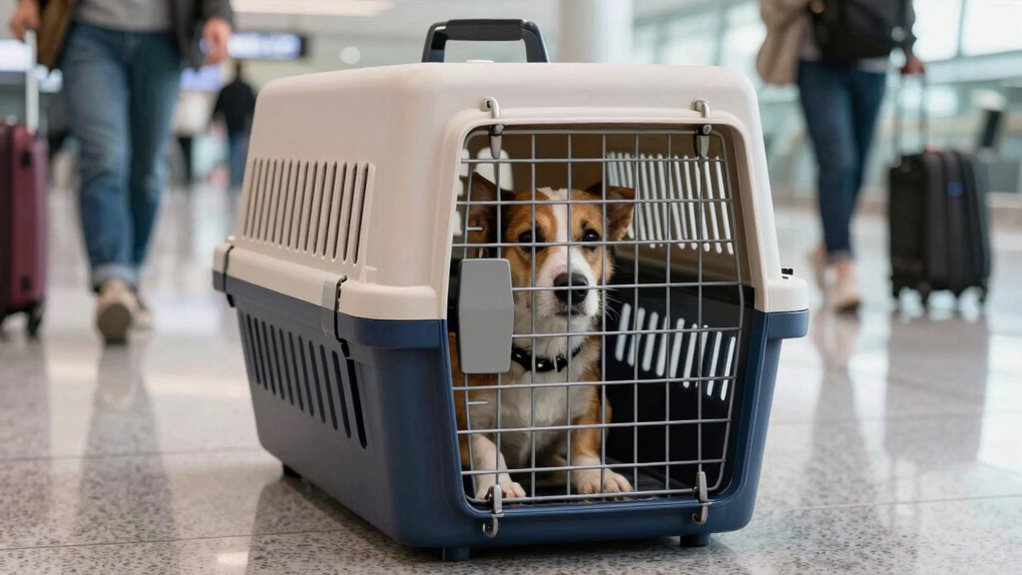
One common mistake travelers make is not double-checking that the crate is the right size for their dog. An improperly sized crate can cause discomfort or safety issues. To avoid this, verify there’s enough space for your dog to stand, turn around, and lie comfortably. Also, don’t overlook crate cushioning; secure padding helps keep your dog comfortable during travel and prevents slipping. Another mistake is neglecting labeling accuracy. Clearly label the crate with your contact information and your dog’s details to prevent confusion. Proper labeling makes it easier for airline staff to identify and handle the crate correctly. Additionally, ensuring your crate has proper ventilation and airflow is crucial for maintaining a comfortable environment during transport. It’s also helpful to familiarize yourself with IATA crate rules to ensure compliance and avoid delays at the airport. Being aware of vetted safety guidelines for pet travel can further reduce risks and improve your dog’s experience. Incorporating appropriate crate materials that meet safety standards can also enhance your pet’s comfort and safety during transit. Remember, airline policies may vary, so checking specific airline regulations can prevent last-minute surprises. By paying attention to crate cushioning, labeling accuracy, and ventilation, you reduce stress for your dog and streamline the shipping process, ensuring a smoother journey.
How Can I Verify My Dog’s Crate Meets Airline and IATA Rules Before Travel?
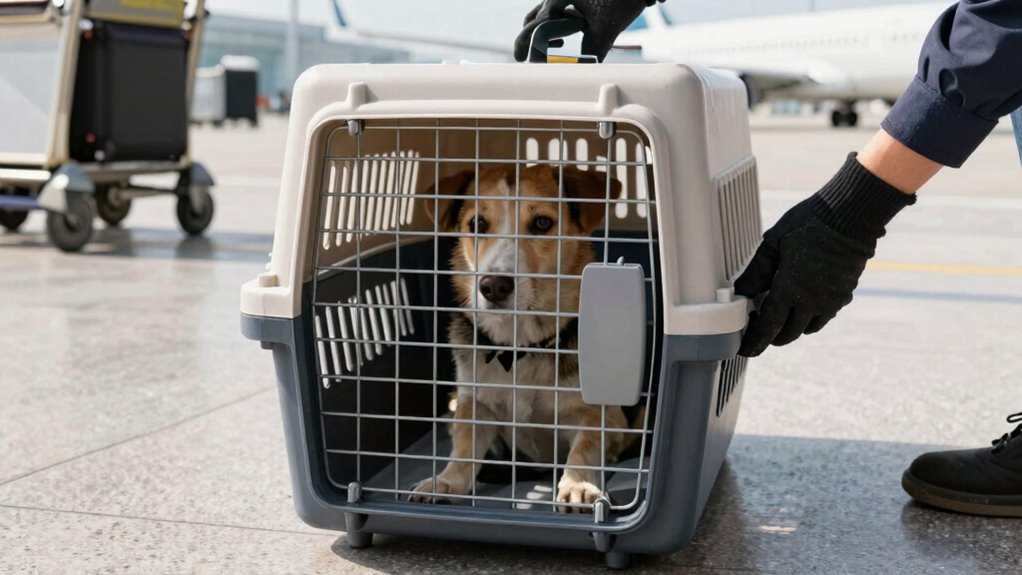
How can you guarantee your dog’s crate complies with airline and IATA regulations before travel? First, check the airline’s specific crate size, weight, and material requirements, as they can vary. Then, verify that the crate’s design meets IATA standards for ventilation, secure locking, and label placement. Prioritize your pet’s health by ensuring the crate provides ample space for comfortable crate training and proper airflow. Measure your dog accurately to select the right size, and gradually introduce crate training to reduce stress during travel. Additionally, review time-sensitive travel documentation requirements to ensure all paperwork is current and complete. Confirm that the crate’s construction and features adhere to IATA-compliant standards, which are critical for safety and acceptance. Ensuring that your crate is IATA-compliant is crucial for smooth travel and your pet’s safety. This includes confirming that the crate has the appropriate ventilation, padding, and labeling as specified by IATA guidelines. It’s also advisable to review airline policies beforehand to avoid last-minute surprises. Finally, consult the airline’s pet travel policies and IATA’s guidelines to confirm all criteria are met. Doing this thorough verification helps prevent delays or issues at the airport and ensures your dog’s safety and well-being throughout the journey.
Frequently Asked Questions
Can I Use a Soft-Sided Crate for Airline Travel?
Yes, you can use soft-sided crates for airline travel, but make certain they meet airline regulations. Soft-sided crates are lightweight and flexible, making them easier to transport and fit into kennels. However, they must be sturdy, well-ventilated, and secure to ensure your dog’s safety during airline travel. Always check with your airline beforehand to confirm their specific requirements for soft-sided crates before flying with your dog.
What Safety Features Are Required Inside the Crate?
Sure, your pup will love the luxury of ventilation standards and padding requirements! Inside, make certain there’s proper ventilation for fresh air and padding to cushion their tiny paws. No secret compartments or fancy gadgets needed—just these essentials to keep your furry friend comfy and safe. Remember, a well-ventilated, padded crate isn’t just airline law; it’s your dog’s first-class ticket to a stress-free flight!
Are There Specific Color or Labeling Requirements for Crates?
You should guarantee your crate has proper crate labeling with your contact info and pet details visible. While IATA doesn’t specify crate color requirements, choose a neutral or light-colored crate for visibility and comfort. Avoid bright, reflective, or overly dark colors. Proper labeling and suitable crate color help airline staff quickly identify your dog and ensure safe handling during travel, making the process smoother for everyone involved.
How Early Should I Arrive at the Airport With My Dog?
You should arrive at the airport at least 2 hours before your flight to give yourself enough time for pet travel checklist preparations and to review airline pet policies. This guarantees you can handle check-in, crate inspections, and any last-minute questions without stress. Arriving early helps your dog stay calm and makes the process smoother for both of you. Always double-check airline-specific requirements before heading to the airport.
What Are the Quarantine Rules if My Dog Travels Internationally?
When your dog travels internationally, quarantine rules depend on your destination country’s pet health requirements. You must provide up-to-date travel documentation, like vaccination records and health certificates, to avoid quarantine or reduce its duration. Some countries require a mandatory quarantine period for pets arriving without proper documentation or if health issues are suspected. Always check specific regulations beforehand to guarantee smooth travel and your pet’s well-being.
Conclusion
Traveling with your dog can be smooth if you follow IATA crate rules. Remember, over 70% of pet travel issues occur due to improper crate preparation. Ensuring your crate meets all airline and IATA standards not only keeps your dog safe but also saves you stress at the airport. Double-check measurements, key features, and compliance before departure. Proper planning makes flying with your furry friend safer and more enjoyable for both of you.
Fall Picks
fall essentials
As an affiliate, we earn on qualifying purchases.