Choosing the right grooming tools for home use is key to keeping your pet healthy and comfortable. Brushes help distribute oils and prevent mats, while combs allow detailed inspection and removal of tangles. Clippers are essential for trimming and maintaining neat coats between pro visits, but using them correctly guarantees safety. Proper maintenance and technique minimize discomfort and injuries. Keep learning about each tool’s best use, and you’ll make grooming easier and safer for your pet.
Key Takeaways
- Different grooming tools like brushes, combs, and clippers serve specific purposes for maintaining pet hygiene and coat health at home.
- Selecting the right brush type (slicker, pin, rubber) depends on your pet’s coat length and texture.
- Combs are essential for detailed grooming, detangling, and checking for skin issues or parasites.
- Clippers help manage trims and maintain neat coats between professional grooming sessions, with blade size matching coat type.
- Proper tool maintenance and safe usage are crucial to prevent injuries and ensure effective grooming at home.
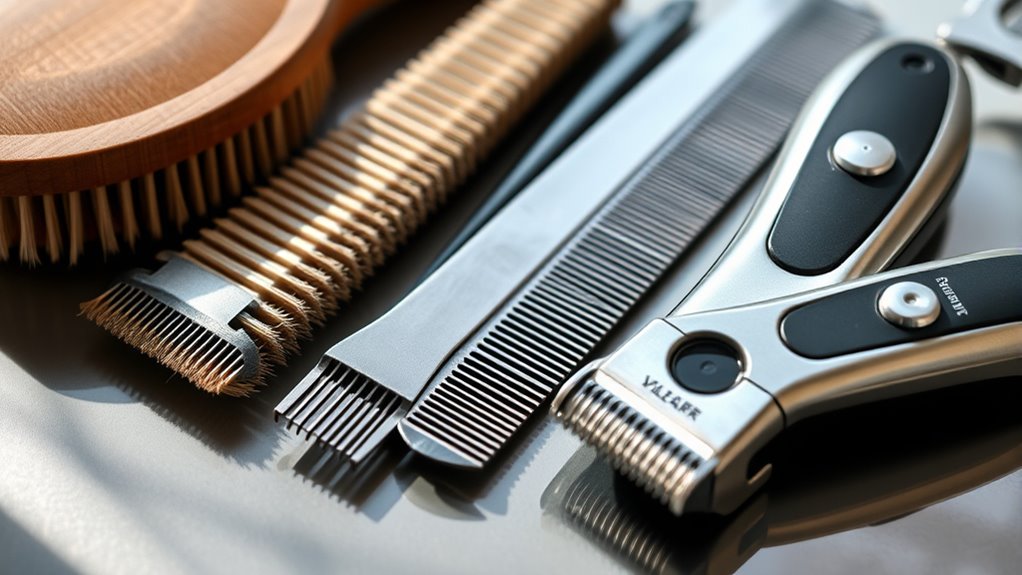
Grooming tools for home use have become essential for maintaining your pet’s hygiene and appearance without frequent trips to the groomer. When you take on pet grooming at home, you gain more control over your pet’s comfort and health. It allows you to keep their coat clean, free of tangles, and looking its best. However, to do this effectively and safely, you need the right tools and knowledge about grooming safety. Choosing the proper brushes, combs, and clippers makes a significant difference in your grooming routine.
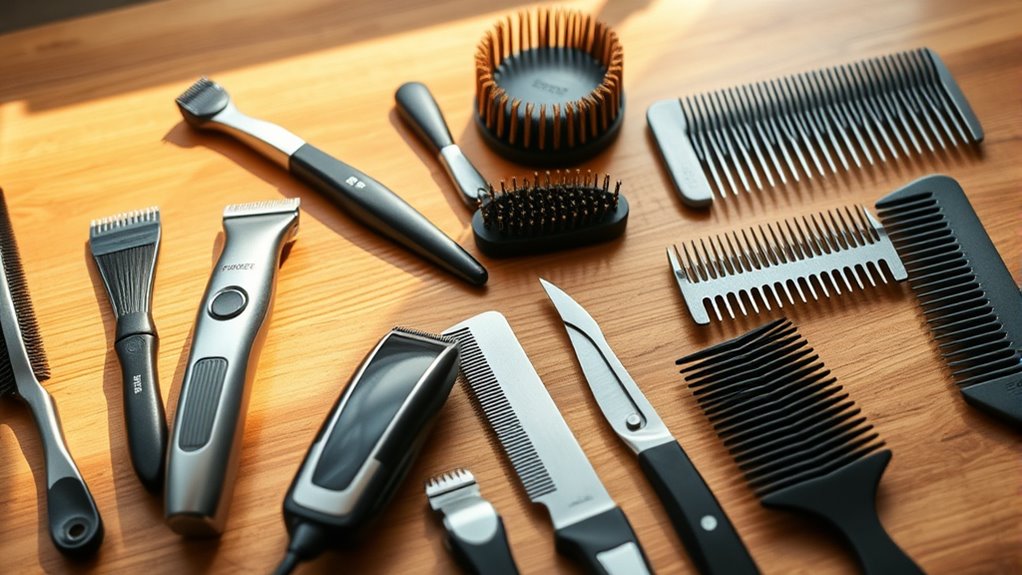
Starting with brushes, they are crucial for pet grooming because they help distribute natural oils, remove loose fur, and prevent matting. Different coat types require different brushes. For example, slicker brushes work well on long-haired or curly coats, helping to detangle and smooth out the fur. Pin brushes are better for finishing touches on longer coats, providing a gentle brushing experience. For short-haired pets, a rubber curry brush can stimulate skin and remove loose hair efficiently. Using the right brush not only enhances pet grooming but also minimizes discomfort and potential grooming safety issues, such as skin irritation or accidental pulling, which can cause stress or injury to your pet.
Combs are equally important, especially for detailed grooming tasks. They help in inspecting your pet’s coat for mats, debris, or parasites. Wide-tooth combs are excellent for detangling and removing hair knots gently, while fine-tooth combs are perfect for checking the skin surface and removing loose hair. Regular combing prevents mats and promotes healthy skin, but always be gentle to avoid hurting your pet. Proper combing techniques and choosing the correct combs reduce grooming safety risks, like skin irritation or accidental scratching.
Clippers are essential for managing trims and keeping your pet’s coat neat between professional groomings. When selecting clippers, consider the blade size and motor power suitable for your pet’s coat type. Cordless models provide better maneuverability, making grooming easier and safer. Always follow the manufacturer’s instructions to avoid nicking or cutting your pet’s skin. Proper use of clippers is vital for grooming safety; rushing or applying too much pressure can cause cuts or discomfort. Regular maintenance, like cleaning and oiling blades, ensures they function smoothly and safely. Additionally, choosing a high-quality spray system can help in preparing the coat for trimming and reduce static or uneven cuts.
Frequently Asked Questions
How Often Should I Replace My Grooming Tools?
You should replace your grooming tools every 6 to 12 months to maintain proper tool maintenance and grooming hygiene. Regularly clean and disinfect brushes, combs, and clippers to extend their lifespan, but worn-out blades or frayed brushes need replacement sooner. Keeping your tools in good condition helps prevent skin irritation and infections, ensuring your grooming routine stays safe and effective. Don’t neglect replacing or maintaining your tools regularly for ideal results.
Are Specific Brushes Better for Sensitive Skin?
Yes, specific brushes are better for sensitive skin. Look for sensitive skin brushes or gentle grooming tools that have soft, flexible bristles designed to minimize irritation. These brushes gently massage your skin without causing redness or discomfort. You should choose tools labeled for sensitive skin and avoid harsh, stiff bristles. Using the right gentle grooming tools will help keep your skin healthy and comfortable during grooming routines.
Can I Use Human Hair Clippers on Pets?
Think of using human hair clippers on pets like trying to fit a square peg into a round hole. You shouldn’t, because they lack pet-specific blades designed to handle fur and skin safely. Instead, opt for multi-purpose tools made for animals, which guarantee comfort and safety. Pet-specific blades are essential—they’re like a tailored suit for your furry friend, preventing irritation and injuries during grooming at home.
What Safety Precautions Should I Follow While Grooming?
You should always wear safety gear like gloves and eye protection to prevent injuries. Keep your grooming tools clean and well-maintained to guarantee they work properly and avoid accidents. Make sure to secure your pet and use gentle, steady movements during grooming. Regularly check your tools for damage, and replace or sharpen them as needed. Taking these precautions helps keep both you and your pet safe and comfortable.
Are There Eco-Friendly Grooming Tool Options Available?
Did you know that over 300 million plastic brushes and combs end up in landfills each year? You can opt for eco-friendly grooming tools like biodegradable brushes and recycled plastic combs to diminish your environmental impact. These options are sustainable, durable, and gentle on your pet or hair, helping you maintain grooming routines while caring for the planet. Making eco-conscious choices ensures a greener future for everyone.
Conclusion
Now that you know the basics of brushes, combs, and clippers, you’re ready to give grooming a try at home. Some say regular grooming boosts your pet’s health and bond, but did you know it might also reduce stress for both of you? While not scientifically proven, many pet owners swear it makes a difference. So, trust your instincts, use the right tools, and enjoy the time spent caring for your furry friend.