
To safely trim your dog’s nails, choose high-quality, sharp tools that fit comfortably in your hand, such as scissors or grinders. Find a quiet, well-lit space, gently hold your dog’s paw, and start slowly, rewarding calm behavior. Be sure to avoid cutting into the quick, which is the pink nerve area, to prevent bleeding and pain. With proper technique and patience, you can keep your dog comfortable—learn more about making this a safe and stress-free routine.
Key Takeaways
- Use high-quality, sharp tools suited to your dog’s nail size and shape for safe trimming.
- Identify and avoid cutting into the quick, which contains nerves and blood vessels.
- Choose a quiet, well-lit space to help your dog stay calm during the process.
- Hold the paw gently, start slowly, and reward calm behavior to reduce anxiety.
- Seek professional help if you’re unsure or uncomfortable with trimming techniques.
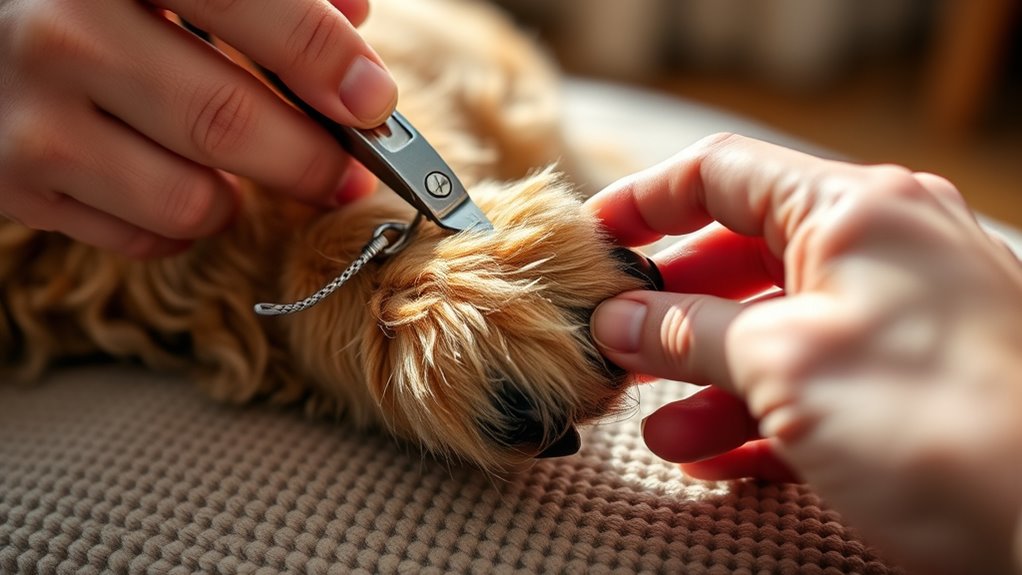
Regular nail trimming is an essential part of your dog’s grooming routine that often gets overlooked. Many dog owners underestimate how important it is for your pet’s overall well-being. Keeping your dog’s nails properly trimmed isn’t just about appearance; it directly impacts dog nail health, comfort, and mobility. Overgrown nails can cause pain, lead to joint issues, and even result in difficulty walking. That’s why investing in the right trimming tools is vital. High-quality nail clippers or grinders designed specifically for dogs will make the process safer and more comfortable for both of you. Using the correct tools reduces the risk of splitting or cracking nails and minimizes discomfort during trimming.
Regular nail trimming is vital for your dog’s health and comfort.
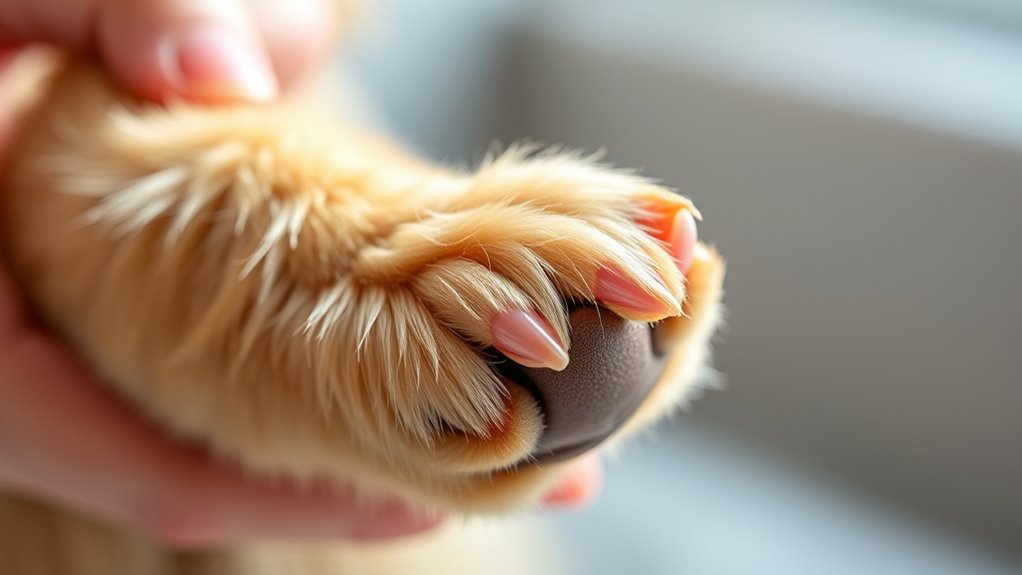
Before you start, it’s good to familiarize yourself with your dog’s nails. Check for signs of overgrowth, uneven wear, or any damage. Healthy nails should be smooth and uniform in length, not digging into the pads or catching on surfaces. When choosing trimming tools, opt for sturdy, sharp equipment that fits comfortably in your hand. Scissors-style clippers, guillotine types, or grinders each have their benefits, so pick whichever your dog tolerates best. Regular use of quality tools ensures clean cuts and reduces the chance of splintering, which can cause pain or infection.
When you’re ready to trim, find a quiet, well-lit space where your dog feels safe. Gently hold your dog’s paw, and be cautious not to press too hard. Start slowly, especially if your dog is nervous, and reward calm behavior with treats and praise. Look for the quick, which is the pink area inside the nail containing nerves and blood vessels. Avoid cutting into the quick, as it causes bleeding and discomfort. With practice, you’ll learn to identify it easily. If you’re using nail grinders, start on a low setting and gradually increase as your dog becomes accustomed to the sensation. Be patient and gentle, taking small, controlled clips or grinding passes. Additionally, high refresh rates in nail trimming tools can help improve precision and reduce stress for your pet.
Consistency is key to maintaining good dog nail health. Regular trims prevent nails from becoming too long, which can cause painful splitting or curling. Keep an eye on your dog’s nails between trims to catch any overgrowth early. If you’re unsure or uncomfortable trimming your dog’s nails, don’t hesitate to seek help from a professional groomer or veterinarian. Proper technique and the right tools make nail trimming a safe, manageable task that benefits your dog’s health and happiness. With patience and practice, it becomes a routine you and your furry friend can handle confidently.

Epica Professional Dog Nail Clipper – Dog Nail Trimmer for Large Dogs – Easy and Safe Pets Grooming Clippers – Cat Claw Trimmer with Safety Guard (Large)
TRIM YOUR PET’S NAILS SAFELY: It’s easy to make a precise, safe cut with our semi-circular blades. Your…
As an affiliate, we earn on qualifying purchases.
As an affiliate, we earn on qualifying purchases.
Frequently Asked Questions
How Often Should I Trim My Dog’s Nails?
You should trim your dog’s nails every 3 to 4 weeks to maintain good dog nail health. Regular trimming fits into your grooming schedule and prevents overgrown nails that can cause discomfort or injury. Keep an eye on your dog’s nails, especially if they’re not very active or walk on hard surfaces, and adjust frequency as needed. Consistent trimming helps keep your dog comfortable and prevents future problems.
Can I Use Human Nail Clippers on My Dog?
You can’t really use human nail clippers on your dog without risking trouble. It’s a case of apples and oranges—pet nail safety depends on using tools designed for dog nail anatomy. Human clippers are often too small or too large, making it hard to trim safely. To avoid pain or injury, invest in dog-specific nail clippers, which are tailored to your pet’s nail shape and size, keeping the process safe and stress-free.
What Are Signs My Dog’s Nails Need Trimming?
You’ll notice your dog’s nails need trimming if they click on the floor or curl under their paw. Keep an eye on their paw health and nail growth patterns—if nails seem overgrown or cause discomfort, it’s time to trim. Regularly check their paws to prevent pain or injury, and remember, healthy nails support overall paw health and mobility. Trimming helps maintain comfort and prevents future issues.
How Do I Prevent My Dog From Scratching During Trimming?
Sure, your dog’s scratches might seem like a fierce defense, but in reality, they’re just desperate for distraction. To prevent scratching during trimming, use dog nail safety and keep your pup calm with trimming distraction techniques like treats or toys. Gently hold their paws, stay patient, and create a positive experience. This way, you turn a potential mess into a peaceful, safe grooming session.
Are There Specific Nail Trimming Tools for Different Dog Breeds?
Yes, there are breed-specific tools designed for trimming your dog’s nails, considering their size and nail type. Smaller breeds often need finer, precise clippers, while larger breeds require heavy-duty tools. Nail type considerations, like thick or brittle nails, also influence your choice. Using the right tools guarantees a safer, smoother trim, reducing discomfort and preventing injury. Always select tools suited to your dog’s breed and nail characteristics for the best results.

LOPSIC Whisper Quiet Dog Nail Grinder with LED Light, Safe & Stress-Free for Sensitive Dogs of All Breeds & Sizes, 3 Grinding Bits, 3-Speed, Pet Nail Trimmers, Rechargeable Painless Grooming Kit
𝐖𝐡𝐢𝐬𝐩𝐞𝐫 𝐐𝐮𝐢𝐞𝐭 & 𝐒𝐭𝐫𝐞𝐬𝐬-𝐅𝐫𝐞𝐞 𝐆𝐫𝐨𝐨𝐦𝐢𝐧𝐠: Ultra-quiet and low-vibration design keeps sensitive dogs calm. No more fear, shaking, or…
As an affiliate, we earn on qualifying purchases.
As an affiliate, we earn on qualifying purchases.
Conclusion
Now that you know how to trim your dog’s nails safely, you hold the magic wand to keep their paws healthy and happy. Remember, each careful snip is like a tiny brushstroke on your pet’s well-being masterpiece. With patience and gentle hands, you’ll turn nail trimming into a smooth dance rather than a formidable chore. Keep their paws proud and their spirits high—because when you care, every step they take feels like walking on sunshine.

Bretheil Dog Nail Clippers Trimmer Set, Quick Safety Guard to Avoid Over-Cutting, Stainless Steel Razor Sharp Blades, Sturdy Non-Slip Handles, Storage Case and Nail File, Professional Pet Grooming
Professional grade: Dog nail clippers set are designed to turn your trimming dog's paw nails into a quick…
As an affiliate, we earn on qualifying purchases.
As an affiliate, we earn on qualifying purchases.
LOPSIC Whisper Quiet Dog Nail Grinder with LED Light, Safe & Stress-Free for Sensitive Dogs of All Breeds & Sizes, 3 Grinding Bits, 3-Speed, Pet Nail Trimmers, Rechargeable Painless Grooming Kit
𝐖𝐡𝐢𝐬𝐩𝐞𝐫 𝐐𝐮𝐢𝐞𝐭 & 𝐒𝐭𝐫𝐞𝐬𝐬-𝐅𝐫𝐞𝐞 𝐆𝐫𝐨𝐨𝐦𝐢𝐧𝐠: Ultra-quiet and low-vibration design keeps sensitive dogs calm. No more fear, shaking, or…
As an affiliate, we earn on qualifying purchases.
As an affiliate, we earn on qualifying purchases.