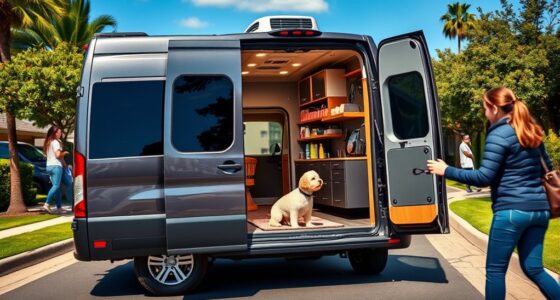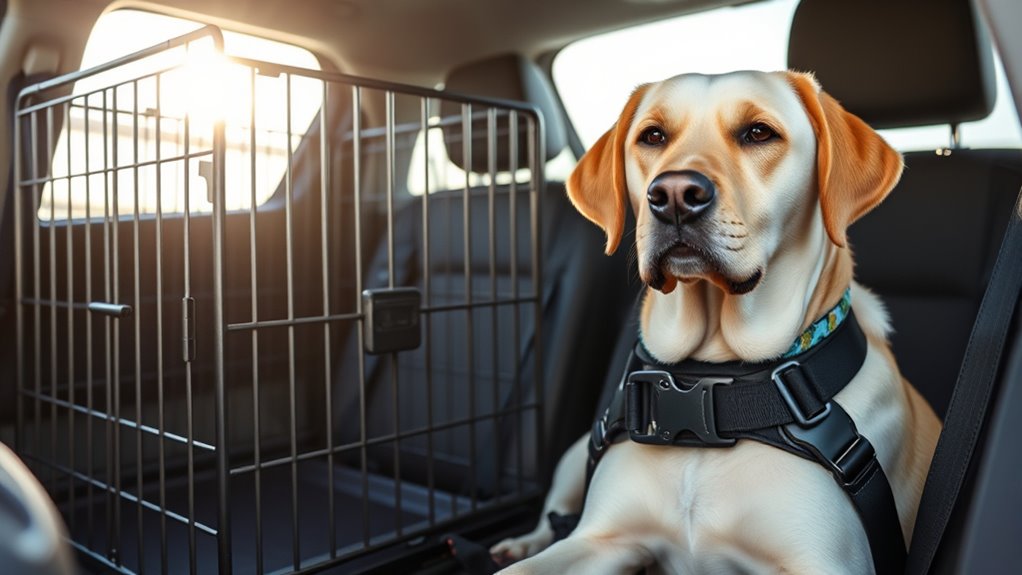
To keep your dog safe during travel, choose a well-ventilated, sturdy crate that fits your dog comfortably and meets safety standards. Pair it with a secure, adjustable seat belt that attaches to a harness to prevent injuries and minimize driver distractions. Understanding local regulations on pet travel helps avoid issues. If you keep exploring, you’ll discover more tips on selecting the best gear to guarantee your dog’s safety and comfort on the road.
Key Takeaways
- Select well-ventilated, sturdy crates that fit your dog’s size and meet safety standards for secure travel.
- Use adjustable, vehicle-compatible canine seat belts that attach securely to harnesses for maximum safety.
- Ensure crates are easy to clean, durable, and prevent dogs from wandering to reduce distractions and injuries.
- Verify compliance with travel regulations, including vaccination records, health certificates, and breed restrictions.
- Consider the dog’s comfort and safety by choosing secure crates and seat belts that allow natural movement without compromising protection.
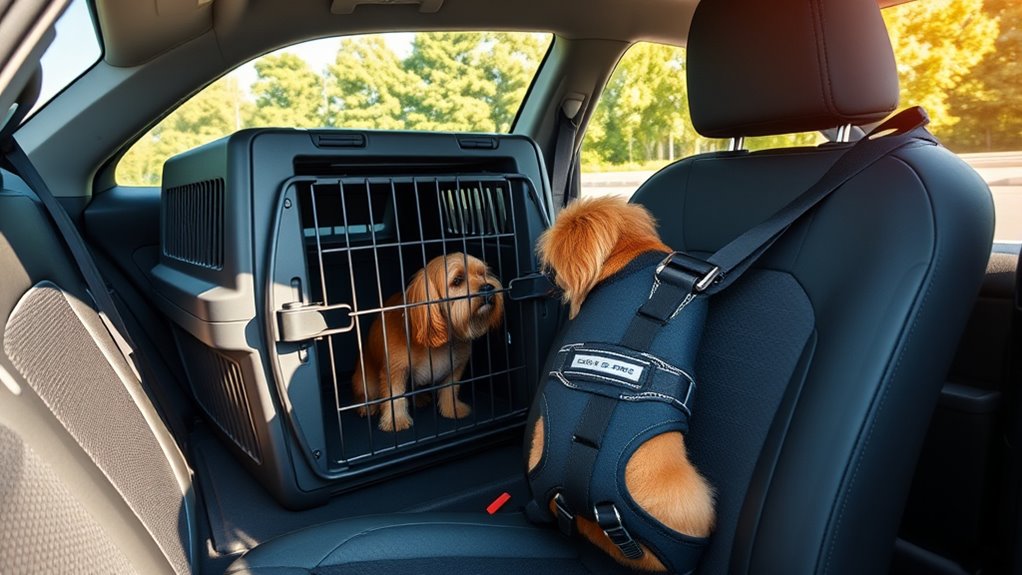
Travel safety is vital to guarantee your trip goes smoothly and without incident. When it comes to bringing your dog along, choosing the right pet travel accessories makes all the difference. Proper crates and seat belts not only keep your furry friend comfortable but also assure their safety in case of sudden stops or accidents. Before hitting the road, familiarize yourself with canine travel regulations, which can vary depending on your destination and mode of transportation. Knowing these rules helps you select the most appropriate gear and avoid any legal issues that could disrupt your trip.
Investing in a well-ventilated, sturdy crate designed specifically for travel is a smart move. Look for one that’s well-ventilated, fits your dog’s size comfortably, and meets safety standards. A secure crate helps prevent your dog from wandering around the vehicle, reducing distractions while driving and protecting them in the event of a collision. When choosing travel accessories, consider the ease of cleaning and durability, especially if your trip involves outdoor activities. Properly secured crates also help you comply with pet travel regulations, which often require that your dog be restrained during transit to prevent injury and guarantee everyone’s safety.
Choose well-ventilated, durable travel crates to keep your dog safe and comfortable on the road.
In addition to a crate, a reliable canine seat belt can be a game-changer. Seat belts designed specifically for dogs attach easily to harnesses, keeping your pet secure in the seat. This not only minimizes the risk of injury but also prevents your dog from distracting you while driving. When selecting a seat belt, ensure it’s adjustable and compatible with your vehicle’s seat belt system. Properly restrained, your dog can enjoy the ride while you maintain control of the vehicle and adhere to travel safety guidelines.
Understanding canine travel regulations is indispensable, especially if you’re crossing state or country borders. Different regions may have specific rules regarding pet identification, health certificates, or quarantine requirements. Make sure your pet’s vaccination records are up to date and carry any necessary documentation. Some areas may also have restrictions on certain breeds or sizes, so doing research beforehand helps you prepare the appropriate pet travel accessories and avoid penalties or delays.
Frequently Asked Questions
What Are the Legal Requirements for Traveling With Dogs in Different States?
You need to check each state’s pet laws before traveling with your dog, as requirements vary. Some states mandate crate safety standards and specific restraint laws, while others may have leash laws or restrictions on certain breeds. Always review the local regulations to make certain you’re compliant, and use a secure, well-ventilated crate or seat belt to keep your dog safe and avoid fines or penalties during your trip.
How Can I Train My Dog to Be Comfortable in a Crate?
To crate train your dog and promote relaxation, start by making the crate inviting with comfy bedding and treats. Gradually introduce your dog to the crate, using positive reinforcement and patience. Allow short periods inside, then slowly increase the duration. Consistency is key; always praise your dog for calm behavior. Over time, your dog will associate the crate with comfort, making crate training and dog relaxation much easier.
Are There Specific Seat Belt Types Recommended for Small or Large Dogs?
For small or large dogs, specific seat belt types are highly recommended to guarantee safety and comfort. Opt for sturdy dog harnesses that secure easily with seat belt installation, providing a snug, secure fit. Small dogs benefit from harnesses designed for their petite frames, while larger dogs need robust, adjustable harnesses that prevent pulling or slipping. Always choose a seat belt that suits your dog’s size, ensuring safety and stability on every trip.
How Often Should I Take Breaks During Long Car Trips With My Dog?
During long car trips with your dog, you should take breaks every 2 to 3 hours to maintain their comfort and safety. Use these rest stop routines to let them stretch, explore, and relieve themselves. Keep hydration schedules in mind; offer water during breaks to prevent dehydration. Regular stops help reduce stress and fatigue, ensuring your dog stays happy and healthy throughout the journey.
What Signs Indicate My Dog Is Stressed or Anxious During Travel?
You’ll notice your dog shows travel anxiety signs like yawning, lip licking, or avoiding eye contact. Watch for dog calming signals such as shifting, sniffing the ground, or a tense body. If your dog whines, paws at you, or seems overly restless, these are clear signs of stress. Recognizing these signals early helps you soothe your pet and make travel more comfortable for both of you.
Conclusion
When it comes to travel safety, choosing the right crates and seat belts for your dog isn’t just important—it’s the difference between a smooth ride and a doggy disaster of epic proportions. Think of your pet’s safety gear as the ultimate superhero cape, protecting them from chaos, injury, and catastrophe. Don’t settle for anything less than the best—because your furry friend’s safety deserves nothing short of a fortress on wheels! Travel smart, stay safe, and keep those tails wagging!