
Clipper burn is a real and painful injury that can happen if you don’t use proper grooming techniques or tools at home. Overheating blades, applying too much pressure, or using dull or dirty clippers can irritate your pet’s skin, causing redness, swelling, and discomfort. To keep your pet safe and comfortable, it’s important to learn how to recognize, prevent, and treat clipper burn. Continue with us to discover how to groom pain-free and protect your pet’s skin.
Key Takeaways
- Clipper burn is a genuine skin injury caused by overheating, improper tool use, or excessive pressure during grooming.
- It results in redness, swelling, open sores, and pet discomfort, often mistaken for minor irritation.
- Using dull blades, pressing too hard, or grooming sensitive areas increases the risk of clipper burn.
- Proper grooming techniques, including sharp tools, gentle handling, and correct blade settings, prevent this injury.
- Early detection and appropriate care, like soothing cleansers and veterinary advice, help manage clipper burn effectively.
Tutuosto 10# Clipper Blades Pet Grooming Clipper Replacement Blades Detachable Blade Compatible with andis/wahl/Oster Dog Clippers
Widely Compatibility: General designed 10# dog grooming clipper replacement blades perfectly compatible with Andis AG, AGC, AGP, AGRC,…
As an affiliate, we earn on qualifying purchases.
As an affiliate, we earn on qualifying purchases.
What Is Clipper Burn, and How Does It Hurt Your Pet?
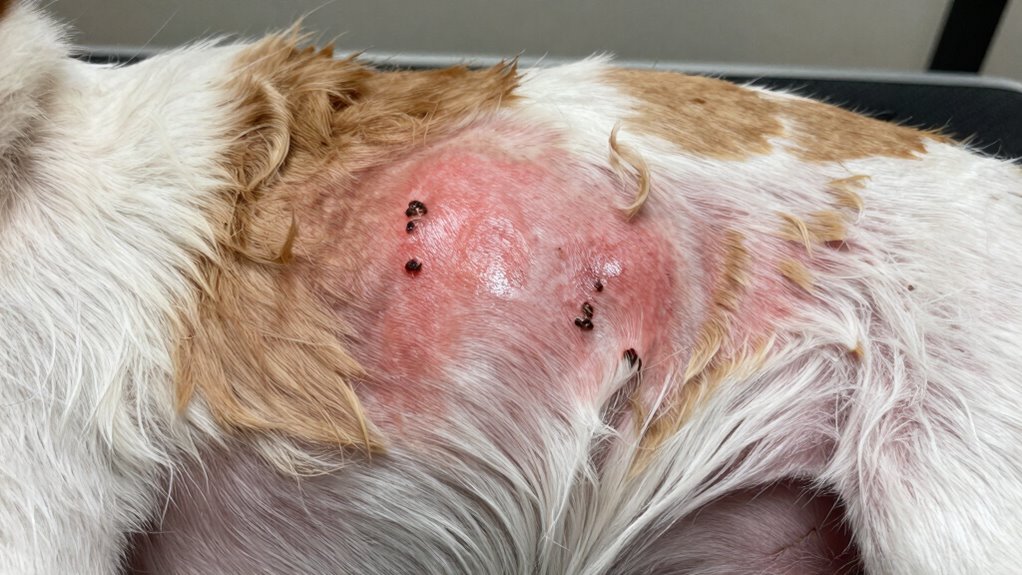
Have you ever noticed redness, irritation, or discomfort on your pet’s skin after grooming? That’s often a sign of clipper burn, a skin injury caused by the grooming process. Clipper burn happens when the blades heat up too much or are used improperly, damaging the delicate skin. It’s a painful experience for your pet and can lead to redness, swelling, and even open sores. Prioritizing grooming safety helps prevent this discomfort, ensuring your pet remains comfortable during and after grooming. Proper technique, using sharp blades, and taking breaks can avoid overheating the equipment. Regular equipment maintenance and proper handling also play a crucial role in preventing clipper burn. Additionally, monitoring the temperature of grooming tools during use can help prevent overheating and skin injuries. Using appropriate grooming techniques is essential to minimize skin trauma and keep your pet comfortable. Employing grooming safety practices such as avoiding prolonged contact with hot blades is vital for your pet’s health. Remember, your goal is pet comfort. When you focus on gentle handling and careful grooming, you reduce the risk of clipper burn and keep your furry friend happy and healthy. Maintaining grooming safety is essential for preventing skin injuries like clipper burn.
BRIOTECH Pure Hypochlorous Acid Spray and Cleanser, Original Premium HOCl Topical Solution, Multi-Purpose Cleaner, Family Approved & Pet Friendly, 8.5 fl oz (2 Pack)
ESSENTIAL SUPPORT: Extra strength, 0.02% Hypochlorous Acid solution for a variety of applications. Our customers report full body…
As an affiliate, we earn on qualifying purchases.
As an affiliate, we earn on qualifying purchases.
What Causes Clipper Burn During Grooming at Home?
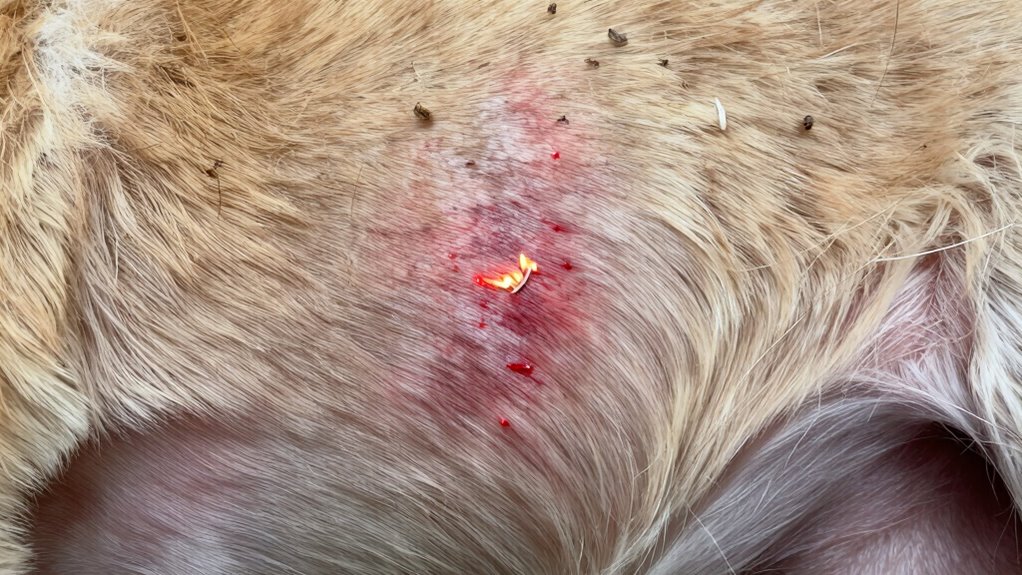
Many factors can cause clipper burn during home grooming, often stemming from improper handling or equipment issues. When you’re grooming your pet at home, pressing too hard with clippers can lead to skin irritation, increasing the risk of clipper burn. Using dull blades or not maintaining sharpness can cause uneven cutting and excessive pulling on the hair, which irritates the skin. Additionally, grooming over sensitive areas or applying excessive pressure on already irritated skin worsens the problem. Poor hygiene of grooming tools can introduce bacteria, leading to further skin irritation or infection. Inadequate preparation, such as grooming on dirty or tangled fur, also contributes to clipper burn. Understanding these causes helps you avoid mistakes that lead to skin irritation during pet grooming at home.

Cat and Dog Ear Temperature Monitor, Pet Only Thermometer, Dogs or Cats Ear Temperature Monitor with Warranty, Dog and Cat Ear Care Supply, Take Pet Temperature Tool.
How to Use – Put the thermometer close to pet's ear and remove the hair to make sure…
As an affiliate, we earn on qualifying purchases.
As an affiliate, we earn on qualifying purchases.
How Can You Recognize Clipper Burn in Your Pet?

Recognizing clipper burn in your pet starts with observing changes in their skin and behavior. Look for redness, inflammation, or raw patches, especially where the clippers were used. Your pet may scratch, lick, or show discomfort in the groomed area. A pet allergy can sometimes mimic clipper burn, so consider whether your pet has reacted to grooming products or environmental factors. Regularly reviewing your grooming schedule helps identify patterns—if irritation occurs consistently after grooming, clipper burn might be the culprit. Keep an eye out for swelling or open sores, which indicate the skin’s irritated state. Early detection allows you to address issues promptly and prevent further discomfort or infection. Being aware of ethical grooming practices can also help minimize risks and ensure your pet’s well-being. Additionally, understanding environmental considerations and how they impact skin health can inform better grooming approaches. Proper hygiene and the use of appropriate grooming tools are essential components of safe grooming practices, which can reduce the likelihood of injury. Using gentle handling techniques during grooming can also lessen stress and reduce the risk of skin irritation. Recognizing the importance of proper tool maintenance ensures that grooming equipment remains safe and effective. If you notice these signs, consult your vet to confirm the cause and determine next steps.

wotdmu Replacement Blades 2 Pack for ONEISALL Dog Hair Vacuum and Dog Grooming Kit, Low Noise Pet Clipper Replacement Blade for ONEISALL Replacement Blade, Cleaning Brush
Custom-designed for one is all pet grooming kit, these replacement blades are perfectly compatible with Oneisall Pet Grooming…
As an affiliate, we earn on qualifying purchases.
As an affiliate, we earn on qualifying purchases.
How Can You Prevent Clipper Burn While Grooming?
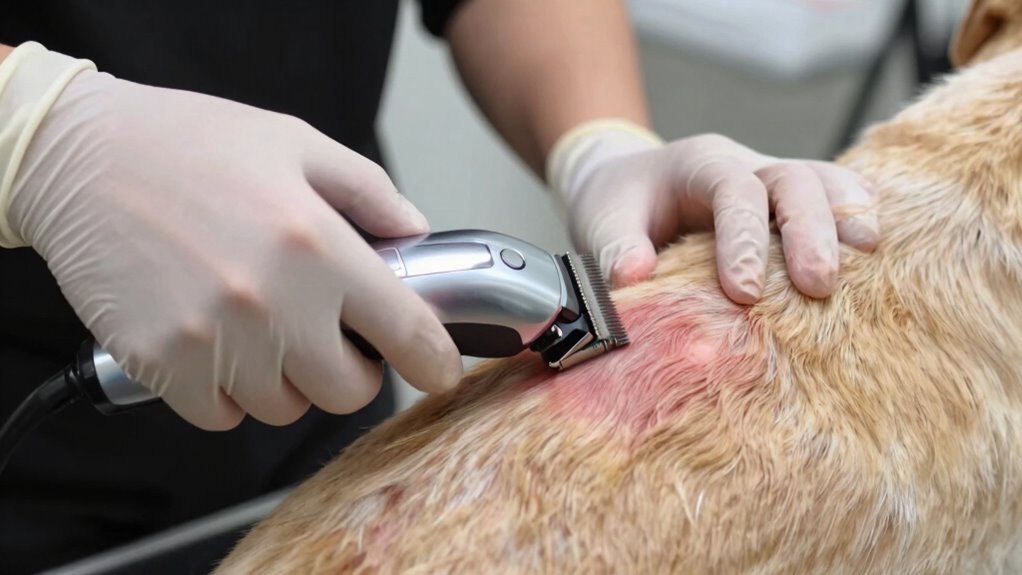
To prevent clipper burn, make sure you’re using proper lubrication techniques to reduce friction on your pet’s skin. Keep your grooming tools clean and well-maintained to avoid irritations caused by dull or dirty blades. These simple steps can help guarantee a smooth, safe grooming experience for your pet. Additionally, applying a suitable airless spray technique can ensure even blade contact and minimize skin trauma during grooming. Using the right DIY tools and safety tips can further protect your pet from accidental injuries and discomfort. Regularly inspecting your tools for proper maintenance can also help prevent skin irritations caused by malfunctioning equipment. Incorporating professional grooming practices and understanding proper grooming techniques can further reduce the risk of clipper burn and ensure your pet’s comfort.
Use Proper Lubrication Techniques
Using proper lubrication techniques during grooming is essential to prevent clipper burn. Applying a quality lubricant regularly helps reduce friction, which can cause irritation and discomfort. When pet grooming, ensure you use a suitable clipper oil designed for blade maintenance. Before starting, clean the blades thoroughly and then add a few drops of lubrication, spreading it evenly across the blades. This not only prolongs the life of your clippers but also minimizes heat buildup and skin irritation. Proper blade maintenance ensures blades glide smoothly over the skin, reducing the risk of cuts and burns. Regular grooming routines with proper lubrication help maintain your pet’s comfort and health. Remember, well-lubricated blades glide smoothly over the skin, reducing the risk of cuts and burns. Consistent blade maintenance, including lubrication, makes grooming safer and more comfortable for your pet, helping to prevent the painful consequences of clipper burn. Additionally, proper disposal of used lubricants and blades is important for eco-friendly disposal practices.
Maintain Clean Grooming Tools
Keeping your grooming tools clean is essential for preventing clipper burn. Dirty blades can cause unnecessary friction and heat, which irritates your pet’s skin and increases the risk of injury. Regularly disinfect and sanitize your clippers to maintain grooming safety and protect your pet’s skin health. Sharp, clean blades cut more efficiently, reducing pulling and tugging that can lead to discomfort. Be sure to remove hair buildup and apply blade oil as recommended to keep tools functioning smoothly. Proper maintenance not only prevents bacterial transfer but also ensures a safer grooming experience. Filtration and suction systems can help remove debris and hair, maintaining a cleaner grooming environment and reducing the risk of contamination. Additionally, regular blade sharpening ensures your tools stay in optimal condition, preventing unnecessary heat buildup during grooming sessions. Implementing proper tool storage practices can also extend the lifespan of your grooming equipment and maintain hygiene standards. Using temperature control techniques can further reduce the chances of clipper burn by preventing overheating during grooming. Regular maintenance practices contribute to consistent grooming quality, making the process safer and more comfortable for your pet.
What Are the Best Clipper Techniques for Sensitive Skin?

To protect sensitive skin during clipping, start by using gentle blade settings to reduce irritation. After grooming, apply soothing post-care products to calm your skin, and choose hypoallergenic options to minimize reactions. These techniques help guarantee a safer, more comfortable grooming experience. Incorporating skin sensitivity practices can also reduce overall stress, making grooming easier and more pleasant. Additionally, understanding personal grooming best practices can further improve your results and comfort, especially when selecting tools designed for precise hair removal. Using high-quality, securely maintained grooming tools can prevent skin damage and ensure optimal performance.
Use Gentle Blade Settings
When trimming sensitive skin, selecting gentle blade settings is vital to prevent irritation and burns. In pet grooming, using the right clipper safety measures helps protect your skin. Opt for blades with lower settings or adjustable blades set to the mildest level. This reduces the risk of pulling hair too harshly or applying excessive pressure. Always test the clipper on a small area first to guarantee comfort. Keep the blades well-maintained and sharp; dull blades can cause nicks and irritation. Slow, controlled movements are essential—rushing can lead to cuts or burns. Remember, gentle techniques combined with the correct blade settings minimize trauma and keep your skin safe, especially if you have sensitive skin. Prioritize clipper safety to make grooming a comfortable, injury-free experience.
Apply Soothing Post-Care
After trimming sensitive skin, applying a soothing post-care product helps calm irritation and promote healing. Whether you’re grooming your pet or yourself, gentle post-care can reduce skin irritation caused by clipping. Look for products designed to soothe and protect, such as those containing aloe vera or chamomile. These ingredients help cool inflamed skin and speed up recovery. Be sure to gently pat the product onto affected areas without rubbing, which can worsen irritation. Proper post-care is essential for preventing clipper burn and ensuring comfort. Regularly applying soothing remedies not only alleviates discomfort but also minimizes future skin irritation during pet grooming or personal grooming routines. This simple step makes a significant difference in maintaining healthy, irritation-free skin.
Opt for Hypoallergenic Products
Have you considered choosing hypoallergenic products to protect sensitive skin during clipping? Using hypoallergenic products can markedly improve grooming safety and reduce irritation. When selecting tools and products, keep these in mind:
- Opt for hypoallergenic creams or gels to minimize allergic reactions.
- Use grooming tools specifically designed for sensitive skin, ensuring smooth, gentle contact.
- Avoid alcohol-based or heavily scented products that can cause dryness or burns.
How Do You Choose the Right Clippers and Settings?

Choosing the right clippers and settings is essential to prevent skin irritation and burns. Start by selecting clippers designed for pet grooming safety, with adjustable blades to suit your pet’s coat. Use the lowest effective setting to avoid cutting too close or causing discomfort. Always read the manufacturer’s instructions for proper clipper maintenance tips, such as cleaning blades regularly and lubricating them to prevent overheating. Consider your pet’s coat type and sensitivity—short-haired pets may require different settings than long-haired ones. Test the clippers on a small area first to gauge response. Properly maintained equipment reduces the risk of burns and skin irritation, ensuring a safer grooming experience. Remember, choosing the right tools and settings is key to gentle, effective grooming.
What Should You Do If Your Pet Gets Clipper Burn?

If your pet develops clipper burn, it’s important to act quickly to prevent further irritation or infection. First, gently cleanse the affected area with lukewarm water and a mild, pet-safe cleanser to remove any debris. Next, apply a soothing, pet-safe antiseptic or aloe vera gel to reduce inflammation and promote healing. Finally, prioritize skin irritation prevention by keeping your pet’s coat clean, dry, and avoiding further grooming until the skin heals. Remember these key steps to ensure pet grooming safety:
- Carefully monitor your pet for signs of discomfort or worsening skin condition.
- Use gentle, non-irritating grooming tools and techniques.
- Seek professional advice if irritation persists or worsens.
Taking prompt action helps your pet recover faster and reduces the risk of complications.
When Is It Time to See a Vet for Clipper Burn?

While minor clipper burns often heal on their own, you should see a vet if the irritation worsens, persists beyond a few days, or shows signs of infection such as swelling, pus, or a foul odor. If your pet’s skin becomes increasingly red, swollen, or painful, it indicates a need for professional care to prevent complications. Also, if grooming tools caused the burn and your pet exhibits excessive licking, scratching, or discomfort, consult a vet promptly. Prioritizing pet safety is vital, especially when home grooming goes wrong. A vet can assess the severity of the burn, prescribe antibiotics if needed, and help guarantee your pet’s recovery. Don’t take chances with infection or worsening pain—timely veterinary attention is essential.
Tips for Safer, Pain-Free Home Grooming Sessions

Ensuring safe, pain-free home grooming sessions starts with proper preparation and technique. First, always use sharp, clean clippers designed for pet grooming safety to prevent pulling or injury. Second, keep your dog calm by using gentle, reassuring commands and taking breaks if needed. Third, prioritize dog skin health by avoiding excessive pressure and staying on the hair rather than directly on the skin. Following these steps helps prevent clipper burn and keeps grooming stress-free. Remember, a relaxed dog is less likely to squirm, reducing the risk of injury. Regularly check your tools for cleanliness, and use appropriate blades for your dog’s coat. With patience and care, you can maintain your pet’s grooming needs safely and comfortably.
Frequently Asked Questions
Can Clipper Burn Affect a Pet’s Long-Term Health?
Yes, clipper burn can affect your pet’s long-term health. It causes skin irritation, which can lead to discomfort and infection if untreated. Repeated burns may also cause fur damage and scarring, impacting your pet’s coat and skin health over time. To protect your pet, always use proper grooming techniques, avoid excessive pressure, and monitor for signs of skin irritation to prevent lasting damage.
Are There Specific Breeds More Prone to Clipper Burn?
Think of breed susceptibility like a fragile glass—it’s more prone to cracking under pressure. Certain breeds with thin or sensitive skin, such as Poodles or Bichon Frises, are more prone to clipper burn, making them riskier during grooming. You’re more likely to encounter grooming risks with these breeds if you’re not extra cautious, so always use gentle techniques and proper equipment to protect their delicate skin.
How Do I Treat Severe Clipper Burns at Home?
If you have severe clipper burns on your pet, immediately clean the area with gentle, pet-safe remedies like lukewarm water and mild antiseptic solutions. Apply soothing ointments specifically formulated for pets, such as aloe-based or veterinary-approved products, to reduce pain and inflammation. Keep your pet from scratching or licking the area, and monitor closely for signs of infection. If the burn worsens or doesn’t improve, consult your veterinarian promptly.
What Are the Signs of Infection From Clipper Burns?
Did you know that skin infections from clipper burns are quite common, affecting over 30% of home groomers? You should watch for signs like redness and swelling, which indicate inflammation. Pus or discharge from the burn site is a clear sign of infection. If you notice these symptoms, it’s essential to keep the area clean and seek medical attention promptly to prevent further complications.
Is Professional Grooming Safer Than Home Grooming for Sensitive Pets?
Professional grooming is generally safer than home grooming for sensitive pets because experts are trained in clipper safety and pet handling. They know how to avoid clipper burn and minimize discomfort, reducing the risk of injury or infection. When you choose professional pet grooming, you benefit from experienced groomers who use proper techniques, ensuring your pet’s comfort and safety during the grooming process.
Conclusion
Remember, every grooming session is a delicate dance—one misstep can leave your pet suffering like a scarred canvas. By understanding clipper burn and taking gentle, informed steps, you can turn grooming into a soothing ritual rather than a painful ordeal. Treat your pet’s skin like fragile porcelain, and with patience and care, you’ll create a masterpiece of comfort and trust that lasts a lifetime. Groom smart, love deeply, and keep those tears at bay.