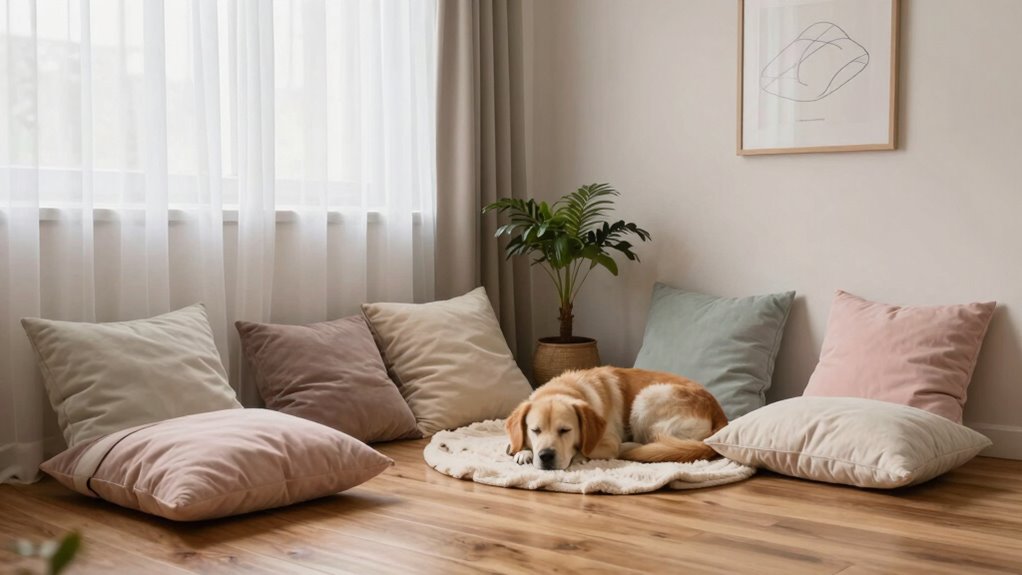

To create a calm recovery space for your dog, choose a quiet, low-traffic corner away from loud appliances and busy hallways. Keep essentials nearby, like water, comfort items, and medications, in a cozy bed or crate. Use soft lighting, maintain a comfy temperature, and add gentle touches like calm talking or soothing scents. Minimize stimuli and provide a secure environment so your dog can rest and heal. If you’re interested in more tips, keep going.

Get pet supplies delivered free with Prime
- Fast, free delivery on millions of items
- Prime Video, Amazon Music and more included
- Member-only deals all year
Key Takeaways
- Choose a calm, low-traffic area away from loud appliances and external noise for ultimate tranquility.
- Equip the space with a cozy bed, fresh water, favorite toys, and comforting items for emotional support.
- Use soft lighting, blackout curtains, and maintain a comfortable temperature to promote relaxation.
- Incorporate gentle petting, calm speech, and calming scents like lavender to soothe the dog.
- Ensure essentials are within easy reach and minimize external stimuli to foster emotional and physical safety.
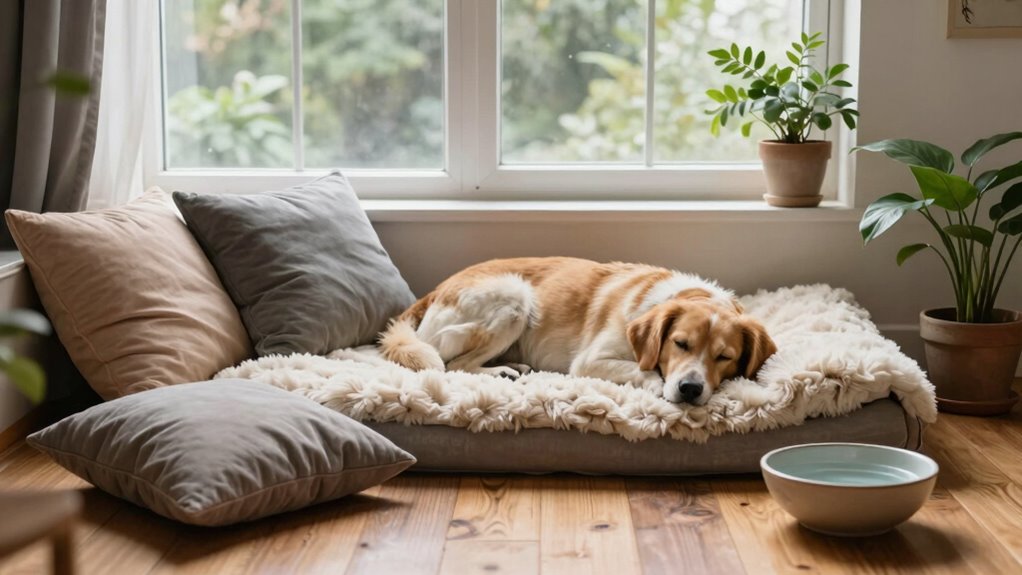
When your dog isn’t feeling well or is simply exhausted, providing a quiet, comfortable recovery space can make all the difference in their healing process. A dedicated area designed for rest encourages your dog to relax fully, helping speed up recovery and reduce stress. To create an effective recovery space, it’s essential to incorporate dog calming techniques that promote tranquility. These might include soft background noise, gentle music, or even a familiar blanket that offers comfort. The goal is to minimize any external stimuli that could cause anxiety or agitation, allowing your dog to focus on resting and healing.
Start by choosing a calm, low-traffic spot in your home. It should be away from loud appliances, busy hallways, or noisy children. A corner of a quiet room is ideal. Once you select the location, gather recovery space essentials such as a cozy bed or crate, easy access to water, and some of your dog’s favorite toys or comfort items. Ensure these essentials are within easy reach so your dog doesn’t have to strain or get up unnecessarily. If your dog is on medication or needs specific care, keep those supplies nearby as well, making it easier to administer treatment without stress. Understanding how environmental factors influence your dog’s recovery can help you create an even more effective space.
Choose a quiet, low-traffic spot with essentials nearby for a stress-free recovery space.
Lighting also plays a critical role. Keep the area softly lit or use blackout curtains if needed to create a peaceful environment. Bright lights can be overstimulating, so aim for a dim, soothing ambiance. Temperature control is equally important; ensure the space is neither too hot nor too cold. A comfortable, well-ventilated room helps your dog stay relaxed and prevents additional discomfort.
Incorporate calming techniques such as gentle petting, speaking in soft tones, or offering calming scents like lavender, if your dog responds well to them. Keep interactions calm and brief to avoid overstimulation. Remember, your presence can be reassuring, but too much handling might tire your dog further. Always observe their responses and respect their need for quiet.
Creating a recovery space isn’t just about physical comfort; it’s about fostering emotional safety. When your dog feels secure and relaxed, their body can focus more effectively on healing. By combining the right environment with dog calming techniques, you give your furry friend the best chance to recover comfortably and peacefully. This dedicated space becomes a sanctuary where your dog can rest, heal, and regain their strength, making the recovery process smoother and less stressful for both of you.
Frequently Asked Questions
How Large Should the Recovery Space Be for My Dog?
The recovery space for your dog should be at least twice their size, allowing enough room for comfortable movement and resting. Think about dog comfort and customize the space to suit their needs, including soft bedding and easy access to water. Consider your dog’s size and activity level, and tailor the space accordingly. A well-sized, personalized recovery area promotes healing and helps your dog feel safe and secure.
What Temperature Is Ideal for a Recovery Area?
Think of the recovery area like a cozy, warm blanket—comfortable and just right. You should aim for a temperature around 68-72°F (20-22°C), which supports temperature regulation without causing chills or overheating. Keep noise control in mind too—maintain a quiet environment, like a gentle lullaby, to help your dog relax and recover. Regularly check the space to make certain the temperature stays consistent and comfortable.
Can I Use Household Items to Create the Space?
Yes, you can use household items to create a calming recovery space for your dog. DIY solutions and household alternatives like a cozy blanket, a familiar bed, and soft towels can make the area comfortable. Use a quiet corner or designate a small room, and add calming elements like dim lighting or a favorite toy. These simple, cost-effective items help your dog feel safe and relaxed during recovery.
How Often Should I Clean the Recovery Area?
Did you know that bacteria can double every 20 minutes if not cleaned properly? You should clean your dog’s recovery area daily, or more often if needed. Stick to a regular cleaning schedule, using gentle, pet-safe disinfectants. Follow sanitation tips like washing bedding frequently and sanitizing high-touch surfaces to prevent infections. Regular cleaning ensures your dog stays comfortable, safe, and promotes a speedy recovery.
Should I Include Toys or Bedding in the Recovery Space?
You should include soft bedding in the recovery space to guarantee dog comfort and create a cozy environment. Avoid adding toys that might cause unnecessary stimulation or stress, as your dog needs rest. Instead, opt for minimal sensory stimulation to promote healing. A comfortable bed helps your dog relax, reduces anxiety, and supports a smoother recovery process, making sure they feel safe and secure during their time of rest.
Conclusion
Creating a quiet recovery space helps your dog heal faster and feel more secure. By providing a peaceful environment, you reduce stress and promote better rest. Did you know that dogs who rest in calm surroundings recover up to 30% faster? Your effort in setting up a cozy, quiet spot can make a significant difference in their recovery process. So, take the time to create that perfect retreat—it’s a simple step with big benefits for your furry friend’s health.
Halloween Picks
halloween
As an affiliate, we earn on qualifying purchases.