
You should replace your dog’s leash, collar, and harness when you notice signs of wear, damage, or after frequent use, generally every 6 months to a year. Regular inspections for fraying, cracks, or loose hardware are essential to keep your pet safe and comfortable. Keep in mind that exposure to water and sun can speed up deterioration. Staying vigilant helps prevent accidents, and if you want tips for maintaining gear, you’re in the right place.

Get pet supplies delivered free with Prime
- Fast, free delivery on millions of items
- Prime Video, Amazon Music and more included
- Member-only deals all year
Key Takeaways
- Replace gear immediately if you notice fraying, cracks, or loose hardware to ensure safety.
- Generally, inspect and consider replacing gear every 6 to 12 months, depending on usage and wear.
- Replace daily-use gear more frequently, especially if exposed to water, dirt, or sun.
- Discard damaged or chewed gear promptly to prevent discomfort or injury during walks.
- Regular maintenance and inspections can extend the lifespan but should not delay replacement when signs of deterioration appear.
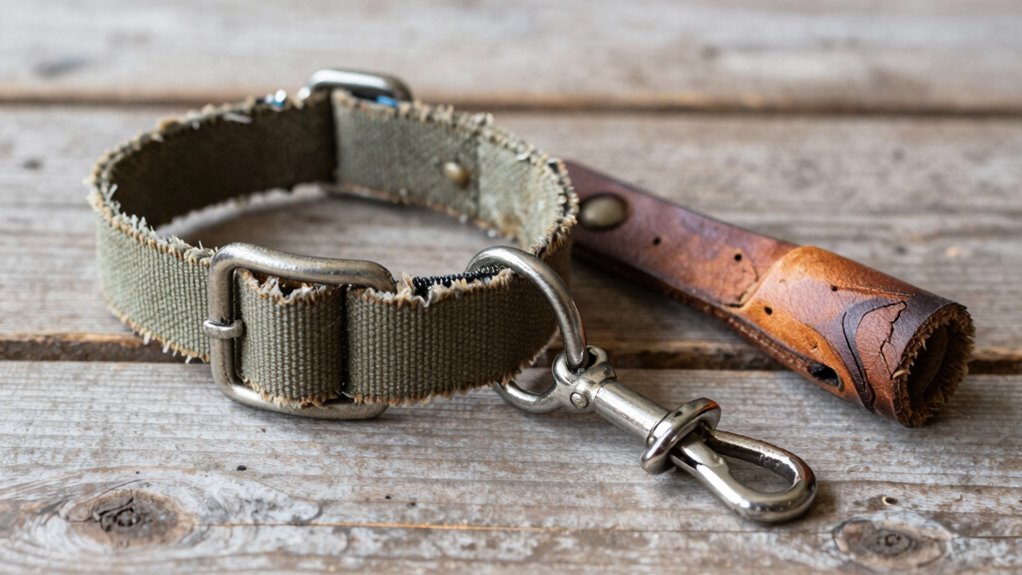
Regularly replacing your dog’s leash, collar, and harness is essential for your pet’s safety and comfort. These items are more than just accessories; they’re vital tools for dog training and grooming essentials that keep your dog secure during walks and help manage behavior. Over time, wear and tear can compromise their effectiveness, so it’s important to stay vigilant about their condition and replace them as needed.
Regularly replacing your dog’s gear ensures safety, comfort, and effective training for a happy, healthy pet.
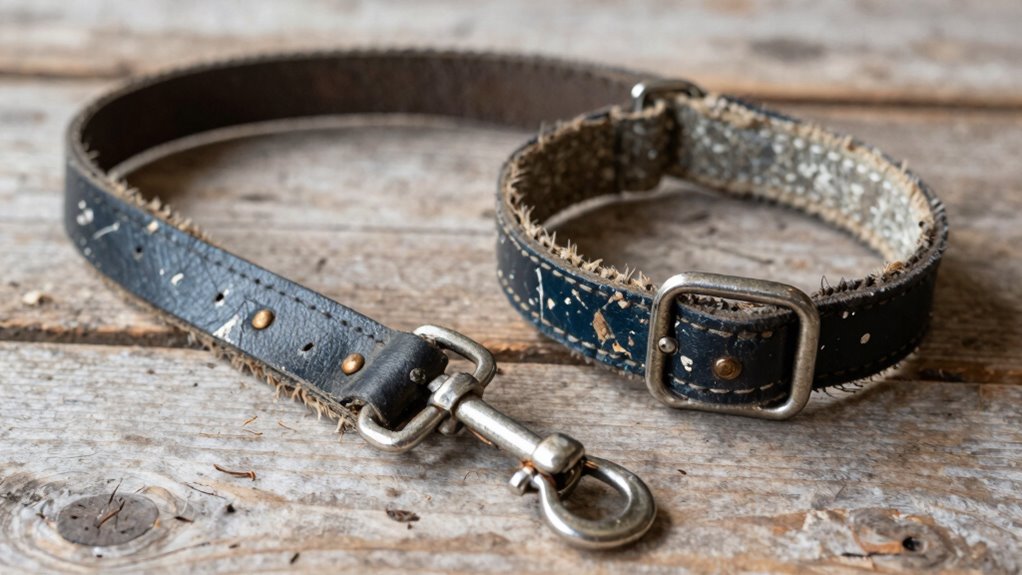
How often you replace these items depends on several factors, including the material, frequency of use, and the health of your dog. For example, leather collars and harnesses tend to last longer than nylon ones, but even leather can deteriorate or crack if not maintained properly. If you notice any signs of damage such as fraying, cracks, or weak spots, it’s time to retire that piece and get a replacement. Damaged gear can break unexpectedly, putting your dog at risk of escape or injury during walks.
You should also consider the age of the collar, leash, or harness. Even if it looks fine externally, the material can weaken over time, especially with frequent exposure to water, sun, and dirt. For items used daily, inspect them weekly for signs of deterioration. If you see any fraying or loose hardware, replace them promptly. It’s better to be cautious than risk your dog breaking free or injuring themselves. material quality plays a significant role in how long these items last, so choosing durable materials can extend their lifespan and ensure your dog’s safety.
In terms of dog training, having reliable, well-maintained gear is essential. Worn-out collars or harnesses can interfere with commands and training progress. You want your equipment to fit properly and function smoothly to reinforce positive behaviors. When gear becomes old or damaged, it can cause discomfort or even pain, hindering your training efforts. Regular replacement ensures that your tools support your training goals effectively. Additionally, proper fit is crucial for your dog’s comfort and security, making sure the gear doesn’t cause chafing or slipping. Routine inspections also help you identify wear and tear early, preventing unexpected failures. Proper gear maintenance can further extend their usability and keep your dog comfortable.
Grooming essentials also tie into the lifespan of these accessories. If your dog is prone to scratching or chewing, they could damage their collar or harness quickly. Chewed or torn items should be discarded immediately to prevent your dog from swallowing pieces or getting injured. Maintaining clean, intact gear also keeps your dog comfortable and happy, making walks and grooming sessions more enjoyable for both of you. Proper sterilization and cleaning of these items can help prolong their usability and prevent infections.
Products Worth Considering

Fi Series 3+ GPS Dog Collar & Tracker, Membership Required, Gray Large

PETLIBRO RFID Automatic Cat Feeder with Collar Sensor

PetSafe Electronic Pet Door – Collar Key Sensor – Large (up to 100 lb)
As an affiliate, we earn on qualifying purchases.
Frequently Asked Questions
Can a Dog Leash Be Repaired Instead of Replaced?
Yes, you can repair a dog leash instead of replacing it, especially if material degradation is minimal. Check for frayed or broken parts, and consider reinforcing weak spots or replacing damaged sections. If you want to personalize your leash, leash customization options like new clips or handles can extend its life. However, if the damage compromises safety, it’s best to replace the leash to keep your dog secure.
What Signs Indicate a Collar Is Causing Discomfort?
You notice your dog scratching or rubbing at their collar—could it be causing discomfort? Signs like redness, hair loss, or skin irritation reveal collar material might be too tight or irritating. Leather, nylon, or fabric collars can all cause discomfort if they don’t fit properly or if your dog has sensitive skin. Pay attention to these discomfort signs, and adjust or replace the collar promptly to keep your pup happy and healthy.
Are There Safety Standards for Dog Harnesses?
Yes, there are safety standards for dog harnesses. You should look for harnesses that meet material standards and manufacturing regulations to guarantee safety and durability. These standards ensure the harness is made from non-toxic, strong materials and is properly tested for strength and fit. Always check the product label or manufacturer’s information to confirm it complies with relevant safety regulations, giving you peace of mind during walks.
How Do Seasonal Changes Affect Leash and Collar Durability?
Seasonal changes can markedly impact leash and collar durability. Weather impact and material degradation from exposure to sun, rain, or snow weaken the materials over time. You should regularly inspect your dog’s leash, collar, and harness, especially during seasonal shifts. Replace them promptly if you notice fraying, cracking, or fading. Proper maintenance and timely replacement guarantee your dog’s safety and comfort regardless of the season.
Is It Necessary to Replace Tags Along With Collars?
Yes, you should replace tags along with collars to guarantee they stay secure and legible. Over time, tags can corrode or become difficult to read, impacting collar longevity and your ability to identify your dog. Regular tag replacement also helps prevent lost identification. Check your dog’s tags periodically, especially if your dog’s info changes or the tags show signs of wear, to keep everything current and functioning properly.
Conclusion
Remember, your dog’s leash, collar, or harness isn’t just gear—it’s a symbol of trust and safety. As they grow and change, so should your equipment, reflecting your commitment to their well-being. Replacing these items regularly keeps your bond strong and your dog secure, like a steady anchor in a shifting sea. Cherish these small acts of care, for they echo the love and protection you vow to provide every day.