
If you’re choosing between soft-sided and heavy-duty crates, safety depends on your dog’s size, behavior, and travel needs. Heavy-duty crates offer greater impact resistance, secure locks, and stronger materials, making them safer for active or larger dogs, especially in accidents. Soft-sided crates are lighter and more portable but are generally best for calm, small dogs in controlled environments. To guarantee your dog’s safety, understand the features of each type and how to use them properly—you’ll find helpful tips ahead.
Key Takeaways
- Heavy-duty crates typically offer better impact resistance and secure locks, making them safer for active or larger dogs.
- Soft-sided crates are lightweight and portable, suitable for calm, small dogs, but less protective against impacts.
- Proper crate size, ventilation, and secure locking are critical safety features for both crate types.
- Heavy-duty crates are better suited for travel and rough handling, reducing escape and injury risks.
- Soft-sided crates can be safe when used appropriately, especially for short-term confinement or calm, smaller dogs.

Cammoo 48'' Heavy Duty Dog Crate for Large Dogs, – Upgraded Chew-Proof Panels, Comfort-Widened Floor Panel, Dog Kennel Indoor, Adjustable Internal Height, Easy-Access Wide Door, 4 Lockable Wheels
[Ultra-Strong Heavy-Duty Build] With 4-sided anti-bite steel panels and a full square-tube frame, this dog cage offers more…
As an affiliate, we earn on qualifying purchases.
As an affiliate, we earn on qualifying purchases.
What Are the Main Safety Risks When Traveling With Your Dog in a Crate?
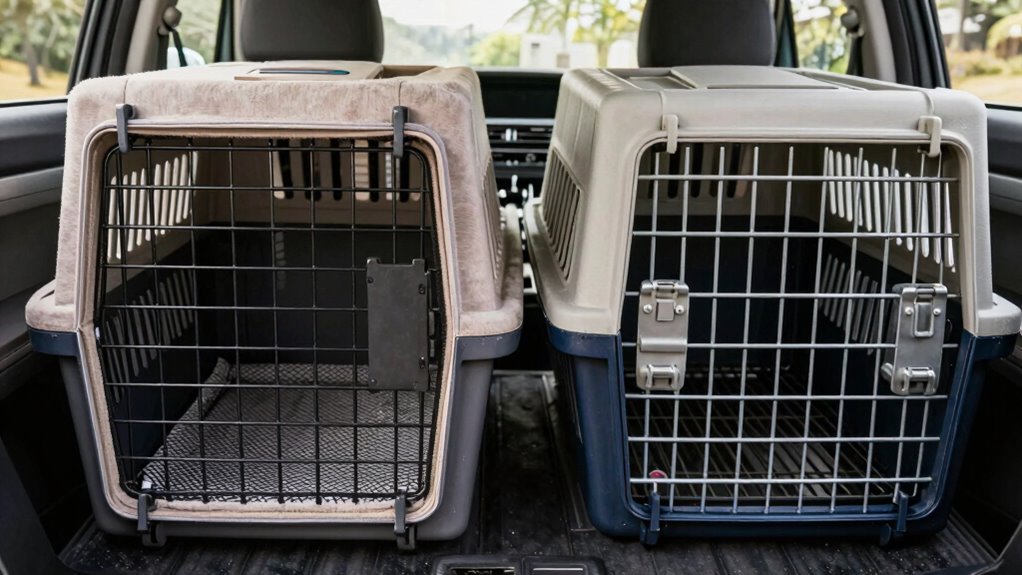
Traveling with your dog in a crate can be safe, but certain risks can compromise their well-being if you’re not careful. One key concern is ensuring their travel comfort; a poorly ventilated or too-small crate can cause stress or overheating. Additionally, crate aesthetics matter—if the crate looks uncomfortable or uninviting, your dog might resist being inside, increasing the chances of escape or injury. Sharp edges or flimsy construction can pose safety hazards, especially during sudden stops or accidents. Also, improper securing of the crate might lead to it shifting or tipping, risking injury. Always choose a crate that balances comfort with secure design, and pay attention to its appearance to foster a sense of safety and calm during travel. Ensuring proper ventilation and airflow can significantly reduce the risk of heat stress and discomfort, especially since air circulation plays a critical role in maintaining a safe environment inside the crate. Being aware of regional safety standards can help you select the most secure and reliable crate for your pet. Additionally, considering proper crate size ensures your dog has enough room to stand and move comfortably, which can reduce anxiety and improve overall safety during transit.

Amazon Basics Portable Folding Soft Dog Crate, Double Door, Collapsible Travel Kennel, Easy to Assemble, Medium, 29.92" x 21.3" x 21.3", Tan
Soft-sided dog crate for keeping a furry 4-legged friend safe and comfortable when traveling, includes a Small dog…
As an affiliate, we earn on qualifying purchases.
As an affiliate, we earn on qualifying purchases.
How Do Heavy-Duty Dog Crates Keep Your Pet Safer During Accidents?

Heavy-duty dog crates keep your pet safer during accidents thanks to reinforced material strength that withstands impacts. Secure locking mechanisms prevent escapes or sudden openings, even during collisions. Additionally, impact-resistant design ensures the crate maintains its integrity under stress. Incorporating safety principles into crate design further enhances their protective capabilities. Proper material selection plays a crucial role in ensuring the crate’s durability and safety during emergencies. Selecting impact-resistant materials is essential for maximizing safety and durability in emergency situations.
Reinforced Material Strength
Because accidents can happen unexpectedly, the reinforced materials in heavy-duty dog crates play a crucial role in keeping your pet safe. Material reinforcement strengthens the crate’s walls and panels, ensuring they can withstand sudden impacts or pressure. This reinforcement maintains the structural integrity of the crate, preventing collapses or breakages during a crash or if your dog tries to escape. Heavy-duty crates often use durable metals, reinforced plastics, or thickened panels designed to absorb shock and resist deformation. This robust construction provides a secure environment, reducing the risk of injury. When your dog is in a heavy-duty crate, the reinforced material strength offers peace of mind, knowing that the crate is built to protect your pet even in high-stress situations.
Secure Locking Mechanisms
Secure locking mechanisms are essential features that keep your dog safely contained during accidents or sudden movements. The dog crate material and locking mechanism design work together to prevent escapes and ensure safety. Heavy-duty crates typically feature robust locks that resist tampering, even under stress. These locks often include double latch or slide bolt systems, making it difficult for your dog to open or break free. The quality of the locking mechanism design directly impacts safety; a well-designed lock stays secure during sudden jolts or impacts. Durable materials like heavy-duty metal or reinforced plastic complement these locks, providing a sturdy enclosure. Ultimately, a reliable locking system minimizes risks during travel or unexpected incidents, giving you peace of mind that your pet remains safely contained.

Elevon 42 Inch Heavy Duty Dog Crate with Secure Locking System, Escape-Proof Dog Cage Kennel for Medium to Large Dogs, Indestructible Chew-Resistant Design, Dual Doors & Easy-Clean Removable Tray
【Superior Durability】This dog crate is crafted from high-quality iron, ensuring exceptional durability and resistance to rust, making it…
As an affiliate, we earn on qualifying purchases.
As an affiliate, we earn on qualifying purchases.
Are Soft-Sided Crates Safe for Travel and Emergency Situations?

Soft-sided crates are often praised for their lightweight and portable design, making them an appealing choice for travel and emergency situations. Their convenience allows you to easily carry your dog and set up a secure space quickly. However, safety depends on proper use; guarantee your dog is comfortable with crate training beforehand. Adding crate accessories like padded liners and secure zippers enhances safety and comfort. For travel, avoid sudden movements or rough handling that could cause the crate to collapse or open. While soft-sided crates are convenient, they may not withstand extreme conditions or heavy impacts. Always evaluate your dog’s size, behavior, and specific travel needs before choosing a soft-sided crate for emergencies. Proper training and accessories are key to making them a safe option. Additionally, consider crate safety standards to ensure your soft-sided crate meets necessary safety requirements. Ensuring that your crate meets indoor safety guidelines can also help prevent accidents during transit or emergencies.
Amazon Basics Portable Folding Soft Dog Crate, Double Door, Collapsible Travel Kennel, Easy to Assemble, Medium, 29.92" x 21.3" x 21.3", Tan
Soft-sided dog crate for keeping a furry 4-legged friend safe and comfortable when traveling, includes a Small dog…
As an affiliate, we earn on qualifying purchases.
As an affiliate, we earn on qualifying purchases.
What Safety Features Should You Look for in a Dog Crate?

When choosing a dog crate, safety should be your top priority. Look for secure latch mechanisms, durable materials, and good ventilation to keep your dog safe and comfortable. These features help prevent escapes and guarantee your pet’s well-being during travel or confinement. Additionally, consider the Free Floating design, which can provide greater stability and reduce the risk of tipping or shifting during use. Incorporating impact-resistant materials can also enhance the crate’s safety, especially in case of accidental knocks or falls. Ensuring that the crate has proper ventilation can help prevent overheating and ensure fresh air circulation, further safeguarding your pet’s health. Paying attention to airflow design can improve overall ventilation efficiency and comfort for your dog.
Secure Latch Mechanisms
A reliable latch mechanism is essential for keeping your dog safely contained, especially when you’re on the go or managing a curious pet. Look for a sturdy door latch that securely locks when closed, preventing accidental escapes. A good security lock adds an extra layer of safety, ensuring the door won’t open unexpectedly if your dog pushes or nudges it. Check that the latch is easy for you to operate but difficult for your dog to manipulate. Avoid crates with flimsy or poorly fitting latches, as these can compromise safety. The best secure latch mechanisms are durable, resistant to rust, and designed to stay locked during transport. Ensuring your crate has a quality door latch and security lock keeps your dog safe and gives you peace of mind. Also, consider accessibility features that make it easier for you to manage the crate securely. Additionally, selecting a latch with tamper-proof features can prevent your dog from attempting to open the crate from inside or outside, further enhancing safety. Incorporating proper maintenance of the latch can help ensure it remains functional and reliable over time.
Durable Material Construction
Choosing a dog crate with durable materials guarantees your pet’s safety during travel and everyday use. Material quality directly impacts the crate’s construction durability, making certain it withstands wear and tear over time. Look for sturdy, high-quality materials like reinforced steel or heavy-duty plastic that won’t bend or break easily.
Consider these key safety features:
- Reinforced Corners – Prevents cracking or splitting during impact.
- Strong Frame Construction – Ensures stability and prevents collapse.
- Impact-Resistant Materials – Protects against bites and scratches.
- Corrosion-Resistant Coatings – Extends lifespan in various environments.
Prioritizing these features helps you select a crate that offers maximum safety through superior material quality and construction durability.
Proper Ventilation Design
Ensuring proper ventilation in your dog crate is vital for your pet’s safety and comfort. Good airflow prevents overheating and reduces stress. Look for crates with ventilation gaps that promote airflow optimization. These gaps should be evenly distributed to ensure consistent ventilation. Proper ventilation design also considers automation challenges by ensuring that design features maintain airflow even in various environmental conditions. Additionally, selecting a crate with adequate airflow can help prevent the buildup of harmful odors and bacteria, contributing to your dog’s overall health. Choose a crate with well-placed ventilation gaps to keep your dog cool and comfortable. Proper ventilation design reduces the risk of suffocation or heatstroke, making your pet safer during travel or confinement.
How Do Material and Durability Affect Crate Safety?

The material and durability of a dog crate directly impact its safety, especially during travel or when your dog is inside. A strong material comparison helps you choose a crate that withstands stress and prevents breakage. Durability factors such as resistance to chewing, rust, and impact are vital for safety. For instance:
- Material strength – ensures the crate won’t collapse under pressure
- Resistance to chewing – prevents escape or injury
- Rust-proof materials – maintain integrity in humid environments
- Impact resistance – absorbs shocks during travel or accidental falls
Additionally, selecting a crate made from impact-resistant materials can provide an extra layer of safety by better protecting your dog from sudden shocks or accidents.
Choosing a crate with high durability factors minimizes risks, protects your dog, and guarantees long-lasting safety. Understanding how the right materials perform under stress helps you select the safest option for your pet.
How to Properly Install and Use Your Dog Crate for Maximum Safety

Proper installation and correct use of your dog crate are essential for your pet’s safety and comfort. Start by choosing an appropriate crate size that allows your dog to stand, turn around, and lie down comfortably. The crate should be large enough but not so big that your dog can use one corner as a bathroom. When it comes to crate placement, avoid areas with direct sunlight, drafts, or excessive noise. Instead, place the crate in a quiet, well-ventilated spot where your dog feels secure. Secure the crate lid or door properly to prevent accidental escapes or injuries. Regularly check that the crate remains stable and in good condition. Proper crate installation and thoughtful placement ensure your dog’s safety while making the crate a comfortable space. Additionally, regularly inspecting the crate stability helps prevent accidental injuries and ensures ongoing safety. Paying attention to stability and safety features can further enhance your pet’s protection during use. Ensuring the crate has proper ventilation is also key to maintaining a comfortable environment for your dog. To further promote safety, consider consulting professional guidance on crate setup and safety best practices.
When Is One Crate Type Safer Than the Other?

Choosing the right crate style depends on your dog’s specific needs and behavior. A soft-sided crate may be safer if your dog is calm, small, or prone to escaping, thanks to its flexible material and lightweight design. Conversely, a heavy-duty crate is safer for larger, more active dogs or those prone to chewing, as its sturdy material and reinforced structure provide better containment. Consider these factors:
- Crate material: Soft-sided crates are more flexible but less durable, while heavy-duty crates are designed for strength.
- Crate size: A properly sized crate ensures comfort and safety; too small can cause stress, too large can be unsafe.
- Dog’s behavior: Calm dogs may do well in soft-sided crates, but energetic or destructive dogs need heavy-duty options.
- Intended use: Use heavy-duty crates for travel or long-term confinement, and soft-sided for temporary or indoor use.
Which Dog Crate Is Best for Keeping Your Pet Safe on the Road?

Wondering which dog crate offers the safest travel solution? The key is choosing a crate that matches your dog’s weight and size. A well-fitting crate minimizes movement and prevents injuries during sudden stops or accidents. For smaller dogs, a lightweight soft-sided crate might suffice, but heavier or larger dogs need a sturdy heavy-duty crate for maximum safety. Consider this comparison:
| Dog Weight | Crate Size | Best Option |
|---|---|---|
| Under 20 lbs | Small to medium | Soft-sided for comfort |
| 20-50 lbs | Medium to large | Heavy-duty for security |
| Over 50 lbs | Large or extra-large | Heavy-duty, crash-tested |
| All sizes | N/A | Proper crate size is essential |
Matching crate size to dog weight ensures safety, comfort, and security on the road. Choosing the right crate can make a significant difference in your pet’s safety and well-being during travel. Additionally, selecting a crate with proper ventilation is crucial for maintaining airflow and comfort during journeys. Ensuring the crate is well-ventilated helps prevent overheating and keeps your dog comfortable throughout the trip.
Frequently Asked Questions
Can Soft-Sided Crates Handle Sudden Impacts During Accidents?
Soft-sided crates aren’t designed to handle sudden impacts during accidents because their impact absorption and material durability are limited. The flexible fabric and lightweight frame can’t withstand high-force collisions, risking injury to your dog. For better safety, opt for a heavy-duty crate with reinforced materials and shock-absorbing features, which provide more impact absorption and durability, protecting your dog better during sudden impacts or accidents.
Are There Specific Breeds That Require Certain Crate Types for Safety?
You know what they say, “Every dog is unique.” Breed-specific safety matters, so some breeds need sturdy, heavy-duty crates for extra protection, especially powerful or energetic dogs. Smaller or more delicate breeds might do well in soft-sided crates that offer comfort. Always consider crate suitability based on your dog’s size, strength, and temperament to keep them safe during travel or confinement.
How Does Crate Size Influence Overall Safety During Travel?
You should choose a crate size that fits your dog snugly, ensuring they can stand and turn comfortably, which enhances safety during travel. Opt for a crate material that provides durability and stability, and place it securely in a well-ventilated area of your vehicle. Proper crate placement prevents shifting and protects your dog from sudden stops, making the journey safer and more comfortable.
Do Soft-Sided Crates Provide Sufficient Ventilation in Emergencies?
Think of soft-sided crates like a trusty sailboat—light and flexible, but do they handle ventilation concerns in emergencies? Yes, they usually provide good airflow, making them suitable for emergency preparedness. Their mesh walls allow ample ventilation, ensuring your dog gets fresh air when needed most. However, always check for proper mesh size and avoid overstuffing, so your pup stays safe and comfortable in urgent situations.
Are There Regulations or Standards Governing Crate Safety?
Yes, there are material regulations and safety standards governing crate safety. You should look for crates that meet the guidelines set by organizations like the USDA, FAA, or ASTM, which guarantee your dog’s safety during travel or confinement. These standards regulate materials used, ventilation, and overall durability. Always verify that the crate complies with relevant safety standards to protect your dog and ensure peace of mind during transport.
Conclusion
Choosing the right crate depends on your dog’s needs and travel habits. Did you know that properly secured heavy-duty crates can reduce injury risk by up to 60% in accidents? Prioritize safety features like sturdy materials and secure locks to keep your pup protected. Always install and use your crate correctly, and consider your travel environment. When safety comes first, you give your dog peace of mind and protect them every time you hit the road.