To trim your pet’s paw fur safely at home, gather sharp grooming shears, a fine-tooth comb, and make sure your pet is calm and relaxed. Gently hold the paw, detangle the fur, and carefully trim only the excess fur between the toes and around the pads, avoiding cuts or dull tools. Use slow, controlled motions, praise your pet, and take breaks if needed. Proper technique and patience make the process safer, and if you keep going, you’ll discover more tips for a stress-free grooming experience.

Get pet supplies delivered free with Prime
- Fast, free delivery on millions of items
- Prime Video, Amazon Music and more included
- Member-only deals all year
Key Takeaways
- Use sharp, small grooming scissors and a fine-tooth comb to carefully detangle and trim excess paw fur.
- Ensure your pet is calm and relaxed, offering treats and positive reinforcement throughout the process.
- Gently hold and inspect paws, trimming only the overgrown fur between toes and around pads to avoid injury.
- Work in a well-lit, quiet space, taking small, steady cuts and avoiding rushing to prevent cuts or discomfort.
- Regularly check for injuries or foreign objects, maintaining grooming consistency to promote overall paw health.
Trimming your pet’s paw fur at home can be be a safe and easy task if you know the right techniques. Proper dog grooming isn’t just about keeping your furry friend looking tidy; it’s also crucial for their pet health. Overgrown fur between paw pads can trap dirt, ice, and moisture, leading to infections or discomfort. When you take a proactive approach to trimming, you help prevent these issues and keep your pet comfortable.
Trimming paw fur prevents infections and keeps your pet comfortable and healthy.
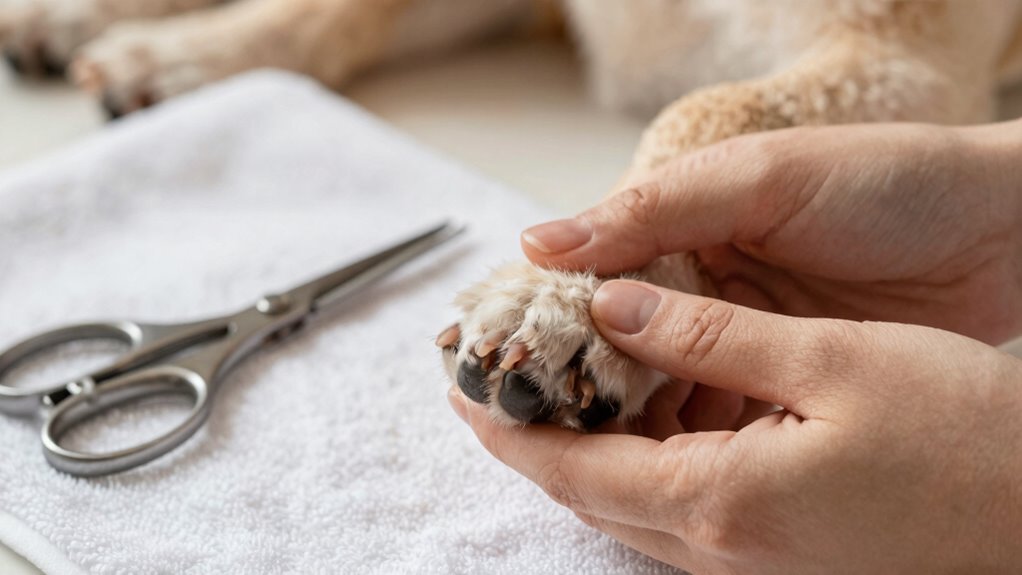
Before you start, gather the necessary tools: a pair of sharp, small scissors or grooming shears, a fine-tooth comb, and perhaps a cordless clipper if your pet’s fur is particularly thick. Make sure your pet is calm and relaxed—try playing with them beforehand or offering treats to create a positive experience. Find a well-lit, quiet space where you can comfortably work without interruptions. Understanding pet grooming safety is essential to ensure a stress-free process for both you and your pet.
Begin by gently holding one of your pet’s paws, inspecting the fur between the toes and around the pads. Use the comb first to lift and detangle any matted fur. This step not only makes trimming easier but also minimizes any discomfort for your pet. When you’re ready to cut, focus on removing only the excess fur, being careful not to cut too close to the skin. Cutting into the sensitive pads can cause pain, bleeding, or infections, which could jeopardize your pet’s health and make future grooming sessions more difficult. Additionally, using appropriate grooming tools can help achieve a cleaner, safer trim and reduce the risk of injury.
Stay calm yourself; your pet will pick up on your mood and might become anxious if you seem unsure or hurried. Keep the scissors or clippers steady, and take small, slow cuts rather than rushing through. If your pet squirms, take breaks and praise them for their patience. Remember, safety is key—never use dull scissors, as they can tug at fur and cause discomfort, or scissors that are too large or sharp for precision work. Using proper grooming techniques can also help ensure a smooth and safe trimming process.
Regularly trimming paw fur helps maintain good dog grooming habits and promotes pet health by preventing mats and irritations. Overgrown fur can hide injuries or foreign objects, so frequent checks and trims are essential. The more consistent your grooming routine, the less stressful it becomes for both of you. Ultimately, caring for your pet’s paws through careful trimming enhances their comfort, health, and happiness. With practice, it’ll become a simple, routine part of your pet care that keeps your furry friend looking good and feeling great. Maintaining pet health is an important part of responsible pet ownership.
As an affiliate, we earn on qualifying purchases.
Frequently Asked Questions
How Often Should I Trim My Dog’s Paw Fur?
You should trim your dog’s paw fur every 4 to 6 weeks to maintain proper dog grooming and prevent matting or debris buildup. Regular fur maintenance guarantees your dog stays comfortable and safe, especially during walks. Keep an eye out for overgrown fur that might cause discomfort or interfere with walking. Consistent grooming sessions help you stay on top of your dog’s health and keep their paws in great condition.
What Tools Are Best for Trimming Paw Fur?
For trimming paw fur, use blunt-tipped scissors or grooming clippers designed for pet safety. These tools help you control cuts and prevent injury during dog grooming. Always choose sharp, quality blades for a clean trim. Keep a steady hand and work gently to avoid hurting your pet. Using the right tools guarantees pet safety and makes trimming easier, helping your dog stay comfortable and healthy.
Can Trimming Paw Fur Help With Paw Pad Health?
Trimming paw fur is like giving your pet a fresh start, and yes, it can improve paw pad health. By keeping fur short, you promote better paw pad hygiene and reduce the risk of dirt and debris causing irritation. Regular trimming also helps prevent fur inflammation, ensuring your pet’s paws stay comfortable and healthy. It’s a simple step to keep their paws clean, protected, and happy as they roam around.
Should I Trim the Fur Between Paw Pads?
Yes, you should trim the fur between your dog’s paw pads to prevent fur matting and reduce paw pad sensitivity. Overgrown fur can trap dirt and moisture, causing discomfort and potential infections. Regular trimming keeps the paws clean, improves traction, and helps your dog stay comfortable. Be gentle and use proper tools to avoid injuring sensitive areas. Consistent maintenance guarantees your pet’s paws stay healthy and irritation-free.
What Signs Indicate I Should See a Vet Instead?
If you notice your pet constantly licking, swelling, redness, or foul odor around their paw pads, see a vet immediately, as these could signal paw pad infections. Also, if you observe excessive fur matting causing discomfort or difficulty walking, consult a professional. Ignoring these signs can worsen issues, leading to pain or infection. Always prioritize professional advice when symptoms persist or worsen despite home care.
Conclusion
Remember, trimming your pet’s paw fur is a careful, caring task that keeps paws pristine and prevents problems. Patience, precision, and positive reinforcement pave the path to a pain-free, perfect trim. Practice makes perfect—so stay patient, be gentle, and praise your pet’s progress. With proper preparation and a calm approach, you can confidently craft a clean, comfortable coat for your companion, creating a caring, confident connection that keeps paws happy and healthy.
Columbus Day / Indigenous Peoples' Day Picks
long weekend sales
As an affiliate, we earn on qualifying purchases.