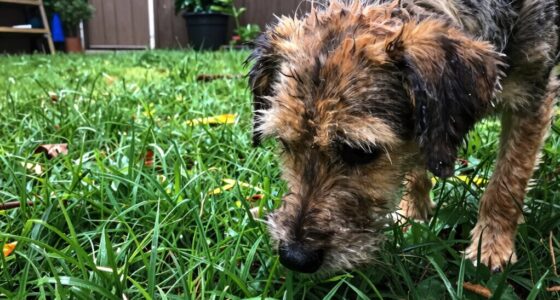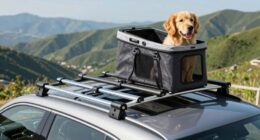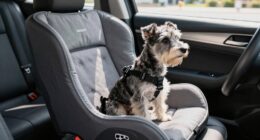
Many owners overlook simple fixes like ensuring proper ventilation, avoiding heavy meals before travel, and creating a comfortable space with familiar toys or blankets. Gradually exposing your dog to car rides with positive reinforcement can drastically reduce sickness, while calming music or pheromone sprays help ease anxiety. Using a secure crate or harness and avoiding sudden stops also make a difference. Keep these tips in mind to prevent car sickness; you’ll discover more effective strategies as you explore further.
Key Takeaways
- Gradually acclimate your dog to car rides with positive reinforcement to reduce anxiety and motion sickness.
- Ensure proper ventilation and a comfortable space using blankets or crates to prevent environmental stress.
- Avoid feeding heavy meals immediately before travel; opt for small, easily digestible snacks hours earlier.
- Incorporate calming sounds, pheromone sprays, or gentle massage to soothe your dog during the trip.
- Recognize persistent symptoms and seek veterinary care to address underlying health issues and get professional guidance.

COOYOO Dog Seat Belt, Durability Retractable Dog Car Harness Adjustable Dog Seat Belt for Vehicle Nylon Pet Safety Seat Belts Heavy Duty & Elastic (1 Pack Black)
DURABILITY – No matter how well-trained your pup is, there’s no guarantee they won’t tug, pull, or chew…
As an affiliate, we earn on qualifying purchases.
As an affiliate, we earn on qualifying purchases.
What Causes Dog Car Sickness and How Can I Prevent It?

Car sickness in dogs often happens because their inner ear, which helps with balance, becomes overwhelmed by the motion of the vehicle. To prevent this, start with puppy training by acclimating your dog gradually to car rides, using positive reinforcement to reduce anxiety. Keeping rides short and providing a comfortable space can also help. For more severe cases, medication options like anti-nausea drugs might be recommended by your vet. These medications can ease discomfort and make travel more manageable. Remember, consistency is key; regularly practicing short trips helps your dog build tolerance. Incorporating calming techniques such as soothing music or pheromone sprays can further reduce anxiety during travel. Additionally, understanding cultural activities in your area can help you find local events or environments that promote positive associations with travel or socialization. Recognizing sensory factors such as smells or vibrations that contribute to motion sickness can help you adjust the environment to better suit your dog’s needs. Being aware of common triggers like sudden stops or sharp turns can also help in planning smoother rides. Being mindful of home safety adjustments, such as securing loose objects in the car, can prevent additional stress for your pet. Combining proper puppy training with appropriate medication options, when necessary, can considerably reduce your dog’s car sickness and make travel a less stressful experience for both of you.

ThunderEase Dog Calming Pheromone Spray | Powered by ADAPTIL | Reduce Anxiety During Travel, Vet Visits and Boarding
ThunderEase is vet recommended brand and uses the ADAPTIL pheromone analog
As an affiliate, we earn on qualifying purchases.
As an affiliate, we earn on qualifying purchases.
Common Mistakes That Make Car Sickness Worse for Dogs

Feeding your dog right before travel can worsen car sickness, so avoid giving them a large meal beforehand. Ignoring proper ventilation can also increase their discomfort, making nausea worse. Additionally, proper color calibration that are engaging and clear can help distract your dog and reduce anxiety during car rides, leading to a calmer experience. Incorporating natural remedies like calming landscaping elements such as plants or outdoor features around your vehicle can also help soothe your dog and alleviate stress. Creating a calm environment with soothing sounds and minimal stimuli can further reduce anxiety and improve their overall comfort during travel. Ensuring your dog’s environment is free from irritants like strong fragrances or smoke can significantly improve their comfort. Paying attention to these mistakes can help keep your dog calmer and more comfortable during car rides.
Overfeeding Before Travel
Overfeeding your dog before travel can markedly increase the likelihood of car sickness. When your dog’s feeding habits include a heavy meal right before a trip, their stomach is more likely to become upset during the ride. Avoid giving large meals close to departure; instead, aim for smaller, easily digestible snacks and plan meal timing to be at least a few hours before traveling. Overfeeding can cause discomfort and nausea, making car sickness worse. Also, watch for feeding habits that set your dog up for trouble—such as giving too much food or feeding immediately before leaving. Proper meal timing helps reduce the chances of an upset stomach, keeping your dog calmer and more comfortable during the journey. Additionally, providing light, frequent snacks instead of a large meal can help maintain your dog’s energy levels without upsetting their stomach. Being mindful of your dog’s feeding habits and understanding how gastric upset occurs can make a significant difference in preventing travel-related car sickness. Recognizing the importance of yarn weight and stitch type for crafting can also be relevant when selecting comfort items for travel. For example, choosing lightweight and soft fabric materials can help keep your dog comfortable during long trips.
Ignoring Ventilation Needs
Have you considered how proper ventilation can impact your dog’s comfort during travel? Ignoring ventilation needs can worsen car sickness by trapping stale air and increasing stress. To address this, focus on airflow solutions:
- Open windows slightly to allow fresh air to circulate.
- Use a fan or vent to improve airflow inside the vehicle.
- Avoid blocking vents with accessories or padding.
- Ensure the car’s air conditioning is functioning properly.
- Regularly check and maintain the vehicle’s ventilation system to ensure optimal airflow. Additionally, understanding the effects of poor ventilation can help you take more informed steps to improve your dog’s travel experience. Proper air circulation can help prevent stuffy, overheated environments that can trigger nausea. Recognizing how air quality impacts comfort is essential for a safer ride.
Maintaining good ventilation also reduces the buildup of stale air that can contribute to discomfort. Proper airflow reduces stress and keeps your dog calmer during the ride. Remember, good ventilation isn’t just about comfort; it’s an essential part of reducing car sickness and making travel safer and more enjoyable for your furry friend.
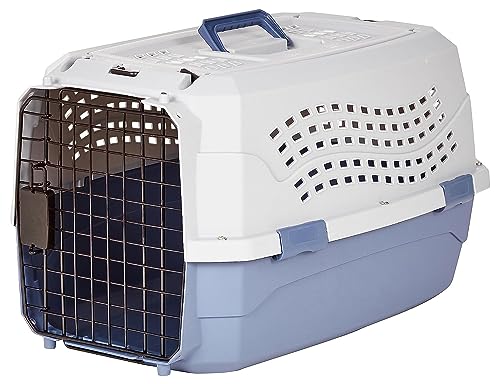
Amazon Basics Sturdy Portable 2-Door Top-Load Hard-Sided Pet Travel Carrier with Secure Ventilation, Handle, Front & Top Entry for Dogs, Cats, 22.8"L x 15"W x 13"H, Gray & Blue
Hard sided pet carrier with 2 doors for front and top entry; suitable for cat or medium size…
As an affiliate, we earn on qualifying purchases.
As an affiliate, we earn on qualifying purchases.
How to Prepare Your Dog for a Calm, Comfortable Car Ride
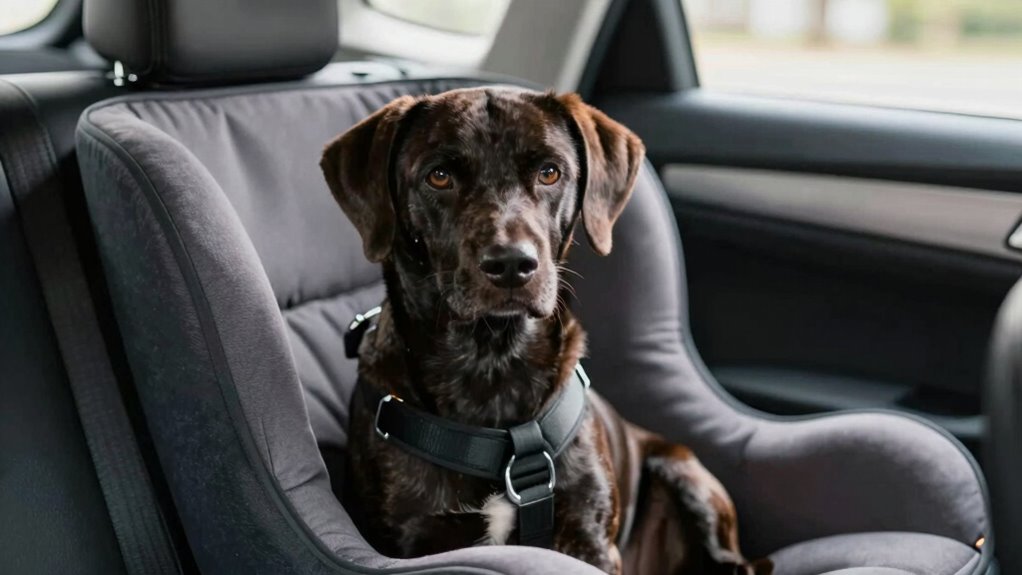
To help your dog stay calm during car rides, create a comfortable and safe space where they can rest. Gradually introduce your dog to car travel by taking short trips and slowly increasing the duration. This approach helps your dog feel secure and reduces anxiety before longer journeys. Incorporating sustainable fabric technology in your pet accessories can also contribute to eco-friendly and comfortable travel gear. Additionally, choosing recycled materials in outdoor furniture for your pet’s resting area can promote a greener environment while providing a cozy space for your dog. Being aware of pinball machine weights can be useful if you plan to transport or set up a dedicated space for your pet’s outdoor relaxation, ensuring safe handling. Considering desert landscaping techniques such as shade structures and resilient plants can further enhance your pet’s outdoor comfort and safety. Proper shading and natural cooling methods can significantly reduce outdoor heat stress for your dog.
Safe Space for Rest
Creating a designated, comfortable space for your dog to rest during car rides can make a significant difference in reducing anxiety and preventing motion sickness. Start by choosing a quiet, secure resting area within the car, such as a cozy corner or a well-padded crate. To optimize comfort:
- Use a soft blanket or bed to make the resting area inviting.
- Position the cozy corner where your dog can see you but feels secure.
- Ensure the space is free of distractions, like loud noises or sudden movements.
- Keep the resting area stable to prevent unnecessary jostling during drives.
- Incorporate appropriate gear such as harnesses or travel crates designed for safety and comfort.
- Consistent training can help your dog associate the designated space with positive experiences, reducing anxiety during travel.
- Proper ventilation and indoor air quality can also help keep your dog comfortable and calm during the ride.
This safe space helps your dog feel calm and secure, making it easier to relax and reduce motion sickness symptoms. Preparing a cozy corner is key to a smoother car ride.
Gradual Travel Acclimation
Getting your dog comfortable with car rides starts before you hit the road. Gradual travel acclimation helps prevent sensory overload and fosters motion adaptation. Begin by letting your dog explore the car when it’s stationary, rewarding calm behavior. Next, take short trips around the block, gradually increasing duration as your dog remains relaxed. Keep the environment quiet and free from sudden noises or strong scents that could overwhelm them. Use familiar blankets or toys to create a sense of security. During these practice runs, observe your dog’s reactions and adjust accordingly. Over time, your dog will learn that car rides are safe and comfortable, reducing anxiety and helping them adapt to the motion. Consistency and patience are key to building confidence and easing travel-related stress.

NausX Anti-Motion Sickness and Nausea Relief for Medium Breed Dogs, Relief for Disorientation and Dizziness, 20 Tablets
Effective Formula: This anti nausea medication was specifically designed for your dog’s needs. It helps relieve motion sickness…
As an affiliate, we earn on qualifying purchases.
As an affiliate, we earn on qualifying purchases.
Simple Tips to Reduce Stress and Nausea During Car Trips
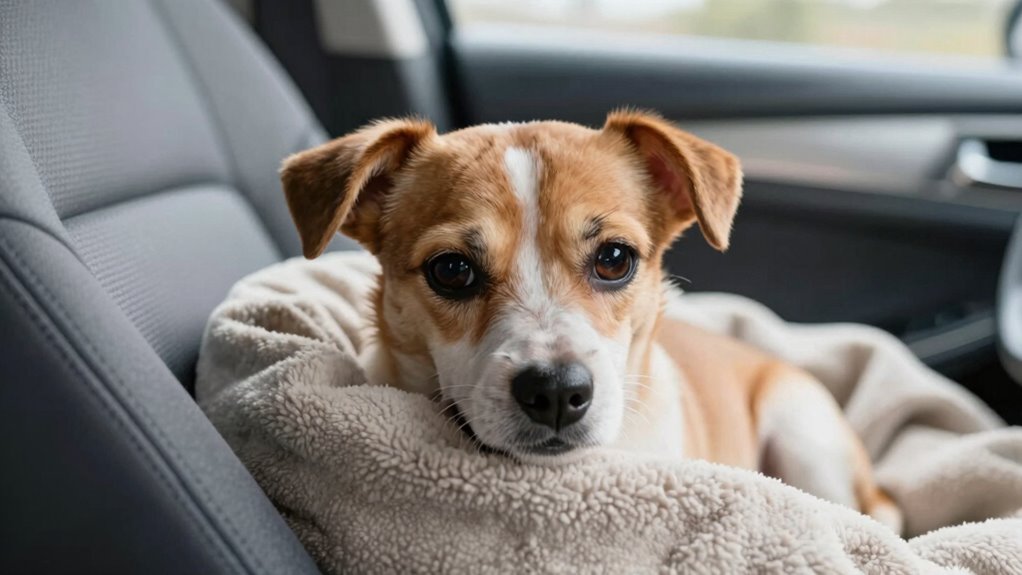
Traveling can be stressful for dogs, but you can help ease their discomfort by taking simple steps. First, guarantee your dog is comfortable with puppy training that includes short, positive car trips. Second, use travel accessories like a secure crate or harness to keep them stable. Third, keep the environment calm with gentle music or white noise, reducing anxiety triggers. Fourth, avoid feeding your dog heavy meals before travel to prevent nausea. These small adjustments can considerably reduce stress and nausea during car trips, making the experience better for your pup. Remember, consistency is key, so practice these tips regularly to build your dog’s confidence and comfort in the car. Your effort will make trips more enjoyable for both of you.
Natural Remedies and Behavioral Strategies to Ease Car Sickness
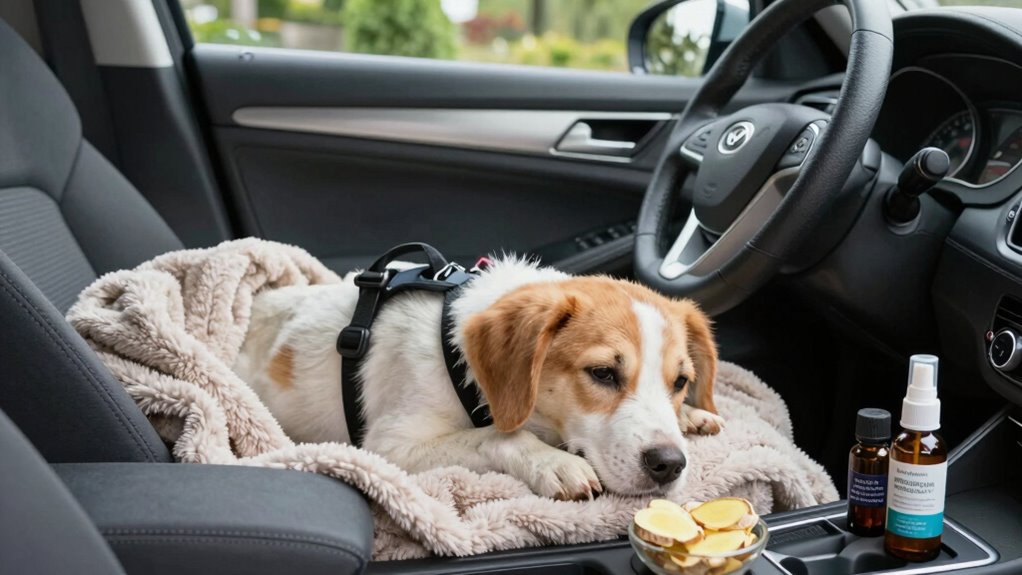
To help ease your dog’s car sickness naturally, you can turn to behavioral strategies and remedies that calm their nerves and settle their stomach. Puppy training plays a crucial role; gradually acclimating your dog to car trips reduces anxiety. Use short, positive sessions, rewarding calm behavior to build confidence. Incorporate calming techniques like gentle massage or soft music during rides. Dietary supplements such as ginger or calming herbs can also help reduce nausea and stress, but consult your vet before use. Consistent exposure paired with these remedies creates a soothing environment, making car rides more comfortable. Remember, patience and gentle reinforcement are key to helping your dog associate car trips with positive experiences, ultimately easing their car sickness naturally.
When Should I See a Vet About My Dog’s Car Sickness?
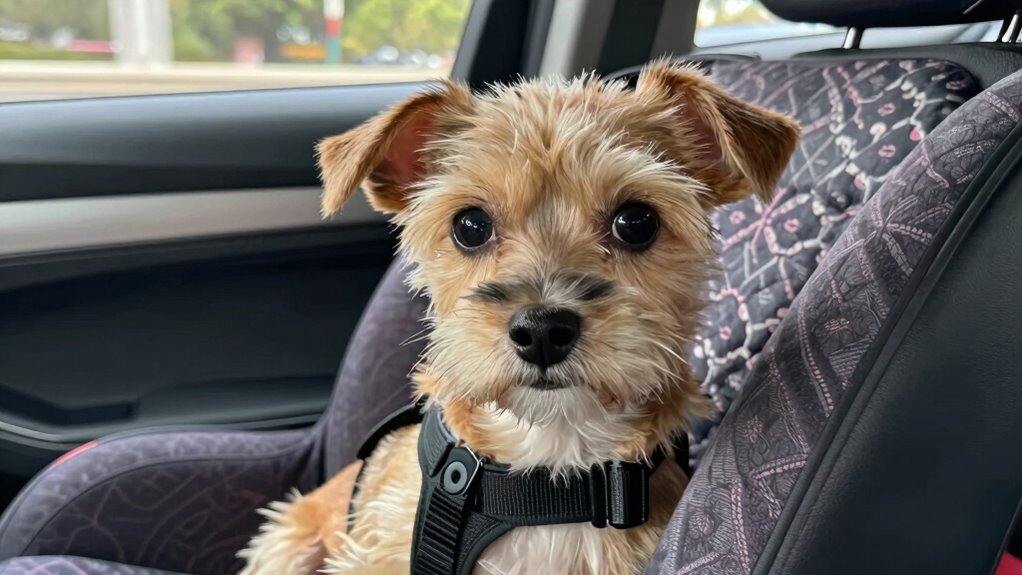
While some mild discomfort is common in dogs during car rides, persistent or severe symptoms mean you should see a vet. If your dog:
- Continues to vomit or has diarrhea after travel, it could signal a health issue.
- Shows signs of dehydration, like dry gums or lethargy, despite stopping the ride.
- Exhibits extreme anxiety that doesn’t improve with doggie aromatherapy or calming pet travel accessories.
- Seems to develop new or worsening symptoms, such as trembling, disorientation, or loss of appetite.
Timely veterinary care can rule out underlying health problems and recommend advanced options. Your vet may suggest supplements, medication, or specific behavioral strategies to improve your dog’s travel experience. Don’t delay if symptoms escalate.
Safe Crate and Restraint Options for Car Travel
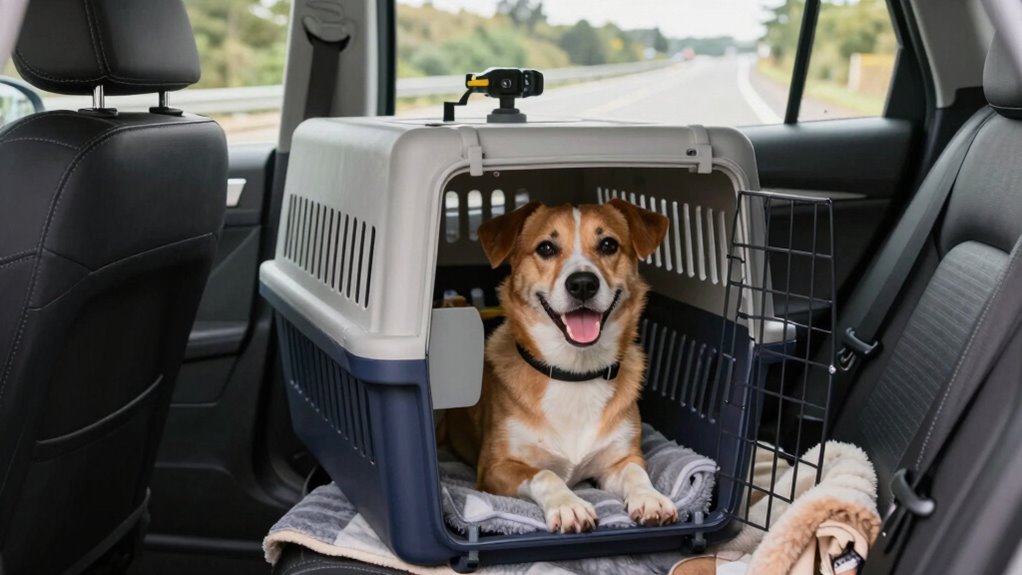
Ensuring your dog’s safety during car rides means choosing the right crate or restraint system. A secure crate provides stability and comfort, reducing stress and preventing injury if sudden stops occur. Look for travel accessories designed specifically for dogs, such as crash-tested harnesses or seatbelt attachments, to keep them safely restrained. Properly sized crates allow your dog to sit, lie down, and turn comfortably, promoting dog comfort during the trip. If a crate isn’t ideal, use a well-fitted harness that attaches securely to the seatbelt, giving your dog freedom to move while remaining safe. Always secure loose items inside the vehicle to prevent hazards. Investing in quality travel accessories guarantees your pet’s safety and comfort, making car journeys less stressful for both of you.
Long-Term Ways to Prevent Car Sickness in Dogs
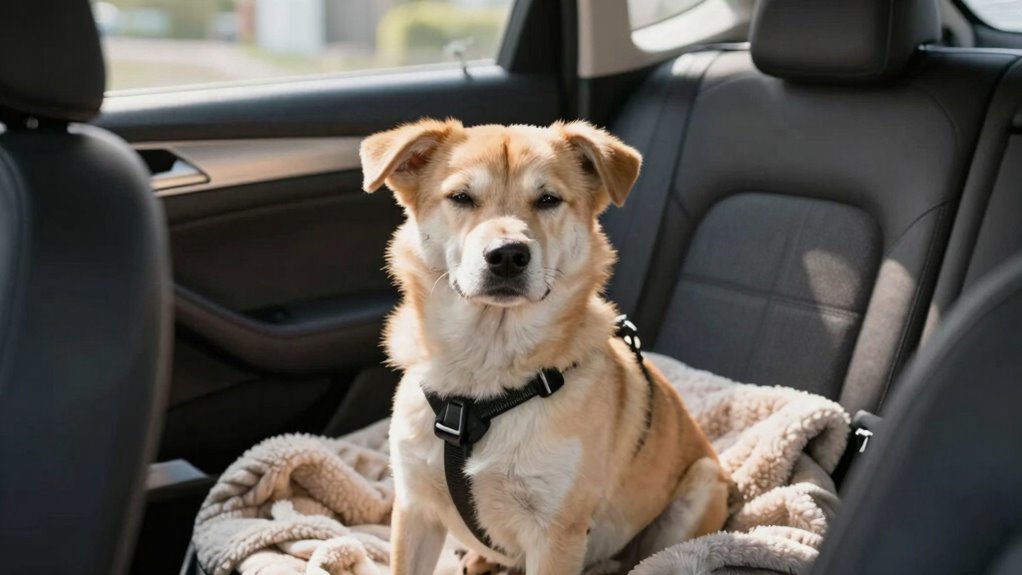
Regularly, gradually acclimating your dog to car rides can considerably reduce their chances of developing motion sickness over time. Start with short trips, slowly increasing duration as your dog becomes more comfortable. Incorporate these strategies:
Gradually acclimate your dog to car rides to reduce motion sickness and increase comfort over time.
- Use doggy aromatherapy with calming scents like lavender to create a relaxed environment.
- Practice consistent travel training, rewarding calm behavior to build positive associations.
- Keep the car well-ventilated and at a comfortable temperature to reduce stress.
- Establish a routine so your dog knows what to expect, easing anxiety during trips.
Frequently Asked Questions
Can Certain Dog Breeds Be More Prone to Car Sickness?
Certain dog breeds are more prone to car sickness due to breed predisposition and genetic factors. Small breeds like Chihuahuas and Yorkshire Terriers often experience more nausea, while some breeds with sensitive stomachs or anxiety, such as Beagles, are also affected. You can help your dog by gradually acclimating them to car rides, avoiding feeding before trips, and providing a comfortable environment, regardless of their breed.
Are There Specific Foods I Should Avoid Before Travel?
Imagine your dog sitting calmly before a car ride; avoid feeding them heavy or spicy foods that could upset their stomach. You should steer clear of foods that trigger dog food allergies, like certain grains or additives. Instead, adjust their feeding schedule by giving a light meal a few hours before travel. This minimizes nausea, helping your pup stay comfortable and calm during the trip.
How Long Does It Take for Natural Remedies to Work?
Natural remedies for travel anxiety and car sickness in dogs can take anywhere from 30 minutes to a couple of hours to show effects. You should start giving home remedies like calming supplements or herbal teas well before travel. Be consistent and patient, as some remedies may need time to build up in your dog’s system. Monitor their response and adjust as needed for the best results.
Is It Safe to Give My Dog Motion Sickness Medication Regularly?
Giving your dog motion sickness medication regularly can be safe if you follow your vet’s guidance, but medication safety is vital. Always adhere to the recommended dosage concerns and avoid overuse, as this can lead to adverse effects. Check with your vet before establishing a routine, and never give medication without professional approval. Monitoring your dog’s response helps ensure safe, effective relief from car sickness during travels.
What Are Signs My Dog Is Experiencing Severe Anxiety During Travel?
If your dog shows signs of severe anxiety during travel, you’ll notice dog anxiety symptoms like trembling, whining, or excessive panting. Look for travel distress cues such as avoiding eye contact, pacing, or trying to hide. These signs indicate your dog is overwhelmed. To help, create a calming environment, use comfort items, and consider gradual exposure to travel situations to reduce their anxiety over time.
Conclusion
By blending basic boundaries with calming cues, you can combat car sickness and create a cozy, carefree journey for your dog. Avoid preventable mistakes, embrace effective remedies, and establish easy routines to ensure every trip is tranquil and trouble-free. With patience, persistence, and a touch of care, you’ll cultivate comfort, confidence, and calmness in your canine companion—making every mile memorable and manageable. Travel together with trust, tenderness, and a sense of security that soothes every sniff, squeal, and sigh.