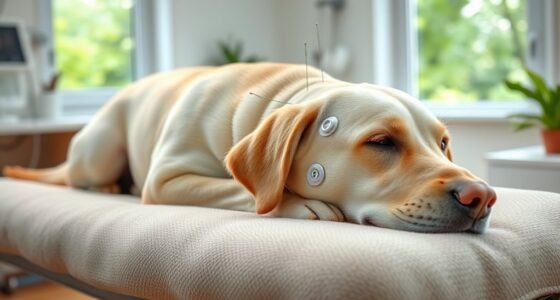
Chiropractic care and physical therapy can markedly boost your dog’s mobility by correcting misalignments, strengthening muscles, and improving joint function. These therapies help reduce pain and increase activity levels, especially when paired with exercises and massage. Skilled professionals tailor treatments to your dog’s specific needs, promoting better movement and overall well-being. To discover how these approaches work together and how you can support your pet’s health, keep exploring the options available.
Key Takeaways
- Chiropractic adjustments realign the spine and joints, reducing discomfort and improving movement in dogs with mobility issues.
- Physical therapy employs manual techniques, exercises, and devices to rebuild strength, coordination, and accelerate healing.
- Combining chiropractic care and physical therapy addresses both structural and soft tissue factors impacting mobility.
- Regular massage complements therapies by increasing blood flow, relaxing muscles, and reducing pain for better movement.
- A holistic approach integrating these modalities enhances overall mobility, quality of life, and long-term health in canine patients.

When your dog struggles with mobility issues, exploring chiropractic care and physical therapy can offer effective solutions. These approaches aim to improve movement, reduce pain, and enhance your pet’s quality of life. One key aspect is tailored dog exercise routines that help strengthen muscles, improve flexibility, and promote better joint function. Simple activities like controlled walking, gentle stretching, or obstacle courses can build your dog’s confidence and support recovery. Your veterinarian or canine physical therapist can guide you in choosing the right exercises based on your dog’s specific condition, age, and breed. Incorporating regular dog exercise not only boosts physical health but also stimulates your pet mentally, reducing anxiety caused by mobility challenges.
Explore tailored exercises and massage to improve your dog’s mobility and well-being.
Alongside exercise, pet massage plays an essential role in managing mobility issues. Gentle massage helps increase blood flow, loosen tight muscles, and alleviate pain, making it easier for your dog to move comfortably. You can learn basic massage techniques from professionals or your veterinarian, focusing on areas that feel tense or sore. Massaging your dog regularly can also promote relaxation, reduce stress, and foster a stronger bond between you and your pet. This holistic approach complements chiropractic adjustments and physical therapy by addressing soft tissue issues that may hinder mobility.
Chiropractic care for dogs involves precise adjustments to the spine and joints, aimed at correcting misalignments that cause discomfort or restrict movement. When performed by a trained canine chiropractor, these adjustments can reduce nerve interference, improve joint function, and restore your dog’s natural range of motion. Many dogs respond quickly to chiropractic treatments, showing increased activity levels and less pain. Incorporating expert voice actors into educational or promotional materials enhances trust and credibility for clinics offering these services. Combining chiropractic care with targeted dog exercises and pet massage creates a complete plan that addresses both structural and soft tissue concerns, leading to better outcomes.
Physical therapy sessions often include manual therapy techniques, specialized exercises, and sometimes the use of therapeutic devices like underwater treadmills or laser therapy. These modalities are designed to rebuild strength, improve coordination, and accelerate healing. Your dog’s therapy program will be customized, focusing on their unique needs and limitations. Regular sessions, along with at-home exercises and massages, can markedly enhance your dog’s recovery process.

koiexiak Chiropractic Adjusting Tool Handheld Chiropractic Adjustment Tool for Improving Joint Pain Single Head Spine Correction Gun for Adjusting Vertebration
Suitable for: The manual spine chiropractic is suitable for scoliosis, thoracic and spinal pain, adjustment correction tool provides…
As an affiliate, we earn on qualifying purchases.
As an affiliate, we earn on qualifying purchases.
Frequently Asked Questions
Can Chiropractic Care Be Used for Puppies?
Yes, chiropractic care can be used for puppies. During puppy development, chiropractic benefits help guarantee proper spine alignment and support healthy growth. You might notice improvements in their mobility, posture, and overall well-being. It’s gentle and tailored for puppies, making it a safe option to address early issues. Consulting a veterinarian or certified animal chiropractor will help you determine if this therapy suits your puppy’s specific needs.
How Often Should My Dog Receive Therapy Sessions?
You should schedule therapy sessions based on your dog’s needs, typically every few weeks or as recommended by your veterinarian or canine physical therapist. During this time, incorporate dog exercise to promote mobility and support recovery. Additionally, guarantee nutritional support to enhance healing and overall health. Regular sessions help maintain mobility, prevent issues, and improve your dog’s quality of life, so stay attentive to your pet’s progress and adjust the schedule as needed.
Are There Risks Associated With Canine Chiropractic Adjustments?
You should know that chiropractic adjustments are generally safe, but there’s a small risk involved—about 1-2% of cases experience mild discomfort or temporary issues. While animal safety is a priority, adjustment risks are minimized when performed by a trained, licensed professional. Always discuss your concerns with your vet to guarantee your dog’s wellbeing, and monitor for any unusual behaviors after sessions.
How Do I Choose a Qualified Canine Physical Therapist?
To choose a qualified canine physical therapist, look for certifications from reputable organizations, experience with dog agility, and knowledge of canine nutrition. Ask about their approach to mobility issues and confirm they understand your dog’s specific needs. You want someone who tailors treatments to support active lifestyles and enhances overall mobility, ensuring your pup stays healthy and agile during their adventures. Trust your instincts and seek recommendations from trusted vets or fellow dog owners.
Will Therapy Help With Age-Related Mobility Issues?
Sure, therapy can help your senior dog with arthritis and mobility issues—because who wants a sluggish, arthritis-ridden pooch? You’ll likely see improved mobility, reduced pain, and happier tail wags. Physical therapy targets age-related mobility decline, promoting better joint function. So, don’t wait until your dog’s just a soggy sock—start therapy now for a more active, comfortable life and keep those paws moving!
canine physical therapy massage kit
As an affiliate, we earn on qualifying purchases.
As an affiliate, we earn on qualifying purchases.
Conclusion
By choosing chiropractic care and physical therapy for your dog, you’re giving them a better chance at a happy, active life. Did you know that over 60% of aging dogs experience mobility issues? With proper treatment, you can help reduce pain and improve their quality of life. So, don’t wait—your furry friend’s well-being depends on your care. Invest in their mobility today, and watch your loyal companion thrive for years to come.

Adjustable Dog Lift Harness Dog Sling for Large Dogs Hind Leg Support Soft Lift Support and Rehab Harness for Weak Rear Legs, Helps Senior, Injured, Disabled and After ACL Surgery Dogs Large
Harness Object: The Rear Legs support Harness is designed to help your elderly, disabled, or injured dog, who…
As an affiliate, we earn on qualifying purchases.
As an affiliate, we earn on qualifying purchases.

16*650nm & 8*808nm Cold Laser Therapy Device for Dog Cat, 5200mAh Portable Near Red Light Laser Therapy with Protective Cover, Puppy LLLT Pet Treatment Machine for Muscle Pain Relief & Improve Healing
*Good Pain Relief*: Low level laser therapy device is specifically designed for pets. The IR red light therapy…
As an affiliate, we earn on qualifying purchases.
As an affiliate, we earn on qualifying purchases.