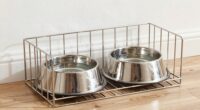
Ensuring your dog’s feeding station is at the right height helps prevent neck, shoulder, and joint strain, making mealtime more comfortable and healthier. Measure your dog at the withers on a level surface to find the ideal height—generally, it should match or be slightly above their shoulder level. Proper setup promotes better posture, digestion, and overall well-being. Keep these tips in mind, and you’ll discover how easy it is to create a healthier feeding routine.

Get pet supplies delivered free with Prime
- Fast, free delivery on millions of items
- Prime Video, Amazon Music and more included
- Member-only deals all year
Key Takeaways
- Measure your dog’s withers to determine the optimal feeding station height, reducing neck and shoulder strain.
- Adjust the feeding station to match your dog’s size, especially for larger or older dogs, for better comfort.
- Signs of incorrect setup include choking, neck stretching, or reluctance to eat, indicating the need for height adjustments.
- Use durable, easy-to-clean materials and ensure the station is level and stable for long-term health benefits.
- Properly positioned feeding stations promote better posture, digestion, and overall well-being for your dog.
As an affiliate, we earn on qualifying purchases.
Why Proper Feeding Station Height Matters for Your Dog’s Comfort and Health
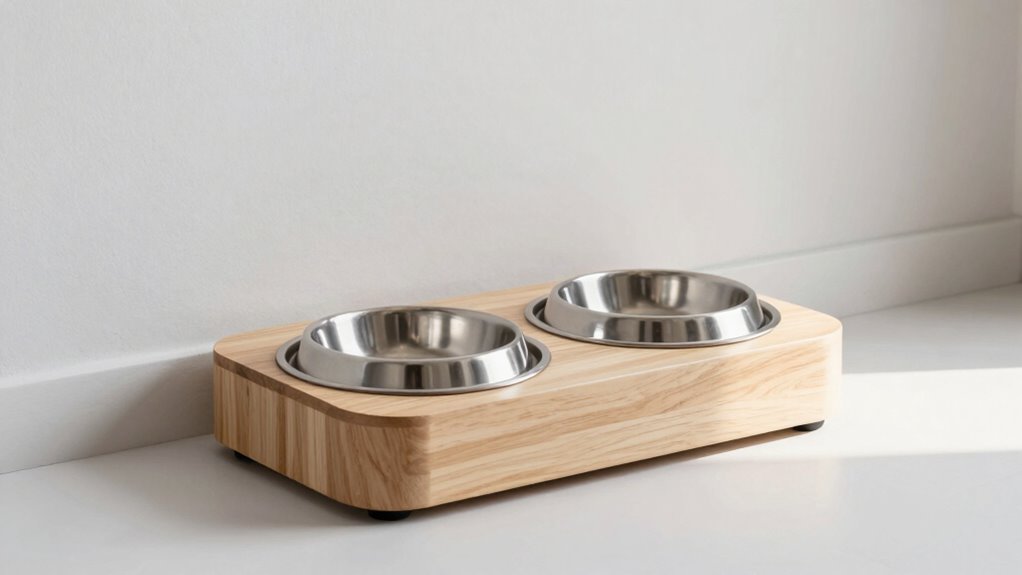
Choosing the right feeding station height is essential because it directly impacts your dog’s comfort and health. Proper feeding station placement helps prevent strain on your dog’s neck, shoulders, and joints, making mealtime easier and less stressful. When your dog eats at the correct height, it promotes better digestion and reduces the risk of discomfort or injury. Keep in mind that feeding station height also influences your dog’s posture, which can affect overall health. Incorporate dog nutrition tips by ensuring the station is accessible and comfortable, encouraging your dog to eat calmly and efficiently. Remember, a well-placed feeding station not only supports your dog’s physical well-being but also contributes to a happier, healthier mealtime routine.
How to Measure Your Dog to Find the Right Feeding Height
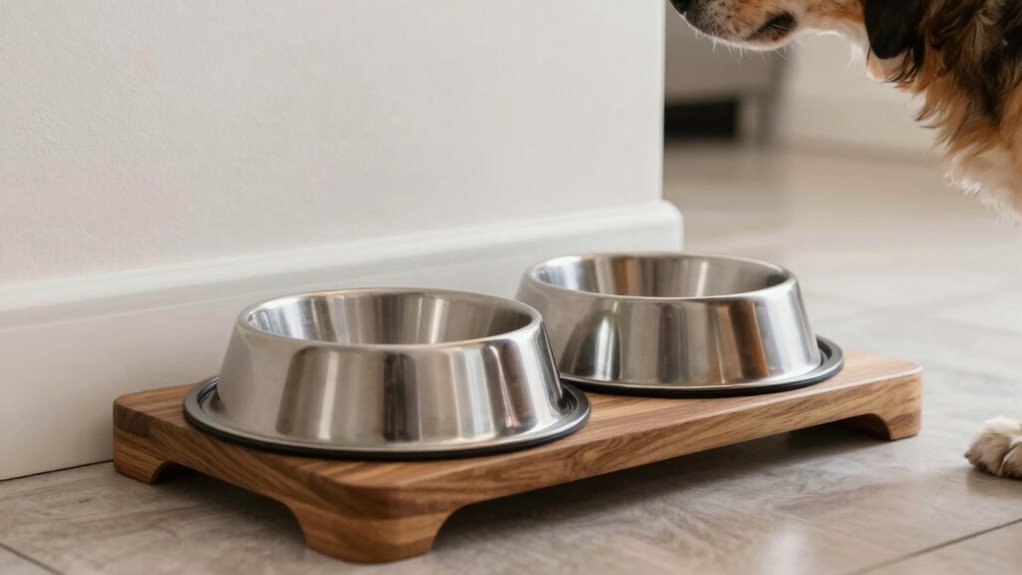
To find the right feeding height, start by measuring your dog at the withers—the highest point of their shoulders. Make sure you’re doing this on a level surface to get an accurate reading. Once you have the measurement, you can determine the ideal height for your dog’s feeding station. Ensuring the correct feeding station height can help prevent neck and shoulder strain, promoting better posture and comfort for your dog. Using natural landscaping ideas can also help create a more comfortable environment around your dog’s feeding area. Properly adjusting the feeding station to match your dog’s size can also help reduce stress on their joints. Additionally, aligning the feeding station height with your dog’s spinal health can further support their overall well-being. Proper height adjustment can also reduce the risk of musculoskeletal issues, ensuring your dog remains healthy and comfortable during mealtime.
Measure at Dog’s Withers
Measuring your dog at the withers is the most accurate way to determine the correct feeding station height. This measurement guarantees the feeding bowl placement supports good dog posture considerations, reducing strain on the neck and shoulders. To do this, have your dog stand naturally on a flat surface. Use a measuring tape to find the height from the ground to the highest point of the shoulders. Keep your dog relaxed for an accurate reading. Consider that a proper height allows your dog to eat comfortably without bending or stretching excessively. Use the table below to compare your measurements and decide on the ideal station height:
| Dog Size | Withers Height | Recommended Feeding Height |
|---|---|---|
| Small | 10-15 inches | 4-6 inches |
| Medium | 16-22 inches | 6-9 inches |
| Large | 23-28 inches | 9-12 inches |
| Extra Large | 29+ inches | 12+ inches |
Use a Level Surface
Before measuring your dog’s withers, make certain you’re working on a level surface. A flat, stable area ensures accurate measurements and consistent results. When selecting a feeding station, consider the feeding bowl materials—stainless steel, ceramic, or plastic—since these affect cleaning routines and durability. Using a level surface helps you determine the right height for your dog’s bowls, preventing strain on their neck and shoulders. It’s essential to keep the station stable and at the proper height, especially if you switch between different bowl materials, as some may slide or tip more easily. A level surface minimizes the risk of spills and makes cleaning routines easier, keeping your dog’s feeding area hygienic and comfortable. Proper feeding station height supports your dog’s overall health and comfort during mealtime. Accurate measurements lead to a healthier feeding setup. Additionally, considering animal ergonomics can further enhance your pet’s feeding experience and prevent long-term musculoskeletal issues. Ensuring the correct height also helps in maintaining your dog’s proper posture, reducing the risk of joint discomfort over time. Incorporating self-sufficiency principles by preparing a suitable feeding area can promote a more comfortable and stress-free environment for your dog. Remember that a well-designed feeding station can also contribute to long-term health benefits, ensuring your pet’s well-being for years to come.
Signs Your Dog Needs a Different Feeding Station Height
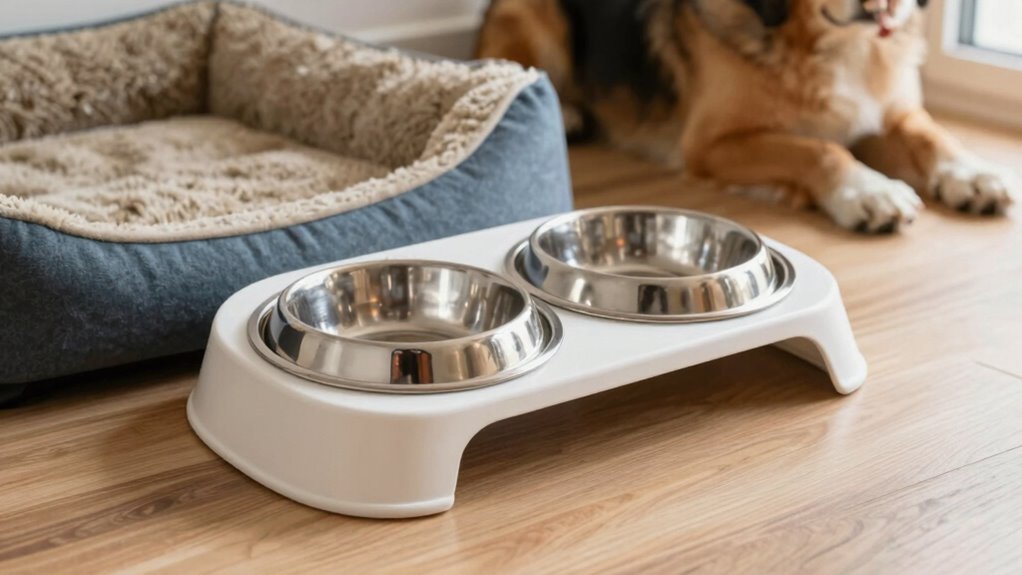
If your dog is having trouble eating, it might be a sign that their feeding station isn’t the right height. Watch for signs like difficulty swallowing or choking, which could indicate discomfort. Also, notice if your dog struggles to reach the food or shows signs of neck strain—that’s a clear signal they may need a different setup. Ensuring your dog’s feeding station is at the proper home environment height can help prevent these issues and promote better eating habits. Using appropriate kitchen gear such as adjustable bowls or stands can make a significant difference in their comfort. Additionally, incorporating traditional Indonesian home decor principles that emphasize harmony and natural materials can create a more balanced and comfortable feeding space. Being aware of ethical considerations in choosing the right feeding setup can also help you make more mindful decisions for your pet’s wellbeing. Additionally, understanding ergonomics for pets can guide you in creating a more comfortable feeding experience.
Difficult Swallowing or Choking
When your dog struggles to swallow or starts choking during mealtime, it’s a clear sign that their feeding station height might not be right. If they’re frequently coughing or gagging, it could indicate they’re straining their neck or throat. Proper positioning helps guarantee they swallow comfortably, reducing the risk of choking. Also, consider their dog hydration—if they’re gulping quickly or showing signs of difficulty, a better height may promote slower, more controlled eating. Adjusting the feeding station can improve their overall feeding schedule, making mealtimes safer and less stressful. If choking persists despite adjustments, consult your vet to rule out underlying health issues. A well-placed feeding station supports safe swallowing, preventing choking and supporting your dog’s overall health.
Struggling to Reach Food
Dogs that strain to reach their food often signal that their feeding station isn’t set at the right height. When your dog has to stretch or hunch to eat, it can negatively impact their feeding posture, leading to discomfort and potential long-term issues. A poorly positioned feeding station may cause your dog to bend their neck awkwardly, which can also affect dental health by making chewing less efficient or causing unnecessary strain on their jaw muscles. If your dog consistently struggles to reach their bowl, it’s a clear sign you should consider adjusting the height. Properly aligned feeding stations help your dog eat comfortably, maintain good posture during meals, and support overall health. Paying attention to these signs can prevent discomfort and promote better eating habits. Additionally, an ergonomic feeding station can help reduce the risk of neck and shoulder strain, contributing to your dog’s overall well-being. Using an appropriate height for your dog’s feeding station is essential for their comfort and long-term health. Ensuring your dog’s feeding station is at the correct feeding height can also help prevent musculoskeletal issues related to improper positioning, especially when combined with cabling solutions that keep feeding areas organized and accessible. Proper alignment of feeding stations can significantly improve your dog’s quality of life by reducing unnecessary strain during meals.
Signs of Neck Discomfort
Noticing your dog frequently strains, yaws, or hesitates while eating are clear signs they may be uncomfortable with their feeding station height. Changes in dog behavior, like reluctance to eat or shifting position repeatedly, indicate neck discomfort. You might observe your dog stretching or craning their neck excessively, or even pawing at their food bowl. These signs suggest that the current feeding setup isn’t ideal. To address this, use training techniques that encourage natural, comfortable eating postures. Adjust the height of the feeding station gradually, observing if your dog shows less discomfort. Properly aligning the station helps reduce strain, making mealtime easier and more enjoyable. Monitoring feeding station ergonomics is crucial for maintaining your dog’s neck health. Recognizing these signs early ensures you can make necessary adjustments before discomfort leads to more serious health issues. Additionally, consulting with a veterinarian can help determine the most suitable feeding station height for your specific dog.
Choosing the Best Feeding Station: Elevated, Standard, or Custom Options
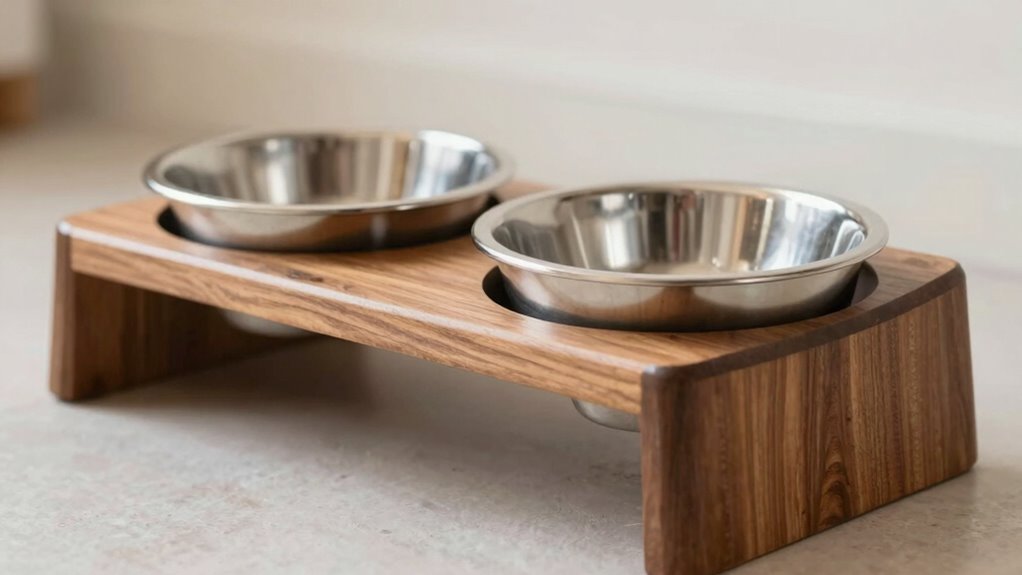
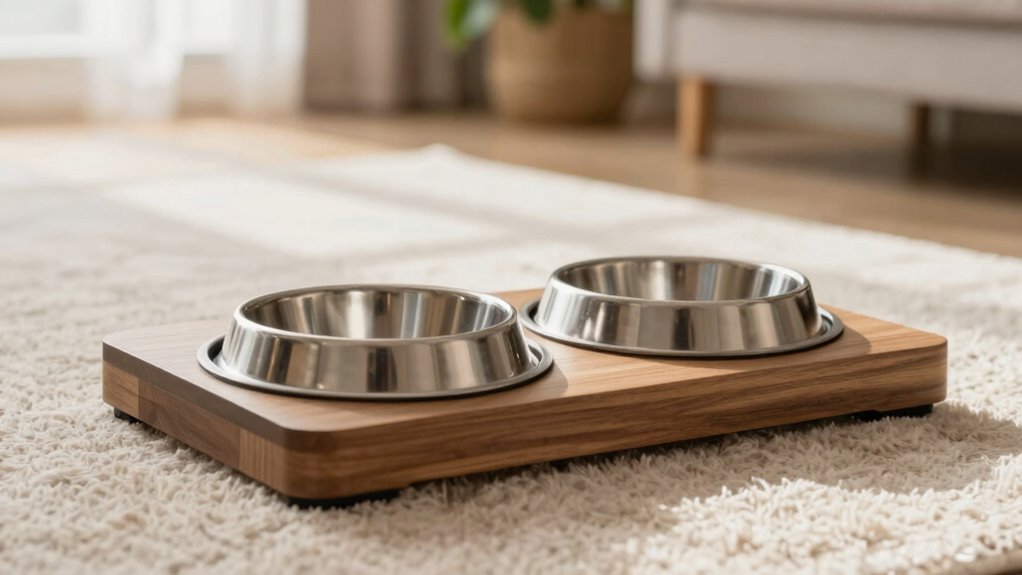
Choosing the right feeding station depends on your dog’s size, age, and any health considerations. Elevated stations help reduce neck strain, making them ideal for larger or older dogs. Standard feeding stations are versatile and suit most dogs, offering simplicity and affordability. Custom options let you tailor the height and design to fit your dog perfectly, especially if they have special needs or preferences. When selecting, consider feeding station materials—sturdy wood, metal, or plastic—to guarantee durability and ease of cleaning. Decorative feeding stations add style while maintaining functionality. Additionally, ergonomic design can enhance your dog’s comfort during mealtime. Whether you choose an elevated, standard, or custom setup, prioritize your dog’s comfort and health. Properly chosen, the right station can prevent discomfort and promote better digestion.
How to Adjust or Build Your Dog’s Feeding Station Step-by-Step
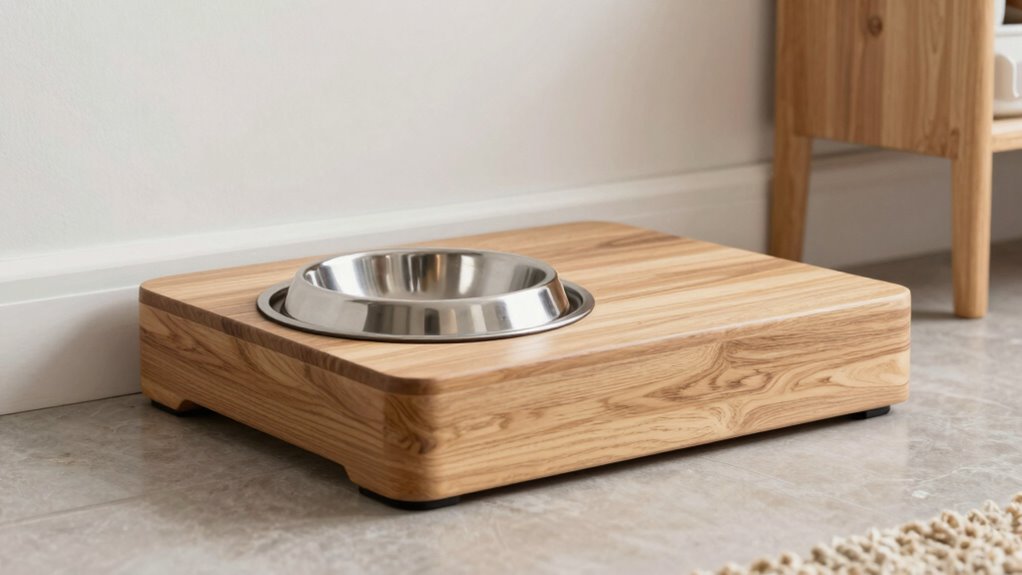
To guarantee your dog’s feeding station is comfortable and functional, you can either adjust an existing setup or build a new one from scratch. First, gather your feeding station materials, such as wood, metal, or plastic, considering durability and ease of cleaning. Next, decide on the height by measuring your dog’s shoulder height and adding a few inches for comfort, factoring in aesthetic considerations to match your home decor. Then, follow these steps:
- Cut the materials to the appropriate dimensions.
- Assemble the frame or platform securely.
- Place the bowls, ensuring stability.
- Adjust the height as needed for your dog’s comfort. Incorporating ergonomic design principles can further enhance your dog’s feeding experience and prevent strain. Additionally, ensuring the feeding station is at an appropriate height can reduce the risk of musculoskeletal issues and improve overall well-being, especially when considering proper height measurements based on your dog’s specific size and breed. Understanding dog anatomy can help you tailor the station to better support your pet’s health. Properly designed feeding stations can also help mitigate issues related to posture and comfort, contributing to your dog’s long-term health.
Tips for Maintaining and Optimizing Your Dog’s Feeding Setup Long Term
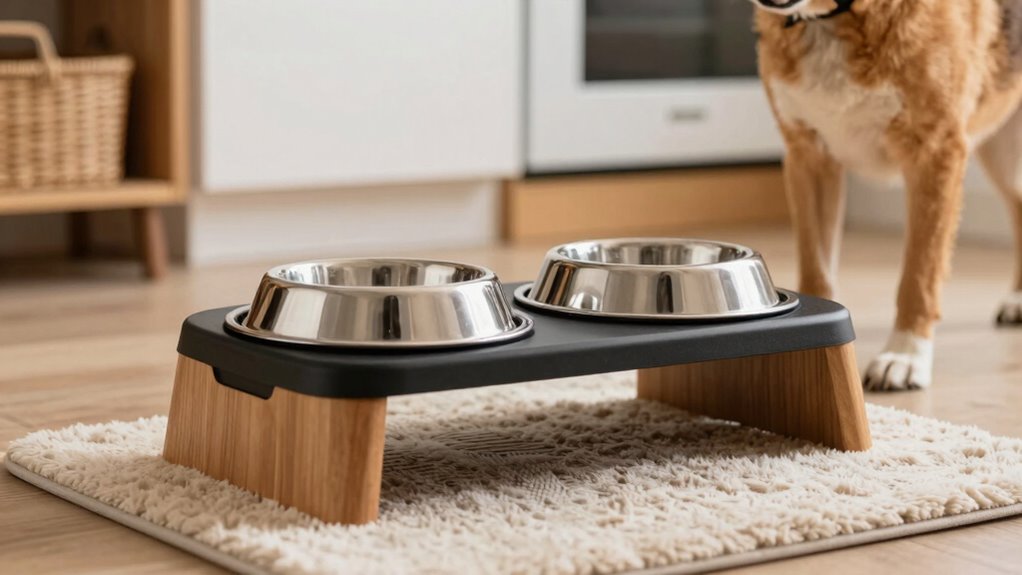
Maintaining your dog’s feeding setup over time guarantees it stays functional, clean, and comfortable for your pet. To preserve feeding station aesthetics, regularly clean the area and check for any wear or damage. This prevents messes and keeps the setup appealing, encouraging your dog to eat calmly. Pay attention to your dog’s feeding habits; if they start eating faster or slower, consider adjusting the station height or layout to suit their evolving needs. Keep bowls at the right height and ensure the space remains accessible and uncluttered. Consistent maintenance and mindful adjustments help your dog feed comfortably, reduce strain, and promote healthy habits. Ultimately, a well-maintained feeding station supports your dog’s long-term health and happiness.
Frequently Asked Questions
Can Different Breeds Require Different Feeding Station Heights?
Yes, different breeds do require different feeding station heights because of breed-specific needs and ergonomic considerations. Smaller breeds often need lower feeders to prevent strain, while larger breeds benefit from elevated stations to reduce neck and shoulder stress. By customizing the height to your dog’s size, you promote comfortable eating, support healthy posture, and prevent potential joint issues, ensuring your dog stays comfortable during mealtime.
How Often Should I Reassess My Dog’s Feeding Station Height?
You should reevaluate your dog’s feeding station adjustments every few months, especially if your dog is still growing or gaining weight. Keep an eye on their dog posture alignment during mealtime, watching for signs of strain or discomfort. Regularly adjusting the feeding station ensures your dog maintains proper posture, reducing neck and shoulder stress. This proactive approach helps keep your pet comfortable and supports healthy digestion and overall well-being.
Are There Safety Concerns With DIY Custom Feeding Stations?
DIY custom feeding stations can be safe if you prioritize material safety and follow proper installation tips. Guarantee you use non-toxic, durable materials that won’t splinter or break. Secure all parts tightly to prevent tipping or collapsing. Double-check your design for stability and accessibility, and avoid sharp edges. With careful planning and attention to safety, your homemade station can be both functional and secure, keeping your dog safe and comfortable.
What Materials Are Best for Durable, Easy-To-Clean Feeding Stations?
For durable, easy-to-clean feeding stations, choose materials like stainless steel or high-quality plastic. Stainless steel resists rust, is hygienic, and cleans easily with simple wipes or washes. Plastic options are lightweight, affordable, and also easy to maintain, but guarantee they’re BPA-free for safety. Avoid porous materials that trap bacteria or require harsh chemicals, and always opt for smooth surfaces to make cleaning quick and effective.
How Can I Prevent My Dog From Tipping Over the Feeding Station?
To prevent your dog from tipping over the feeding station, secure it with non-slip mats underneath to keep it steady. Consider switching to wall-mounted stands, which attach securely to the wall and are less likely to be pushed over. You can also reinforce the station’s base with heavier materials or non-slip pads, making it more stable and safe during mealtime.
Conclusion
Just as the wise see the importance of balance in life, ensuring your dog’s feeding station is at the right height nurtures their well-being. By paying attention to their comfort, you’re not only preventing strain but also fostering a happier, healthier pup. Remember, a well-designed feeding setup is the foundation of good health—think of it as the cornerstone of their daily routine, much like the steady rhythm of a well-composed symphony.
Fall Picks
fall essentials
As an affiliate, we earn on qualifying purchases.