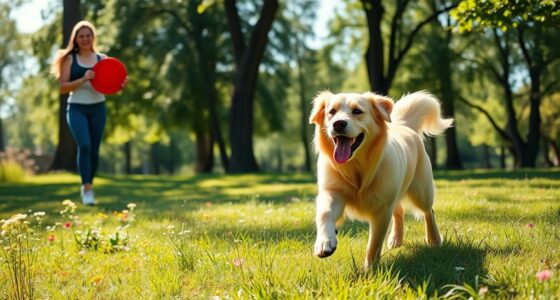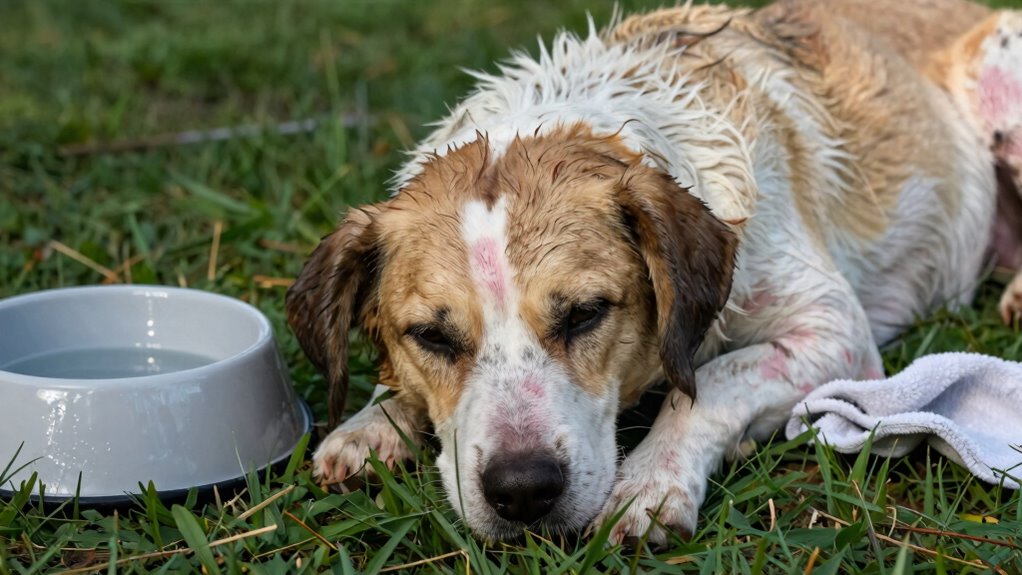

After a heat exhaustion emergency, your dog needs rest, rehydration, and careful monitoring. Provide a shaded, cool spot and offer small amounts of water to help them recover without causing vomiting. Avoid strenuous activity for at least 24 hours, gradually reintroducing exercise based on their energy levels. Keep an eye on their behavior, and consult your vet if symptoms persist or worsen. To learn more about supporting your dog’s full recovery, continue exploring helpful tips and strategies.

Get pet supplies delivered free — and shop member deals
- Fast, free delivery on millions of items
- Access to Prime Big Deal Days deals on October 6–7
- Prime Video, Amazon Music and more included
Key Takeaways
- Ensure the dog rests in a cool, shaded area with access to fresh water for rehydration.
- Gradually reintroduce activity, avoiding strenuous exercise for at least 24 hours after recovery.
- Monitor for lingering symptoms like weakness, vomiting, or disorientation, and seek veterinary care if they persist.
- Conduct follow-up health checks to identify any underlying issues that may predispose to overheating.
- Maintain proper environmental ventilation and hydration practices to prevent future heat exhaustion episodes.
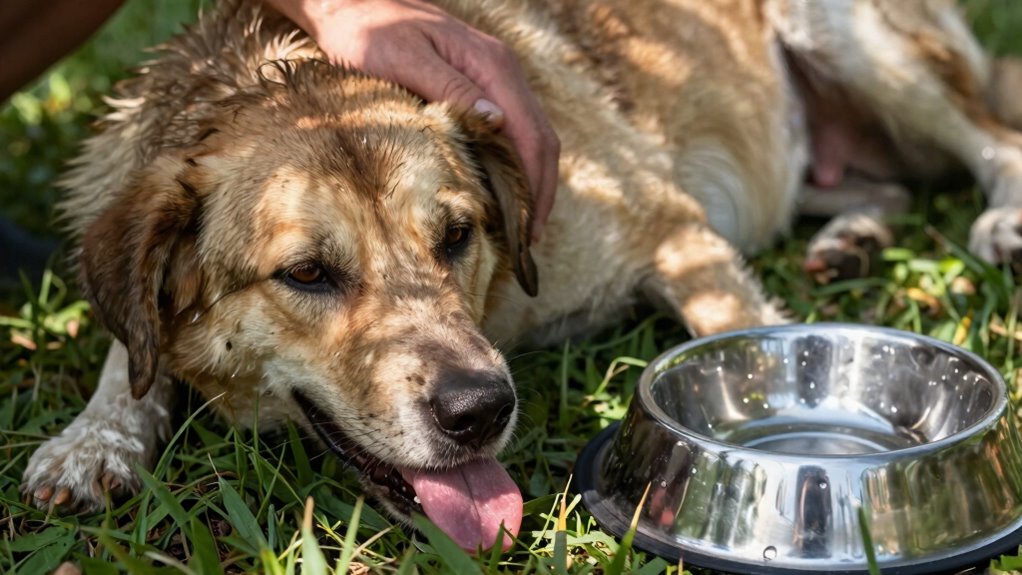
Heat exhaustion in dogs occurs when their bodies overheat due to prolonged exposure to high temperatures or intense physical activity in hot weather. If you’ve noticed your dog panting heavily, drooling excessively, or appearing weak and disoriented, it’s vital to act quickly. The first step in recovery is to focus on dog hydration. Offer small amounts of cool, fresh water immediately, but avoid forcing large quantities at once, as this can cause vomiting. Hydration helps to lower their body temperature and restore electrolyte balance. Providing a shaded, cool spot is equally essential to prevent further overheating and to give your dog a safe environment to recover.
Overheating prevention is key to avoiding heat exhaustion altogether. During hot weather or vigorous exercise, plan activities during cooler parts of the day, such as early mornings or late evenings. Always carry water and encourage your dog to drink regularly, especially if they’re active or playing outside. You can also use cooling products like damp towels or cooling mats to help keep your dog’s body temperature in check. Never leave your dog in a parked car, as temperatures can rise rapidly and become deadly. Keep your dog’s environment well-ventilated and shaded, and avoid strenuous activity when the weather is particularly hot. Recognizing early signs of overheating allows you to intervene before the situation worsens. Being aware of early signs of overheating can save your dog’s life.
Once you’ve addressed immediate concerns like hydration and cooling, monitor your dog closely. If they seem better after initial cooling efforts, continue offering small amounts of water and keep them in a cool, shaded area. However, if symptoms persist—such as persistent weakness, vomiting, or signs of distress—you should seek veterinary attention immediately. Heat exhaustion can escalate into heatstroke, which is life-threatening and requires professional treatment. Your vet might administer intravenous fluids, oxygen, or other supportive measures to stabilize your dog. Additionally, understanding the importance of quick intervention can significantly improve the prognosis and prevent serious complications. Recognizing the risk factors for overheating can also help you proactively safeguard your dog during hot weather.
Recovery from heat exhaustion involves a combination of rest, rehydration, and careful monitoring. It’s also important to understand that proper aftercare can significantly influence your dog’s recovery process. Additionally, regular health checks can help identify underlying issues that might make your dog more susceptible to overheating. Even after symptoms subside, avoid vigorous activity for at least 24 hours and gradually reintroduce exercise while paying attention to your dog’s behavior. Keep a close eye on their energy levels and breathing. Remember, preventing overheating is always easier than treating its consequences. Regularly check your dog for signs of overheating, especially during warm weather, and prioritize dog hydration and overheating prevention to keep your furry friend safe and healthy year-round.
As an affiliate, we earn on qualifying purchases.
Frequently Asked Questions
How Long Does Recovery Typically Take After Heat Exhaustion?
Recovery from heat exhaustion in dogs usually takes a few days, but it varies based on severity. You should focus on hydration strategies, offering plenty of fresh water and electrolyte solutions, and use cooling techniques like cool, damp cloths or fans. Keep your dog in a shaded, comfortable environment, monitor their progress closely, and consult your vet if symptoms persist or worsen. Proper care speeds up recovery and prevents complications.
Can Dogs Recover Fully Without Veterinary Treatment?
You shouldn’t rely on your dog recovering fully without veterinary treatment, especially after heat exhaustion. Proper care involves ensuring hydration importance and using cooling techniques like ice packs or a damp cloth to lower their body temperature. While mild cases may improve with immediate home care, a vet’s evaluation guarantees there’s no underlying damage and helps prevent complications, ensuring your dog’s full recovery and long-term health.
What Are Long-Term Health Effects of Heat Exhaustion in Dogs?
You might notice lingering issues like dehydration or sensitive skin after heat exhaustion, especially in breeds susceptible to overheating. Long-term effects can include kidney problems or heart strain if hydration wasn’t maintained during recovery. Imagine a dog’s coat returning to shine, yet subtle signs like fatigue or reluctance to play might stay. Prioritizing continued hydration and regular vet checkups helps prevent these long-term health effects from lingering.
How Can I Prevent Heat Exhaustion in My Dog?
You can prevent heat exhaustion in your dog by ensuring proper hydration strategies, like providing fresh water frequently and encouraging your dog to drink. Keep your dog in shaded areas and avoid peak heat hours to manage shade effectively. Monitor their activity levels, especially during hot days, and never leave them in a parked car. These steps help keep your dog cool and safe in hot weather.
Are Certain Breeds More Susceptible to Heat Exhaustion?
Some breeds naturally have a gentle vulnerability to heat, thanks to their genetic predisposition. You’ll notice breeds like Bulldogs, Pugs, and Brachycephalic dogs tend to be more susceptible due to their shorter noses and compact build. Recognizing this breed vulnerability helps you take extra precautions, especially during hot days. By understanding genetic predisposition, you can better safeguard your furry friend from overheating and ensure they stay comfortable and safe.
Conclusion
Recovering from heat exhaustion in your dog takes patience and care. You’ll want to keep them in a cool, shaded environment, offer plenty of water, and monitor their progress closely. Remember, a gentle approach can make all the difference in their recovery. Isn’t it worth taking those extra steps to guarantee your furry friend bounces back stronger? With love and attentiveness, you’ll help your dog recover fully and prevent future heat-related emergencies.
Halloween Picks
halloween
As an affiliate, we earn on qualifying purchases.