If your dog drinks too much, they might seem overly tired, have dry gums, or their skin may tent. Too little water leads to sunken eyes, lethargy, dry mouth, and skin that tents when pinched. Monitoring how often your dog drinks and observing their behavior helps catch these signs early. By paying attention to these clues, you can spot hydration issues quickly—continue for more tips on keeping your dog properly hydrated.
Key Takeaways
- Monitor the amount and frequency of water your dog consumes daily to identify abnormal increases or decreases.
- Watch for signs of dehydration such as dry gums, sunken eyes, lethargy, or skin tenting.
- Notice if your dog is drinking excessively, which may indicate health issues like diabetes or kidney problems.
- Observe if your dog refuses to drink water, possibly signaling illness or dehydration.
- Track changes in urine color and volume as indicators of hydration status and overall health.

Tractive Smart Dog GPS Tracker | Live Pet Tracker with Virtual Fence | Vital Signs Monitoring of Heart & Respiratory Rate | Bark Monitoring | Dog Collar Attachment (Black)
REAL-TIME GPS TRACKING WITH UNLIMITED RANGE: Track your dog with live location updates every 2–3 seconds. Unlike others…
As an affiliate, we earn on qualifying purchases.
As an affiliate, we earn on qualifying purchases.
What Is Normal Water Intake for Dogs?

On average, a healthy dog should drink about 1 ounce of water per pound of body weight each day. This is a good guideline for maintaining proper dog hydration. Your dog’s water consumption can vary based on activity level, weather, and diet, but staying close to this range helps ensure they’re well-hydrated. Keep an eye on how much water your dog drinks daily to recognize normal patterns. If your dog consistently drinks markedly more or less, it could indicate a health issue. Monitoring water intake is essential for understanding your dog’s hydration status. Remember, consistent water consumption supports overall health, digestion, and energy levels. Staying attentive to your dog’s drinking habits helps you catch potential hydration problems early. Additionally, tracking tools can assist in monitoring your dog’s water intake more effectively with the right tools. Recognizing hydration needs early can help prevent dehydration or other health complications, especially since factors like environmental conditions influence water requirements. Being aware of hydration cues can also help you identify changes in your dog’s health before more serious issues develop.

Watchdog Home Monitor – Water, Temperature, Humidity, and Power Outage Alarm Sensor with WiFi
No app, hub, batteries, or subscription required!
As an affiliate, we earn on qualifying purchases.
As an affiliate, we earn on qualifying purchases.
What Factors Affect How Much Water Your Dog Drinks?

Your dog’s water intake can change based on several factors. If your pup is more active or it’s hot outside, they’ll need more water. Also, their diet and environmental conditions play a role in how much they drink daily.
Activity Level Impact
Physical activity substantially influences how much water your dog needs, as increased movement causes them to sweat and lose fluids more quickly. The key factors are exercise intensity and activity duration. When your dog engages in vigorous play or runs for extended periods, they’ll require more hydration to replace lost fluids. Short, moderate walks may not greatly impact their water intake, but longer or more intense activities do. Monitoring how active your dog is helps you anticipate their hydration needs. If they’re exercising intensely or for a prolonged period, ensure they have access to fresh water before, during, and after activity. This way, you prevent dehydration and support their overall health while they stay active and happy. Additionally, understanding hydration needs can help prevent health issues related to dehydration or overhydration. Recognizing how exercise levels influence water consumption is essential for maintaining your dog’s health and well-being. Being aware of hydration balance also helps you adjust their water intake according to environmental conditions, ensuring optimal hydration in all weather. For example, weather fluctuations can significantly alter a dog’s hydration requirements and should be taken into account when planning outdoor activities.
Weather Conditions Effect
Weather conditions considerably influence how much water your dog needs, as temperature, humidity, and sunlight can alter their hydration requirements. During hot weather or high humidity, your dog will likely drink more to stay cool and prevent dehydration. Seasonal variations also play a role; in colder months, dogs may drink less, but they still need adequate hydration. Climate change has intensified these impacts, causing unpredictable weather patterns that challenge your dog’s usual hydration habits. Sun exposure can lead to increased water loss through panting, making it essential to monitor water intake carefully. Understanding how weather affects your dog’s hydration helps you adjust their water availability and prevent dehydration or overhydration, especially as climate change continues to influence seasonal patterns. Environmental factors significantly impact your dog’s hydration needs, so staying informed about weather patterns is crucial. Additionally, weather variability can make it harder to predict your dog’s hydration needs, requiring more attentive monitoring. Recognizing climate effects on hydration helps owners adapt their care routines accordingly, and being aware of piercing aftercare can be helpful if your dog has any skin sensitivities or wounds that need attention. Regularly observing your dog’s behavior and hydration status can also serve as an important hydration indicator to prevent health issues.
Dietary Influences
Have you ever wondered what dietary factors can influence how much water your dog drinks? Dietary minerals like sodium and potassium play a pivotal role in maintaining your dog’s hydration levels. An imbalance can lead to increased thirst or dehydration. Additionally, some dogs are given hydration supplements to support fluid intake, especially during illness or recovery, which can also affect how much water they consume daily. The type of food you provide matters too—wet food contains more moisture than dry kibble, reducing the need for additional water. Proper hydration management is essential for mineral balance, and understanding these dietary influences helps you better manage your dog’s water intake and overall health. Monitoring your dog’s hydration levels can help detect early signs of imbalance and prevent health issues, especially considering how credit card insights are transforming personal finance management in today’s digital economy. Being aware of hydration triggers can further aid in maintaining your dog’s health by adjusting their diet accordingly.

Decflow 1.2Gallon Dog Water Bowl No Spill, 4.5L Large Capacity Spill Proof Dog Bowls with Transparent Floating Disk, No Splash Slow Drinking Dog Bowl for Sloppy Messy Drinkers (Clear)
1.2 Gallon Large Capacity Water Bowl: The 1.2 Gallon large capacity dog water bowl meets the all-day drinking…
As an affiliate, we earn on qualifying purchases.
As an affiliate, we earn on qualifying purchases.
How Can You Tell If Your Dog Is Dehydrated?
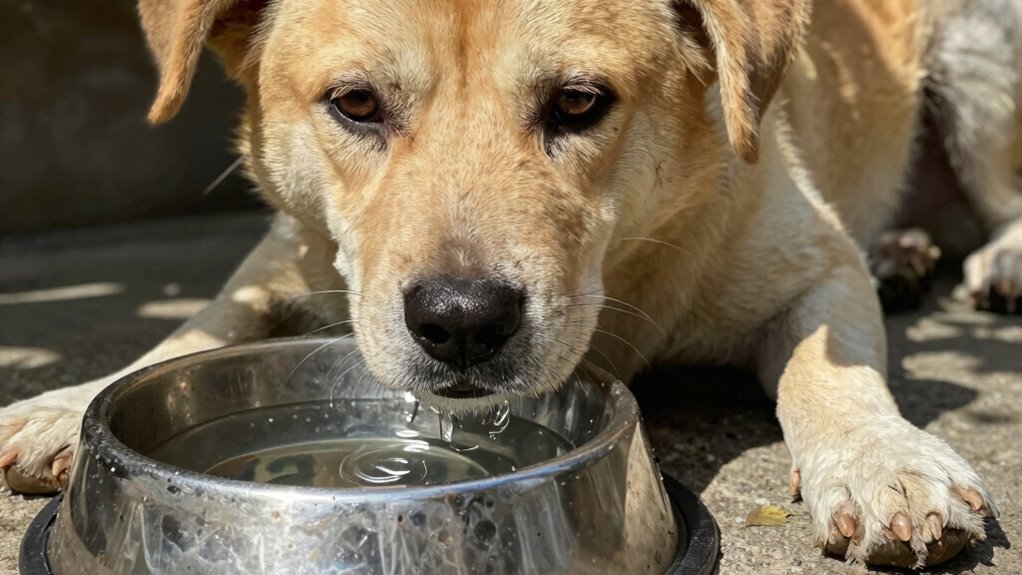
Dehydration in dogs can develop quickly, especially during hot weather or after vigorous activity. Recognizing the signs is vital to prevent serious health issues like puppy dehydration or dehydration in senior dogs. Look for symptoms such as dry gums, sunken eyes, lethargy, and loss of skin elasticity. If your dog is reluctant to drink or shows signs of weakness, dehydration might be the cause. Monitoring their behavior and physical cues helps you act fast. Here’s a quick emotional snapshot:
| Symptom | What It Looks Like | Urgency Level |
|---|---|---|
| Dry gums | Sticky or cracked | Immediate concern |
| Sunken eyes | Eyes look hollow or sunken | High risk |
| Lethargy | Weak, uninterested in activities | Act quickly |
| Skin elasticity | Skin stays tented when pinched | Critical indicator |
| Loss of thirst | Refusal to drink water | Seek veterinary care |
Being aware of proper hydration practices can also help prevent dehydration before it occurs. Additionally, understanding the importance of hydration cues can assist pet owners in early detection and intervention.
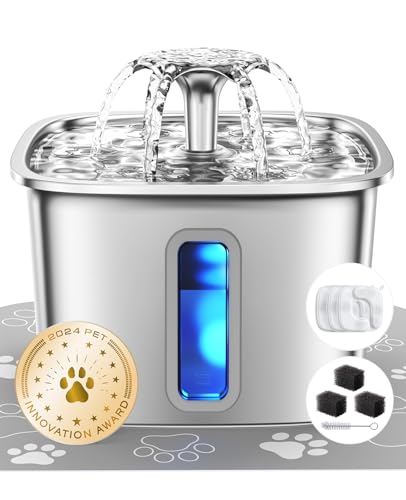
Veken Innovation Award Winner Stainless Steel Cat Water Fountain, 108oz/3.2L Automatic Pet Fountain Dog Water Dispenser with 3 Replacement Filters & Silicone Mat, Gifts for Cats, Dogs (Silver)
Premium 304 Stainless Steel & Easy Maintenance. Crafted from high-quality 304 stainless steel, this pet fountain offers a…
As an affiliate, we earn on qualifying purchases.
As an affiliate, we earn on qualifying purchases.
How to Monitor Your Dog’s Hydration Effectively
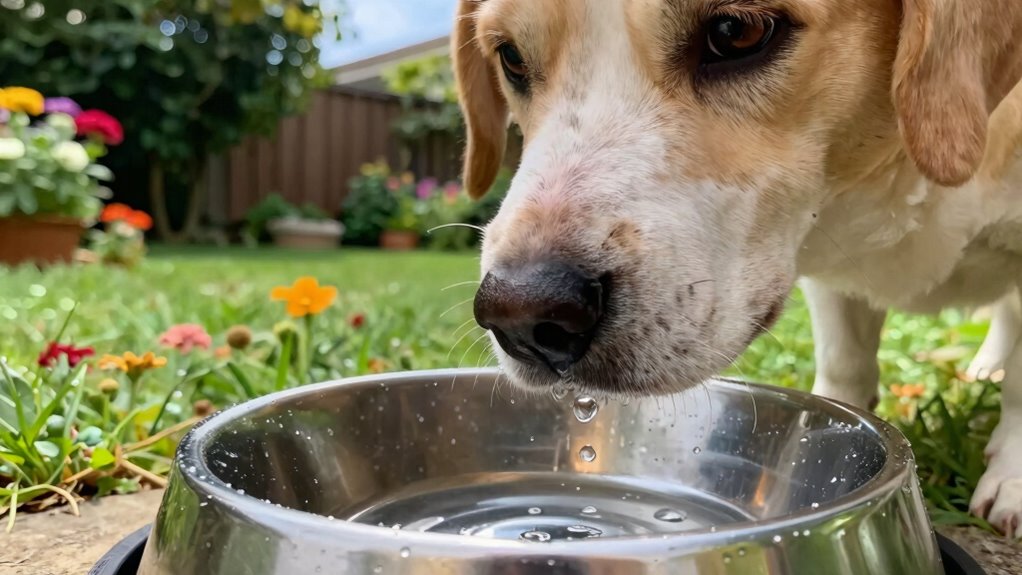
To effectively monitor your dog’s hydration, regular observation of their behavior and physical cues is essential. Be aware of water consumption myths that might lead you astray, such as assuming a dog is drinking enough just because they have access to water. Use hydration monitoring tools like a pet water intake tracker or digital scales to measure changes over time. Keep an eye on signs like the frequency of water bowls being emptied, the color of their urine, and overall activity levels. Also, note any changes in their skin elasticity or eye brightness. These simple steps help you accurately assess hydration and prevent issues before they become serious. Additionally, understanding indoor air quality can influence your dog’s health, as allergens and pollutants may affect their hydration needs. Maintaining proper air quality standards can support overall hydration and health. Being aware of environmental factors that impact indoor air quality can further help you create a healthier living space for your pet. Consistent monitoring ensures your dog stays healthy and well-hydrated.
When Should You See a Vet About Your Dog’s Water Intake?
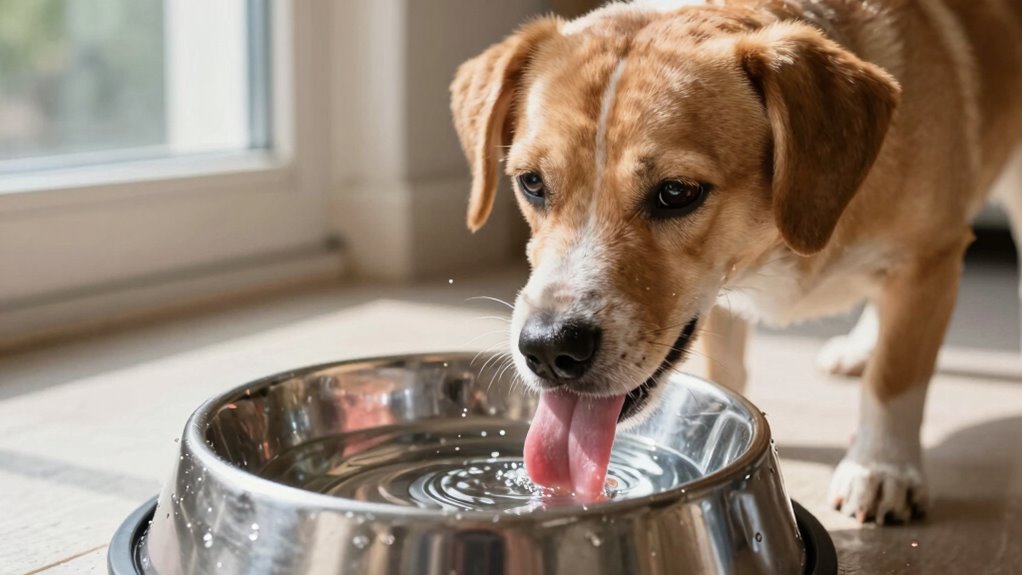
Recognizing when your dog’s water intake signals a health concern is crucial for prompt intervention. Watch for signs of dehydration, such as dry gums, lethargy, sunken eyes, or loss of skin elasticity. Unusual water intake triggers—either drinking excessively or very little—should raise red flags. If your dog drinks more than usual for several days, it could indicate issues like diabetes or kidney problems. Conversely, if your dog refuses to drink or shows signs of dehydration, immediate veterinary attention is necessary. Don’t ignore persistent changes in water consumption or accompanying symptoms like vomiting, diarrhea, or weakness. Monitoring water consumption patterns can be an important part of early diagnosis, especially considering that dream analysis can sometimes reveal underlying emotional or physical issues in humans. Being aware of long-range drone technology and how it can be used in veterinary research can help in early diagnosis and treatment. Timely vet visits can diagnose underlying health conditions early, preventing complications and ensuring your dog’s well-being.
Tips to Keep Your Dog Properly Hydrated
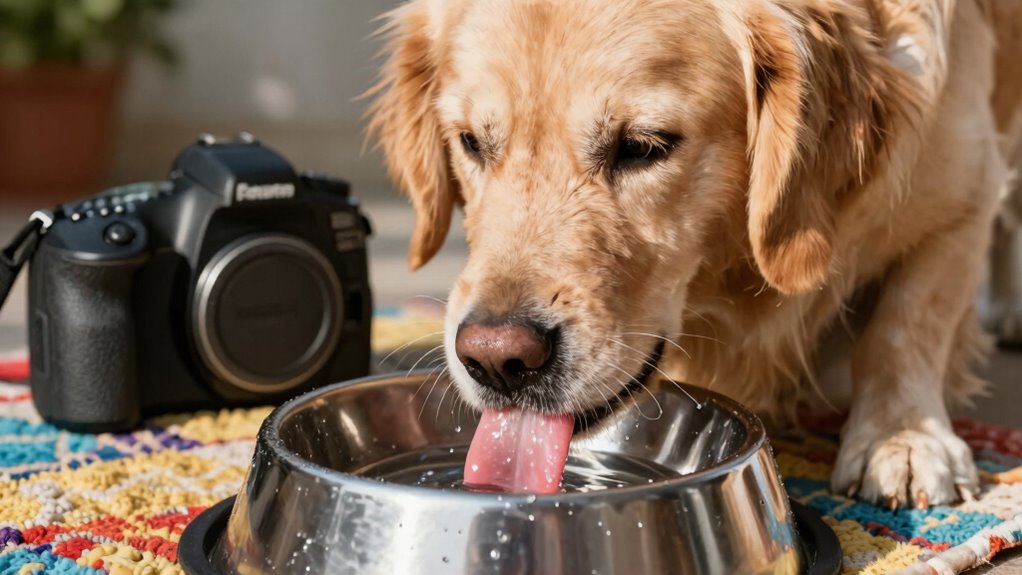
Ensuring your dog stays properly hydrated is essential for their health and energy levels. Good dog nutrition includes providing fresh water and using hydration devices like spill-proof bowls or automatic water dispensers. To keep your dog well-hydrated, consider these tips:
Keeping your dog hydrated with fresh water and easy-access devices supports their health and vitality.
- Offer fresh water multiple times daily to encourage drinking.
- Use hydration devices that make drinking easier and more appealing.
- Incorporate wet dog food into their diet for added moisture.
- Monitor their water intake regularly to catch any signs of dehydration early.
Frequently Asked Questions
How Can I Encourage My Dog to Drink More Water?
To encourage your dog to drink more water, try offering hydration supplements like broth or flavored water to make it more appealing. Keep water fresh and accessible by using water fountains, which often entice dogs to drink more. You can also place multiple water bowls around your home and praise your dog when they drink. Consistent encouragement and variety help guarantee your dog stays well-hydrated and healthy.
Are Certain Dog Breeds More Prone to Dehydration?
Certain dog breeds are more prone to dehydration, like fragile flowers in a breeze. Breeds with thick coats, such as Bulldogs or Pugs, face higher dehydration risk due to heat retention. Small or active breeds like Chihuahuas or Retrievers also have increased susceptibility if they’re overexerted or in hot weather. Being aware of breed susceptibility helps you monitor hydration, ensuring your dog stays comfortably hydrated and healthy.
What Are Hidden Signs of Dehydration in Dogs?
You might notice hidden signs of dehydration in your dog, like sunken eyes, dry gums, or lethargy, which are early dehydration symptoms. Keep an eye out for less obvious signs, such as loss of skin elasticity or a dry nose, as these can signal hidden health issues. Promptly addressing these signs helps prevent more serious problems and guarantees your dog stays properly hydrated and healthy.
Can Diet Affect My Dog’s Hydration Levels?
Yes, your dog’s diet impacts hydration balance. Foods with high moisture content, like wet dog food, help keep your dog well-hydrated, while dry kibble may require more water intake. Additionally, diets rich in salt or protein can increase thirst, potentially leading to dehydration if not balanced properly. Make sure to provide fresh water and choose a diet that supports hydration, especially in hot weather or if your dog is active.
How Does Weather Influence My Dog’s Water Needs?
They say, “A healthy dog is a happy dog,” and weather plays a big role. In humid climates, your dog needs more water to stay cool and prevent dehydration. Seasonal variations also matter—hotter days increase water intake, while cooler days may decrease it. Always monitor your dog’s water consumption, especially during extreme weather, to make certain they stay properly hydrated and healthy regardless of the season.
Conclusion
Think of your dog’s hydration like tending a delicate garden. Too little water, and the plants wither; too much, and they drown. By paying close attention to their drinking habits, you’re the gardener ensuring each blossom stays healthy. When you notice signs of imbalance, act quickly—your attentive care keeps their well-being thriving. With mindful monitoring, you nurture a happy, vibrant companion, ensuring their life blossoms with energy and love.