
To keep your dog protected, make certain they’re up-to-date on vaccinations to defend against diseases like rabies and distemper. Use effective parasite preventatives such as topical treatments and oral medications to guard against fleas, ticks, and worms. Regular vet check-ups help monitor their health and maintain protection. Incorporating good grooming and hygiene also supports their immune system. If you want to learn more about maintaining your dog’s health, keep exploring these essential care strategies.
Key Takeaways
- Keep vaccinations up-to-date through regular vet visits to protect against diseases like rabies and distemper.
- Use effective parasite preventatives such as topical treatments or oral medications to guard against fleas, ticks, and worms.
- Regular grooming and cleaning help detect early signs of parasites and skin issues, supporting overall health.
- Implement environmental controls like cleaning bedding to reduce allergen exposure and prevent parasite infestations.
- A healthy immune system, maintained by proper vaccinations and hygiene, enhances your dog’s resistance to infections.
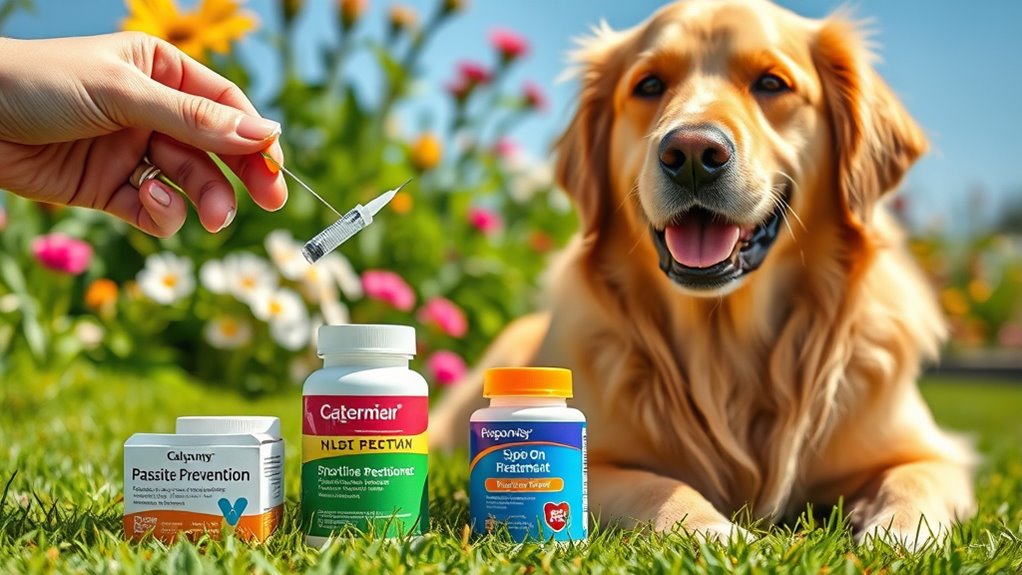
Vaccinations and parasite prevention are essential components of maintaining your pet’s health. When you’re proactive about these aspects, you considerably reduce your dog’s risk of serious illnesses and discomfort. Ensuring your dog is properly vaccinated protects against a variety of infectious diseases, from rabies to distemper, which can be life-threatening. Regular visits to the veterinarian for vaccinations keep your dog up-to-date and safeguard both your pet and your community. Alongside vaccinations, parasite prevention is crucial, as fleas, ticks, and intestinal worms can cause health issues, some of which might be severe or even fatal. Using effective preventatives, like topical treatments or oral medications, helps keep these pests at bay.
You should also pay attention to pet allergies, which can sometimes be triggered or worsened by exposure to pests or certain environmental factors. Allergies may cause itching, skin irritation, or ear infections, making your dog uncomfortable and prompting frequent vet visits. Proper dog grooming plays a vital role in managing pet allergies. Regular grooming not only keeps your dog looking good but also helps you spot early signs of skin issues or allergic reactions. Brushing your dog’s coat helps remove loose hair, dirt, and allergens, reducing the chances of skin irritations. Bathing your dog with hypoallergenic shampoos can soothe sensitive skin and minimize allergic responses. Additionally, cleaning your dog’s bedding and living areas regularly can reduce exposure to dust mites, mold, and other allergens that could exacerbate pet allergies.
Furthermore, grooming sessions provide an opportunity to check your dog for signs of parasites or skin problems. When you’re attentive during grooming, you can notice fleas or ticks early, preventing infestations from becoming severe. Regular grooming also supports overall health by promoting good circulation and skin health, which are vital for your dog’s immune system. If your dog has allergies or skin sensitivities, consult your vet about specific grooming products suited to their needs. This tailored approach ensures you’re not accidentally irritating their skin with harsh shampoos or grooming tools. Additionally, understanding the importance of fostering a healthy immune system can help you take further steps to keep your dog resilient against illnesses and parasites.

Puppy Shot Record Cards, 5×3.5 Inch Tri-Fold Vaccination Health Log for Dogs, 5 Pack, Ink-Resistant Paper, for Breeders, Vets, Pet Owners (5)
PACKAGE CONTENTS: Set of 5 tri-fold puppy vaccination record cards, perfect for tracking multiple pets' health records or…
As an affiliate, we earn on qualifying purchases.
As an affiliate, we earn on qualifying purchases.
Frequently Asked Questions
How Often Should I Update My Dog’s Vaccination Schedule?
You should update your dog’s vaccination schedule according to your vet’s recommendations, typically every 1 to 3 years. Keep track of booster timing, which is essential to maintain immunity. Regular check-ups ensure your dog stays protected against diseases. Remember, initial vaccines often need booster shots, so stay attentive to your vet’s advice and follow the recommended schedule to keep your dog healthy and safe.
Are There Any Side Effects From Parasite Prevention Medications?
Yes, parasite prevention medications can cause side effects, though they’re usually mild. Some dogs experience vaccine allergies or reactions like itching, swelling, or discomfort. Rarely, medication interactions may occur, leading to gastrointestinal issues or lethargy. Always monitor your dog after administration and consult your vet if you notice any unusual behavior. Proper dosage and timing help minimize side effects and keep your dog safe and healthy.
Can Vaccinations Prevent All Types of Parasites?
Imagine your dog’s immune system as a shield, but it’s not a magical barrier against all parasite types. Vaccinations primarily target specific parasites, like rabies or distemper, and have limitations. They can’t prevent every parasite, especially those like fleas, ticks, or worms. To fully protect your pup, combine vaccinations with regular parasite prevention treatments, ensuring you cover the gaps that vaccines can’t fill.
What Should I Do if My Dog Reacts Negatively to a Vaccine?
If your dog reacts negatively to a vaccine, act quickly by monitoring for vaccine reactions like swelling, difficulty breathing, or vomiting. Contact your veterinarian immediately for emergency response advice and to determine if your dog needs urgent care. Keep calm and avoid giving additional vaccines until a vet evaluates the situation. Your prompt action can help prevent serious complications and ensure your dog gets the care they need.
Are Natural Remedies Effective for Parasite Prevention?
Natural remedies like herbal remedies and alternative treatments can help prevent parasites, but they’re not always as effective as conventional medications. You might see some benefits, but it is crucial to consult your veterinarian before relying solely on these options. They can guide you on safe and effective strategies, combining natural approaches with proven treatments to keep your dog healthy and parasite-free. Always prioritize professional advice for your pet’s safety.

Amazon Basics Preventative Flea and Tick Topical Treatment for Dogs, Medium Dog (23-44 lbs), Fast Acting and Long Lasting, 3 Counts, Packaging May Vary
SHIPMENT CONTAINS: One 3-dose pack of Amazon Basics Flea and Tick Treatment for Medium Dogs (23-44 lbs)
As an affiliate, we earn on qualifying purchases.
As an affiliate, we earn on qualifying purchases.
Conclusion
By keeping up with vaccinations and parasite prevention, you’re planting the seeds for a healthy, joyful life for your dog. Think of it as shielding a delicate garden from harsh storms—your care creates a safe haven amid the unpredictable weather of life. With each step you take, you nurture a bond rooted in protection and love. Together, you and your dog can thrive, blossoming in a world where health and happiness flourish under your watchful eye.

PetArmor 7 Way De-Wormer for Dogs, Oral Treatment for Tapeworm, Roundworm & Hookworm, Large Dog Dewormer (Over 25 lbs), Worm Remover (Praziquantel & Pyrantel Pamoate), 6 Flavored Chewables
Dewormer for Dogs: PetArmor 7 Way Chewable dewormer for puppies; treats and controls 7 species of worms: 2…
As an affiliate, we earn on qualifying purchases.
As an affiliate, we earn on qualifying purchases.

Veterinary Formula Clinical Care Hypoallergenic Shampoo for Dogs and Cats, 16 oz – No Harsh Ingredients – Fragrance-Free Pet Shampoo for Allergies and Sensitive Skin, Promotes Healthy Skin and Coat
NON-IRRITATING CLEANSER – Scientifically formulated hypoallergenic dog shampoo with gentle coconut-based cleansers and no harsh ingredients, dyes, or…
As an affiliate, we earn on qualifying purchases.
As an affiliate, we earn on qualifying purchases.