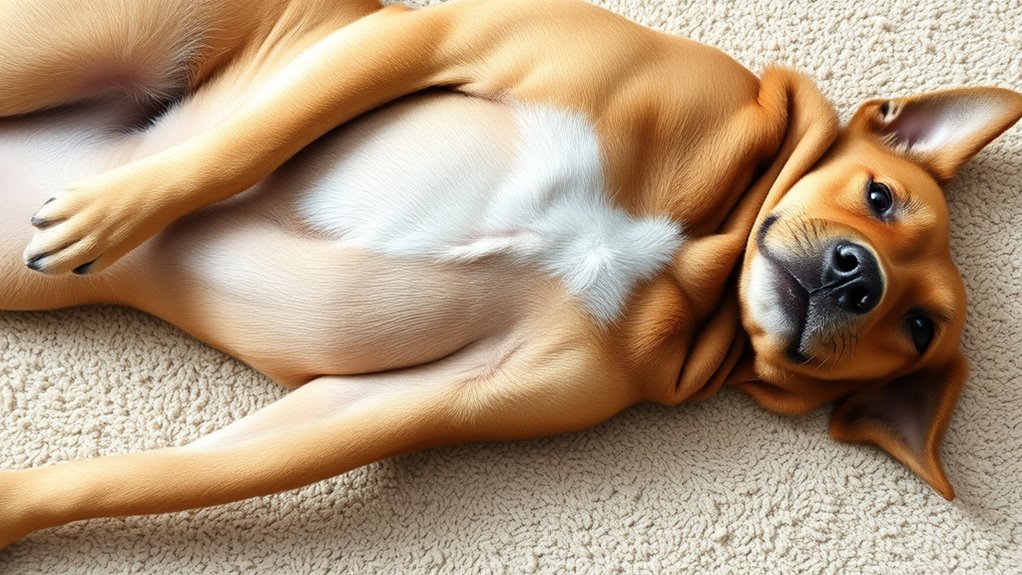

To check if your dog is overweight at home, look for a visible waistline when viewed from above and feel along the ribs—press gently and see if you can easily feel them. A thick layer of fat over the ribs, a sagging belly, or no inward curve behind the ribs indicate extra weight. Keeping an eye on these signs helps you manage your dog’s health better—keep going to learn more tips.
Key Takeaways
- Feel your dog’s ribs; they should be palpable without pressing hard or feeling thick fat cover.
- Observe from above for a visible waistline and an inward curve behind the ribs.
- Check from the side for a slight tuck-up of the belly; absence indicates possible overweight.
- Look for a sagging abdomen or lack of body definition and inward curves.
- Regularly assess your dog’s body condition to detect early weight gain and maintain a healthy weight.

Is your dog carrying a little extra weight? If so, you’re not alone. Many pet owners worry about their dog’s health, especially when it comes to weight management. The good news is, you can do simple body‑condition tests at home to determine if your dog is overweight. It’s important to be proactive because excess weight can lead to health issues like joint problems, diabetes, and decreased lifespan. To start, you need to understand how to assess your dog’s body condition accurately. This involves a combination of visual checks and physical touch, focusing on areas like the ribs, waist, and abdomen.
Check your dog’s body condition at home with simple visual and touch tests to ensure a healthy weight.
One effective way to gauge your dog’s weight is by checking if you can easily feel their ribs without pressing too hard. When you run your hands over their sides, you should feel the ribs with a light touch, not a thick layer of fat covering them. If you struggle to feel the ribs or they’re hidden beneath a layer of fat, your dog may be carrying too much weight. Next, look at your dog from above; they should have a visible waistline, which is an inward curve behind the ribs. If the waist is absent or the abdomen sags, that’s a sign they might be overweight. Also, observe from the side—your dog’s belly should tuck up slightly behind the ribs. If it droops or extends outward, that could indicate excess weight. Additionally, understanding how robots enhance logistics helps inform us about the importance of efficiency and precision, which can be paralleled in managing pet health through consistent monitoring and adjustments.
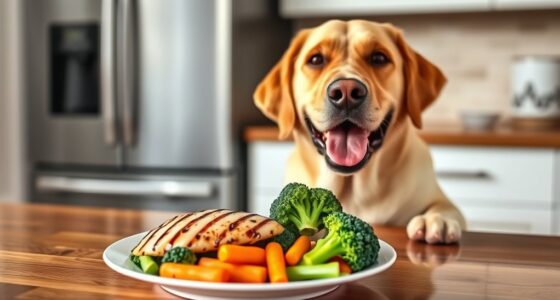
Once you’ve identified that your dog might be overweight, it’s time to evaluate their current diet and activity level. Calorie counting is essential here—knowing how many calories your dog consumes versus how many they burn can help you make smarter choices. You might need to adjust their food intake or switch to a diet formulated for weight management. Incorporating regular exercise routines is equally important. Simple activities like daily walks, fetch sessions, or agility games can considerably increase their calorie expenditure. Remember, consistency is key; gradual, steady weight loss is safer and more sustainable than quick fixes.
Always keep in mind that weight management is a balance of proper diet and exercise. You don’t have to overhaul your dog’s routine overnight, but small, consistent changes can make a big difference. Monitoring their body condition regularly helps you stay on track and catch any weight gain early. If you’re unsure about your dog’s condition or how to adjust their diet and activity levels, consult your veterinarian. They can provide tailored advice based on your dog’s breed, age, and health status. With attentive care, you can help your dog reach a healthy weight, leading to a happier, more energetic life.

Digital Weighing Scale for Dogs Cats Puppies, Vet Scale, Scale for Animals Pets, 330lb x 0.1lb, Veterinary Scale, 33 x 19in Wide Platform, 8mm Tempered-Glass
WIDE WEIGHING PLATFORM: This electronic scale has a large 33 x 19 inch (840 x 480mm) tempered glass…
As an affiliate, we earn on qualifying purchases.
As an affiliate, we earn on qualifying purchases.
Frequently Asked Questions
How Often Should I Check My Dog’S Weight at Home?
You should check your dog’s weight regularly, ideally weekly, to spot any changes early. Daily monitoring isn’t necessary but keep an eye on seasonal fluctuations that can affect their weight. Use a reliable scale and observe their body condition. Consistent checks help you maintain their health and prevent issues. Adjust the frequency based on your dog’s lifestyle, age, and health needs, ensuring you’re proactive in their well-being.
What Signs Indicate My Dog Is Overweight Beyond Body Condition?
Imagine your dog waddling like a penguin, struggling to fit through doorways—that’s a red flag. Signs include difficulty breathing, reluctance to exercise routines, or visible fat deposits. These clues hint at potential obesity complications, which could affect their joint health or heart. Keep an eye out, and if you notice these, consult your vet for tailored advice to help your pup stay active and healthy.
Can Diet Alone Help My Dog Lose Weight Effectively?
Yes, diet alone can help your dog lose weight if you focus on calorie counting and adjusting their feeding schedule. You should measure meals carefully and avoid giving extra treats or table scraps. Consistency is key, so stick to a regular feeding routine and monitor portion sizes. Combining diet changes with increased activity enhances weight loss, ensuring your dog reaches a healthy weight safely.
Are There Breed-Specific Weight Guidelines I Should Consider?
You should definitely consider breed-specific weight guidelines because different breeds have unique standards for healthy weight. Checking breed standards and weight charts helps you determine if your dog’s current weight aligns with what’s recommended for their breed. By using these resources, you can better assess your dog’s health and make informed decisions about diet and exercise, ensuring they stay within a healthy weight range tailored to their breed.
When Should I Consult a Veterinarian About My Dog’S Weight?
You should consult a veterinarian about your dog’s weight if you notice signs of pet obesity, like difficulty breathing, reduced activity, or visible excess fat. Regular veterinary consultations help monitor their body condition and prevent health issues. If your dog’s weight seems off despite your efforts, schedule a check-up. A veterinarian can provide tailored advice, ensuring your pet stays healthy and at an appropriate weight.

KAMaster Rib Membrane Remover Tool, Stainless Steel Rib Prep Tool for BBQ, Ergonomic Rib Skinner with Curved Blade for Effortless Rib Preparation, Easy to Clean and Store
【Efficient Rib Membrane Removal】Specially designed with a curved blade and comfortable grip to quickly remove tough membranes from…
As an affiliate, we earn on qualifying purchases.
As an affiliate, we earn on qualifying purchases.
Conclusion
Just like the Greek hero Hercules faced challenges with strength and balance, you can take charge of your dog’s health with simple at-home checks. By staying attentive to their body condition, you make certain they stay strong, happy, and ready for their next adventure. Remember, a healthy dog isn’t just a happy pet—it’s your loyal companion for many more journeys. Keep these tests in mind, and watch your furry friend thrive like a true hero.

Purina Pro Plan Weight Management Dog Food Dry, Shredded Blend Chicken and Rice Formula – 6 lb. Bag
Crunchy kibble and tender, shredded pieces for delicious taste and texture
As an affiliate, we earn on qualifying purchases.
As an affiliate, we earn on qualifying purchases.

PawHut Wooden Dog Agility Seesaw for Training and Exercise, Platform Equipment Run Game Toy, Weather Resistant Pet Supplies, 71" L x 12" W x 12" H, Gray
Solid Construction: Give your furry friend a dog agility seesaw suitable for daily use. Our seesaw is made…
As an affiliate, we earn on qualifying purchases.
As an affiliate, we earn on qualifying purchases.