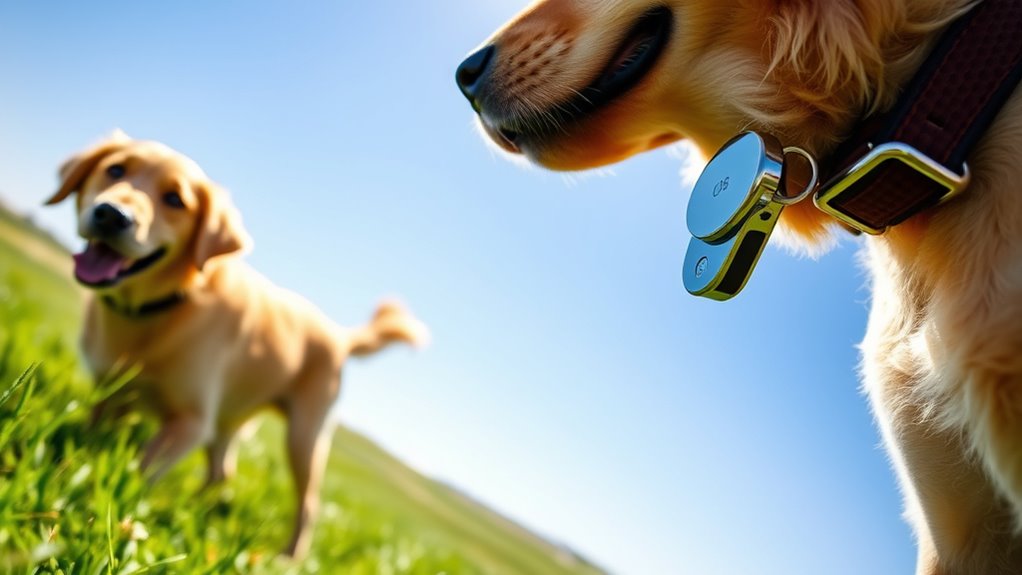

GPS tracking devices help you find your dog quickly by providing real-time location updates. With this technology, you can monitor your pet’s whereabouts easily through your smartphone, reducing search time and stress. They are especially useful if your dog tends to wander or escape. Combined with training and safety measures, GPS trackers give you peace of mind and a better chance of a safe reunion. Keep exploring to discover more ways to protect your furry friend.
Key Takeaways
- GPS trackers provide real-time location updates, enabling quick recovery of lost dogs.
- They reduce search time and minimize stress for owners during pet emergencies.
- Combining GPS devices with boundary training helps prevent pets from wandering far.
- GPS tracking enhances overall safety when used alongside traditional training and containment measures.
- Some pet insurance plans offer benefits or coverage for GPS tracking devices to aid in pet recovery.
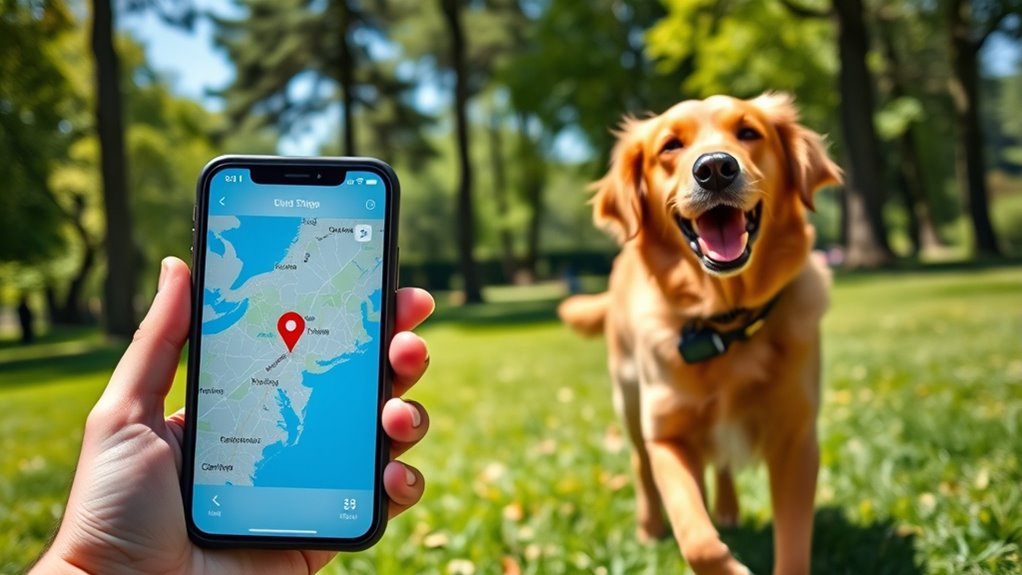
If your dog tends to wander or escape, GPS tracking devices can provide peace of mind by helping you keep tabs on their location in real time. These devices are especially valuable for pets with a high curiosity level or those that are known escape artists. With a GPS tracker attached to their collar, you can monitor their whereabouts from your smartphone, ensuring you’re alerted immediately if they venture beyond safe boundaries. This real-time tracking can considerably reduce the time it takes to find a lost pet, preventing the stress and worry that come with a missing dog. Incorporating regular practice of training and familiarization with the device can enhance your pet’s comfort and responsiveness to the technology.
Using GPS devices doesn’t mean you have to abandon traditional training methods, but they can complement them effectively. Training your dog to stay within a certain area or respond to recall commands is essential, but it’s not foolproof. A GPS tracker acts as an extra layer of security, especially during outings or off-leash activities. It’s a proactive way to ensure your dog’s safety if they ignore commands or get distracted. Over time, these devices can also help you understand your pet’s habits and behavior patterns, making training more tailored and effective. For instance, if your dog keeps trying to escape a certain part of the yard, you can reinforce training or make environmental adjustments.
GPS trackers complement training, providing security and insight into your dog’s habits during outdoor activities.
Another factor worth considering is pet insurance, which can help cover the costs associated with lost pets, including the purchase of a GPS tracking device. Some insurance plans now offer discounts or benefits when you use tracking technology, recognizing its role in pet safety. When choosing a GPS device, ensure it’s compatible with your insurance coverage and that it offers features suitable for your dog’s specific needs.
Opting for a GPS tracker isn’t just about locating your dog; it’s about peace of mind and proactive safety. It can save you from costly searches or the heartbreak of losing your pet forever. Plus, knowing your dog is protected can alleviate some of the anxiety around off-leash outings or outdoor adventures. Remember, combining GPS technology with good training methods and appropriate pet insurance coverage creates a complete safety net. This way, you’re not only prepared for emergencies but also actively preventing them. With a reliable GPS tracker, you can enjoy your time with your dog more fully, confident that you’ll be quickly reunited if they ever go astray.
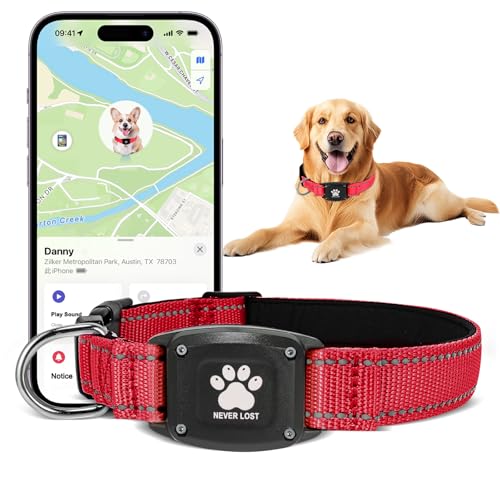
Myiwb GPS Dog Collar Tracker 2-in-1,Reflective Waterproof Pet Collar,iOS-Only,No Monthly Fees,Unlimited Range,Ideal for Dog Tracking pet Tracker,for Small Dogs(S (12.6"-16.5" Width:0.78"), Red)
✅【IP68 Waterproof & 286lbs Tensile Strength】 High-density nylon webbing (IP68 certified) makes this gps dog collar submersible in…
As an affiliate, we earn on qualifying purchases.
As an affiliate, we earn on qualifying purchases.
Frequently Asked Questions
How Accurate Are GPS Trackers in Densely Wooded Areas?
GPS trackers in densely wooded areas can be less accurate because tree coverage often causes signal loss. You might notice the device’s location becomes less precise or updates less frequently when your dog is among thick trees. While modern trackers are designed to handle such challenges, expect some delays or reduced accuracy due to signal interference. Keep this in mind to better interpret your pet’s location during outdoor adventures.
What Is the Battery Life of Most Dog GPS Devices?
You might think your dog’s GPS tracker lasts forever, but most devices offer a battery longevity of about 24 to 48 hours. Ironically, that’s not much longer than a busy day at the park! To make it last, you’ll want to activate power saving features, which considerably extend battery life. So, be prepared to recharge regularly or choose a tracker with longer battery life if you’re planning longer adventures.
Are GPS Trackers Safe for All Dog Breeds and Sizes?
Yes, GPS trackers are generally safe for all dog breeds and sizes, but you should consider size compatibility and dog breed safety. Smaller breeds may require lightweight, compact devices, while larger dogs can handle more robust options. Always check the manufacturer’s guidelines, confirm the collar fits well, and monitor your dog’s comfort. Properly chosen GPS trackers provide a safe way to keep your pet monitored without compromising their well-being.
How Much Do GPS Tracking Devices Typically Cost?
GPS tracking devices typically cost between $50 and $200, depending on the brand, features, and subscription plans. You’ll find a cost comparison across various devices, highlighting features like real-time tracking, waterproof design, and battery life. As you weigh your options, consider how the device’s features match your needs and budget, ensuring you choose a reliable, budget-friendly option that offers peace of mind when keeping your dog safe.
Can GPS Trackers Be Used Internationally for Travel?
Yes, GPS trackers can be used internationally for travel, but you need to check the device compatibility first. Make sure the tracker supports international networks and has global coverage, especially in the countries you’ll visit. Some devices may require SIM cards or subscriptions specific to certain regions. Always verify these details before your trip to ensure you can track your dog seamlessly wherever you go.

Dog GPS Tracker – Real-Time Location Tracking Device with App – Smart Alerts & Geo-Fence – Collar-Compatible, Waterproof – Long-Life Battery – 4G Built-in SIM – iOS & Android (Subscription Required)
This Device Requires a Subscription. To start using it, simply select the flexible and transparent tariff plan that…
As an affiliate, we earn on qualifying purchases.
As an affiliate, we earn on qualifying purchases.
Conclusion
Now that you know how GPS tracking can help find your dog quickly, imagine the relief you’ll feel knowing you’re prepared for the unexpected. But what if your pet slips away just when you least expect it? The right GPS device could be your secret weapon in that critical moment. Don’t wait until it’s too late—equip your furry friend today. After all, being proactive might just save their life when it matters most.

GPS Tracker for Dogs, Smart Collar with Real-Time Location – Pet Location Tracker with Holder, No Monthly Fee/No SIM Card, Works with iOS Find My, Ultra-Slim, IP68 Waterproof, 12-Month Working Time
No Monthly Fee Tracker & iOS Find My APP – Our tracker with holder is free of any…
As an affiliate, we earn on qualifying purchases.
As an affiliate, we earn on qualifying purchases.

2-in-1 GPS Tracker for Dogs: Smart Pet Collar with Real-Time Tracking,No Monthly Fee/Subscription (iOS Only) Waterproof, Anti-Lost,365-Day Long Battery Life GPS Tracker Dog Collar(Tracker Included)
🟢Smart Activity Pet Tracker Collar: The BONSO 2-in-1Pet Collar features an advanced tracker to monitor your pet's activity….
As an affiliate, we earn on qualifying purchases.
As an affiliate, we earn on qualifying purchases.