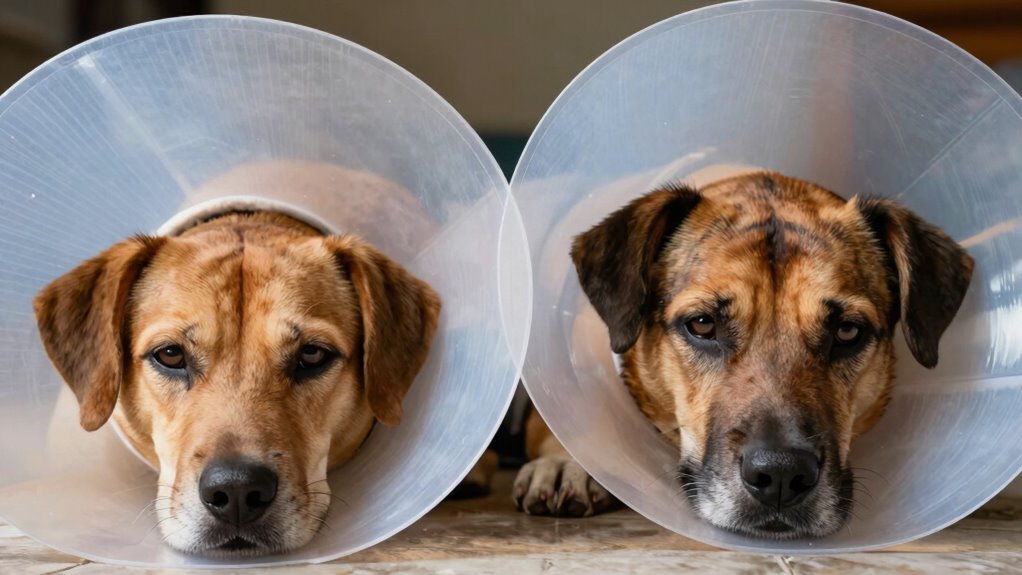

Inflatable recovery collars tend to be better tolerated by dogs because they’re softer, lighter, and mold better to their neck, reducing discomfort and stress. They avoid rigid edges that can cause irritation or frustration. While they require monitoring to prevent punctures, their comfort often helps dogs move more easily and stay calmer during recovery. If you want to know which options suit your dog best, you’ll find helpful insights if you continue exploring.

Get pet supplies delivered free with Prime
- Fast, free delivery on millions of items
- Prime Video, Amazon Music and more included
- Member-only deals all year
Key Takeaways
- Inflatable collars generally offer greater comfort, reducing stress and allowing dogs to tolerate them longer than rigid cones.
- Dogs with sensitive skin or prone to chafing tend to tolerate inflatable collars better.
- Rigid cones may cause discomfort and frustration, leading to lower tolerance in some dogs.
- Proper fit and material flexibility in inflatable collars enhance overall dog acceptance.
- Durability and ease of maintenance influence how well a dog continues to tolerate the recovery device over time.
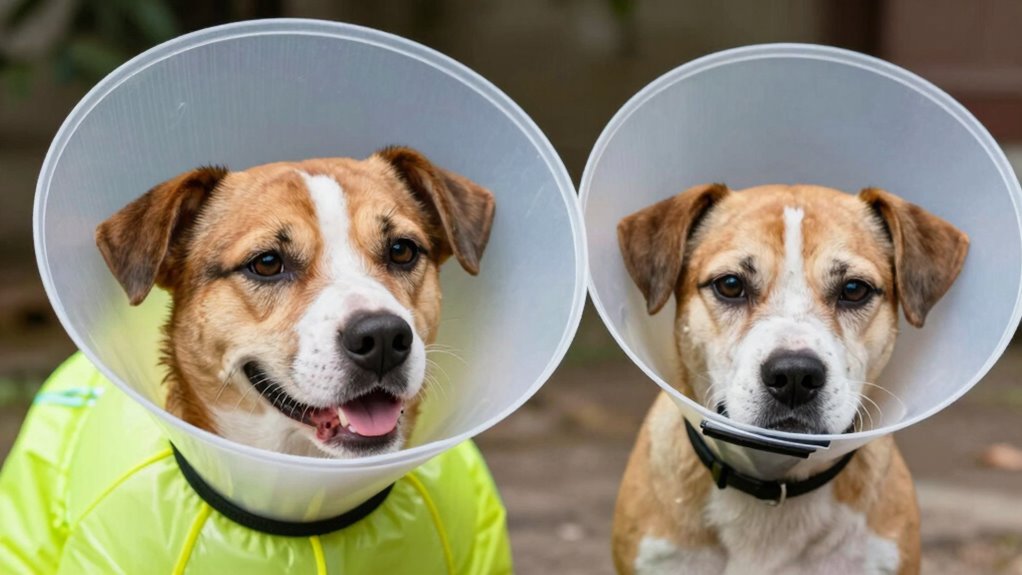
When your pet needs to heal after surgery or an injury, choosing the right recovery device is essential. You want something that keeps your dog safe while also allowing them to move comfortably. Among the options, inflatable recovery collars and traditional cones are common, but understanding which one your dog will tolerate better can make a big difference in their recovery process. Pet safety is paramount, and both options are designed to prevent your dog from licking or biting at their wounds. However, the material durability of each impacts not just safety but also how well your dog adapts to wearing the device. Inflatable collars are made from flexible, soft materials that are less likely to cause chafing or skin irritation. They are typically lightweight and resistant to punctures, ensuring they stay intact even if your dog bumps into furniture or scratches at their collar. The robustness of these materials means you can trust them to last through the recovery period without falling apart or losing their shape. This robustness also plays a role in pet safety, as a collar that resists tearing reduces the risk of your dog removing it prematurely, which could lead to injury or infection. Additionally, the material strength of inflatable collars helps prevent accidental tearing that might compromise their protective function. Proper inspection of the collar’s material can help identify potential vulnerabilities before issues arise. Traditional cones, usually made from sturdy plastic, are highly durable but sometimes less comfortable. While they effectively prevent your dog from reaching their wounds, they can be bulky and uncomfortable for your pet. Some dogs find cones difficult to navigate through doorways or furniture, which can lead to frustration or stress. Because plastic cones are rigid, they don’t mold to your dog’s body, making pet safety a concern if your dog tries to maneuver around or remove them. In contrast, inflatable collars contour to your dog’s neck, offering a gentler fit that reduces the chances of injury caused by a rigid edge. Their material robustness is sufficient to withstand normal wear and tear, but they are more susceptible to punctures compared to plastic cones. This means you need to monitor them and ensure your dog isn’t chewing or scratching aggressively at their collar. Proper maintenance of these collars can extend their lifespan and ensure continued safety. It’s also helpful to consider material flexibility when choosing a recovery collar, as it affects how easily your dog can move and adapt. Ultimately, the choice depends on your dog’s temperament and specific needs. If your dog is a persistent chewer, a more durable plastic cone might be necessary. If comfort and pet safety are your priorities, an inflatable collar could be the better option. Either way, selecting a recovery device with strong material robustness ensures your dog’s safety while helping them heal comfortably.
As an affiliate, we earn on qualifying purchases.
Frequently Asked Questions
Are Inflatable Collars Suitable for All Dog Breeds?
Inflatable collars aren’t suitable for all dog breeds. Breed suitability and size considerations matter because smaller or very active dogs might find them uncomfortable or ineffective. If your dog is large, strong, or tends to chew, a traditional cone might work better. For gentle or small breeds, inflatable collars can be a comfortable alternative, but always monitor your dog’s reaction and consult your vet to guarantee the collar provides proper protection without causing stress.
How Do Inflatable Collars Affect a Dog’s Mobility?
Inflatable collars generally allow your dog to move more freely than traditional cones, promoting better mobility. They’re designed for collar comfort, so your dog can eat, drink, and behave normally, aiding in behavior modification during recovery. However, some dogs might still find them restrictive or uncomfortable, affecting their activity levels. Observe your dog closely to make sure the collar doesn’t hinder their natural movements or cause frustration.
Can Dogs Eat or Drink Comfortably With Inflatable Collars?
Think of an inflatable collar as a gentle shield, making it easier for your dog to eat and drink comfortably. They usually allow better diet comfort and hydration ease compared to traditional cones. Your dog can usually reach their food and water bowls without much struggle, thanks to the collar’s soft, flexible design. This means they stay nourished and hydrated without feeling trapped or frustrated, easing their recovery journey.
What Is the Average Lifespan of an Inflatable Recovery Collar?
The average lifespan of an inflatable recovery collar is about 1 to 2 weeks with regular use, but it can last longer with proper care. To maximize durability, check for leaks and clean it regularly, especially if your dog bites or scratches. This helps in behavior modification, reducing stress, and extending the collar’s usability. Remember, a well-maintained collar keeps your dog comfortable and supports quicker recovery.
Are Inflatable Collars More Cost-Effective Than Traditional Cones?
Inflatable collars are more cost-effective than traditional cones, offering a budget-friendly option for pet owners. With a favorable cost comparison and durability analysis, they last longer and resist damage better than plastic cones. You’ll save money over time by avoiding frequent replacements. Plus, their lightweight, comfortable design encourages your dog to wear them longer, reducing stress and promoting quicker recovery, making them a smart, economical choice.
Conclusion
So, whether you choose an inflatable collar or a cone, it’s all about what your dog tolerates best. Inflatable collars can be more comfortable and less intrusive, but some pups might prefer the traditional cone. Ultimately, isn’t your goal to keep your furry friend safe and comfortable during recovery? By considering your dog’s personality and needs, you can help make healing a smoother, less stressful experience for both of you. After all, isn’t a happy, comfortable pup worth it?
Halloween Picks
halloween
As an affiliate, we earn on qualifying purchases.