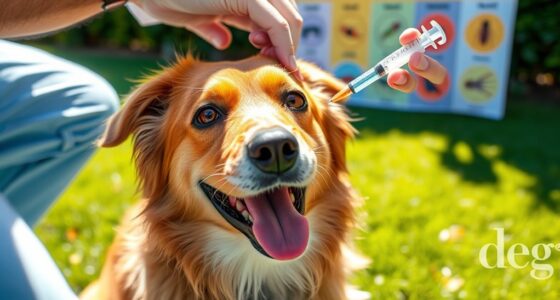
Regular checkups are essential for your pet’s health, allowing you to catch potential issues early and prevent serious problems. During visits, your vet assesses overall health, dental condition, and monitors vaccines to protect against dangerous diseases. Catching health concerns early can save money and ensure your pet stays happy and comfortable. Staying proactive with routine visits is key to a long, healthy life for your furry friend—learn more about how to keep them in top shape.
Key Takeaways
- Regular veterinary visits help detect health issues early, ensuring timely treatment and better outcomes.
- They maintain your pet’s dental health, preventing pain and infections that can impact overall well-being.
- Routine checkups ensure vaccinations are up-to-date, protecting against serious, contagious diseases.
- Regular exams allow for monitoring weight and body condition, preventing obesity and related health problems.
- Proactive care promotes long-term health, comfort, and happiness for your pet through early detection and prevention.

Have you ever wondered why regular veterinary visits are crucial for your pet’s health? Consistent checkups are the foundation of preventive veterinary care, helping catch potential problems early before they develop into more serious issues. During these visits, your veterinarian assesses your pet’s overall health, from weight and body condition to essential signs. One critical aspect often overlooked is pet dental health. Regular exams allow the vet to evaluate your pet’s teeth and gums, preventing painful conditions like periodontal disease, which can lead to infections and even affect internal organs if left untreated. Good dental health isn’t just about fresh breath; it’s about maintaining your pet’s quality of life and preventing costly treatments down the line. Regular vet-approved dental products can also support ongoing oral health between visits.
Another indispensable element of preventive care is staying up-to-date with vaccination schedules. Vaccinations protect your pet from a host of contagious diseases that can be life-threatening or severely impact their well-being. During routine visits, your veterinarian reviews your pet’s vaccination history and recommends booster shots as needed. Staying current on vaccines not only safeguards your pet but also helps prevent the spread of diseases to other animals and humans, especially in multi-pet households or areas with high pet populations. With the ever-evolving landscape of infectious diseases, regularly scheduled visits ensure that your pet receives the most appropriate vaccinations based on age, lifestyle, and regional health risks.
Beyond dental health and vaccinations, these checkups serve as an opportunity for your veterinarian to identify subtle signs of health issues you may not notice at home. Early detection of conditions like obesity, skin problems, or joint issues allows for prompt intervention, often with less invasive and less expensive treatments. Your vet might also provide advice on nutrition, exercise, and behavioral concerns, which are all part of an essential preventive approach. Regular visits foster a strong relationship between you and your veterinarian, giving you confidence that your pet’s health is monitored closely and that you’re doing everything possible to ensure their longevity.
Ultimately, safeguarding your pet’s health is about more than just reacting to illness; it’s about proactive care. By making routine veterinary visits a priority, you’re investing in your pet’s happiness and long-term well-being. From maintaining pet dental health to adhering to vaccination schedules, these checkups form the backbone of a preventive strategy that keeps your furry friend healthy, comfortable, and loved for years to come.
Frequently Asked Questions
How Often Should My Pet Visit the Vet for Checkups?
You should take your pet for checkups at least once a year, but more frequent visits are recommended for senior pets or those with health issues. Regular visits help monitor pet dental health and catch problems early. If your pet is young and healthy, biannual checkups may suffice. Consistent vet visits make certain your pet stays happy, healthy, and comfortable throughout their life.
Are There Specific Vaccines Recommended for All Pets?
Yes, there are specific vaccines recommended for all pets. You should follow a vaccine schedule tailored to your pet’s age, lifestyle, and local regulations. Immunization protocols typically include core vaccines like rabies, distemper, and parvovirus for dogs, and feline herpesvirus, calicivirus, and panleukopenia for cats. Regular vaccinations help protect your pet from serious diseases, so stay in touch with your vet to keep their immunization up-to-date.
What Signs Indicate My Pet Needs Urgent Veterinary Attention?
You might think your pet’s just being playful, but urgent signs like difficulty breathing, seizures, vomiting, or severe bleeding require immediate vet attention. Don’t ignore symptoms that seem minor—they could signal a serious emergency. Quick symptom identification and prompt emergency response can save your pet’s life. If you notice changes in behavior, appetite, or activity levels, act fast. Your quick action makes all the difference in ensuring your pet’s health and safety.
How Can I Make My Pet’s Vet Visits Less Stressful?
To make your pet’s vet visits less stressful, start by using calming techniques like gentle petting, soothing words, or treats. Keep visits short and positive, gradually introducing your pet to the clinic environment. Bring familiar items like a favorite blanket or toy to reduce pet anxiety. Stay calm yourself, as your demeanor influences your pet’s comfort. Consistent, positive experiences help build trust and make future visits easier for both of you.
What Are the Costs Associated With Preventive Veterinary Care?
Think of preventive care as investing in your pet’s health treasure chest. The cost breakdown typically includes exams, vaccines, and screenings, which can vary but often save money in the long run. Insurance coverage can ease the financial burden, covering many routine services. By budgeting for these costs now, you prevent unexpected expenses later, ensuring your pet stays happy and healthy without draining your wallet.
Conclusion
By keeping up with regular checkups, you’re planting seeds of health and happiness in your pet’s life. Think of these visits as gentle rain nurturing a blooming garden, ensuring your furry friend thrives and blossoms. Skipping them is like leaving a garden unattended—dangers may hide unseen. So, stay vigilant and show your pet love through proactive care. Together, you’re building a lifelong bond rooted in health, happiness, and unconditional companionship.